Traffic, loud neighbors and barking dogs can ruin a relaxing afternoon in your yard. While you can’t control the world around you, you can create a quiet retreat by adding the right sound‑absorbing elements to your landscape. In recent years, research has shown that dense vegetation can attenuate noise; in one study, hedges with less than 4.6 % porosity reduced sound levels by an average of 2.7 dB and up to 7 dB at higher frequencies. That may not sound like much, but even small decibel reductions can make outdoor spaces feel significantly more peaceful. Artificial hedges offer the same dense barrier without the maintenance challenges of natural plants. This article explores how faux greenery can help you reclaim your sense of peace and privacy.
How Hedges Block Sound
Noise travels as waves; anything that disrupts or absorbs those waves will reduce the sound energy that reaches your ears. Natural and artificial hedges provide attenuation in two ways:
- Absorption and deflection – Leaves and branches scatter and absorb sound waves. The more dense the foliage, the greater the effect. A vertical surface covered in plants acts like a natural acoustic panel.
- Psychological masking – The visual barrier of a hedge helps reduce the perception of noise. According to a sustainable‑design article on Green.org, vertical gardens and green walls act as natural sound barriers in urban environments, reducing noise pollution and creating more pleasant spaces.
The key to effective noise reduction is density. A thin hedge or sparse planting won’t do much; studies suggest that hedges must be thick enough to prevent light from shining through to achieve measurable attenuation. That’s where artificial hedges shine — they stay dense and lush year‑round.
Why Choose Artificial Hedges?
Natural hedges can certainly dampen sound, but they come with significant upkeep: watering, pruning, fertilizing and pest control. Drought, disease or poor soil can leave gaping holes that let noise (and prying eyes) in. Artificial hedges, on the other hand, maintain their density without watering or trimming.
Maintenance savings
Real plants require regular irrigation — and according to the U.S. EPA, the average American family uses 320 gallons of water per day, with nearly one‑third going to landscape irrigation. Installing faux greenery helps conserve water and lowers your monthly bill.
Year‑round beauty
Drought, frost or disease can leave natural hedges patchy or bare. Our faux boxwood and ivy panels look lush in every season. Because the foliage is UV‑protected, it resists fading and cracking even under intense sunlight.
Customizable height and thickness
Califaux Scapes offers modular fence extensions and privacy wall solutions that can be built to any height. Need an 8‑foot screen to block a busy road? Want a 3‑foot panel to hide pool equipment? Faux hedges let you customize your barrier without worrying about plant maturity.
Versatile installation
Artificial panels can attach to existing fences, freestanding frames or even indoor walls. They’re lightweight compared with solid wood or masonry and can be installed quickly with minimal disruption.
Design Tips for Creating a Quiet Space
A well‑designed noise‑reduction strategy uses multiple layers. Here are some ideas to maximize acoustic benefits:
Combine hedges with solid structures
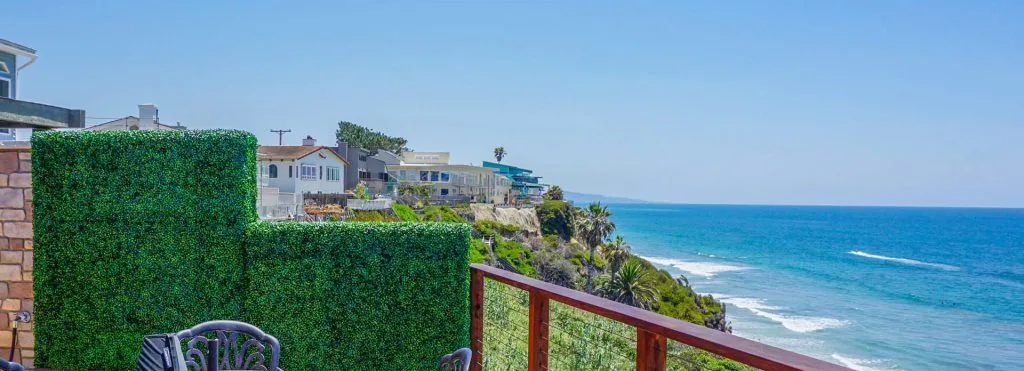
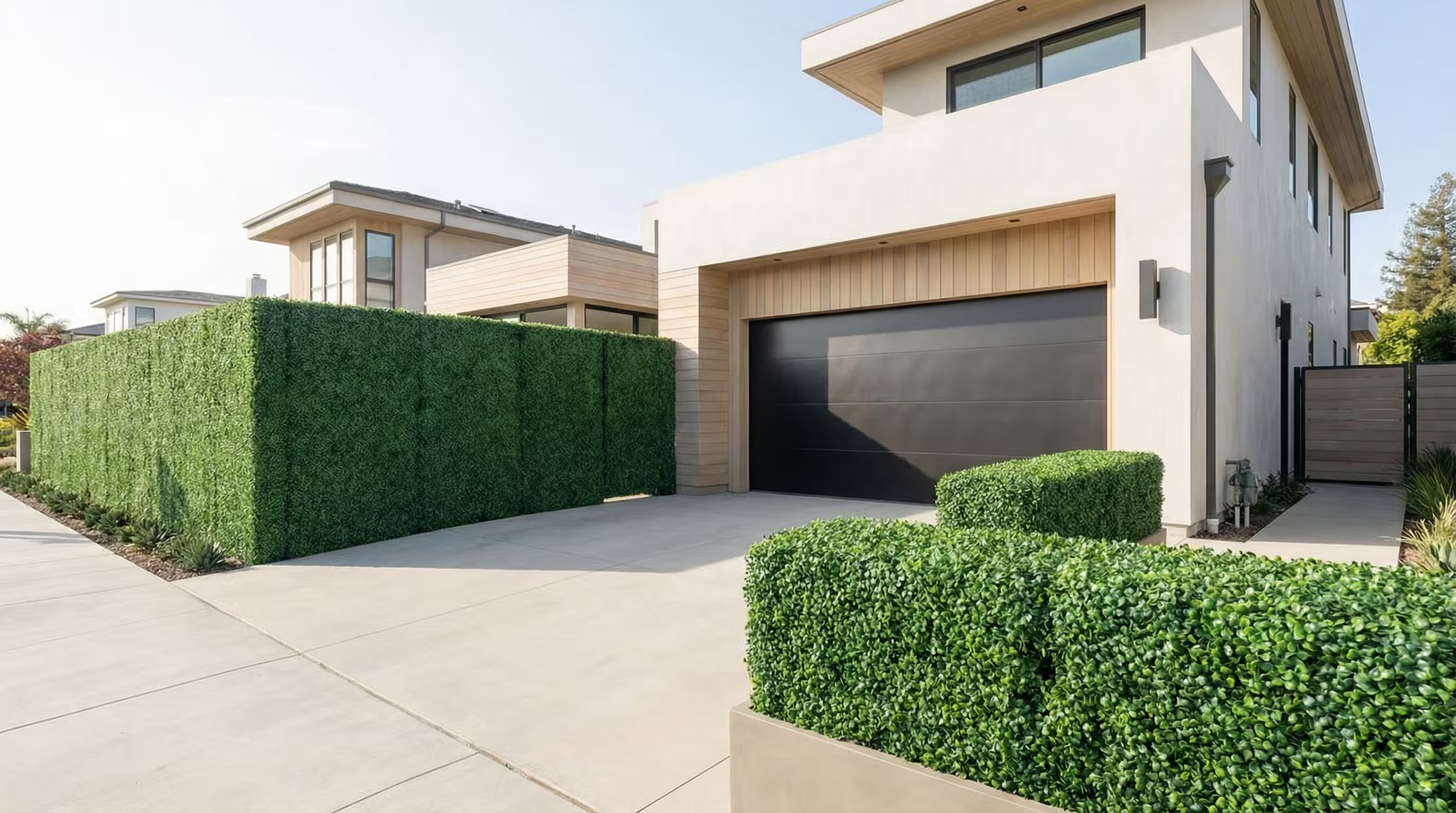
Dense foliage works best when paired with a rigid backing. Mount your faux hedge panels on a fence or wall to prevent sound from sneaking through gaps. If you don’t have a fence, our fence extensions offer an easy way to add height.
Stagger plantings
Instead of a single straight line, create multiple rows of hedges or offset panels. This forces sound waves to travel a longer, more complex path, reducing the energy that passes through.
Use corners and enclosures
Enclose your patio or seating area on two or three sides with hedges. The “L” or “U” shape traps noise and creates a cozy outdoor room.
Add water features or soft furnishings
The gentle trickle of a fountain or waterfall introduces white noise that masks unwanted sounds. Outdoor rugs, cushions and umbrellas also absorb sound waves and soften echoes.
Incorporate living walls
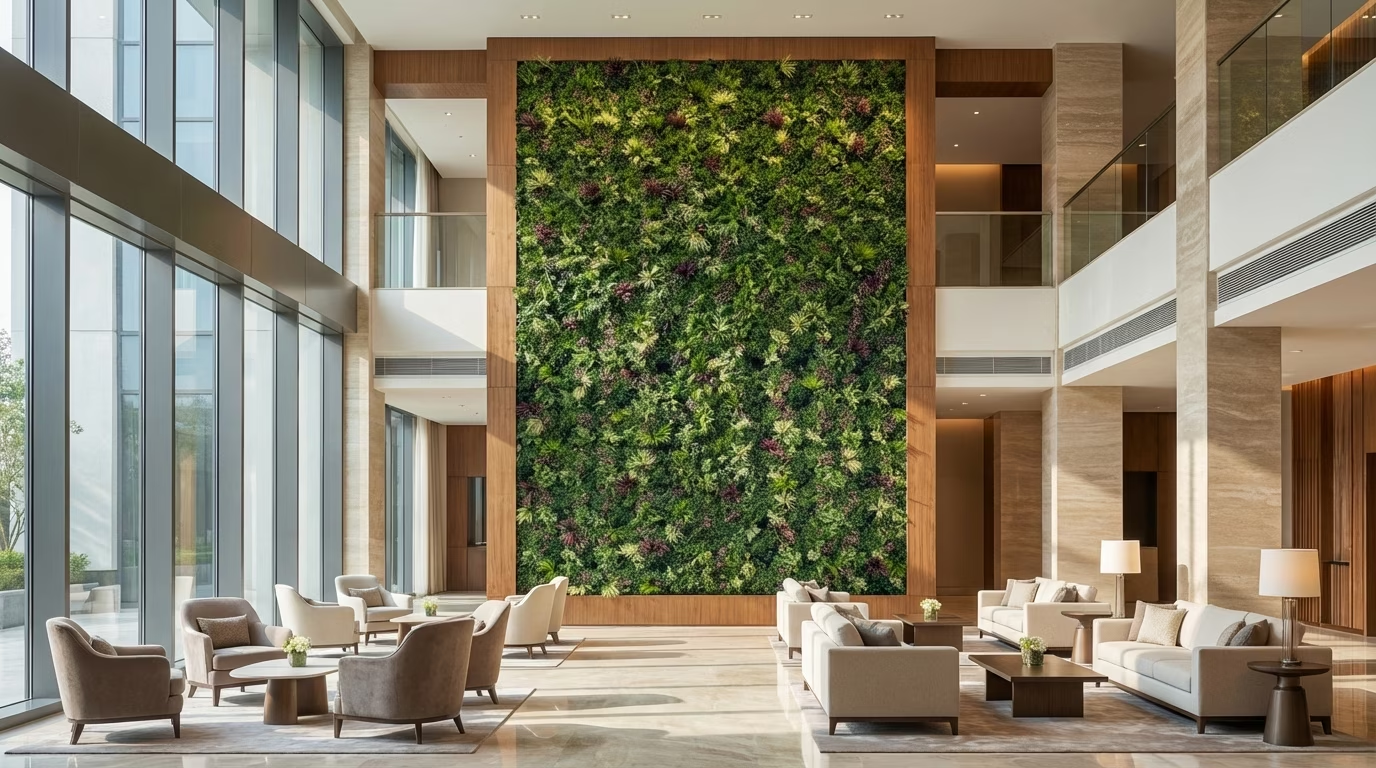
Vertical gardens aren’t just for small spaces — they also contribute to noise reduction. Our artificial living walls bring texture and greenery to blank walls while helping to dampen sound. Green.org notes that vertical gardens purify air, reduce heat and act as sound barriers.
External Insights and Best Practices
Scientists and landscape architects have long studied vegetation as a tool for sound abatement. The Journal of Agricultural Engineering reports that dense hedges with minimal porosity can attenuate noise by several decibels, particularly at higher frequencies. While you may not achieve the same results with a single shrub border, the research underscores the importance of density and thickness.
Sustainable design experts also point out that green walls offer more than just acoustic benefits. They improve air quality by absorbing carbon dioxide and releasing oxygen, help mitigate the urban heat island effect and create a calming atmosphere【857730710511893†L94-L101】. Even if you’re using artificial foliage, the visual cue of greenery can trigger relaxation and make your yard feel like a spa.
For further reading, check out “Vertical Gardens and their Role in Sustainable Design” on Green.org, which explains how green walls reduce noise and improve urban environments.
Conclusion: Reclaim Your Peace and Privacy
Noise pollution doesn’t have to dictate how you enjoy your home. By incorporating dense, faux greenery into your landscape design, you can buffer traffic sounds, muffle neighborhood chatter and create a serene sanctuary. Artificial hedges offer the benefits of sound attenuation without the headaches of watering, pruning or waiting for plants to mature.
Ready to transform your yard into a quiet retreat? Califaux Scapes can design and install custom artificial hedge solutions that fit your space and budget. Contact us today to explore options like privacy walls, fence extensions and vertical living walls. Your tranquil oasis is just a hedge away.
Quiet Outdoor Spaces with Artificial Hedges
Traffic, loud neighbors and barking dogs can ruin a relaxing afternoon in your yard. While you can’t control the world around you, you can create a quiet retreat by adding the right sound‑absorbing elements to your landscape. In recent years, research has shown that dense vegetation can attenuate noise; in one study, hedges with less than 4.6 % porosity reduced sound levels by an average of 2.7 dB and up to 7 dB at higher frequencies. That may not sound like much, but even small decibel reductions can make outdoor spaces feel significantly more peaceful. Artificial hedges offer the same dense barrier without the maintenance challenges of natural plants. This article explores how faux greenery can help you reclaim your sense of peace and privacy.
How Hedges Block Sound
Noise travels as waves; anything that disrupts or absorbs those waves will reduce the sound energy that reaches your ears. Natural and artificial hedges provide attenuation in two ways:
- Absorption and deflection – Leaves and branches scatter and absorb sound waves. The more dense the foliage, the greater the effect. A vertical surface covered in plants acts like a natural acoustic panel.
- Psychological masking – The visual barrier of a hedge helps reduce the perception of noise. According to a sustainable‑design article on Green.org, vertical gardens and green walls act as natural sound barriers in urban environments, reducing noise pollution and creating more pleasant spaces.
The key to effective noise reduction is density. A thin hedge or sparse planting won’t do much; studies suggest that hedges must be thick enough to prevent light from shining through to achieve measurable attenuation. That’s where artificial hedges shine — they stay dense and lush year‑round.
Why Choose Artificial Hedges?
Natural hedges can certainly dampen sound, but they come with significant upkeep: watering, pruning, fertilizing and pest control. Drought, disease or poor soil can leave gaping holes that let noise (and prying eyes) in. Artificial hedges, on the other hand, maintain their density without watering or trimming.
Maintenance savings
Real plants require regular irrigation — and according to the U.S. EPA, the average American family uses 320 gallons of water per day, with nearly one‑third going to landscape irrigation. Installing faux greenery helps conserve water and lowers your monthly bill.
Year‑round beauty
Drought, frost or disease can leave natural hedges patchy or bare. Our faux boxwood and ivy panels look lush in every season. Because the foliage is UV‑protected, it resists fading and cracking even under intense sunlight.
Customizable height and thickness
Califaux Scapes offers modular fence extensions and privacy wall solutions that can be built to any height. Need an 8‑foot screen to block a busy road? Want a 3‑foot panel to hide pool equipment? Faux hedges let you customize your barrier without worrying about plant maturity.
Versatile installation
Artificial panels can attach to existing fences, freestanding frames or even indoor walls. They’re lightweight compared with solid wood or masonry and can be installed quickly with minimal disruption.
Design Tips for Creating a Quiet Space
A well‑designed noise‑reduction strategy uses multiple layers. Here are some ideas to maximize acoustic benefits:
Combine hedges with solid structures
Dense foliage works best when paired with a rigid backing. Mount your faux hedge panels on a fence or wall to prevent sound from sneaking through gaps. If you don’t have a fence, our fence extensions offer an easy way to add height.
Stagger plantings
Instead of a single straight line, create multiple rows of hedges or offset panels. This forces sound waves to travel a longer, more complex path, reducing the energy that passes through.
Use corners and enclosures
Enclose your patio or seating area on two or three sides with hedges. The “L” or “U” shape traps noise and creates a cozy outdoor room.
Add water features or soft furnishings
The gentle trickle of a fountain or waterfall introduces white noise that masks unwanted sounds. Outdoor rugs, cushions and umbrellas also absorb sound waves and soften echoes.
Incorporate living walls
Vertical gardens aren’t just for small spaces — they also contribute to noise reduction. Our artificial living walls bring texture and greenery to blank walls while helping to dampen sound. Green.org notes that vertical gardens purify air, reduce heat and act as sound barriers.
External Insights and Best Practices
Scientists and landscape architects have long studied vegetation as a tool for sound abatement. The Journal of Agricultural Engineering reports that dense hedges with minimal porosity can attenuate noise by several decibels, particularly at higher frequencies. While you may not achieve the same results with a single shrub border, the research underscores the importance of density and thickness.
Sustainable design experts also point out that green walls offer more than just acoustic benefits. They improve air quality by absorbing carbon dioxide and releasing oxygen, help mitigate the urban heat island effect and create a calming atmosphere【857730710511893†L94-L101】. Even if you’re using artificial foliage, the visual cue of greenery can trigger relaxation and make your yard feel like a spa.
For further reading, check out “Vertical Gardens and their Role in Sustainable Design” on Green.org, which explains how green walls reduce noise and improve urban environments.
Conclusion: Reclaim Your Peace and Privacy
Noise pollution doesn’t have to dictate how you enjoy your home. By incorporating dense, faux greenery into your landscape design, you can buffer traffic sounds, muffle neighborhood chatter and create a serene sanctuary. Artificial hedges offer the benefits of sound attenuation without the headaches of watering, pruning or waiting for plants to mature.
Ready to transform your yard into a quiet retreat? Califaux Scapes can design and install custom artificial hedge solutions that fit your space and budget. Contact us today to explore options like privacy walls, fence extensions and vertical living walls. Your tranquil oasis is just a hedge away.