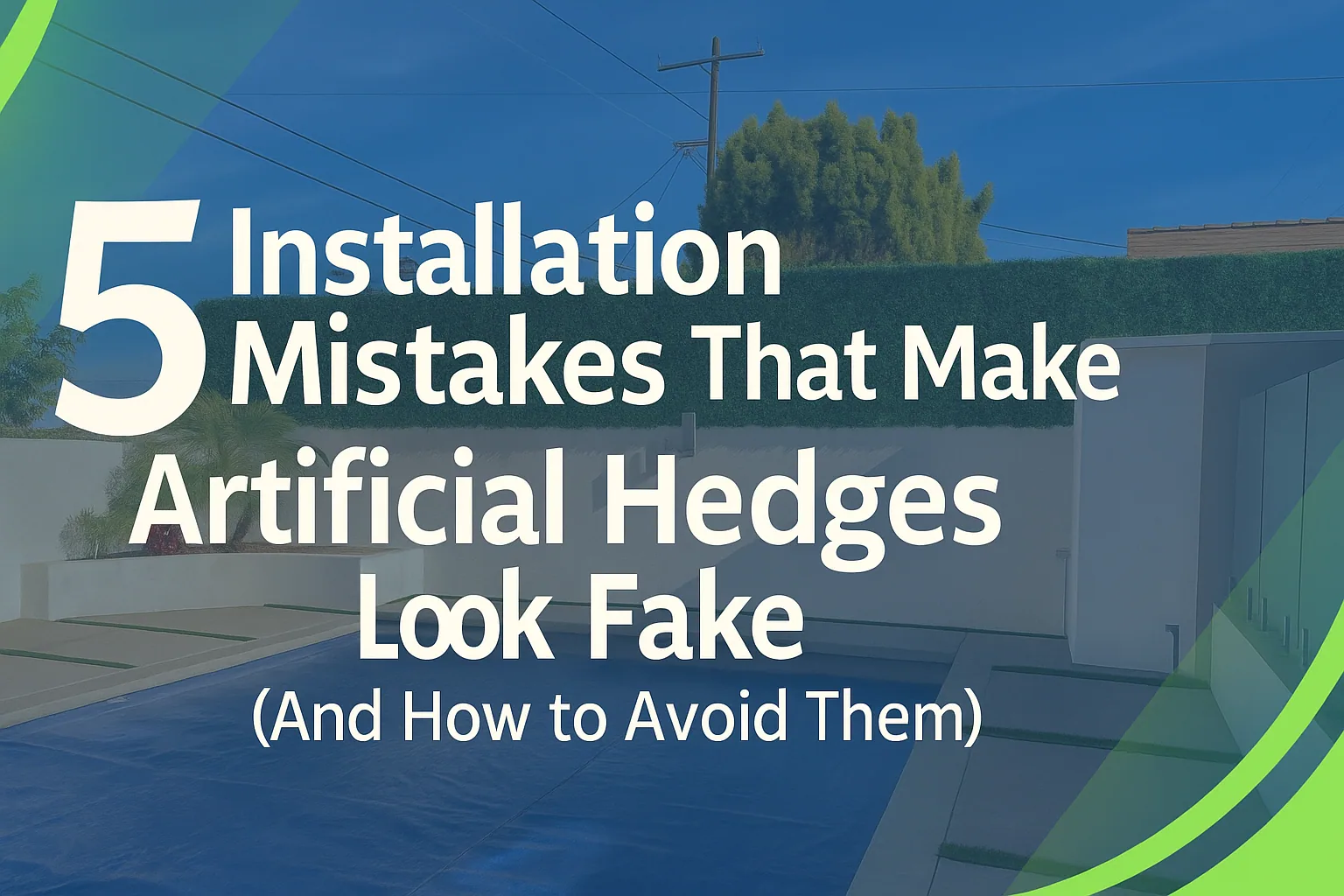
Should You DIY Your Hedge Install?
The honest answer is: sometimes. A small, simple privacy screen can be a reasonable DIY project. A larger hedge install on an exposed fence line or a custom wall usually stops being simple once the framing, leveling, and mounting details show up.
This page is meant to help you make that call before you spend money in the wrong place.
DIY usually works best when the project is simple
DIY is most realistic when you are dealing with:
- Short, straight runs with clean measurements
- Fence-mounted panels that do not need custom fabrication
- Low-risk access where ladders, wind, and difficult wall conditions are not major factors
- Small decorative screens where absolute perfection is not the goal
If the job is compact and the site is forgiving, DIY can make sense.
Professional installation usually makes more sense when the site is doing the hard part
The projects that look easy in photos are often the ones that become frustrating in the field. Professional installation is usually the better call when you are dealing with:
- Tall privacy screens
- Fence extensions that need to stay rigid
- Wall-mounted systems
- Corners, grade changes, or custom layouts
- Commercial sites where the finish has to look polished
The real issue is usually mounting, not foliage
Most installation problems happen because the structure behind the hedge was not planned properly. That is what leads to:
- visible gaps
- uneven top lines
- weak attachment points
- sagging panels
- a screen that looks temporary instead of built-in
Good-looking hedge work comes from clean alignment, the right frame, and a mounting method that fits the surface.
Cost is not just the material order
DIY can reduce the upfront spend, but buyers often underestimate everything around the panels:
- tools
- hardware
- delivery handling
- rework when measurements are off
- the value of your own time
That does not mean DIY is a bad idea. It means the cheapest first step is not always the lowest-cost finished job.
A practical middle ground
Some projects split well:
- DIY for a short decorative section or light fence-mount application
- Professional install for the main privacy run, custom framing, or any area that needs a premium finished look
That approach keeps the more technical work in experienced hands while still giving you control over smaller sections.
A simple rule of thumb
If the hedge needs to protect privacy, hold a straight line, deal with exposure, and look clean from every angle, professional installation is usually the safer move. If it is a small, forgiving project and you are comfortable measuring, mounting, and adjusting on site, DIY can work.
Related Resources
- Fence Extension Products - See specs for the most common DIY-friendly system
- Maintenance & Care Guide - What upkeep looks like after installation
- California Artificial Landscaping Cost Guide - Budget planning for DIY and professional projects