Can an online estimate replace a site visit?
Online estimates are usually an early planning tool. Site verification is typically needed for final pricing.
How to budget with real site variables instead of generic square-foot promises.
At a glance
This guide is for owners, architects, designers, and builders who need a realistic early planning range before a site-specific quote exists. It explains what usually drives cost, how early budgets should be used, when phasing makes sense, and how maintenance and warranty terms affect total ownership.
Most budget mistakes happen when a project is priced as a surface area only. Artificial landscaping scopes are shaped by more than square footage: access, attachment conditions, detailing, species mix, returns, corners, existing wall condition, and how much of the work has to be staged around an active property. This guide is meant to help teams build a realistic early planning range before a field-verified quote exists. It is not a shortcut around site review. It is a way to ask better budgeting questions earlier, reduce redesign later, and understand what actually drives final pricing.
Product system
Living walls, privacy hedges, privacy walls, and fence extensions each carry different material and labor assumptions.
Detail complexity
Corners, returns, reveals, and custom transitions usually increase scope faster than raw area alone.
Substrate readiness
Existing wall condition, levelness, and attachment path can change labor requirements.
Site access
Staging, loading, elevators, and active-site constraints often affect pricing more than teams expect.
Early range
Best use
Compare options and phase priorities
Field review
Required for final quote
Validates substrate, access, and detailing
Premium detailing
Budget early
Do not treat edge conditions as an afterthought
Scope first
Better than target price
Pricing gets sharper once the layout is real
Reference: range-vs-final-pricing
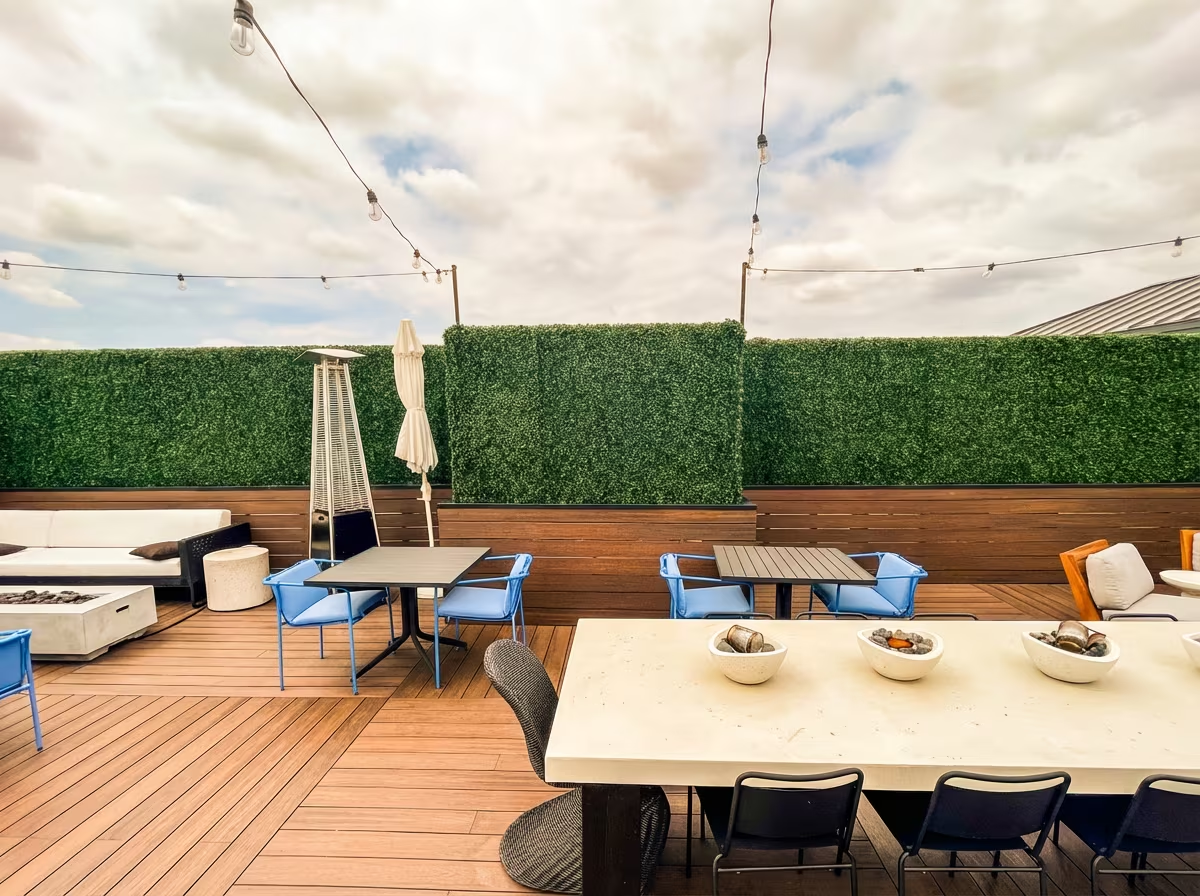
Last reviewed February 2026 · Content is reviewed periodically and updated when new information is available.
Online estimates are usually an early planning tool. Site verification is typically needed for final pricing.
Sometimes, but not always. Complexity, access, and detailing can offset volume efficiencies.
Yes. Ongoing care expectations should be included in total ownership planning.
Share the site conditions, privacy goals, or wall type you are evaluating and we can help you narrow the right system for the project.
Request project review
A California planning guide for privacy, screening, and long-term ownership.
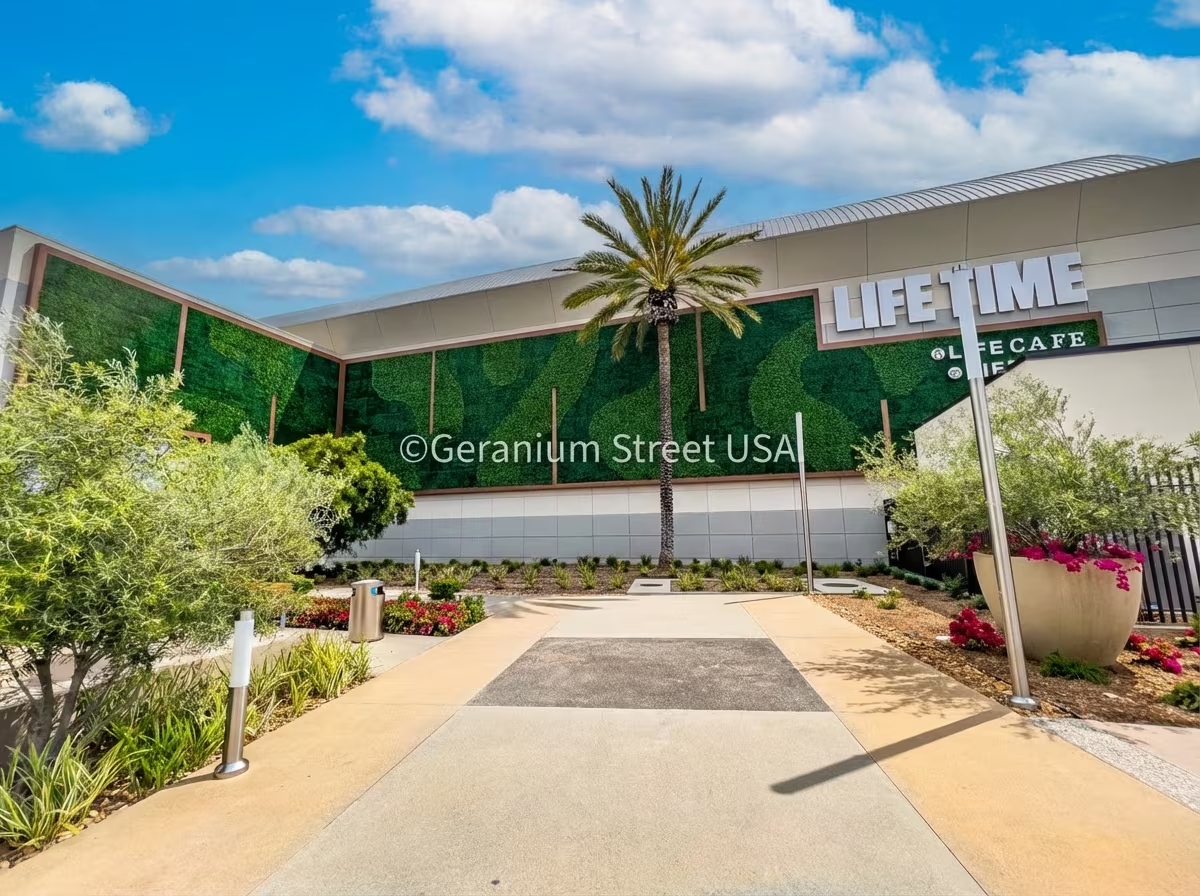
A California planning guide for architects, designers, builders, and owners.
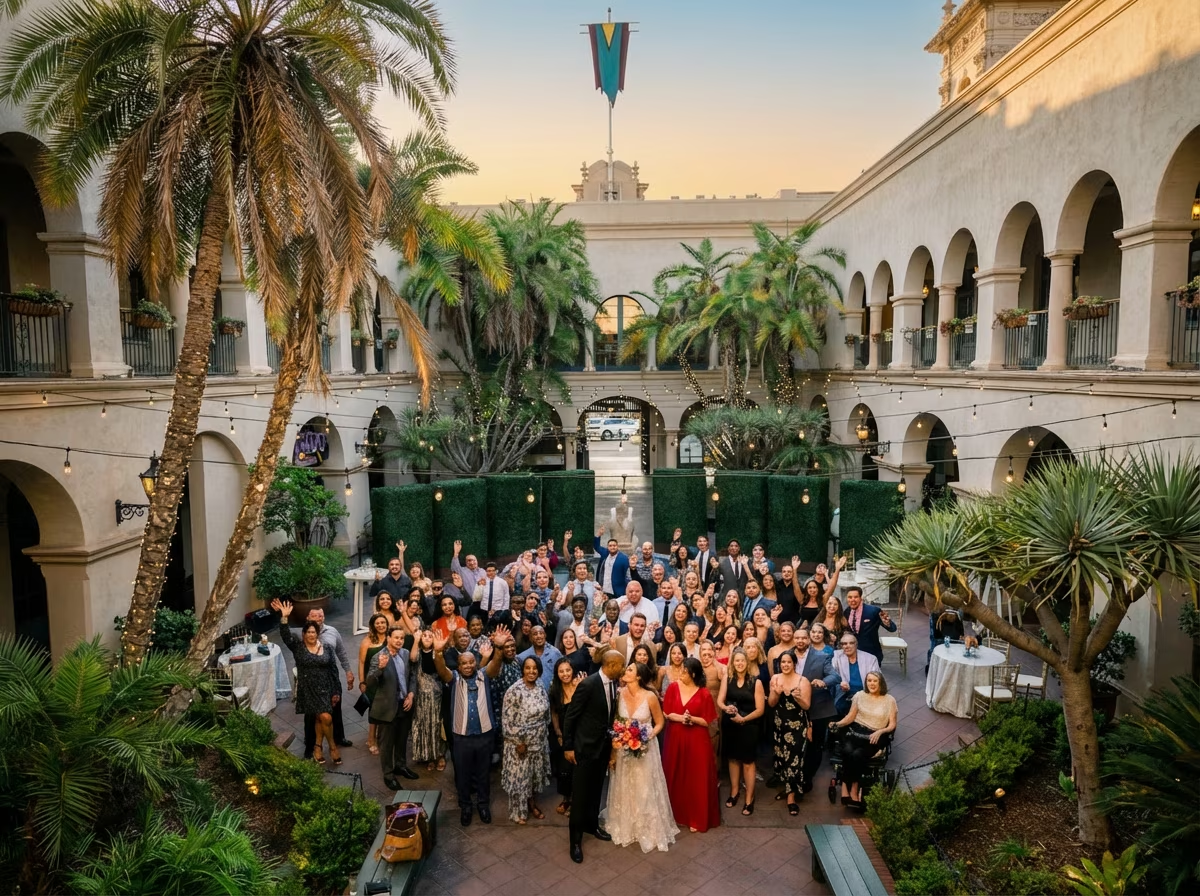
How commercial teams scope visible landscape upgrades without creating operational drag.
What realistic upkeep looks like when the finish quality still matters.