Why boxwood gets specified so often
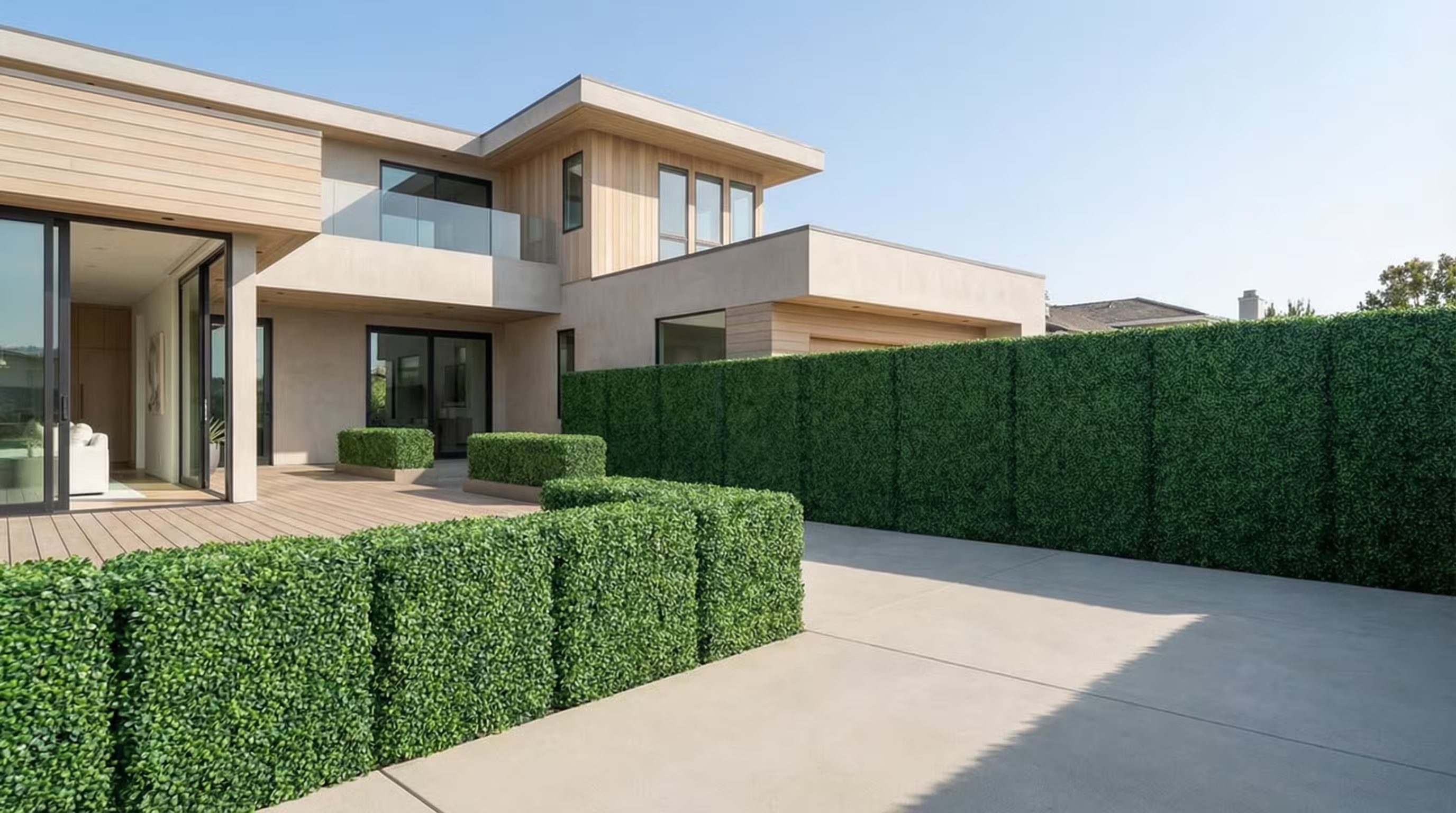
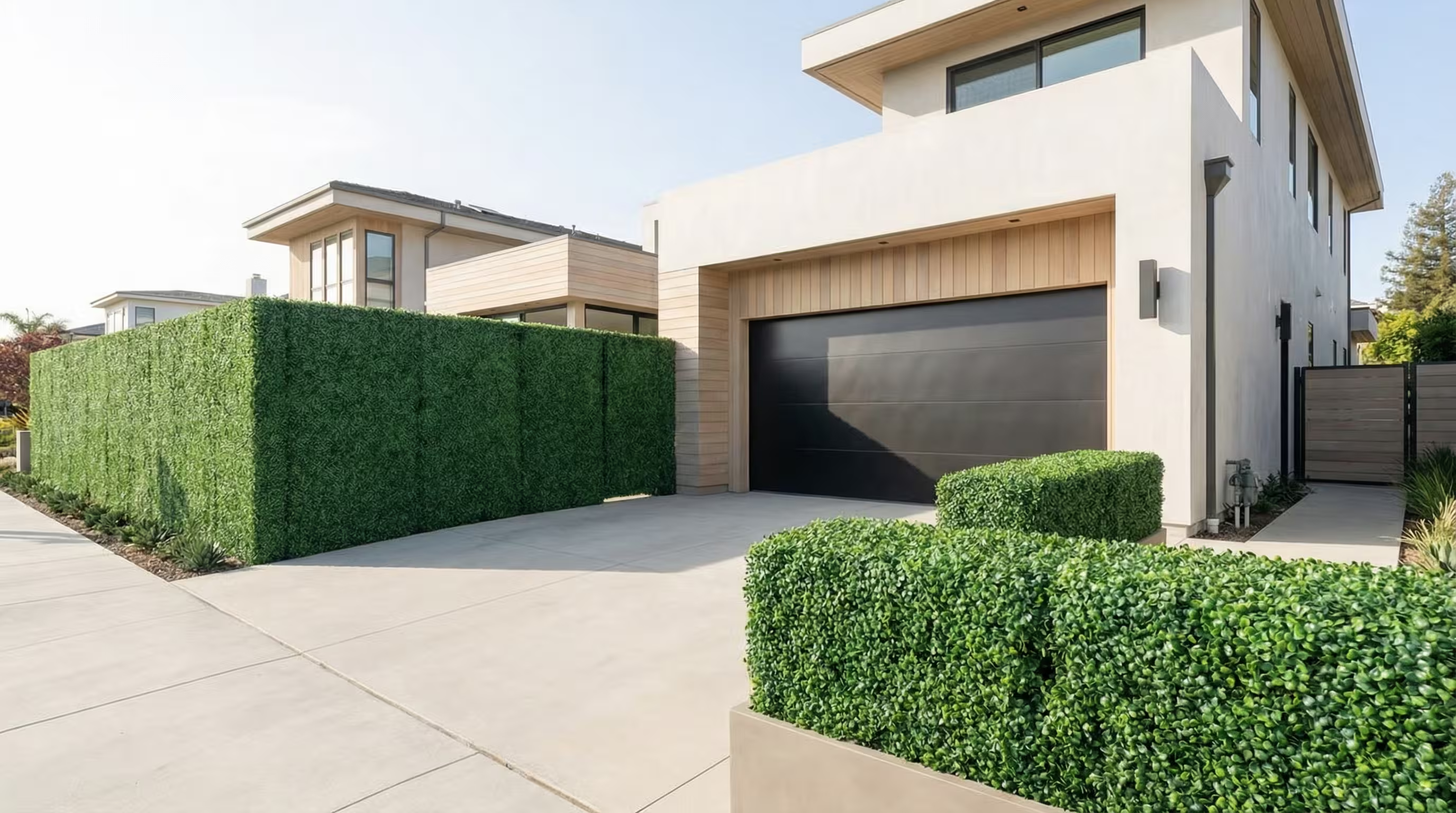
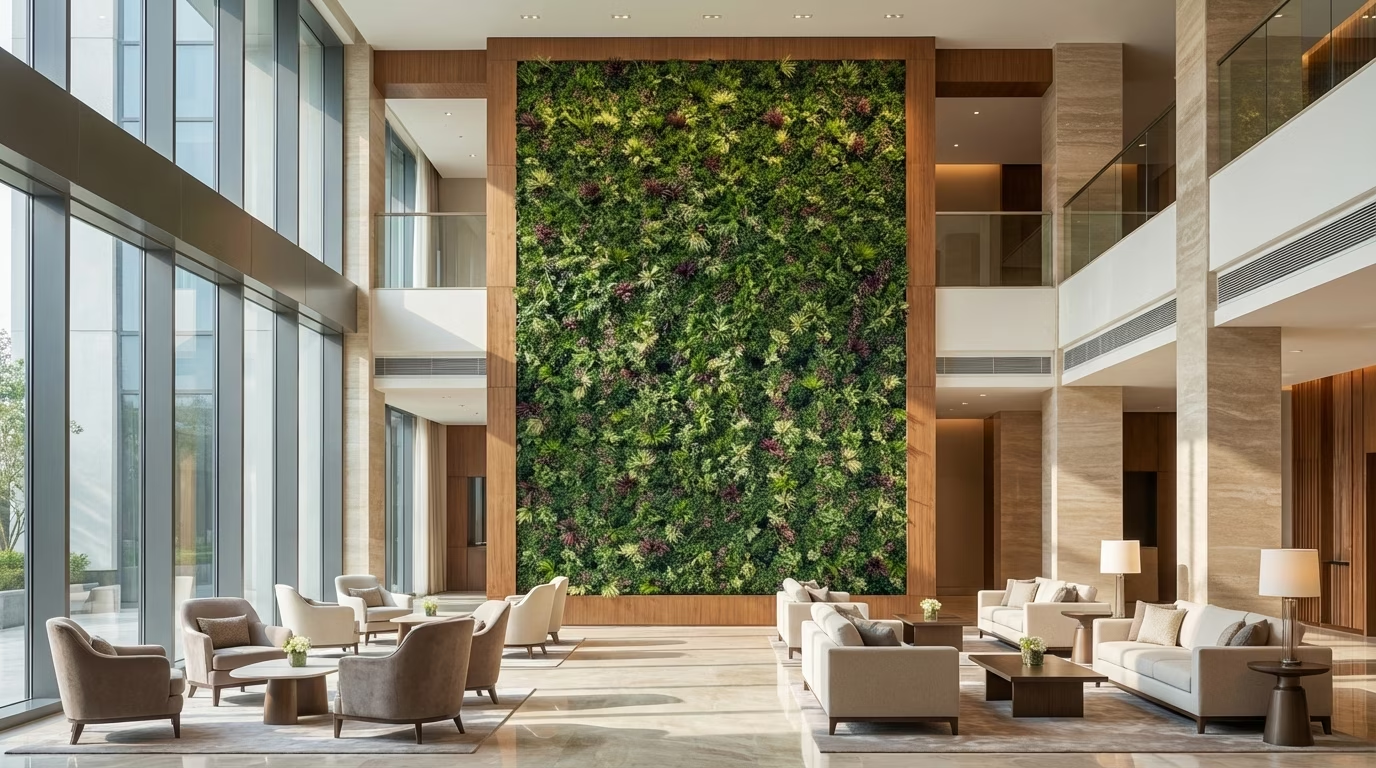
Artificial boxwood hedges get specified because they solve a familiar privacy problem fast. They give patios, pool edges, hospitality boundaries, and fence lines a dense green screen without the watering, trimming, and grow-in period that live planting usually requires. The better question is not whether boxwood is popular. It is whether a boxwood-style hedge is the right installation path for your actual wall, fence, or project edge.
If the property already has a serviceable fence, the first comparison is often between a hedge-faced install and Fence Extensions. If the project needs a more architectural screen, Privacy Wall systems may be the cleaner fit.
Where it tends to work best
- Backyard and patio screening
- Pool and rooftop edges
- Restaurant and hospitality boundaries
- Commercial frontage or service-zone cover
What to check before you choose it
- UV stability for the actual exposure
- Panel density and leaf variation
- Backing and mounting method
- Whether the site needs fence extensions or a full hedge face
- Whether the project needs fire documentation
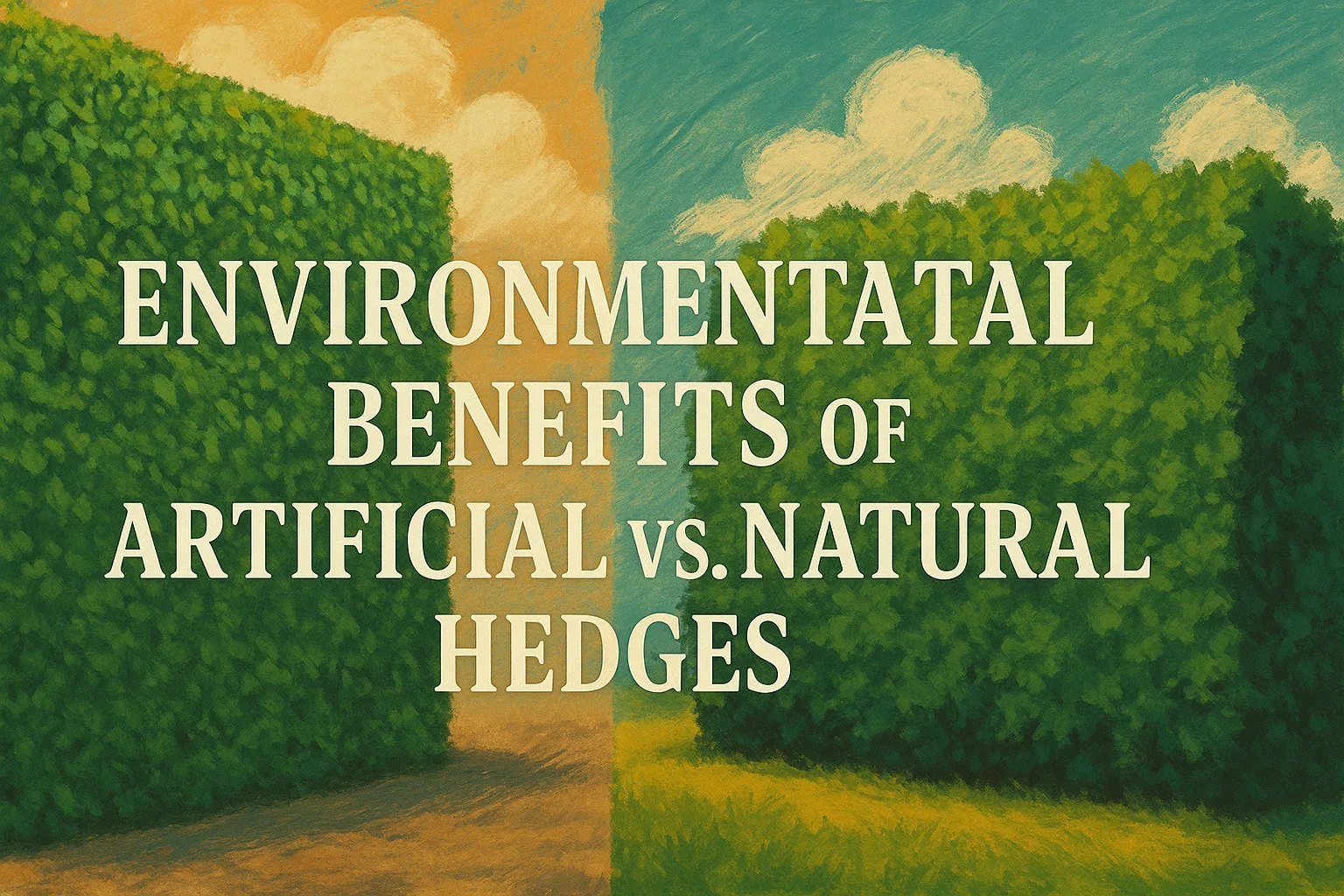
Boxwood vs natural hedges
A live boxwood hedge can be beautiful, but it asks for irrigation, trimming, and time. Artificial boxwood gives you the finished look immediately, which is the point on many California properties.
A practical way to plan it
If the site already has a usable fence or wall, start there and confirm the substrate. If the hedge needs more height, pair the panels with Fence Extensions. If you are still comparing screening options, the artificial vs natural hedges guide is the better first read.
What makes boxwood read finished instead of flat
The boxwood label is only part of the decision. The better installs rely on leaf variation, a matte finish, and a top line that follows the property instead of fighting it.
- Denser panels help the hedge feel complete at close range
- Mixed leaf textures reduce the repeating pattern problem
- Better edge detailing matters more than most buyers expect
That is why a spec sheet alone is not enough. The install quality still controls the final look.
When boxwood is the right fit
Boxwood is strongest when the project needs a familiar privacy screen on a fence, patio, or hospitality edge. It is less compelling when the design needs a more architectural wall surface or a taller feature that should read like a built backdrop instead of a hedge.
For a hospitality example, the Artificial hedges for L'Auberge Del Mar hotel case study shows how a boxwood-based solution can work when the site needs privacy and repeatability. The Jamul casino boxwood project is a stronger reference for exterior durability and a custom base.