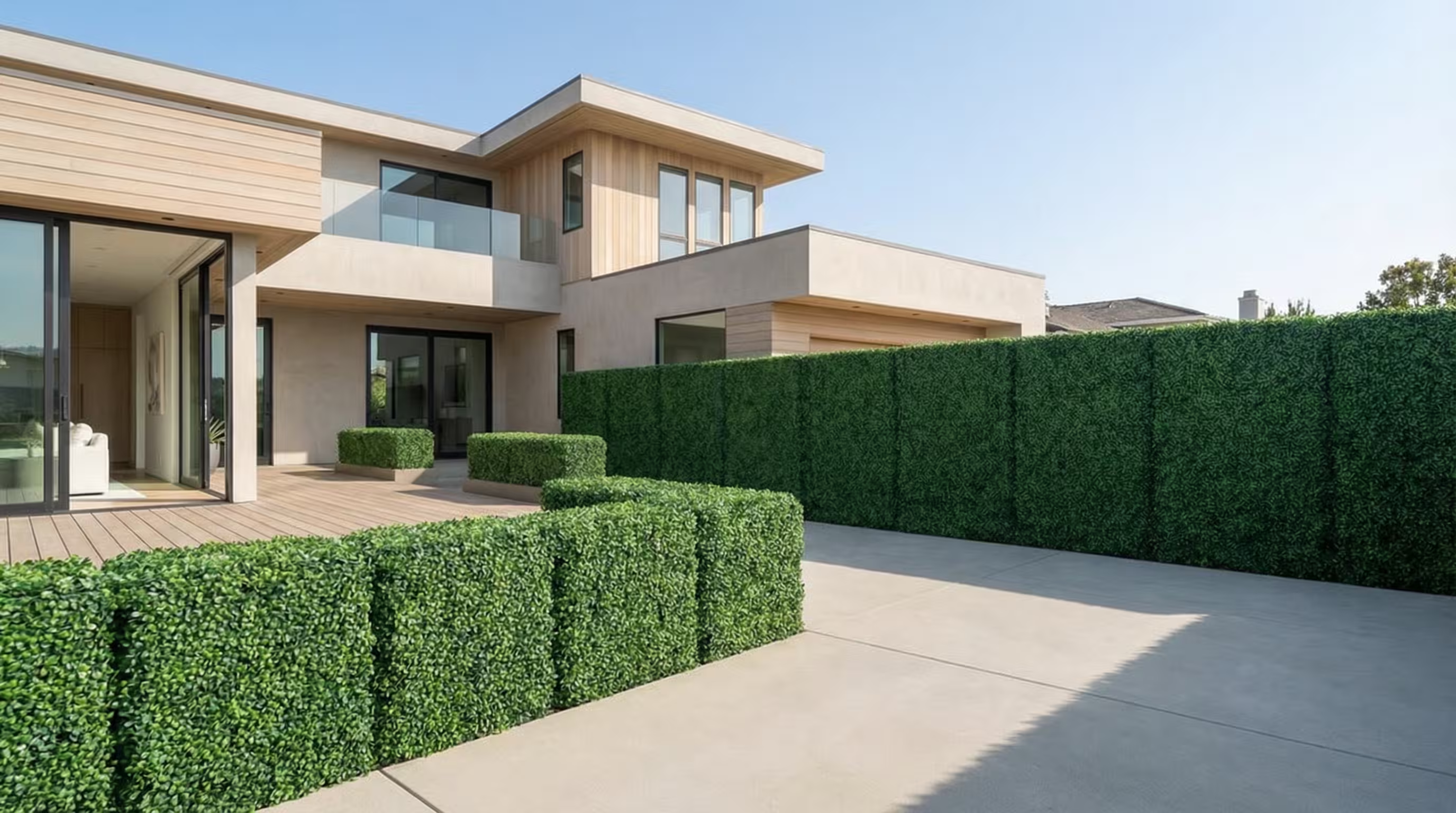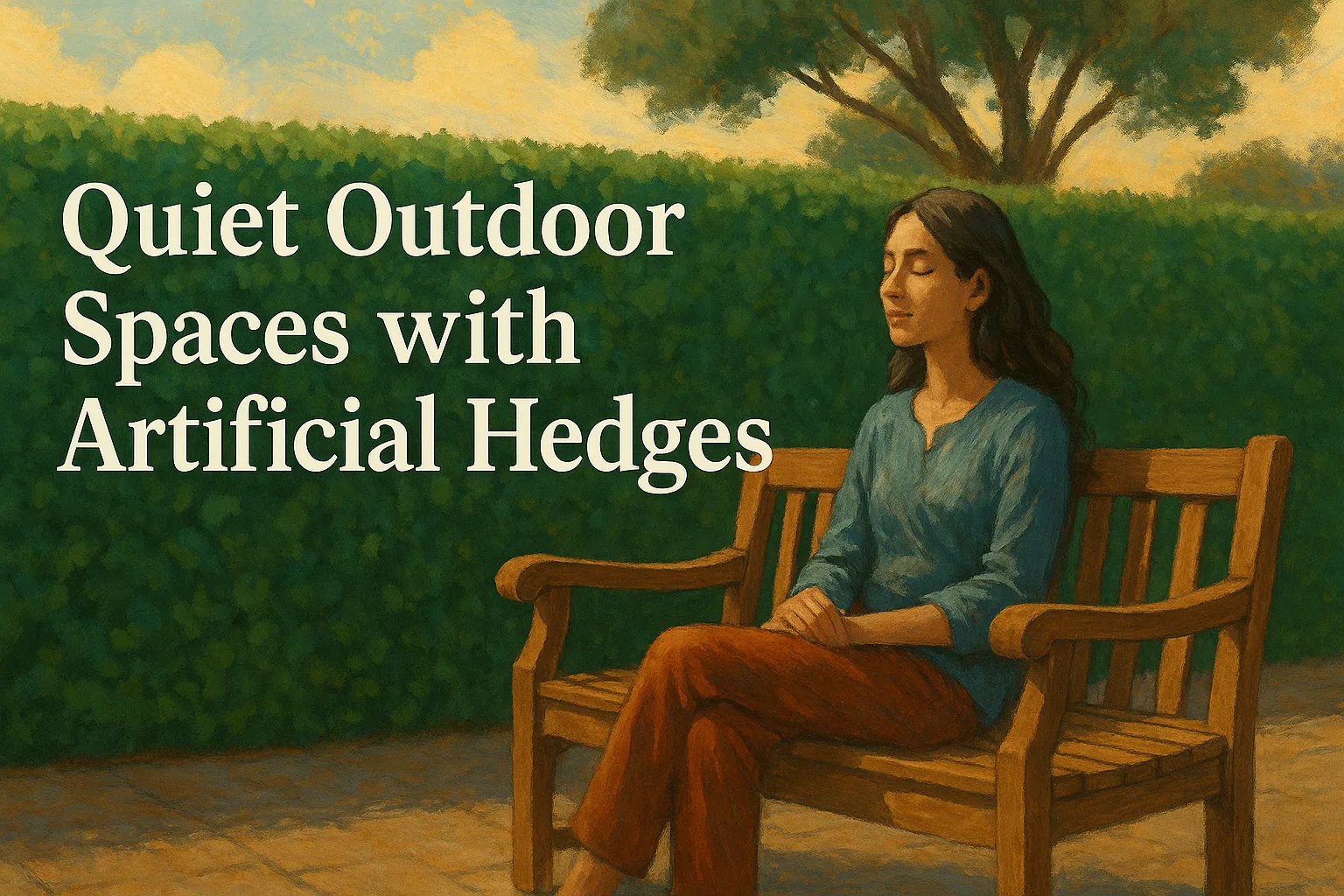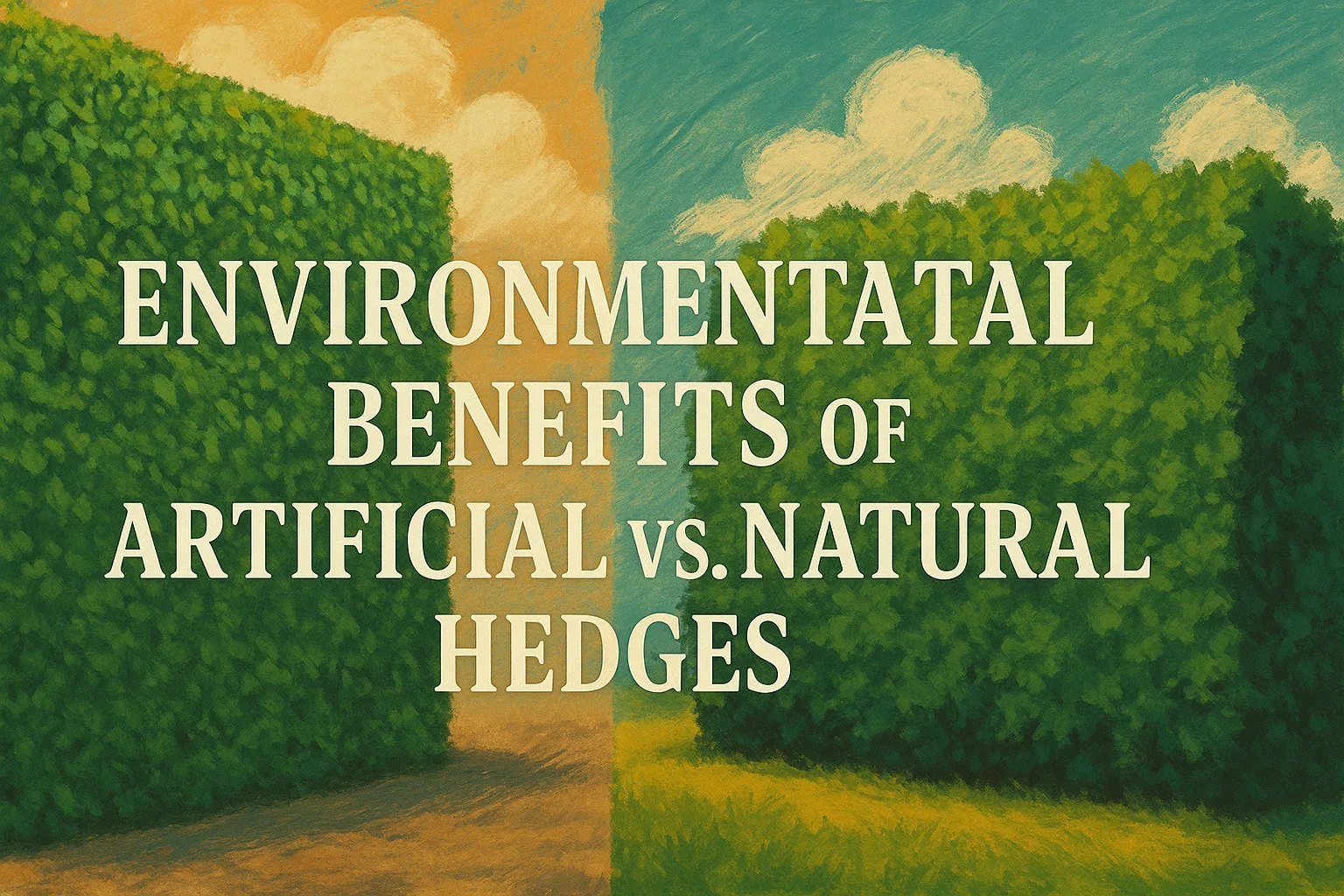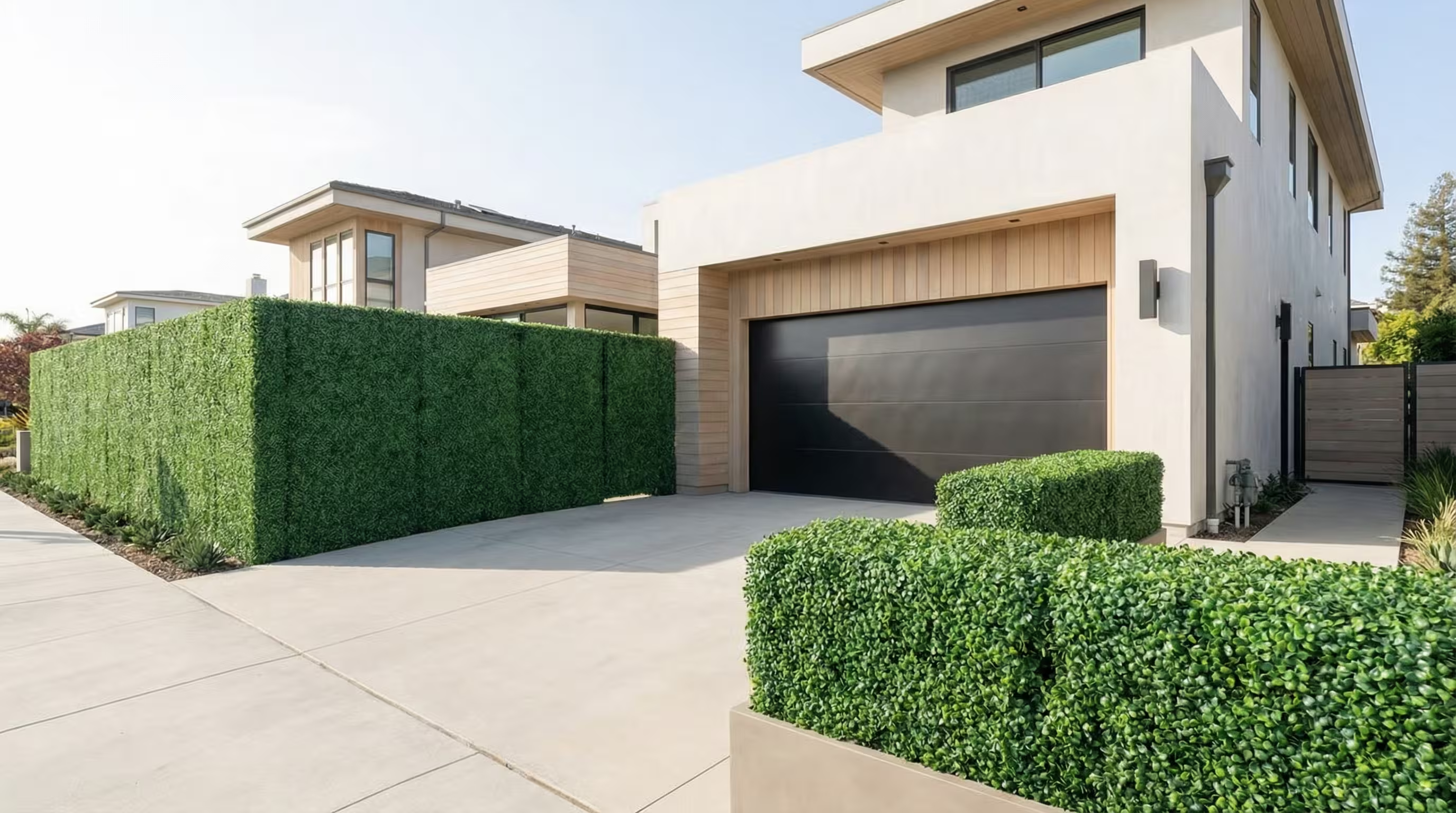
Southern California has a privacy problem. Lots are tight, outdoor living matters, and many properties are exposed from above, beside, or across the street. People want screening, but they do not always want the water, trimming, pest issues, and waiting period that come with live hedges.
That is why artificial privacy hedges have become such a common request across Los Angeles, Orange County, and San Diego. They solve a practical problem quickly and they can be designed to look intentional instead of improvised.
Why the demand is growing
The biggest driver is speed. Buyers do not want to plant a hedge and spend months or years waiting for privacy. They want to use the yard, patio, rooftop, or guest-facing space now.
The second driver is maintenance. Many Southern California properties want greenery without adding another irrigation zone, another trimming cycle, or another set of plant replacements.
Where they are being used
- backyards with close neighboring homes
- pool areas and lounge spaces
- rooftop decks and balconies
- restaurant patios and hospitality screening
- commercial edges where appearance matters every day
Why they fit this market
Southern California buyers usually care about three things at the same time: appearance, privacy, and low upkeep. Artificial hedges sit in that overlap well when the product and installation are handled correctly.
They also give designers and owners more control over the finished result. You are not waiting on growth patterns, filling in dead sections, or hoping the hedge matures evenly. The screen is established on day one.
What separates a strong project from a weak one
Not all hedge installs look premium. The better ones are designed around the site conditions:
- the right height for the actual privacy issue
- clean framing and base conditions
- good panel alignment
- a layout that matches the property instead of fighting it
If the install is under-scaled or thin, it reads as a shortcut. If it is integrated well, it looks like part of the property.
When a hedge is not the best answer
Some sites are better served by fence extensions, privacy walls, or living wall systems. A buyer trying to screen a tall overlook, cover a long blank wall, or create a more architectural statement may need a different approach.
That is why the first question should be “what are we screening?” rather than “which panel do we buy?”
The practical takeaway
Artificial privacy hedges are showing up across Southern California because they line up with how people actually use property here. They create immediate privacy, they keep maintenance lighter, and they work in spaces where live screening is slow or difficult to manage.
If you are deciding between a hedge, extension, or wall system, start with artificial privacy hedges and compare them against fence extensions for sites that need added height above an existing fence.