Pool and Patio Privacy in California: How to Choose the Right Screening Approach
A decision framework for choosing privacy screening based on your site conditions, not a product catalog.
By Alex TarnowskiUpdated March 28, 202611 min read
Choosing privacy screening by site condition
Reference: pool-privacy-decision
Irrigation demand signal
Treated zones may require less routine watering input.
Maintenance effort signal
Many projects reduce trimming frequency, not all upkeep.
Ownership-cost signal
Total cost depends on scope complexity and service model.
At a glance
This guide helps California homeowners choose the right privacy screening for their pool or patio by starting from site conditions -- exposure type, fence condition, pool codes, wind, and sun -- rather than from a product list. It covers natural planting, fence extensions, freestanding walls, artificial hedge panels, and lattice with vine, with honest assessments of where each approach works and where it falls short.
Planning note: any timelines, cost examples, or ownership comparisons in this guide are for early specification and budgeting conversations only. Final scope depends on existing conditions, attachment strategy, access, and field verification.
Table of contents
The privacy problem at a pool or patio is usually specific. It is not the entire backyard that feels exposed -- it is a particular sightline. A neighbor's second-story window looks directly down at the spa. A shared fence is only five feet tall along the one stretch where it matters most. An open side yard turns the patio into a fishbowl every time someone walks past. The fix depends on what kind of exposure you are dealing with, what is already built along the boundary, how quickly you need coverage, and what your local codes and HOA rules allow.
This guide works through those site conditions first, then maps them to the screening approaches that actually solve them. It is not a product catalog. Some situations call for planting. Some call for structural screens. Some call for artificial systems. And some call for a combination that treats different zones differently. The right choice depends on what your site needs, not on what is most convenient for a supplier to sell. If you are standing in your backyard right now trying to figure out what to do about privacy, start with the exposure -- the rest follows from there.
Start with the exposure, not the product
The first question is not "what should I buy?" It is "what am I exposed to?" Most pool and patio privacy problems fall into one of four categories, and each one leads to a different set of solutions. Getting this right at the start saves you from buying something that looks great in a photo but does not actually block the sightline that bothers you.
Horizontal exposure is the most common: your neighbor is at roughly the same elevation, and a taller or denser screen along the fence line would solve it. This is the easiest type to fix because most screening approaches work here -- planting, fence extensions, panels, or freestanding walls. Elevated exposure is harder. When a neighbor can look down from a second story or a hillside, perimeter screening alone may not be enough. You may need taller systems, overhead coverage like a pergola or shade sail, or strategic placement of screening closer to the area you use rather than along the property line. Street exposure brings a different constraint: if the exposed side faces the public right-of-way, front-yard height limits (typically 3 to 4 feet in most California cities, per local municipal zoning codes) may restrict what you can build. And wind exposure, common on coastal and hilltop properties, introduces structural risk. Tall solid panels catch wind and can fail. Open-weave or flexible screening systems handle wind-prone locations better than rigid panels.
Figuring out which type of exposure you are dealing with is the single most useful thing you can do before contacting a contractor or shopping for products. Stand in the space you want to make private. Look up, look around. Where can people actually see in? That is what needs screening -- not necessarily the whole perimeter.
Horizontal exposure
Neighbor is at the same level. A 6-8 ft screen along the fence line typically solves this. Most screening options work here.
Elevated exposure
Neighbor can see down from above. Harder to solve -- requires tall screening, overhead coverage, or strategic placement rather than perimeter coverage.
Street exposure
Visible from the public right-of-way. Front-yard height limits (typically 3-4 ft per local municipal zoning codes) may restrict options.
Wind exposure
Coastal or hilltop site. Tall solid panels catch wind and can fail structurally. Open-weave or flexible systems handle wind better than rigid panels.
What your existing fence can and cannot support
Before you start comparing screening products, take a hard look at what is already there. A fence extension only works if the existing fence is structurally sound enough to carry the added height and wind load. This is one of the most common points where pool privacy projects go sideways -- someone installs a topper on a fence that was not built to support it, and six months later the whole thing is leaning.
Wood fences in good condition can typically support 1 to 2 feet of added height, but the key variables are post depth, post spacing, and whether there is rot at the base. Residential wood fence posts are commonly set 18 to 24 inches deep, which limits how much additional leverage they can handle. If the fence leans when you push on it, that is your answer -- it needs reinforcement or replacement before anything goes on top. Vinyl fences are generally not designed for retrofit extensions. The posts are hollow, the connections are engineered for the original configuration, and adding weight or height can compromise the system. Check with the manufacturer before assuming a vinyl fence can be extended.
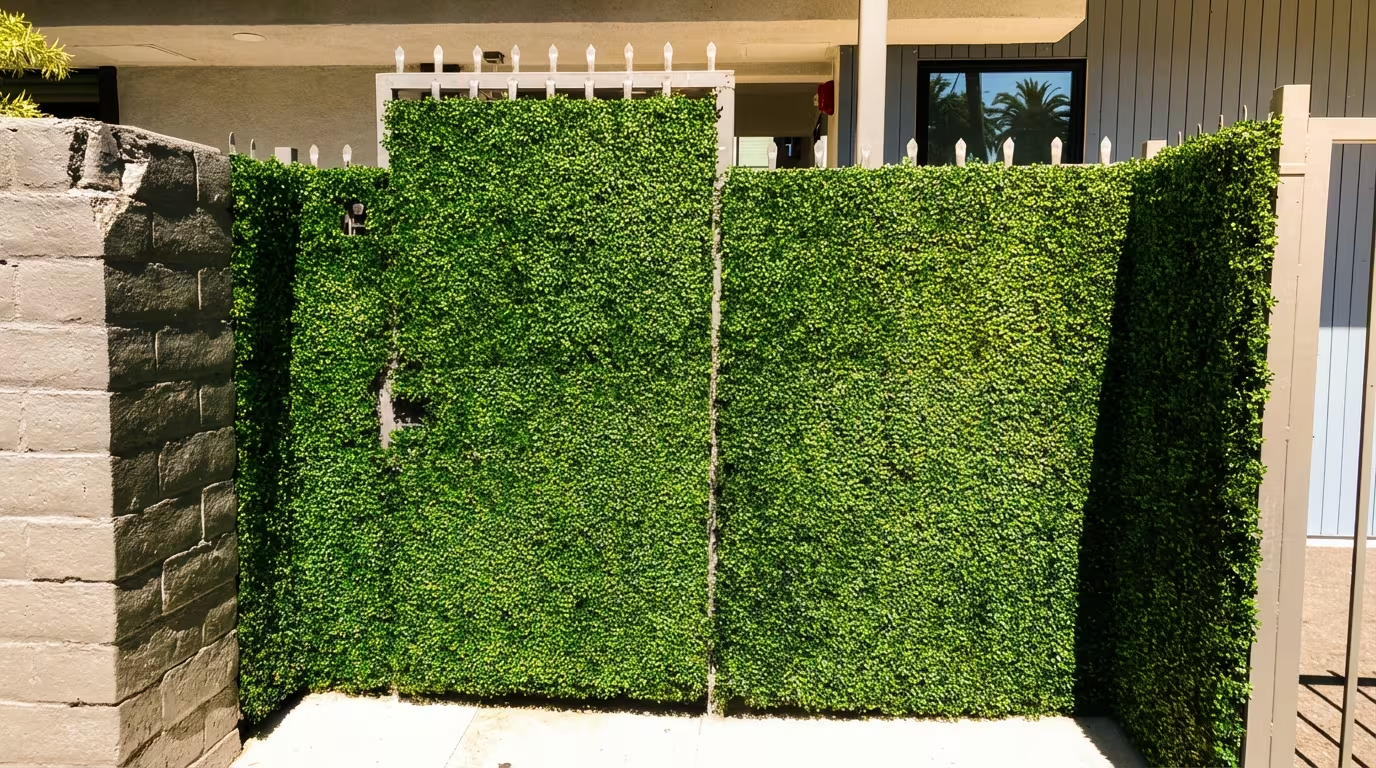
Block and masonry walls are a different story. They are typically strong enough to serve as a base for most screening systems -- extensions, living wall panels, hedge panels, or mounted trellis. The main things to check are cap condition, total height relative to local code limits, and how the screening will be attached without compromising the wall's integrity. Wrought iron and metal fences present an interesting middle ground. They are open by design, which means they provide no privacy on their own, but many configurations can accept hedge panel inserts or privacy screen attachments between the rails. Check the spacing between rails, the structural gauge of the metal, and whether rust has weakened any sections. If there is no existing fence at all, you are looking at either a freestanding screening system or a new fence -- which means considering property line surveys, permit requirements, and footing conditions.
Existing Structure
Extension Potential
What to Check
Wood fence (good condition)
Can typically support 1-2 ft of added height
Post depth, lean, rot at base, fastener condition
Wood fence (aging/leaning)
May need post reinforcement first
A leaning fence will not support additional wind load
Vinyl fence
Limited -- most vinyl is not designed for retrofit
Manufacturer specs, post insert strength
Block/masonry wall
Strong base for most systems
Cap condition, height relative to code limit, attachment method
Wrought iron / metal
Can accept hedge panel inserts
Spacing between rails, structural gauge, rust
No existing fence
Freestanding system or new fence required
Property line survey, permit requirements, footing conditions
Screening approaches mapped to conditions
Now that you know what kind of exposure you are dealing with and what your existing fence can handle, the question becomes which screening approach fits your situation. Each one has a real sweet spot and real limitations. Being honest about those tradeoffs up front saves time, money, and frustration.
Natural planting -- privacy hedges, climbing vines, screening trees -- works well when you have plantable soil along the boundary, access to irrigation, and patience. A well-chosen privacy hedge like Ficus nitida or Podocarpus can create a beautiful, living screen. But the grow-in period is real: expect 2 to 5 years before a newly planted hedge reaches full screening density, depending on species and conditions. During that time, you still have a privacy gap. And once it fills in, you are committed to ongoing trimming, watering, and pest management. If a section dies, the gap is visible until the replacement catches up. Fence extensions are the most efficient path when the existing fence is solid and 1 to 2 feet of added height is enough to block the sightline. They are fast to install, relatively affordable, and keep the project contained to the boundary line. The constraint is structural -- the existing fence has to be able to handle it.
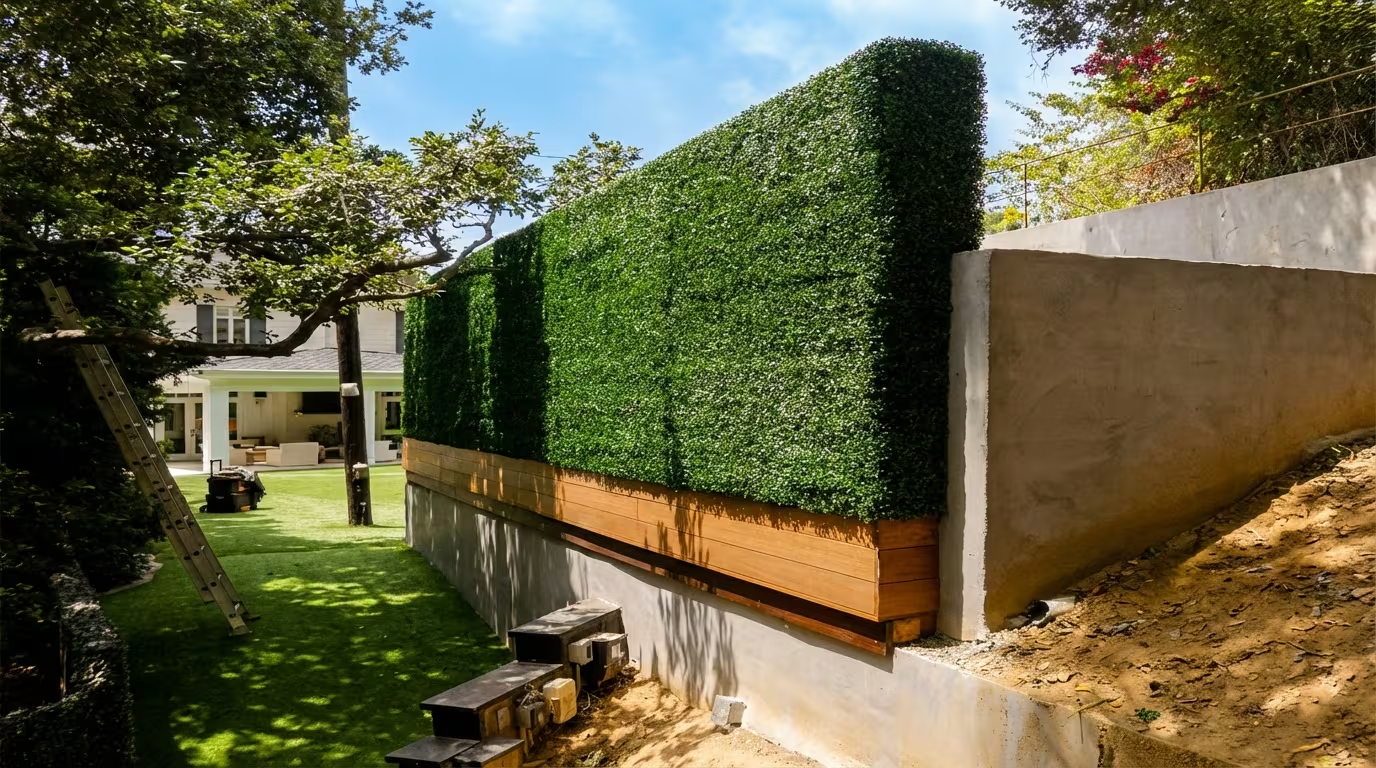
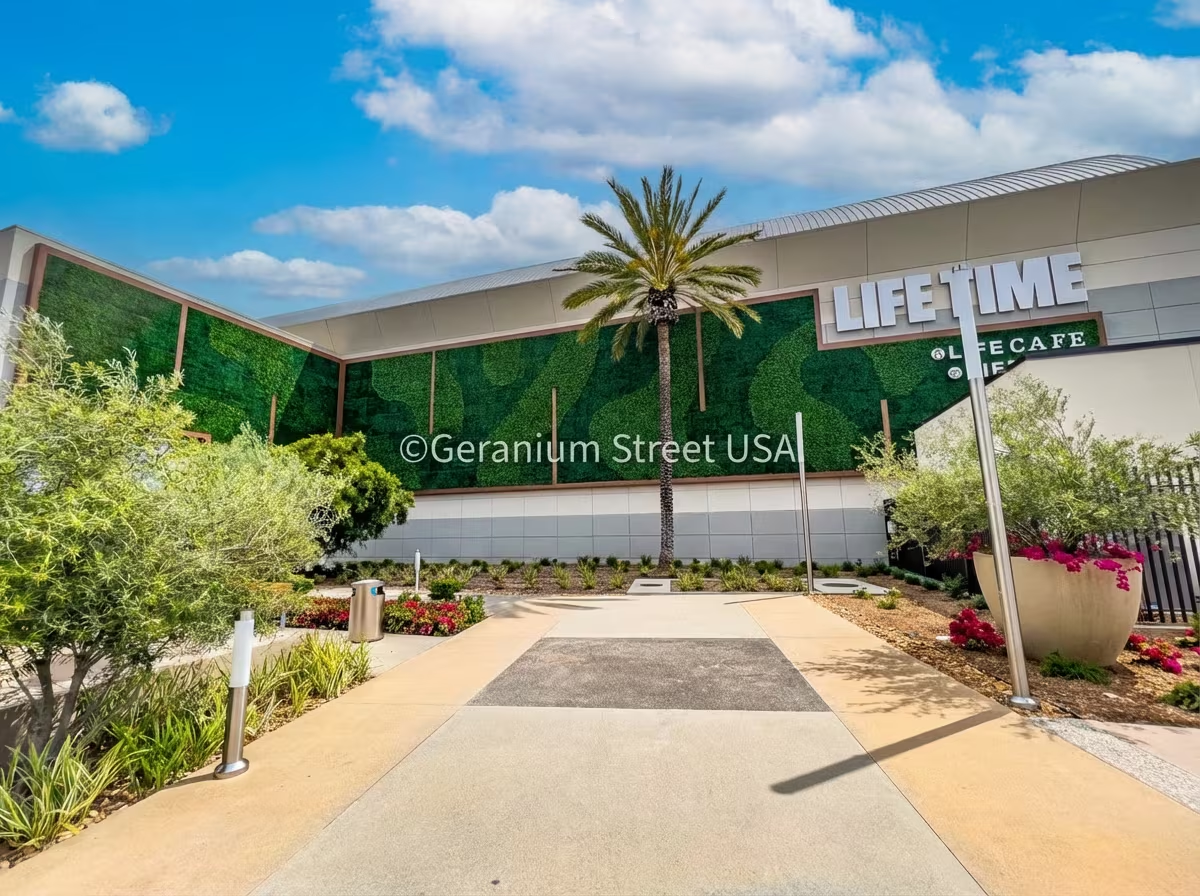
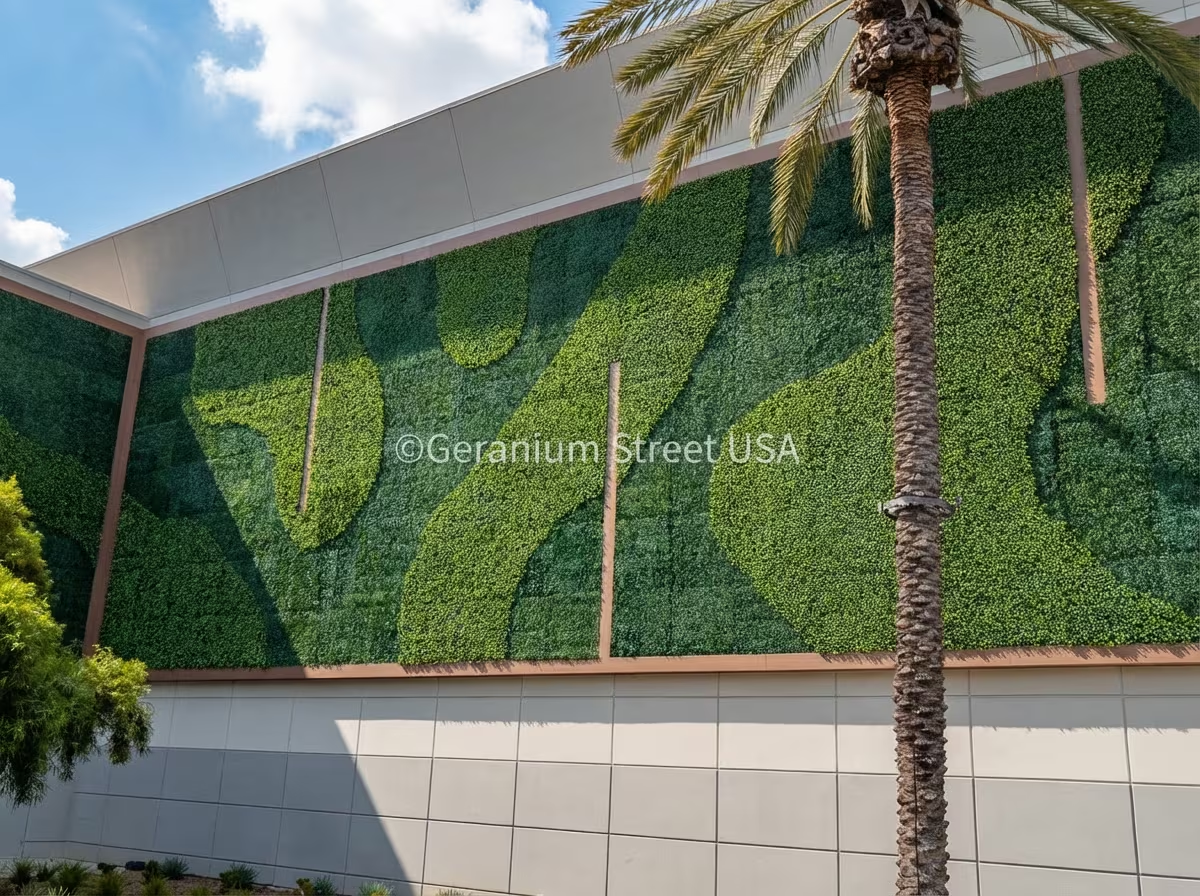
Freestanding privacy walls or screens make sense when there is no usable existing fence, or when the fence cannot be modified. These require footings and often a permit, and the cost is higher, but they give you full control over placement, height, and material. Artificial hedge panels are strongest when you need immediate, full-density coverage without irrigation -- particularly near pool equipment, in chlorine splash zones, or in coastal locations with high UV exposure. They do not need grow-in time, they handle chemical exposure better than most live plants, and they maintain consistent density year-round. The tradeoff is higher upfront cost compared to planting and a finite service life, typically 8 to 15 years depending on UV exposure. And lattice or trellis with vine is worth considering when partial screening is acceptable and you want a softer, more organic look. It takes 1 to 3 growing seasons for a vine to fill in, and you will need to maintain it, but the cost is low and the aesthetic can be charming.
Approach
Best When
Limitations
Natural planting
Soil, irrigation, and time are available; living material is part of the design intent
2-5 year grow-in; ongoing trimming, watering, and pest management
Fence extension
Existing fence is solid and 1-2 ft of added height solves the exposure
Depends on fence condition; may trigger permit requirements above 6 ft
Freestanding privacy wall
No usable existing fence; need structural screening from scratch
Immediate full coverage needed; no irrigation near pool equipment; coastal UV exposure
Higher upfront cost than natural; panels have a service life (8-15 years)
Lattice/trellis with vine
Partial screening is acceptable; softer aesthetic desired
Not full privacy; vine maintenance required; growth takes 1-3 seasons
Pool-area-specific considerations
Pool areas introduce constraints that general backyard privacy screening does not have to deal with. If you are screening around a pool specifically, there are four things worth understanding before you choose an approach.
First, pool barrier codes. The California Building Code (Section 3109) requires barriers (fences, walls, or approved safety covers) around residential swimming pools and spas. These barrier requirements -- covering minimum heights, gate specifications, and gap limitations -- are separate from your city's general fence height rules. The U.S. Consumer Product Safety Commission (CPSC) publishes detailed pool barrier guidelines at cpsc.gov that are worth reviewing. The critical point is this: a fence that meets your city's height code may not meet pool barrier requirements, and a barrier that satisfies pool safety rules may not satisfy fence code. You need to check both with your local building department before planning.
Second, the splash zone. Materials within roughly 4 to 6 feet of the pool edge get regular exposure to chlorinated or salt water -- through direct splash, mist from water features, and spray from pool cleaning. Many live plants struggle in this zone. Chlorine burn on leaves is a real and recurring problem, and replacing damaged plants next to a pool is both annoying and expensive. Artificial panels, treated metals, and composite materials handle chemical exposure significantly better. If you are going to plant, keep living material outside the splash radius and use chemical-tolerant species.
Third, pool equipment screening. The equipment pad -- pump, heater, filter, and sometimes a salt cell -- is usually visible and unattractive. Low hedge panels, privacy screens, or living wall sections are commonly used to screen equipment from the pool deck and patio area. This is also a practical zone for artificial systems because the equipment generates heat and the area typically has no irrigation.
Fourth, drainage. Planters and soil beds placed near pools can create drainage problems if water flows toward the pool or undermines the deck. Non-soil-based screening systems avoid this entirely. If you do plant near a pool, make sure the grading directs water away from the pool structure.
“Pool barrier requirements and fence height codes are two different sets of rules. A fence that meets height code may not meet pool barrier requirements, and vice versa. Check both with your local building department before planning.”
— Califauxscapes project planning guidance
CPSC
Pool safety guidelines
U.S. Consumer Product Safety Commission publishes pool barrier guidelines -- check cpsc.gov
Separate
Pool barrier vs fence code
Pool barrier requirements are separate from fence height limits -- verify both
4-6 ft
Splash zone radius
Materials within this range of the pool edge get regular chemical exposure
How to evaluate what you actually need
Before you call a contractor, spend 20 minutes doing your own site evaluation. This is not complicated, but it is surprisingly effective at narrowing down your options and making sure you do not overbuild or underbuild. You can do most of it with a tape measure and your eyes.
Start by standing in the space you want to make private -- the pool deck, the patio, the spa area, wherever you actually spend time. Look up, look around, and identify exactly where the exposure comes from. Is it a neighbor's window? A gap in the fence? A section where the fence is shorter? You may find that you only need to screen 20 feet of a 60-foot fence line. Screening just the exposure saves money and avoids over-engineering the perimeter. Next, measure the existing fence or wall height and figure out how much additional height would actually block the sightline. Stand where your neighbor would be looking from and work backward. Sometimes 12 inches of added height is enough. Sometimes you need 3 feet. That measurement determines whether an extension works or whether you need a different system entirely.
Then check the fence condition. Push on it. Walk the line and look at the posts at ground level. Rot, lean, loose fasteners, and soil erosion around posts all tell you whether the fence can support more weight and height. If it cannot, you are either reinforcing the fence first or going with a freestanding system. Note the sun direction. A west-facing patio gets intense afternoon sun, especially in Southern California. Materials on that side need to be UV-rated or they will degrade faster than the rest of the installation. South-facing exposures get consistent sun year-round. Check wind patterns too -- if you are coastal, on a ridge, or in a canyon that funnels wind, tall solid panels may not be the right choice. Finally, verify your local codes and HOA rules before contacting anyone. Call your city's planning counter -- most have a duty planner who can answer fence and barrier questions in a few minutes. If you are in an HOA, pull up the CC&Rs and architectural guidelines. Ten minutes of checking now saves weeks of correction later.
Identify the exposure source
Stand in your space. Where can people see in from? That is what needs screening -- not necessarily the whole perimeter.
Measure the height gap
How tall is the existing fence? How much more height would block the sightline? This determines whether an extension works or a new system is needed.
Assess fence condition
Push on it. Does it flex or lean? Check posts at ground level for rot. A weak fence cannot support extensions.
Note sun direction
West and south-facing exposures get the most UV. Materials here need to be UV-rated or they will degrade faster.
Check wind exposure
Tall solid panels in wind-prone locations can fail. Ask about wind load ratings if you are coastal or elevated.
Verify codes and HOA rules first
A quick call to the planning counter before you start saves weeks of correction after. Check your CC&Rs too.
Last reviewed March 2026 · Content is reviewed periodically and updated when new information is available.
FAQ
What is the fastest way to add privacy around a pool?
Artificial hedge panels or freestanding privacy screens provide immediate coverage without a grow-in period. Fence extensions are also fast if the existing fence is in good condition and 1-2 feet of added height solves the sightline. Natural planting provides a living screen but typically requires 2-5 years to reach full density.
Do I need a permit to add privacy screening around my pool?
Possibly. Pool barrier modifications often require a permit under the California Building Code. Fence extensions above certain heights (which vary by city) may also require one. The threshold differs by jurisdiction, so check with your local building department before starting work.
Can I plant hedges right next to a pool?
You can, but plants near pools face chlorine or salt water exposure, root intrusion into pool plumbing, and leaf debris in the water. Many pool owners choose non-plant screening within the immediate splash zone (roughly 4-6 feet from the pool edge) and use live planting farther out where chemical exposure is less of an issue.
How do I know if my fence can support an extension?
Check for lean, rot at the base, and post stability. Most wood fences in good condition can support 1-2 feet of added height if the posts are sound and set at adequate depth (typically 18-24 inches for residential fences). A contractor or fence company can evaluate structural capacity in a site visit, which is worth doing before committing to an extension approach.
Need project-specific guidance before design or procurement moves forward?
Share the site conditions, privacy goals, or wall type you are evaluating and we can help you narrow the right system for the project.