Who this page is for
Owners, operators, asset managers, architects, and builders working on resident amenities and boundaries.
Amenity, perimeter, and resident-facing privacy solutions for apartments and condo communities.
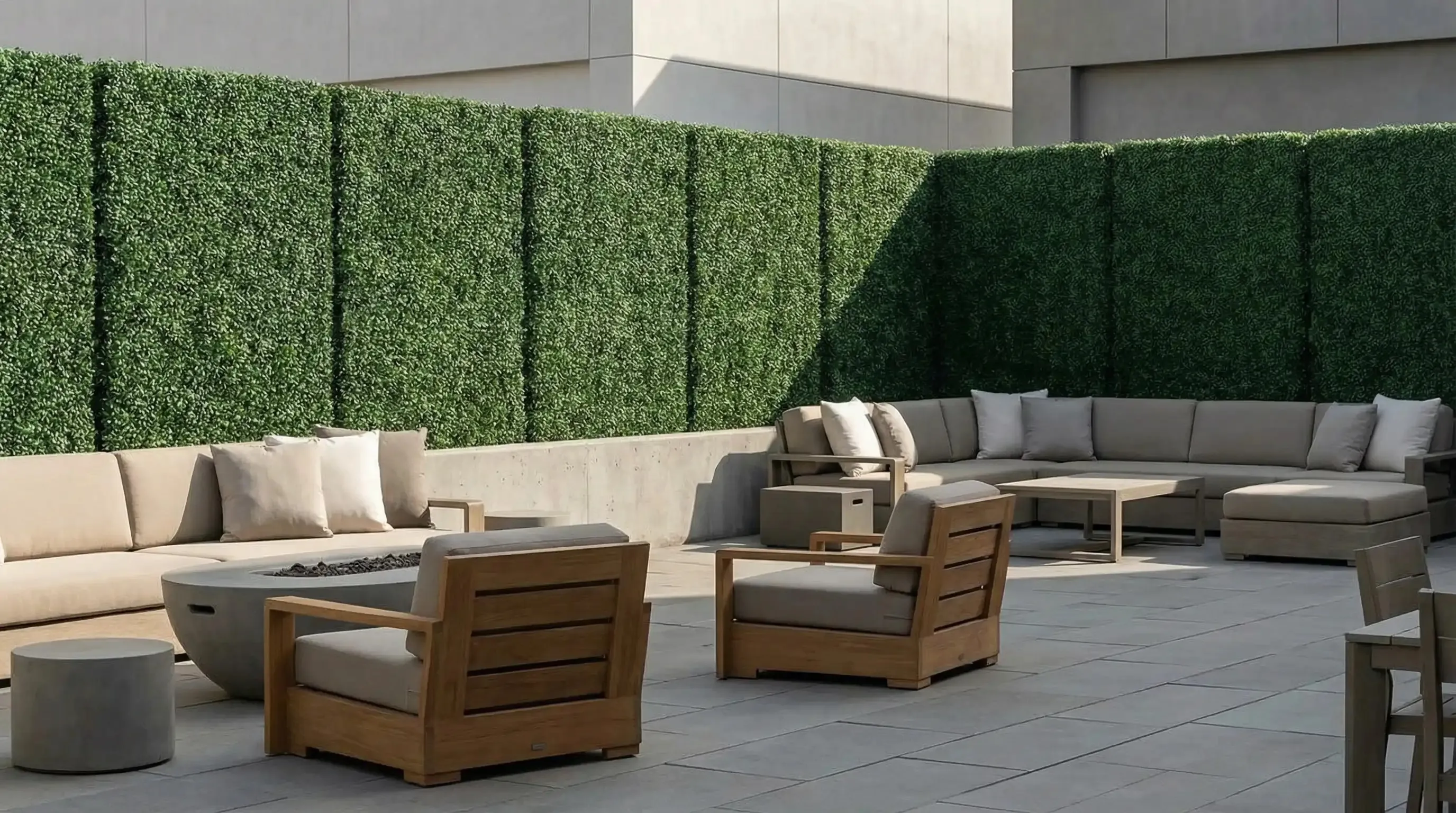
This page is built for multi-family owners, operators, designers, and builders reviewing artificial landscaping by resident experience, visibility control, and maintenance planning.
Who this page is for
Owners, operators, asset managers, architects, and builders working on resident amenities and boundaries.
Where it tends to fit
Best when the property needs amenity improvement or selective privacy that still works in a shared-use environment.
What usually weakens scope
Weak scopes ignore resident circulation, service access, and how the system will be maintained after turnover.
Multi-Family Housing planning view
Review how property conditions, operational requirements, and finish expectations shape the recommendation.
For multi-family operators, artificial landscaping can be an efficient way to improve amenity aesthetics and selective privacy while keeping maintenance expectations more predictable in upgraded zones.
Multi-family sites often need privacy and amenity upgrades that perform across shared-use environments. Scope planning typically includes resident visibility, access corridors, maintenance serviceability, leasing optics, and consistent visual outcomes across multiple buildings.
Planning approach
Recommendations are built around site conditions, operational reality, and the level of finish the property needs to present.
Specification mindset
Product fit is evaluated by substrate, visibility, upkeep load, and installation sequencing rather than broad category claims.
Shared spaces can be upgraded with greenery features that support resident comfort and place identity.
Boundaries and transitional zones can be tuned for privacy without overbuilding all edges.
Detail standards can often be carried across multiple buildings or properties for a more consistent operating and leasing presentation.
Routine upkeep can be simplified in target zones with coordinated cleaning protocols.
Industry detail
Multifamily properties evaluate landscaping differently because the install has to work for more than one audience at once. Residents care about comfort, privacy, and whether the amenity space feels finished. Ownership and operations teams care about durability, maintenance predictability, and whether the property can keep the same visual standard across turnovers and active use. That tension is what makes multifamily planning different from a single-user residential or hospitality scope.
Artificial systems can work well in multifamily settings when the property wants stronger amenity aesthetics, cleaner resident-facing privacy edges, or visual improvement in serviceable zones without adding a more fragile live maintenance program. The strongest scopes usually focus on the shared spaces and boundary conditions that shape daily resident experience the most.
Industry detail
A multifamily property can improve amenity perception quickly with a well-placed living wall or privacy edge, but only if the install remains easy to clean, inspect, and operate once the space is active. This is why serviceability should be part of the scope from the beginning. Circulation, cleaning routes, and visibility from units all matter just as much as the initial look. A system that photographs well but complicates maintenance will usually underperform in the long run.
Project references help a lot here because they show how other properties solved the same tradeoffs. Multifamily teams often want proof that the system can hold up in real shared-use environments, not just in staged product photography. Linking to case studies, comparison guides, and product pages makes it much easier for operators, designers, and ownership groups to evaluate the idea realistically.
Related multifamily-style project
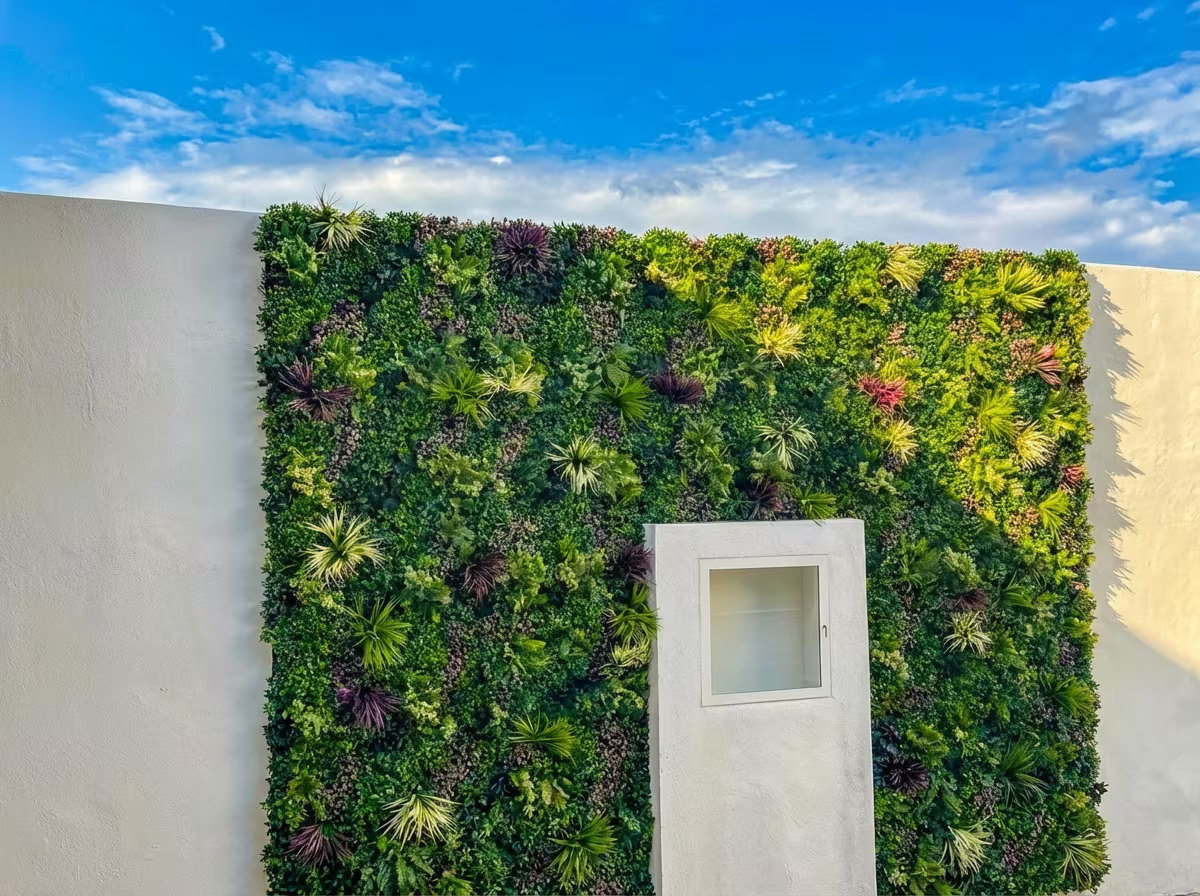
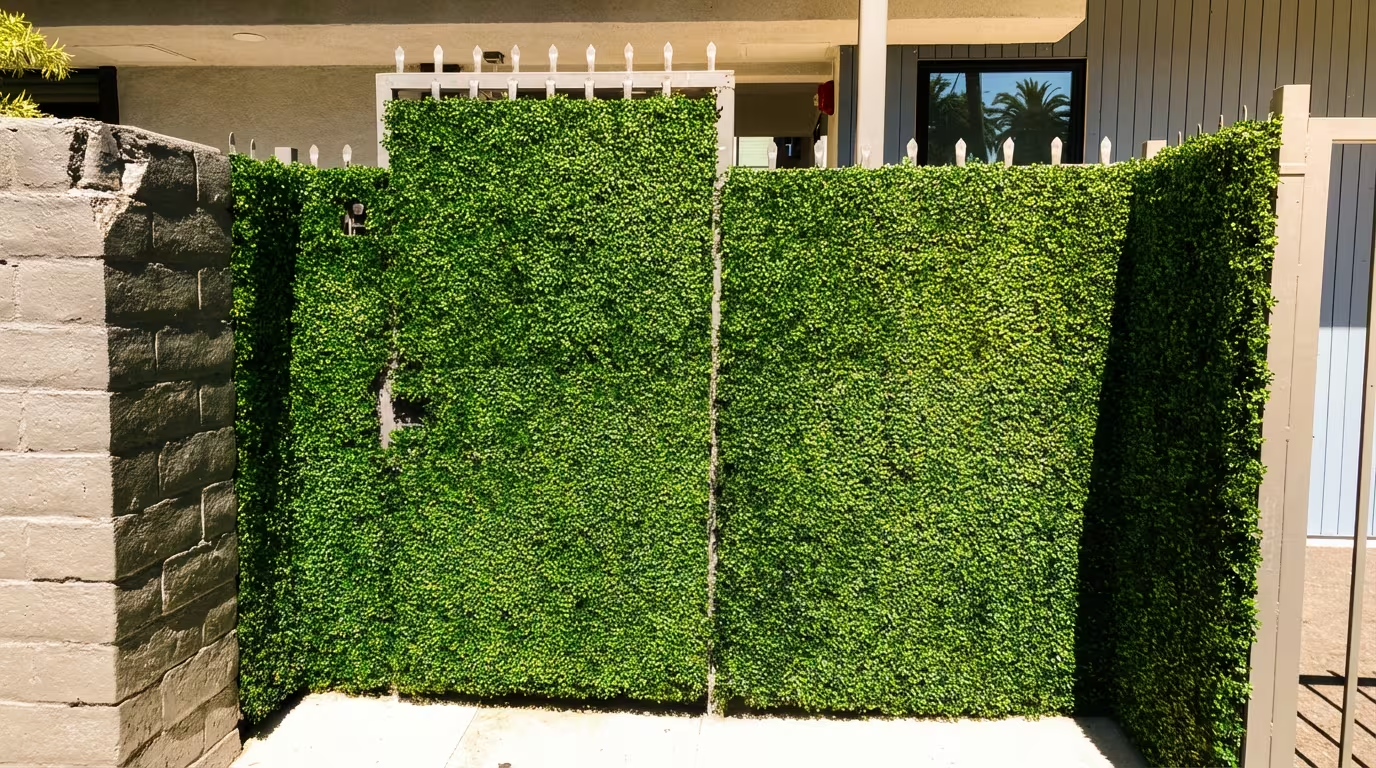
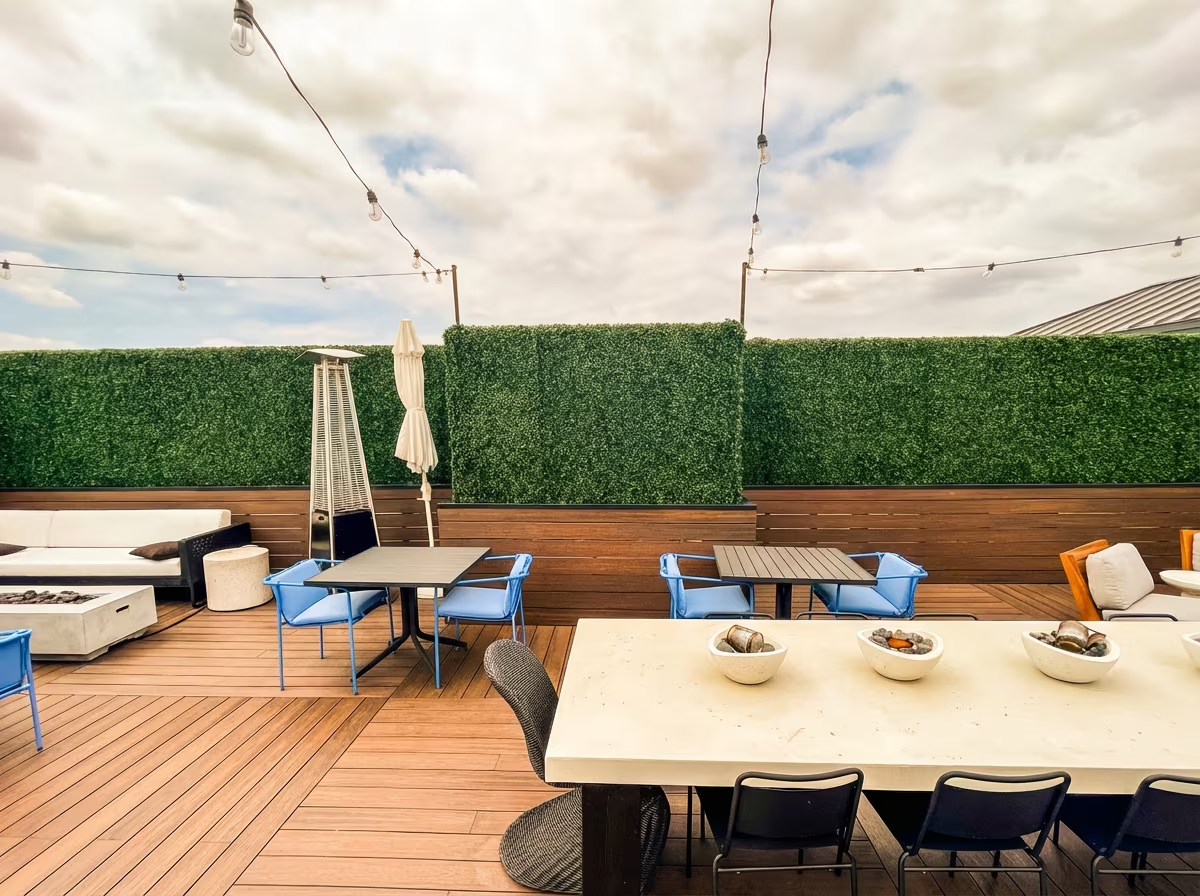
This project is relevant because it shows how Califauxscapes approaches resident-facing visibility, amenity improvement, and serviceable detailing in a shared-use environment.
CalifauxScapes installed a 200 sq ft UV-resistant, irrigation-free Vallum FRX artificial living wall in a Los Angeles multi-family courtyard. One-day install, low maintenance, immediate visual upgrade.
Open case studyDecision framework
Multifamily properties usually get the clearest answer when they decide whether the main need is resident privacy, amenity impact, or cleaner perimeter conditions. Those goals can overlap, but they rarely need the same treatment everywhere.
Best when the property needs softer screening around amenities, patios, or shared-use boundaries.
If the space needs tighter separation or a more controlled geometry, privacy walls may be stronger.
Best when the property wants a stronger focal wall or leasing-friendly visual upgrade.
If the main problem is screening between adjacent uses, privacy systems usually solve more directly.
Best when the multifamily scope needs compact screening with a more architectural finish.
If the property wants a softer planted look, hedges usually feel more natural.
Coverage
5-year limited UV warranty on qualifying products and 1-year installation workmanship warranty.
Coverage is limited and subject to product eligibility, installation scope, and written warranty terms.
5-year limited UV
1-year installation
Written terms apply
commercial
Los Angeles
commercial
Los Angeles
commercial
Los Angeles
They often are, especially when installation is phased and coordinated around resident access patterns.
Yes. Many multi-family projects sequence amenity enhancements and boundary screening in separate phases.
Design usually accounts for touch points, maintenance access, and cleaning protocols in higher-use zones.
In many portfolios, a shared detailing standard can be adapted across sites with local adjustments.
Bring the site condition, the property type, and the main design objective. We can help clarify the right system, the likely installation path, and the next step for scope review.
Request project reviewIndustry
Privacy, screening, and finish-control systems for high-end private properties.
Industry
Guest-facing greenery systems for hotels, venues, restaurants, and event properties.
Industry
Screening, frontage, and amenity upgrades for active commercial properties.
Industry
Branded greenery systems for employee, client, and campus-facing environments.