Who this page is for
Commercial owners, property managers, tenant-facing teams, architects, and general contractors.
Screening, frontage, and amenity upgrades for active commercial properties.
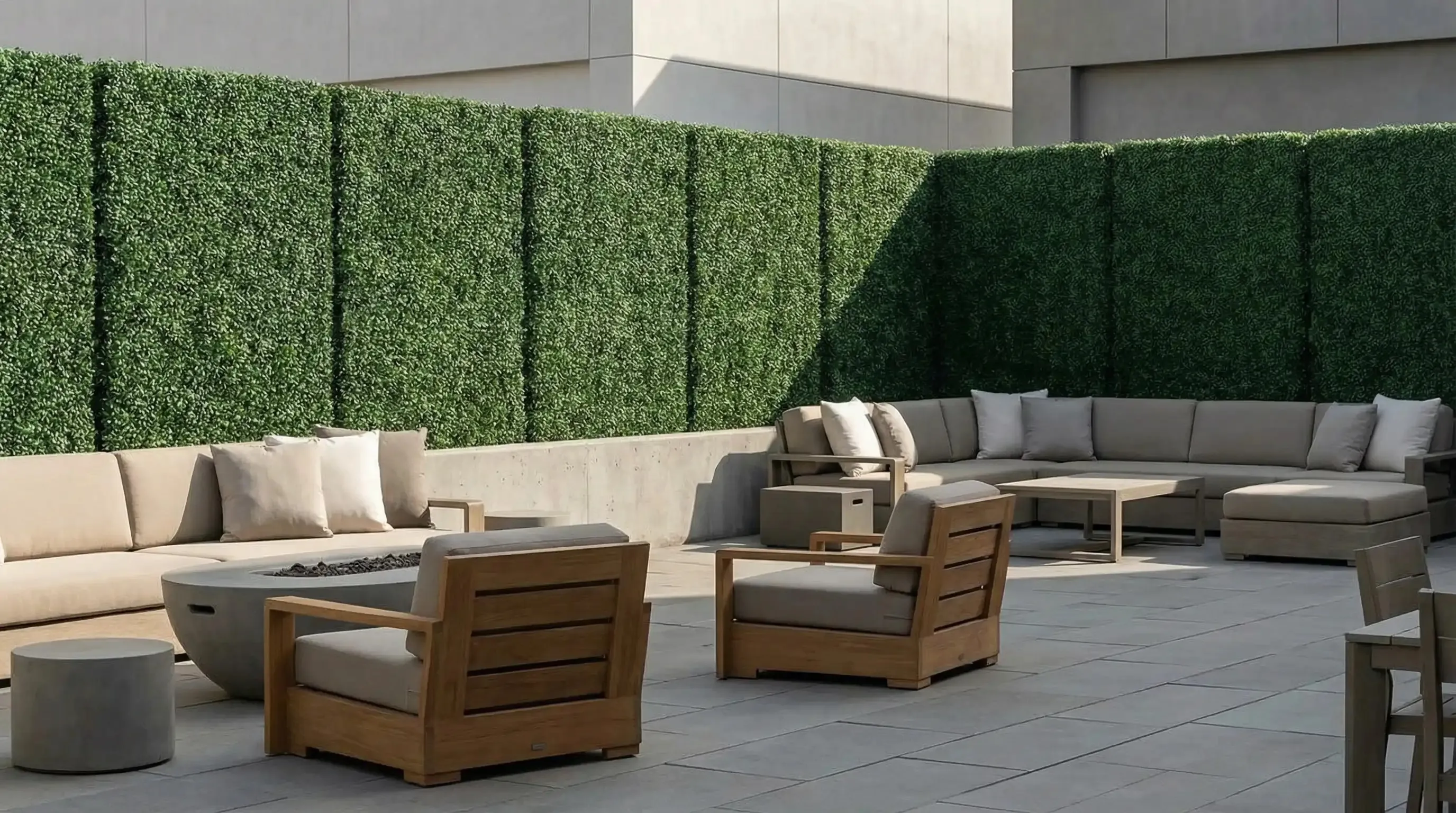
This page helps commercial teams compare artificial landscaping options by visual impact, durability strategy, and operational fit.
Who this page is for
Commercial owners, property managers, tenant-facing teams, architects, and general contractors.
Where it tends to fit
Best when the project needs a stronger frontage, visual screening, or a lower-maintenance green finish in public-facing areas.
What usually weakens scope
Weak scopes usually blur together privacy, branding, and visual upgrade goals without deciding which one matters most.
Commercial & Retail planning view
Review how property conditions, operational requirements, and finish expectations shape the recommendation.
For commercial properties, artificial landscaping can improve visual consistency across public-facing zones while reducing recurring maintenance labor in selected areas.
Commercial projects usually balance appearance, durability, and operational practicality. Typical planning includes frontage impact, tenant visibility, circulation paths, maintenance access, and how the finish will hold across high-traffic public zones.
Planning approach
Recommendations are built around site conditions, operational reality, and the level of finish the property needs to present.
Specification mindset
Product fit is evaluated by substrate, visibility, upkeep load, and installation sequencing rather than broad category claims.
Entries, service edges, and public-facing frontages can be upgraded with greenery that still feels controlled and intentional.
Phased installs can support occupied environments where downtime is limited.
Multiple areas can be brought into a cohesive visual language with repeatable detailing.
Many scopes lower ongoing trimming and irrigation needs compared with traditional plant programs.
Industry detail
For commercial and retail properties, artificial landscaping is often attractive because it creates a more controlled finished environment in places where live programs are inconsistent, labor-intensive, or prone to looking tired between service cycles. That does not mean every site should use it. It means the strongest scopes are the ones where the property has a clear operating reason for wanting a more stable visual outcome in specific public-facing zones.
Those zones are usually predictable: arrival areas, tenant-facing amenities, patio perimeters, service edges that need screening, and blank walls that pull down the overall quality of the frontage. Once the property decides which condition matters most, the recommendation can be built around operations, maintenance access, and brand fit instead of broad category claims.
Industry detail
A lot of weak commercial briefs ask for “more greenery” without deciding whether the real problem is privacy, branding, poor frontage quality, or maintenance drag. That lack of specificity usually leads to overbuilt or underperforming recommendations. The better approach is to define the property condition first, then choose the system that solves it with the least operational friction.
This is why project callouts, product links, and guides matter. They help owners, operators, and designers compare apples to apples. A privacy wall is not just a greener fence. A living wall is not just decoration. Each system carries a different maintenance profile, visibility impact, and installation logic. The more clearly the property can compare those tradeoffs, the better the final scope tends to perform.
Related commercial case study
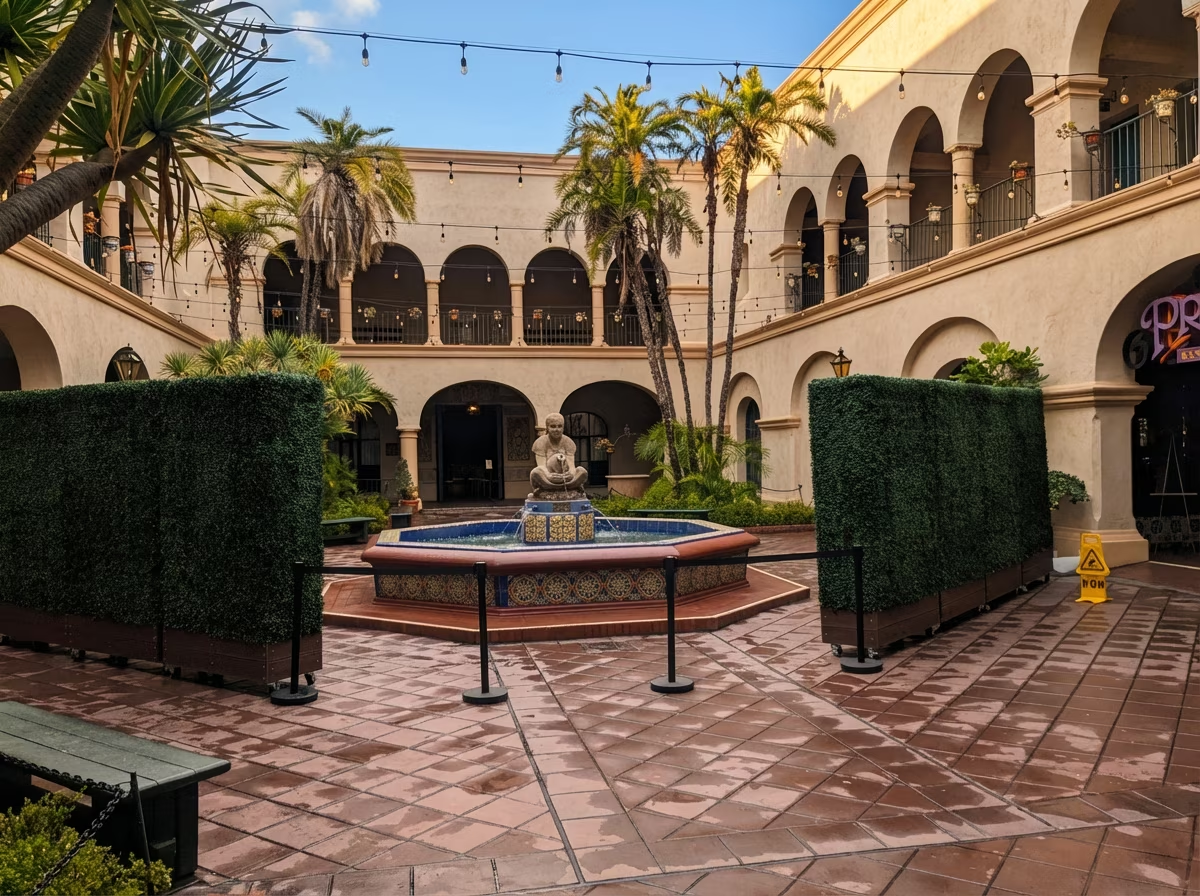
This case study shows how Califauxscapes handles occupied commercial environments where appearance, tenant experience, and maintenance practicality all affect the recommendation.
CalifauxScapes built custom mobile artificial hedges on locking casters for The Prado restaurant in San Diego. Replaced costly rental hedges, gave staff control over the patio layout, and drastically reduced ongoing fees.
Open case studyDecision framework
Commercial properties usually make the best choice when they decide whether the main job is screening, frontage improvement, or vertical visual impact. That first choice typically narrows the system quickly.
Best when the site needs controlled separation, stronger geometry, or tighter layout control.
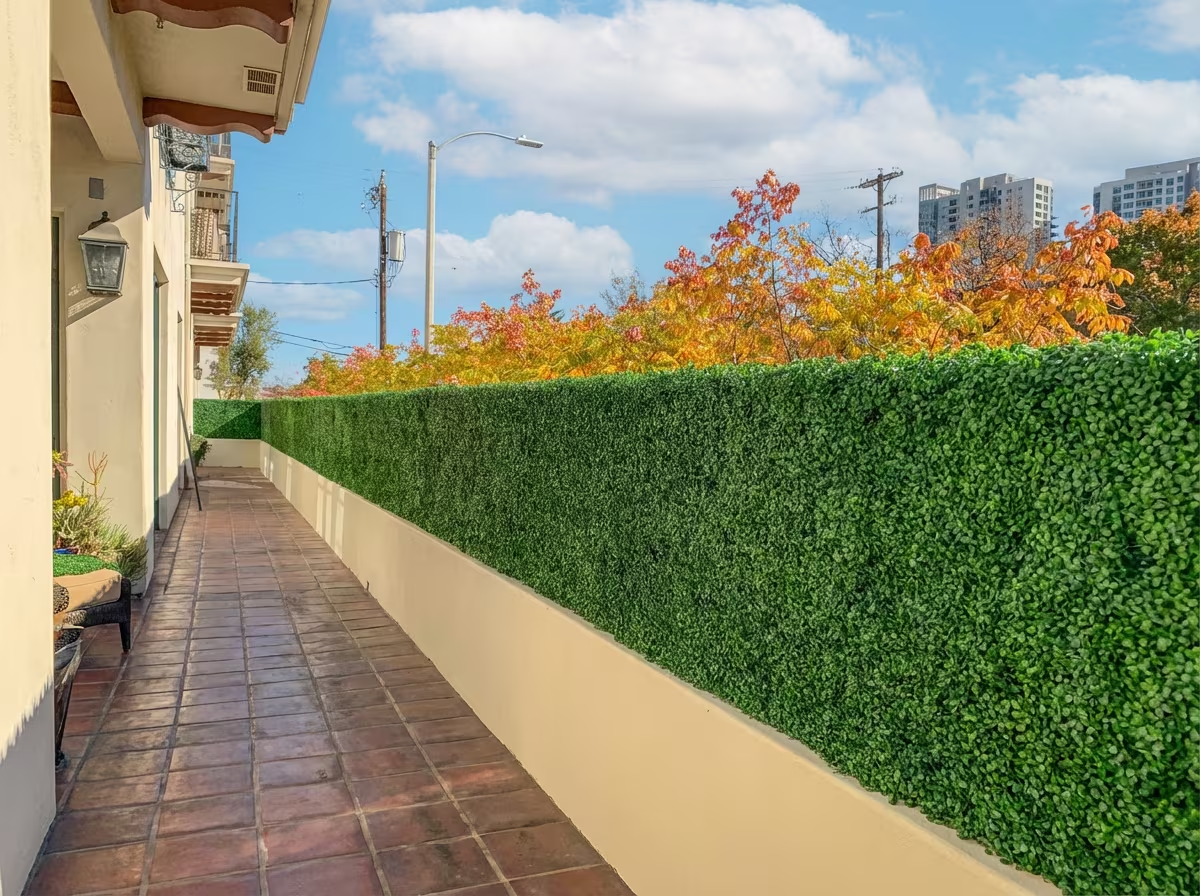
If the property wants a softer landscape expression, privacy hedges usually read more naturally.
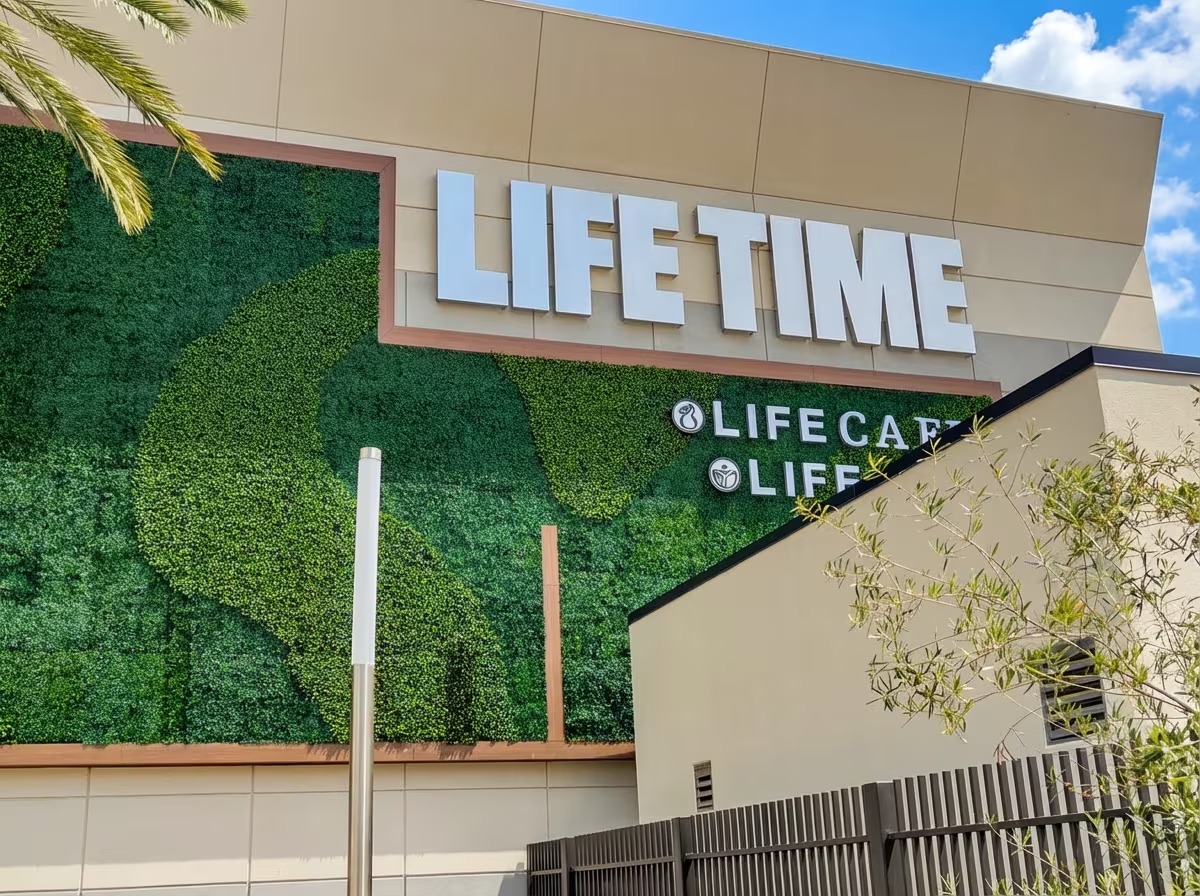
Best when the site needs a branded feature wall, arrival moment, or stronger vertical finish.
If line-of-sight control is the main issue, living walls may not solve enough on their own.
Best when patios, tenant spaces, or frontage zones need greenery plus privacy without a harsher wall condition.
If traffic durability or tighter control matters more, walls may be stronger.
Coverage
5-year limited UV warranty on qualifying products and 1-year installation workmanship warranty.
Coverage is limited and subject to product eligibility, installation scope, and written warranty terms.
5-year limited UV
1-year installation
Written terms apply
commercial
Balboa
commercial
artificial green wall
residential
Los Angeles
They often can, with detailing and material selection matched to expected traffic and cleaning patterns.
Durability planning usually includes substrate review, hardware strategy, and maintenance access considerations.
Approval requirements vary by property. Management or landlord review is common on multi-tenant assets.
Yes. Many commercial upgrades are staged by zone to fit timeline and budget constraints.
Bring the site condition, the property type, and the main design objective. We can help clarify the right system, the likely installation path, and the next step for scope review.
Request project reviewIndustry
Privacy, screening, and finish-control systems for high-end private properties.
Industry
Guest-facing greenery systems for hotels, venues, restaurants, and event properties.
Industry
Amenity, perimeter, and resident-facing privacy solutions for apartments and condo communities.
Industry
Branded greenery systems for employee, client, and campus-facing environments.