Who this page is for
Facilities teams, workplace leads, ownership groups, architects, and builders planning entries, courtyards, and campus-facing areas.
Branded greenery systems for employee, client, and campus-facing environments.
This page supports facilities teams, workplace stakeholders, designers, and builders evaluating artificial landscaping for brand expression, workplace experience, and operational consistency.
Who this page is for
Facilities teams, workplace leads, ownership groups, architects, and builders planning entries, courtyards, and campus-facing areas.
Where it tends to fit
Best when the project needs a more controlled green effect that aligns with contemporary architecture and campus operations.
What usually weakens scope
Weak scopes treat greenery as decor only and skip the harder questions around upkeep, security, and access.
Corporate Campuses planning view
Review how property conditions, operational requirements, and finish expectations shape the recommendation.
Artificial landscaping can help corporate teams deliver a more controlled biophilic effect in selected areas while keeping maintenance expectations more predictable.
Corporate environments frequently seek a premium design language with a practical upkeep strategy. Planning often focuses on brand alignment, lobby-to-outdoor continuity, entry sequence quality, and maintaining a professional standard across multiple use zones.
Planning approach
Recommendations are built around site conditions, operational reality, and the level of finish the property needs to present.
Specification mindset
Product fit is evaluated by substrate, visibility, upkeep load, and installation sequencing rather than broad category claims.
Material palettes and feature placements can be tuned to corporate architecture and identity systems.
Workplace zones can gain visual warmth and spatial definition through vertical greenery and screening.
Install sequencing can coordinate with facilities, design, security, and operations teams.
Many sites reduce irrigation and frequent plant-care cycles in specific exterior or interior-adjacent zones.
Industry detail
Corporate and workplace properties often evaluate artificial landscaping through the lens of image control. The question is not just whether the space feels greener. It is whether the install supports a cleaner, more deliberate environment for employees, visitors, and clients. Entries, courtyards, collaboration areas, and campus-facing outdoor zones often need that visual lift, but they also need a system that can be maintained predictably without creating another operational burden for the facilities team.
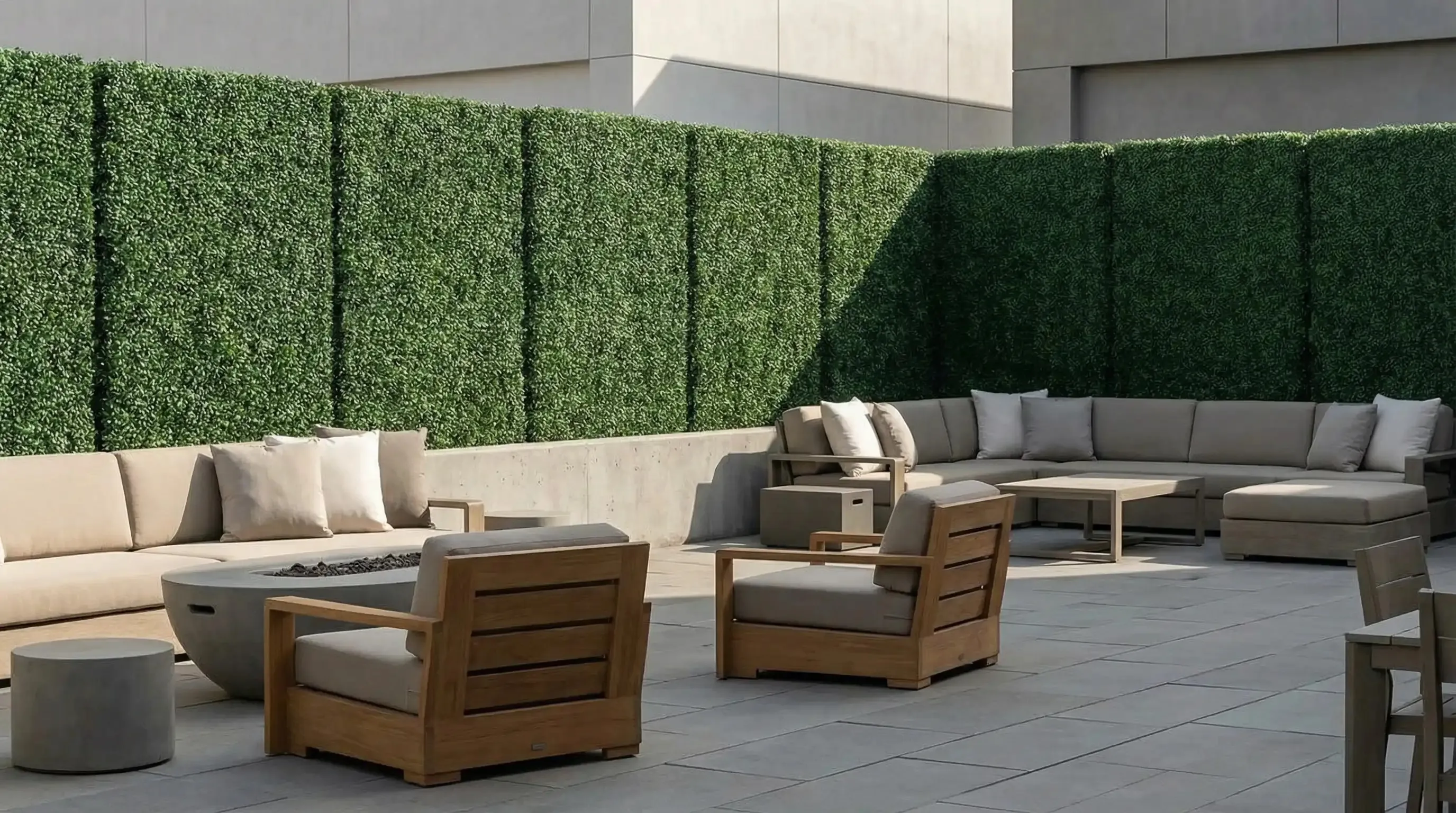
That is why corporate properties usually benefit from a more design-forward planning approach. The installation has to align with architecture, circulation, and the existing brand environment. A hedge line that works on a residential perimeter may not feel right at all on a contemporary office campus. The goal is usually a more refined edge, stronger arrival quality, or a cleaner screen around visible outdoor or service zones.
Industry detail
Corporate installs tend to perform best when the facilities realities are surfaced early: who will maintain the space, how cleaning happens, which zones are public-facing, and where the installation could interfere with access or security. Those questions sound operational, but they directly affect design quality. A system that fits the facility well will usually look better longer than one chosen only for a first-day visual effect.
This is also why internal links to product, guide, and blog pages matter. Corporate teams usually need multiple types of proof. They want to see what the finished system looks like, understand how it compares to alternatives, and evaluate whether the ownership path makes sense for their campus or workplace conditions. A page that helps them do that will usually be more valuable than one that just lists benefits.
Related corporate-style project
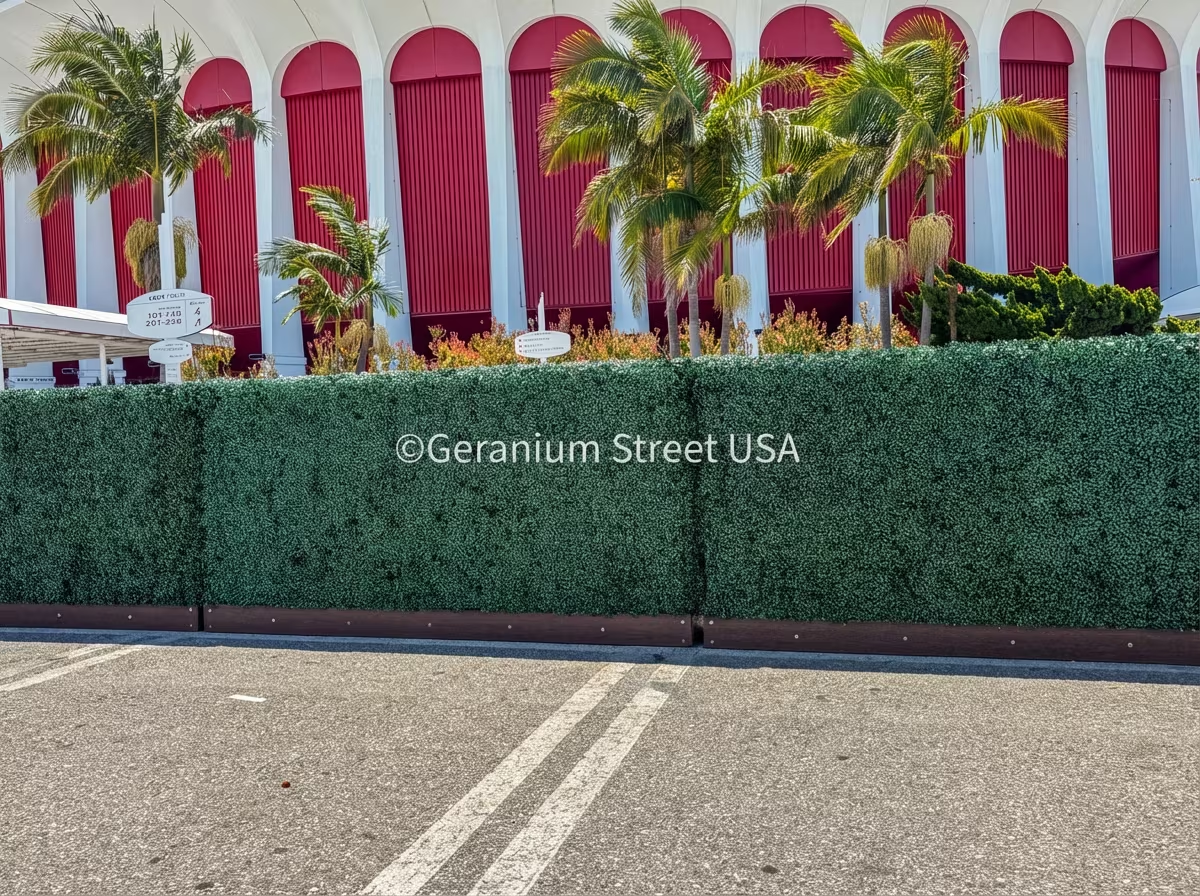
This reference is useful because it shows how Califauxscapes handles visible, design-sensitive environments where operations, access, and finish quality all affect the recommendation.
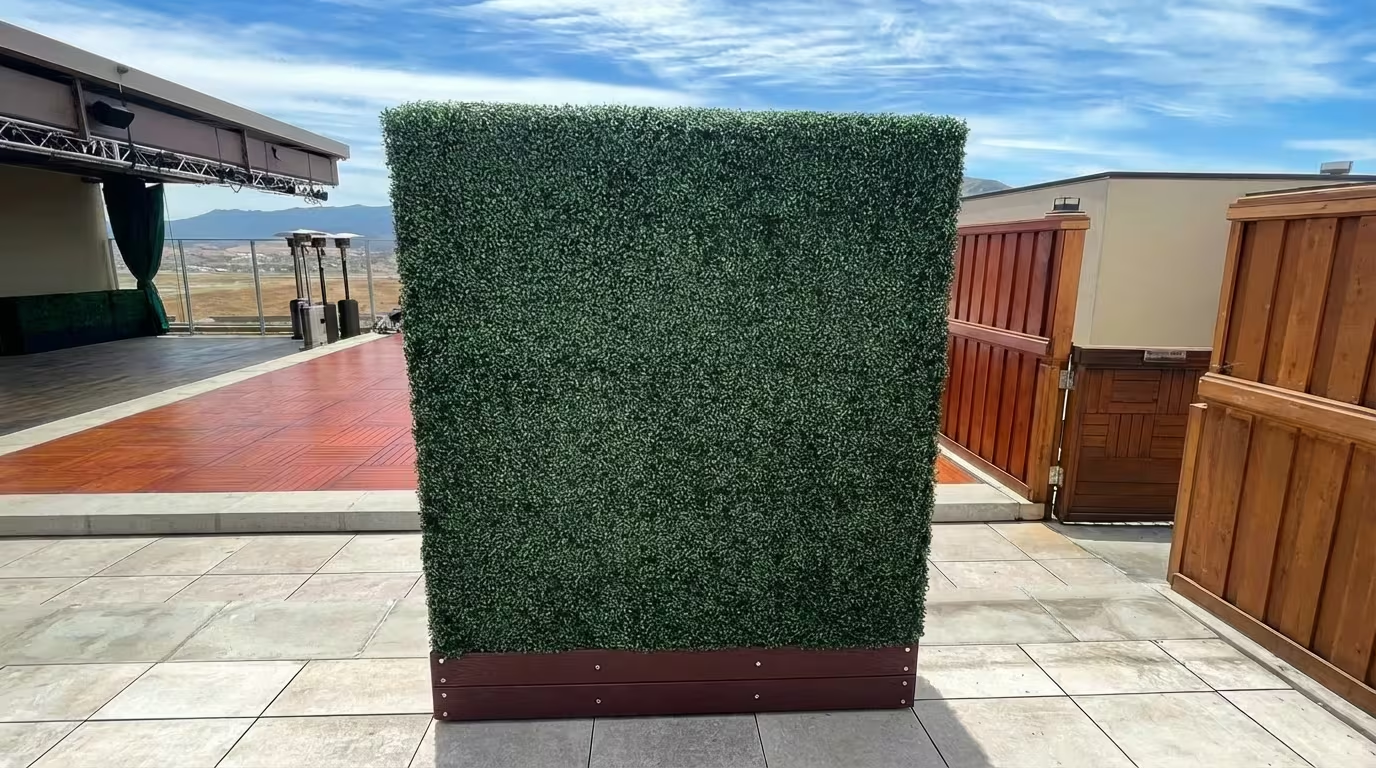
CalifauxScapes installed 64 modular, UV-resistant artificial hedge panels (512 sq ft) at the Kia Forum in Los Angeles. Movable, weighted barriers that replaced metal barricades with something that actually looks good.
Open case studyDecision framework
Corporate properties usually narrow the right approach by deciding whether the space needs a feature wall, a cleaner privacy or service screen, or a more controlled green effect for arrival or employee-facing areas.
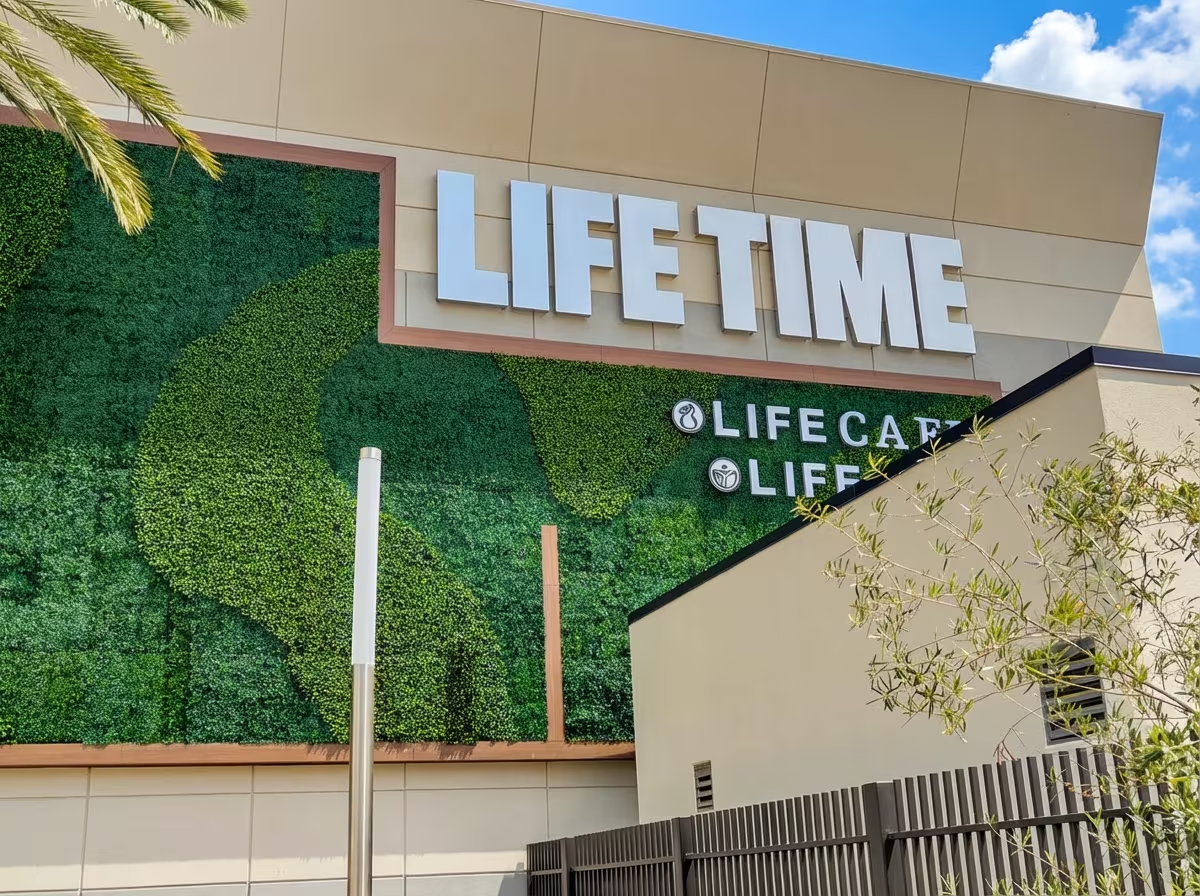
Best when the property wants a more contemporary focal wall, entry statement, or branded interior or exterior moment.
If the main problem is privacy or service screening, privacy systems often solve more directly.
Best when the property needs a cleaner, tighter visual screen around visible edges or service areas.
If the environment wants a softer landscape expression, hedges may feel less rigid.
Best when the workplace wants greener screening along patios, courtyards, or employee-facing outdoor areas.
If the site needs a stronger architectural read, other systems may be more appropriate.
Coverage
5-year limited UV warranty on qualifying products and 1-year installation workmanship warranty.
Coverage is limited and subject to product eligibility, installation scope, and written warranty terms.
5-year limited UV
1-year installation
Written terms apply
Useful when the corporate property wants a higher-impact feature surface.
Helpful when the property needs a cleaner and more controlled visual screen.
A planning guide for workplace and commercial stakeholders.
Useful when workplace teams need a more practical business-case perspective.
Yes. Many scopes combine lobby-adjacent features and outdoor screening under one coordinated design direction.
Maintenance planning is usually documented with periodic cleaning and inspection guidance by zone.
They can be, especially where consistent appearance and brand alignment are priorities.
Often yes, particularly on active campuses where access and operations continuity are important.
Bring the site condition, the property type, and the main design objective. We can help clarify the right system, the likely installation path, and the next step for scope review.
Request project reviewIndustry
Privacy, screening, and finish-control systems for high-end private properties.
Industry
Guest-facing greenery systems for hotels, venues, restaurants, and event properties.
Industry
Screening, frontage, and amenity upgrades for active commercial properties.
Industry
Amenity, perimeter, and resident-facing privacy solutions for apartments and condo communities.