Who this page is for
Ownership teams, operators, designers, and builders planning guest-facing outdoor zones or branded moments.
Guest-facing greenery systems for hotels, venues, restaurants, and event properties.
This page outlines how hospitality teams evaluate artificial landscaping for guest experience, operations timing, and long-term appearance consistency.
Who this page is for
Ownership teams, operators, designers, and builders planning guest-facing outdoor zones or branded moments.
Where it tends to fit
Best when appearance has to stay controlled across service cycles and the outdoor space is part of the guest experience.
What usually weakens scope
Weak scopes tend to ignore service access, event circulation, or how the installation affects active operations.
Hospitality Properties planning view
Review how property conditions, operational requirements, and finish expectations shape the recommendation.
Artificial landscaping can support hospitality teams that want a curated greenery effect with predictable appearance and less operational disruption than frequent horticulture work in guest-facing zones.
Hospitality environments often need premium visuals that stay controlled across service cycles. Planning usually focuses on arrival moments, dining edges, event adjacencies, photography value, and maintenance windows so installations integrate with active operations.
Planning approach
Recommendations are built around site conditions, operational reality, and the level of finish the property needs to present.
Specification mindset
Product fit is evaluated by substrate, visibility, upkeep load, and installation sequencing rather than broad category claims.
High-visibility zones can maintain a stable look through seasonal shifts and variable occupancy.
Install phases can often be aligned with occupancy and event calendars to reduce service impact.
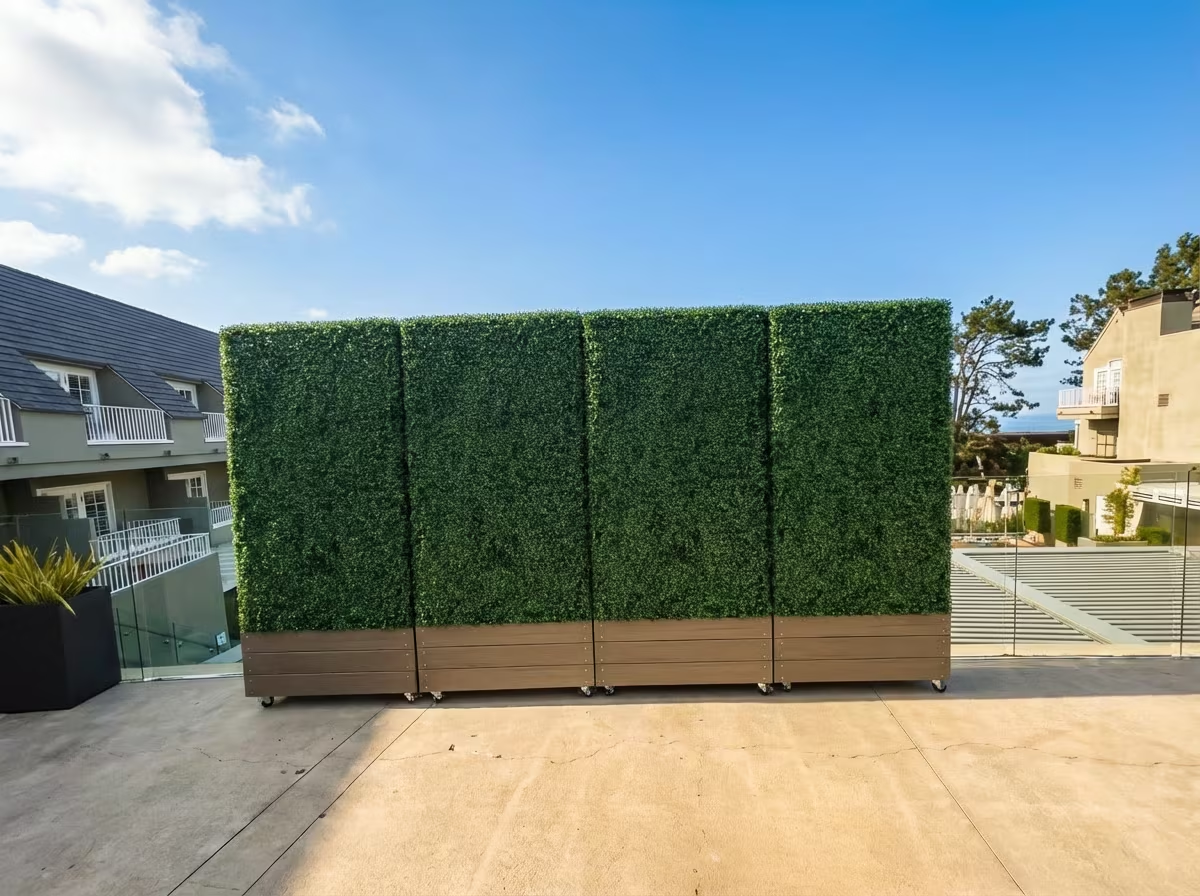
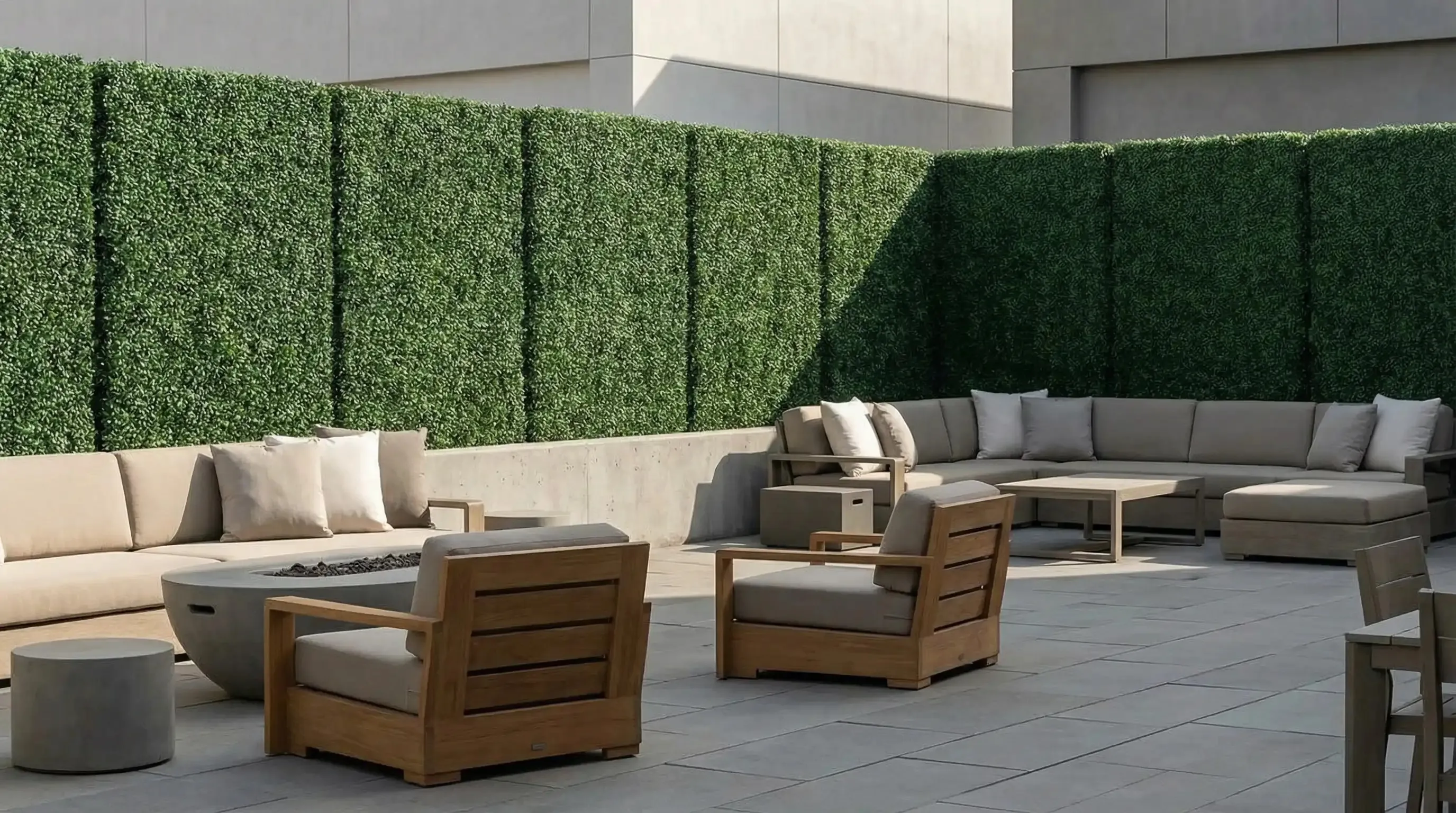
Feature walls and screening zones can support dining, events, and other spaces where the visual backdrop matters.
Layout planning can preserve access paths for ongoing cleaning and property operations.
Industry detail
Hospitality properties judge greenery differently from almost every other market. The installation is not just there to look attractive in isolation. It has to support a guest journey that includes arrival, seating, photography, privacy, comfort, and service flow. That is why the same product can perform very differently depending on where it is used. A privacy hedge may be ideal around a ceremony zone and completely wrong for a main arrival wall that needs more visual drama.
Artificial landscaping can be especially valuable when the property wants a premium green effect without the operational disruption that comes with constant horticultural upkeep in guest-facing zones. Hotels, venues, restaurants, and resort properties often care as much about appearance consistency and event-readiness as they do about the look itself. That puts more weight on planning, sequencing, and durability than generic design inspiration tends to show.
Industry detail
The strongest hospitality scopes usually identify exactly which moments the installation needs to support. Is the goal to improve privacy for weddings and events? To create a cleaner dining edge? To give the arrival sequence more visual depth? Or to stabilize how the property photographs through the year? Once those questions are clear, it is much easier to choose the right system and installation sequence.
This is also where project references become valuable. Hospitality teams do not just need to know what a hedge or living wall looks like. They need to see how a similar property handled occupancy, event use, coastal exposure, or public visibility. That practical context is what makes a recommendation credible enough for owners, designers, and operators to approve.
Related hospitality case study
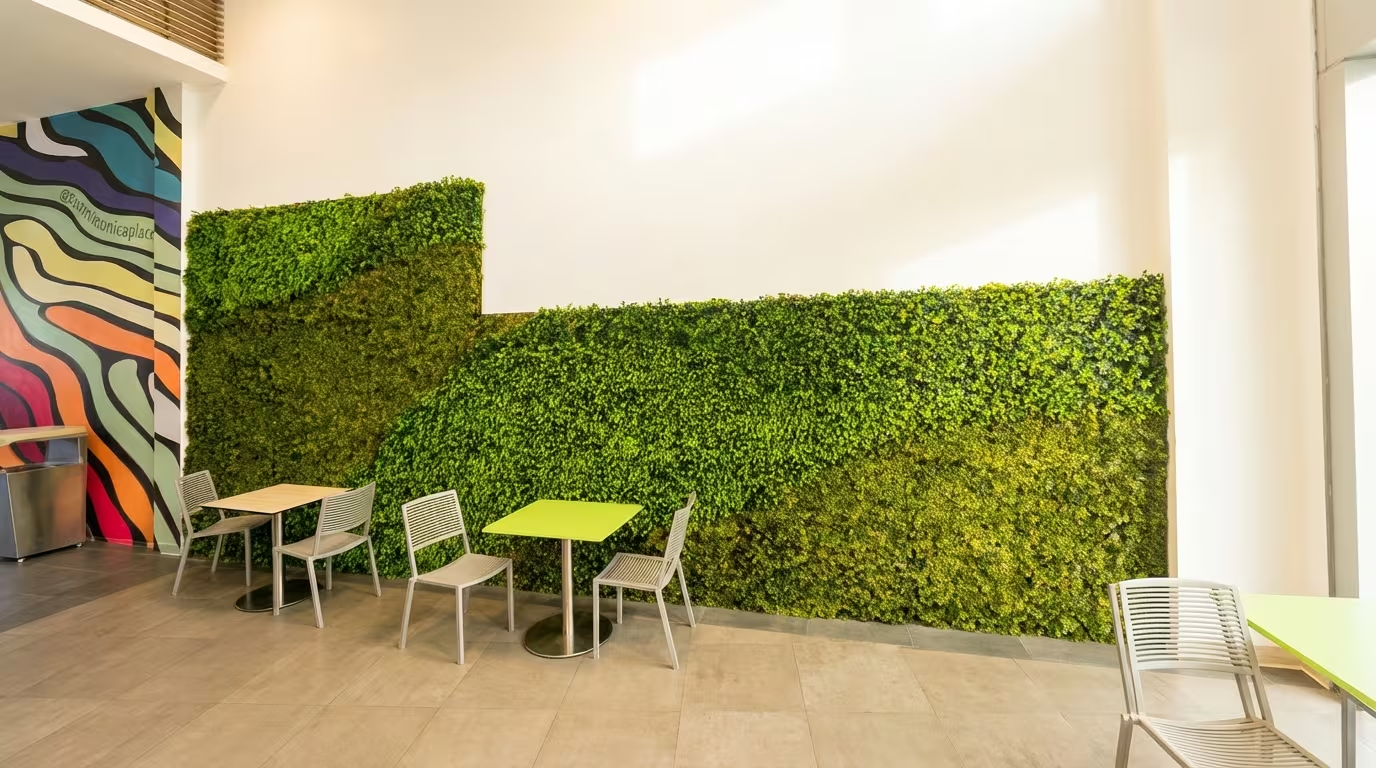
This project is helpful because it shows how Califauxscapes balances guest visibility, event conditions, and a premium finished look in a real hospitality environment.
CalifauxScapes designed and installed a 420 sq ft custom artificial living wall for a Santa Monica, CA mall food court. Three foliage types in a fluid pattern, UV-resistant materials, installed overnight.
Open case studyDecision framework
Hospitality teams usually get the clearest answer when they decide whether the property needs privacy, atmosphere, or a stronger feature moment first. Those priorities often point to different product mixes.
Best when the space needs a softer screening layer around patios, ceremonies, or dining areas.
If the property needs a stronger focal moment, living walls usually carry more visual weight.
Best when the property needs an arrival wall, branded backdrop, or other guest-facing feature.
If the main issue is privacy, the investment may be better spent on hedges or screens.
Best when the property has both feature and privacy needs across multiple guest areas.
A single-system approach can simplify operations on smaller hospitality sites.
Coverage
5-year limited UV warranty on qualifying products and 1-year installation workmanship warranty.
Coverage is limited and subject to product eligibility, installation scope, and written warranty terms.
5-year limited UV
1-year installation
Written terms apply
Often yes. Phased sequencing can help preserve guest flow and reduce operational disruption.
In many cases yes. Tone and texture can be selected to align with architecture and brand standards.
They can, depending on layout, exposure, and required screening height.
Maintenance plans are typically defined during scope development and aligned to property operations.
Bring the site condition, the property type, and the main design objective. We can help clarify the right system, the likely installation path, and the next step for scope review.
Request project reviewIndustry
Privacy, screening, and finish-control systems for high-end private properties.
Industry
Screening, frontage, and amenity upgrades for active commercial properties.
Industry
Amenity, perimeter, and resident-facing privacy solutions for apartments and condo communities.
Industry
Branded greenery systems for employee, client, and campus-facing environments.