Challenge profile
What this scope is usually trying to solve
Property teams often need premium greenery impact across multiple zones while managing maintenance budgets and service disruption.
Commercial
Consistent frontage and amenity visuals for high-traffic properties.
Commercial scopes focus on balancing visual quality, operational practicality, and long-term upkeep planning.
Quick answer
This solution page is designed for property teams comparing artificial landscaping options by operational fit, visual impact, and long-term upkeep strategy.
Challenge profile
Property teams often need premium greenery impact across multiple zones while managing maintenance budgets and service disruption.
Approach
We stage installation around occupancy windows, match material palettes to brand standards, and prioritize durable detailing for high-traffic edges.
At a glance
This solution page is designed for property teams comparing artificial landscaping options by operational fit, visual impact, and long-term upkeep strategy.
Expected outcomes
Can support stronger first-impression quality for visitors and tenants
May reduce recurring landscape labor in selected zones
Often simplifies appearance consistency across seasons and service cycles
Scope considerations
Commercial submittal and property management approvals may affect schedule.
High-touch areas should be detailed for cleaning access and durability.
Phased sequencing is often preferred for occupied properties.
Planning detail
Commercial teams rarely choose artificial landscaping just because they want a greener frontage. The real decision usually involves operations: how the site will stay presentable with limited maintenance windows, whether tenants or guests will move through the area all day, and how much disruption the property can tolerate during installation. That is why commercial projects are often planned around occupied conditions rather than around a blank-site ideal.
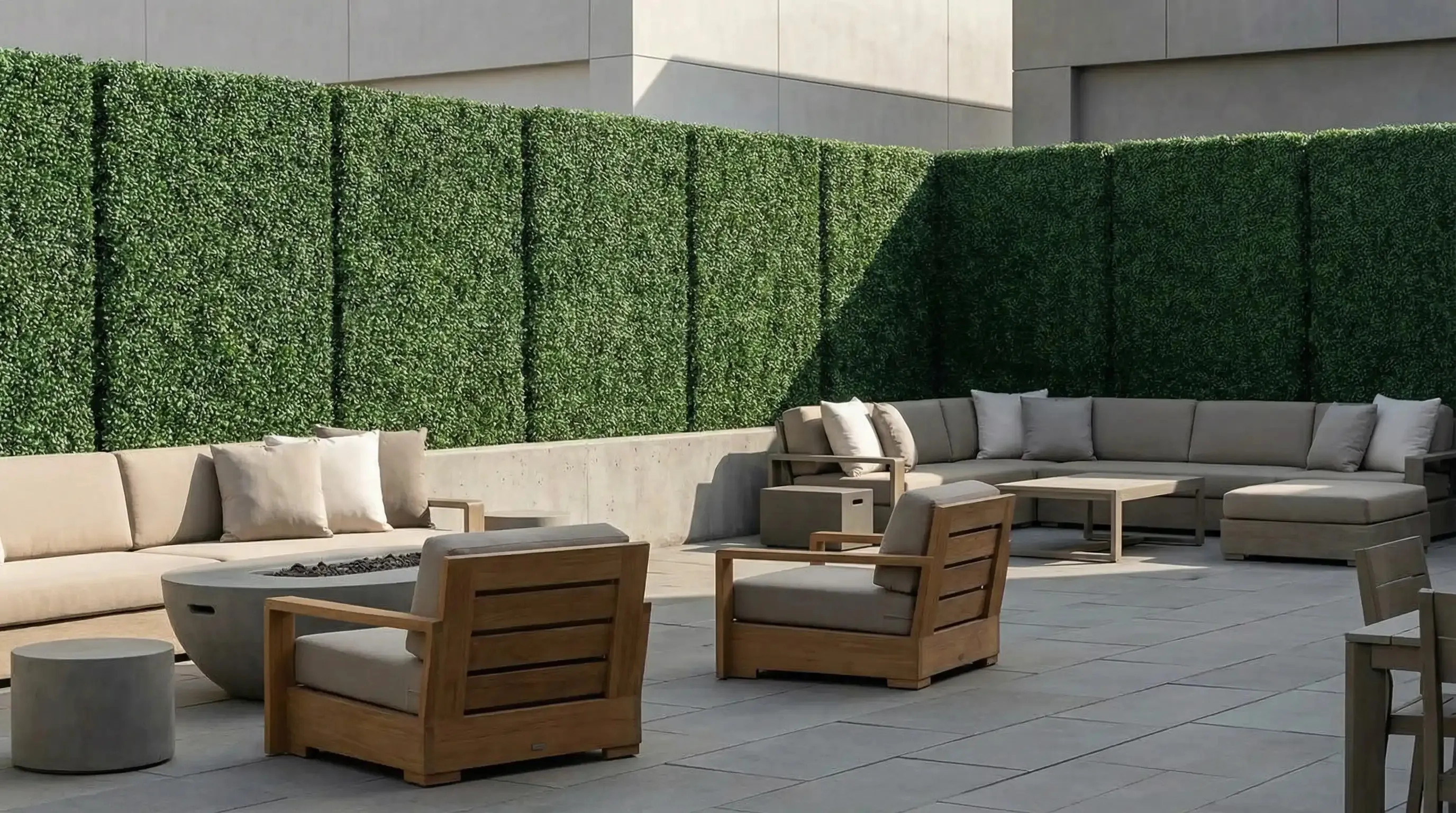
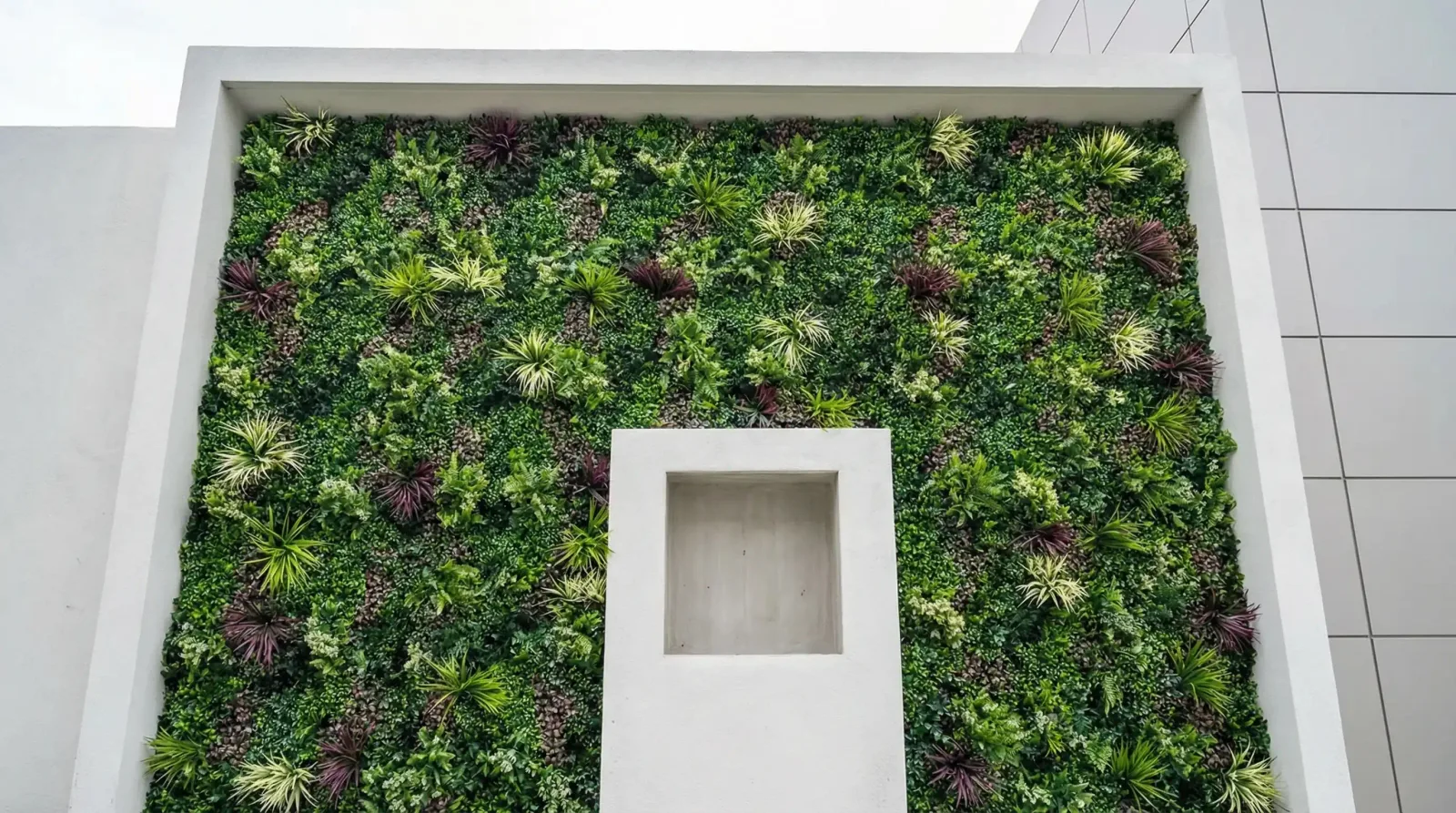
On retail, mixed-use, and office properties, the strongest scopes usually focus on the public-facing edges that shape the first impression: arrival zones, amenity courtyards, patio dividers, service areas that need screening, and blank walls that drag down the perceived finish of the property. Once those zones are identified, the project can be phased and the material palette can be tuned to brand standards without treating every area the same way.
Planning detail
A commercial install should not just look good on day one. It should keep reading correctly after turnover, seasonal staffing shifts, and day-to-day foot traffic. That means the planning conversation should cover cleaning access, attachment strategy, replacement simplicity, and how the system will perform in high-touch environments. Those details are what separate a short-lived decorative gesture from a system the property team can actually operate.
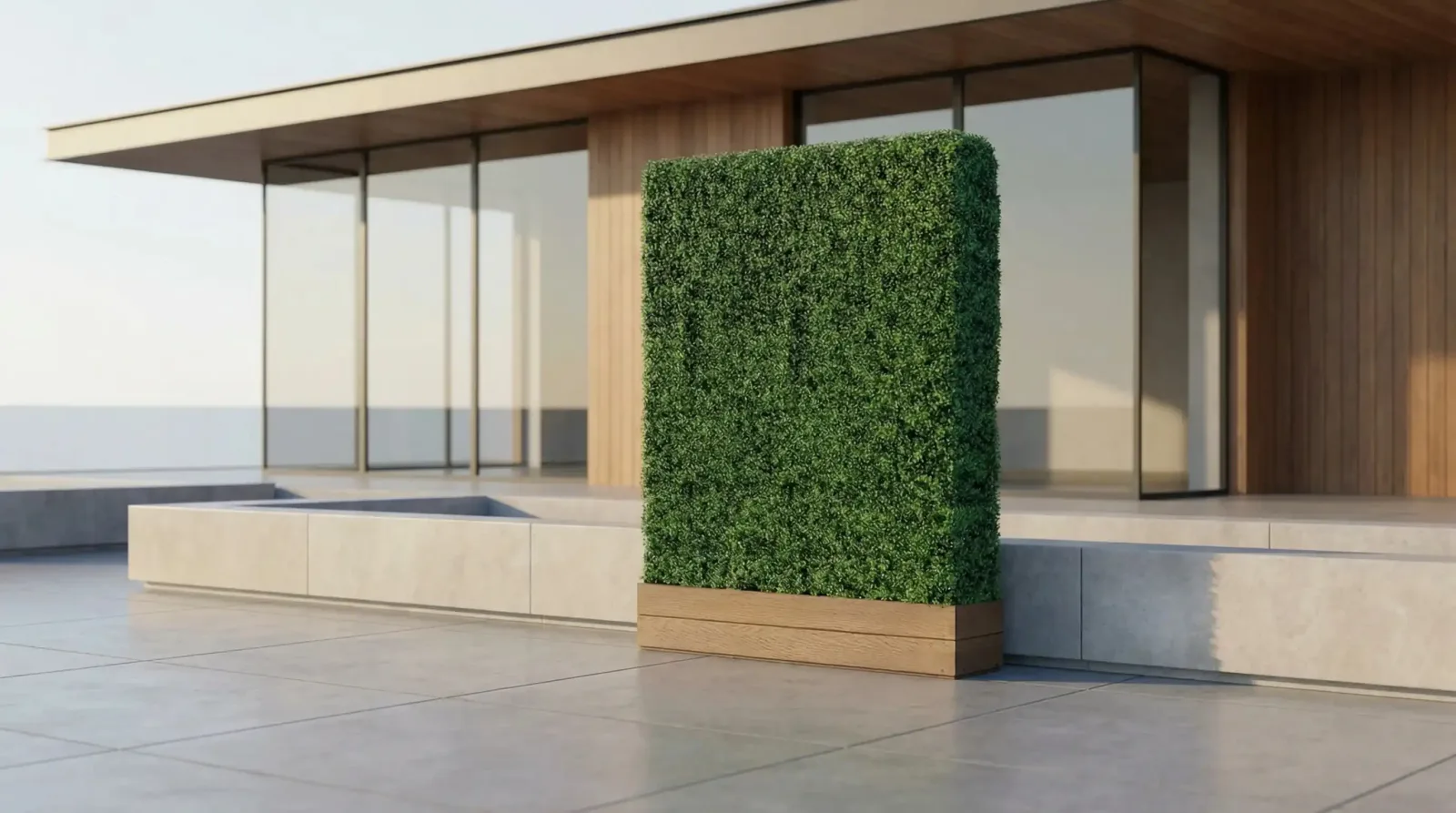
This is also where internal linking to related products and guides becomes useful. A property manager comparing a living wall, privacy wall, or privacy hedge is usually not choosing between aesthetics alone. They are comparing frontage impact, upkeep profile, traffic durability, and how the install will support the tenant or guest experience. When the team can evaluate those factors clearly, the scope becomes easier to justify and execute.
Related commercial project
This case study is relevant because it shows how Califauxscapes handles public-facing commercial work where installation sequencing, brand alignment, and ongoing upkeep all influence the final recommendation.
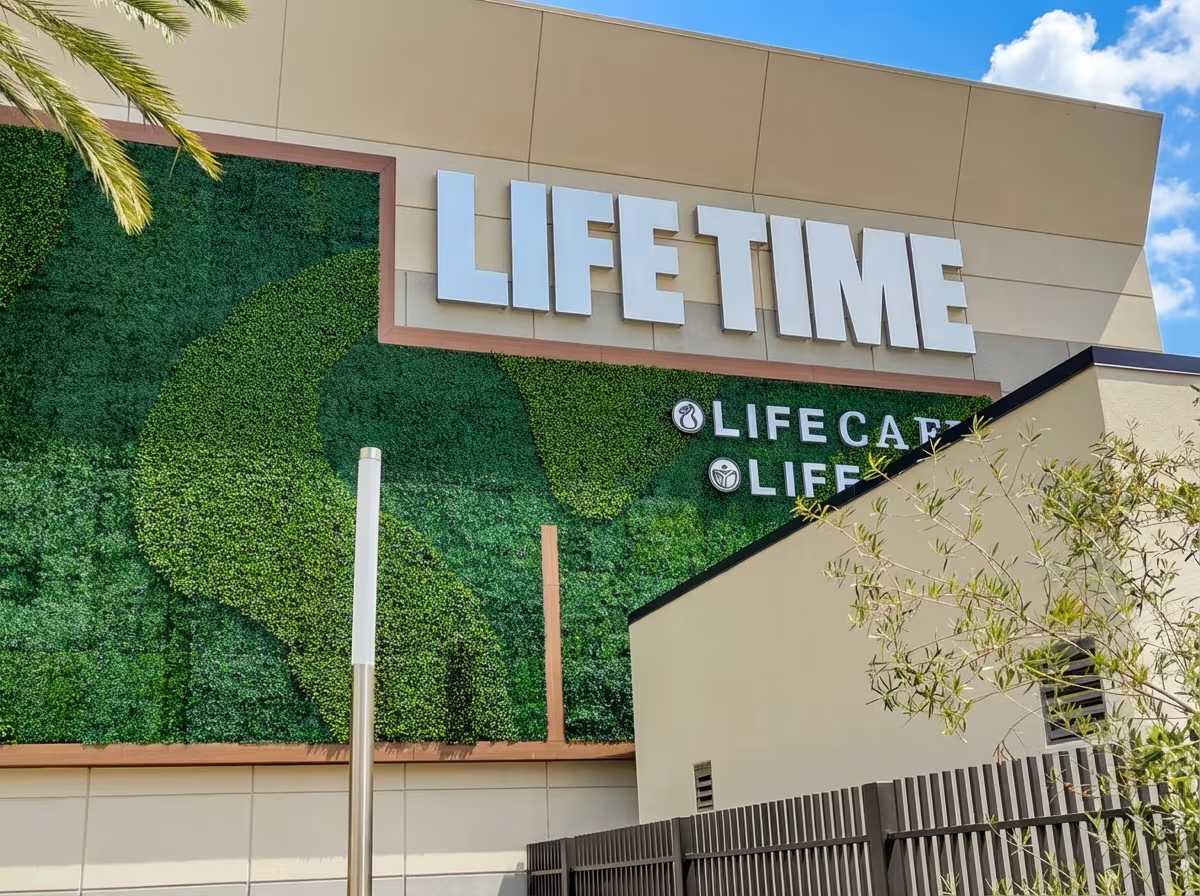
CalifauxScapes designed and installed a custom 1,800 sq ft artificial living wall for Lifetime Irvine's main entrance. UV-resistant, irrigation-free, built in collaboration with Lifetime's architects.
Open case studyDecision framework
Commercial scopes usually get stronger when the team decides whether the main goal is frontage improvement, privacy screening, or a cleaner amenity or service condition. That decision tends to point toward the right product mix quickly.
Best when the property needs a feature wall, branded arrival moment, or a stronger vertical finish in a guest-facing or tenant-facing zone.
If the site mostly needs line-of-sight control, a privacy hedge or privacy wall is often a cleaner answer.
Best when the property wants softer greenery along patios, dining edges, or perimeter zones without a harsher built-screen effect.
If circulation, durability, or tighter layout control matter most, privacy walls may outperform hedges.
Best when the site needs controlled screening, cleaner detailing, and a stronger architectural presence.
If the property wants a more organic visual edge, privacy hedges usually feel less rigid.
Recommended products
Supporting projects
artificial green wall
CalifauxScapes designed and installed a custom 1,800 sq ft artificial living wall for Lifetime Irvine's main entrance. UV-resistant, irrigation-free, built in collaboration with Lifetime's architects.
Open case study
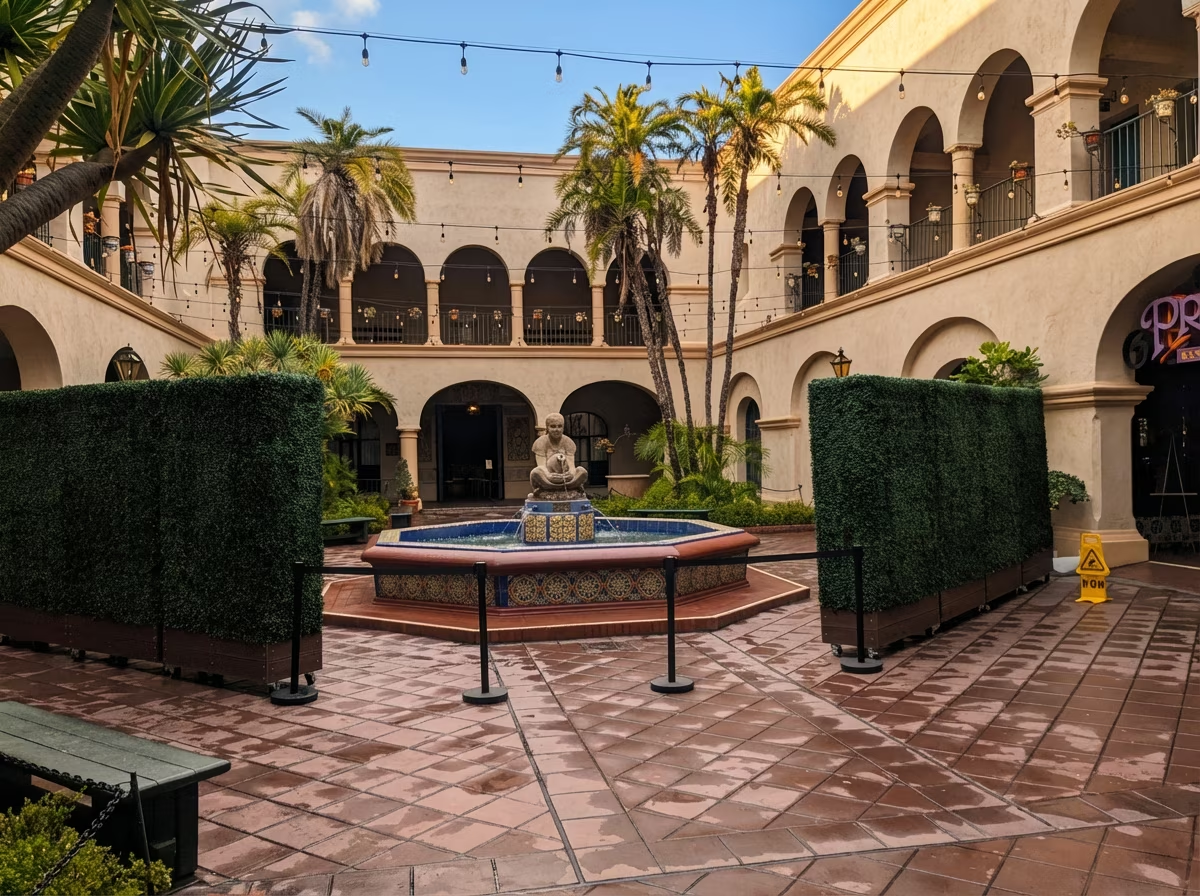
Balboa
CalifauxScapes built custom mobile artificial hedges on locking casters for The Prado restaurant in San Diego. Replaced costly rental hedges, gave staff control over the patio layout, and drastically reduced ongoing fees.
Open case study
Related resources
A common choice for high-visibility commercial feature zones.
A planning guide built specifically for commercial stakeholders.
Useful when the commercial need is screening rather than feature greenery.
Supports the business case for selected upgrades.
Explore next
FAQ
Yes, many commercial scopes are staged by zone so active operations can continue with limited interruption.
They can be, provided detailing, material selection, and cleaning access are coordinated with expected traffic patterns.
Maintenance plans are usually documented during scope development and include inspection and cleaning intervals appropriate for each zone.
In many commercial projects, approvals are required and can affect timeline and installation sequencing.
Coverage
5-year limited UV warranty on qualifying products and 1-year installation workmanship warranty.
Coverage is limited and subject to product eligibility, installation scope, and written warranty terms.
5-year limited UV
1-year installation
Written terms apply