What Are the Top Living Wall Design Trends in 2026?
Artificial living walls are not being specified just because they look green. In California, the trend is toward walls that photograph well, stay consistent in service, and fit real hospitality, office, retail, and residential budgets. If you are planning an actual project, the important question is not what looks trendy in isolation. It is which wall types and detailing choices still make sense once the install, maintenance expectations, and viewing distance are real.
If you are already comparing systems for a real project, start with the Artificial Living Wall page for installation fit and the Complete Guide to Artificial Living Walls for planning detail. The trends below make the most sense when they support that bigger scoping conversation.
Biophilic Office Design
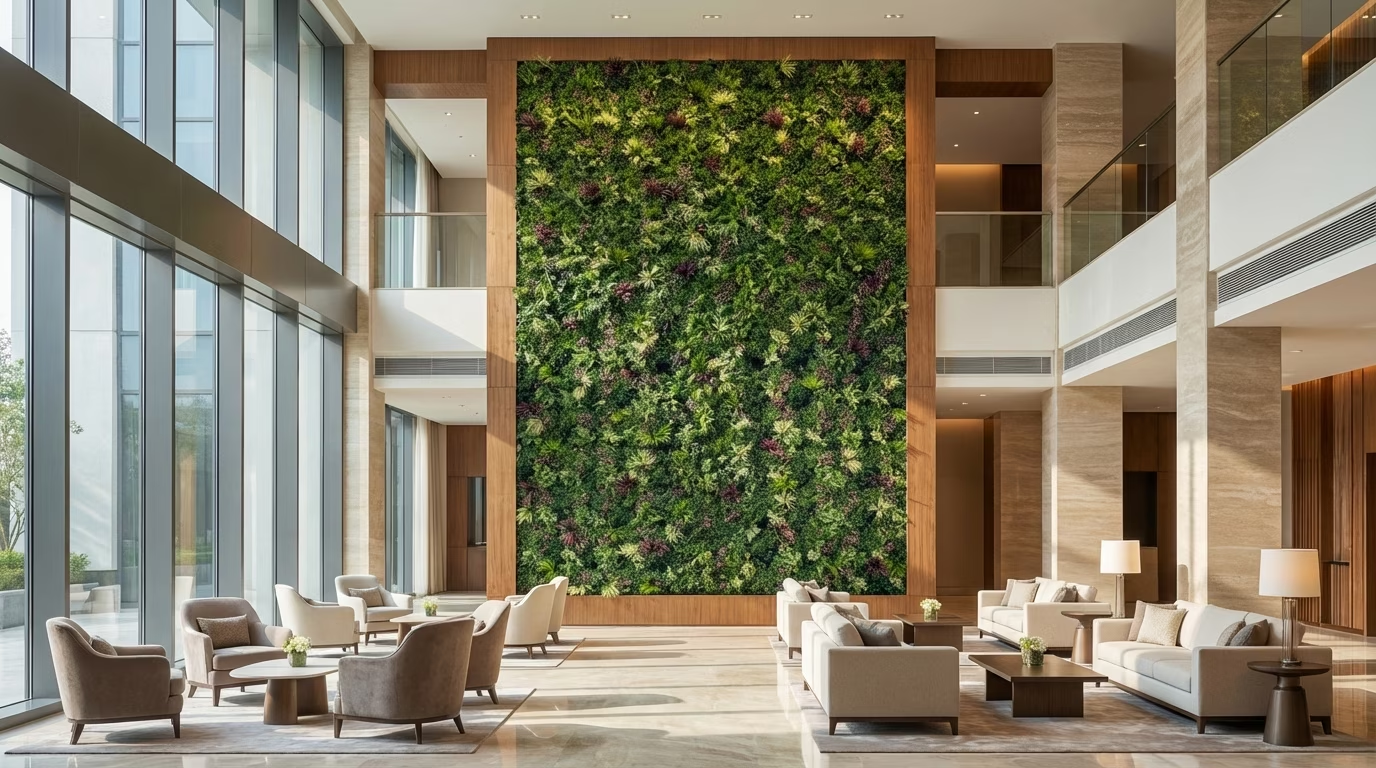
A landmark 2014 study from the University of Exeter and Cardiff University found that enriching lean office spaces with plants increased worker productivity by 15% (Journal of Experimental Psychology: Applied, Vol. 20, No. 3). A broader 2015 global survey of 7,600 workers across 16 countries (Human Spaces Report, Interface) found biophilic environments improve productivity by 6%, creativity by 15%, and wellbeing by 15%. Companies are investing in living walls to capture these benefits without ongoing horticulture costs.
Residential Statement Walls
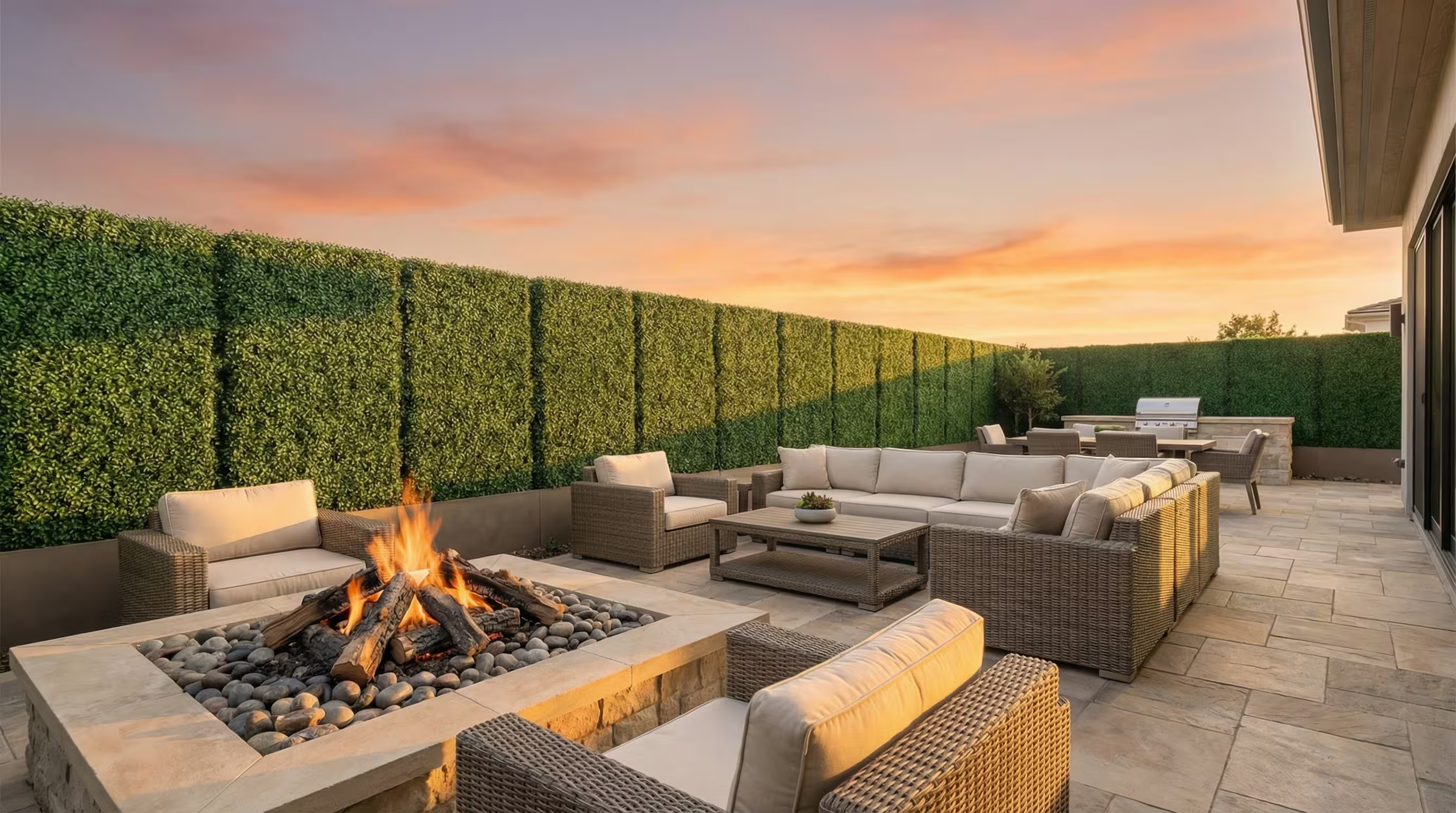
Homeowners are using living walls as dramatic focal points in living rooms, entryways, and outdoor entertainment areas. In California, where outdoor water use accounts for roughly half of total urban consumption (Public Policy Institute of California), artificial living walls offer the visual impact of vertical greenery without any irrigation infrastructure.
Mixed Material Integration
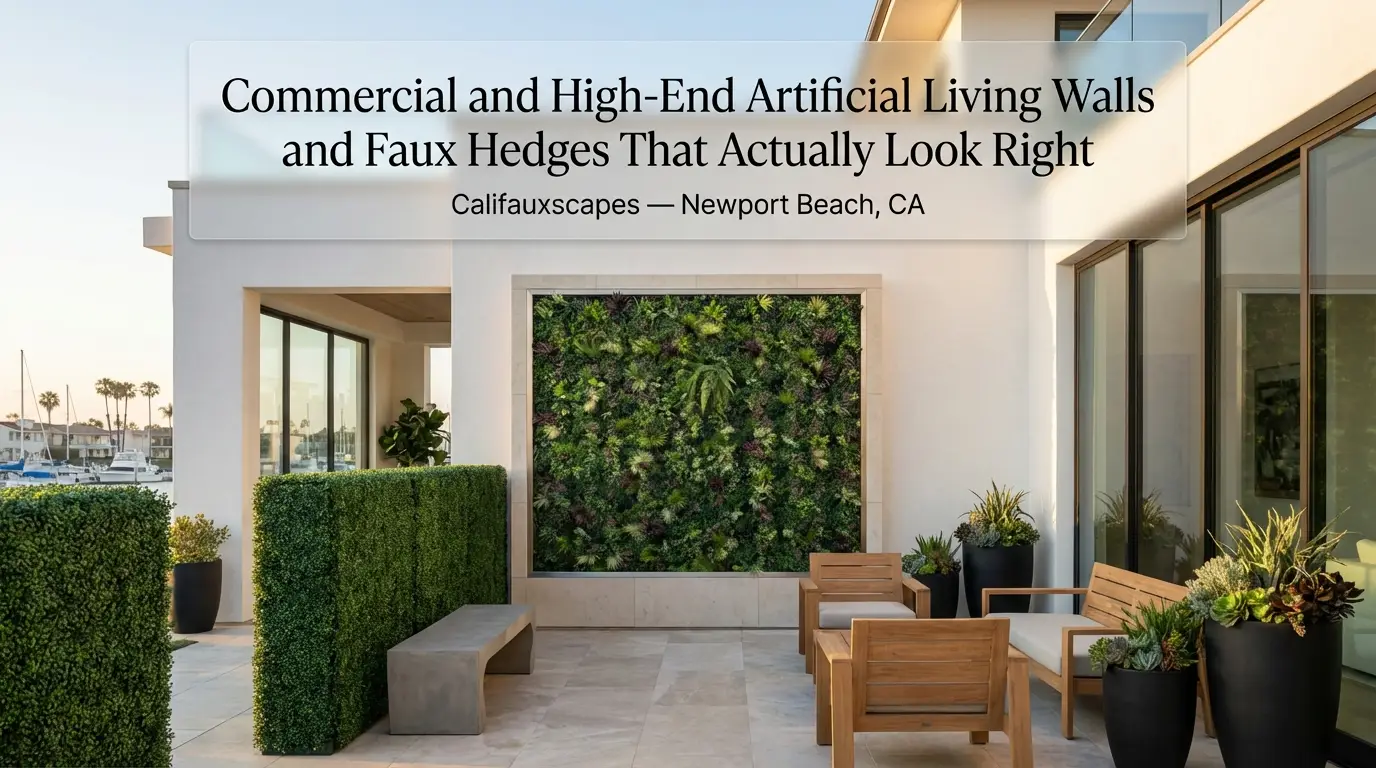
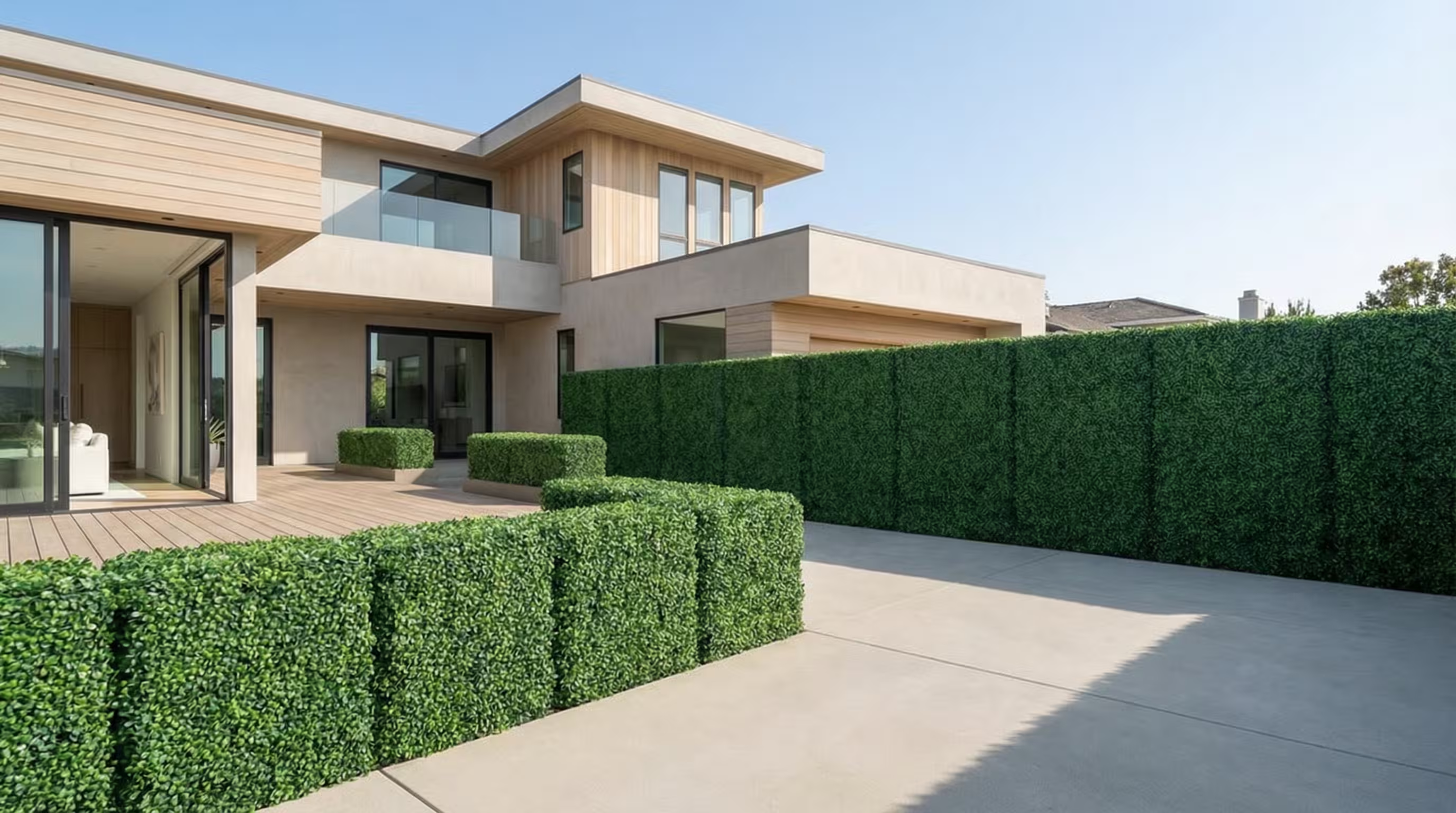
Combining living wall panels with wood, metal, and stone creates depth and visual interest. Thoughtful design composition - including depth layering, color balance, and edge detailing - has outsized impact on visual realism per panel.
Sustainable Material Innovation
UV-stabilized high-density polyethylene (HDPE) with inhibitors compounded directly into the resin is now the industry standard for artificial foliage. Testing follows ASTM G154 protocols for accelerated UV weathering, helping ensure material durability under California sun exposure.
Smart Integration
LED accent lighting and subtle tech integration enhance the visual impact of vertical gardens, especially in hospitality and retail spaces where dwell time and ambiance matter.
For California projects, the common thread across these trends is controlled execution. The walls that hold up best are the ones where the substrate, edge detailing, lighting, and service expectations were all considered before the foliage mix was selected.
Related Resources
- Artificial Living Wall Systems - Full product details and specifications
- Complete Guide to Artificial Living Walls - Planning guide for California properties
- Commercial Artificial Landscaping Guide - Scoping guide for offices and retail