When artificial landscaping actually makes sense
Artificial landscaping systems are most useful when a property needs a controlled finished look, reliable privacy, or a cleaner vertical surface without depending on live growth to get there. They are not a replacement for every landscape condition, but they can be the right answer where irrigation, trimming, inconsistent plant health, or limited planting zones keep getting in the way.
1. Privacy can be solved immediately
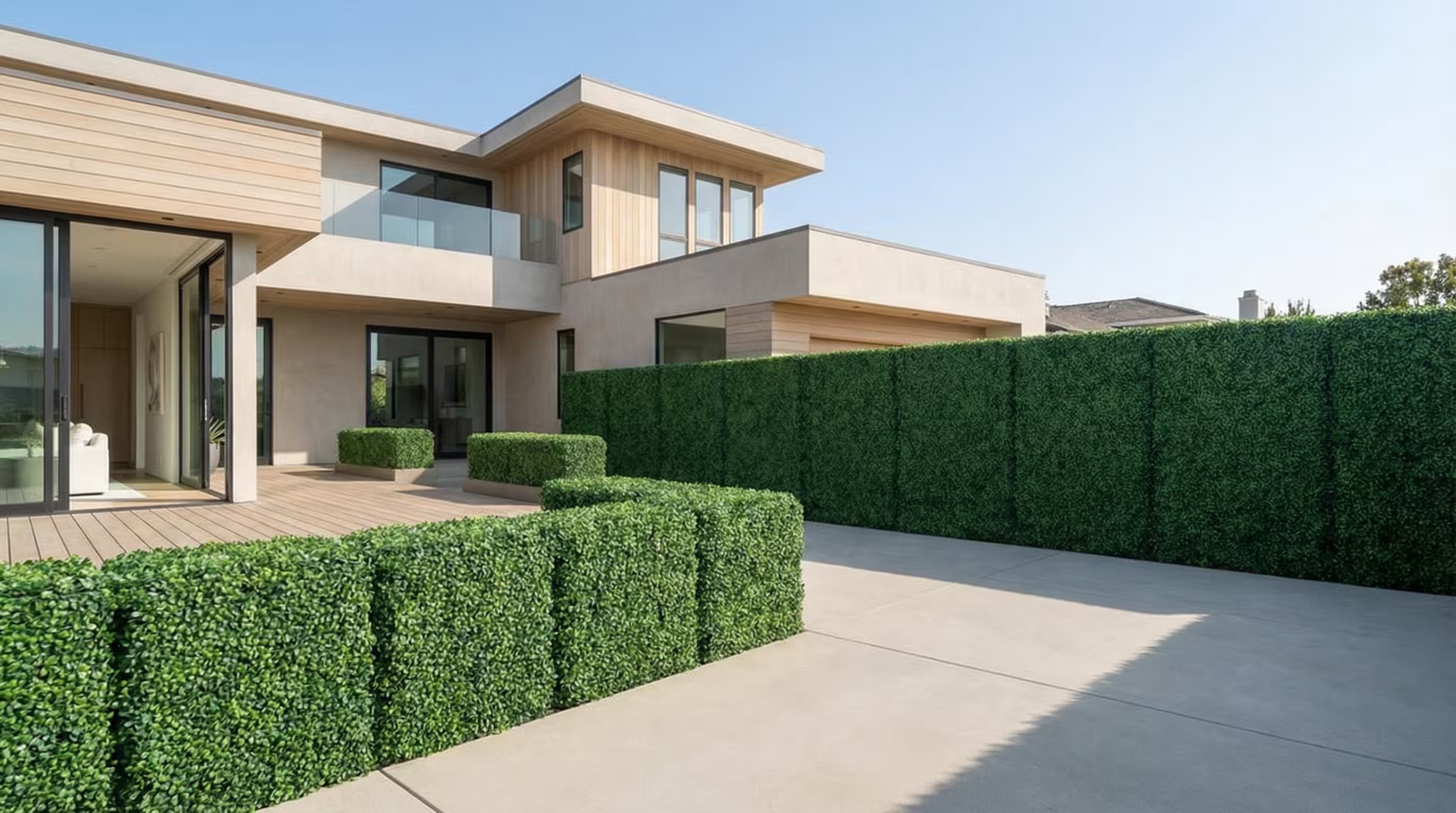
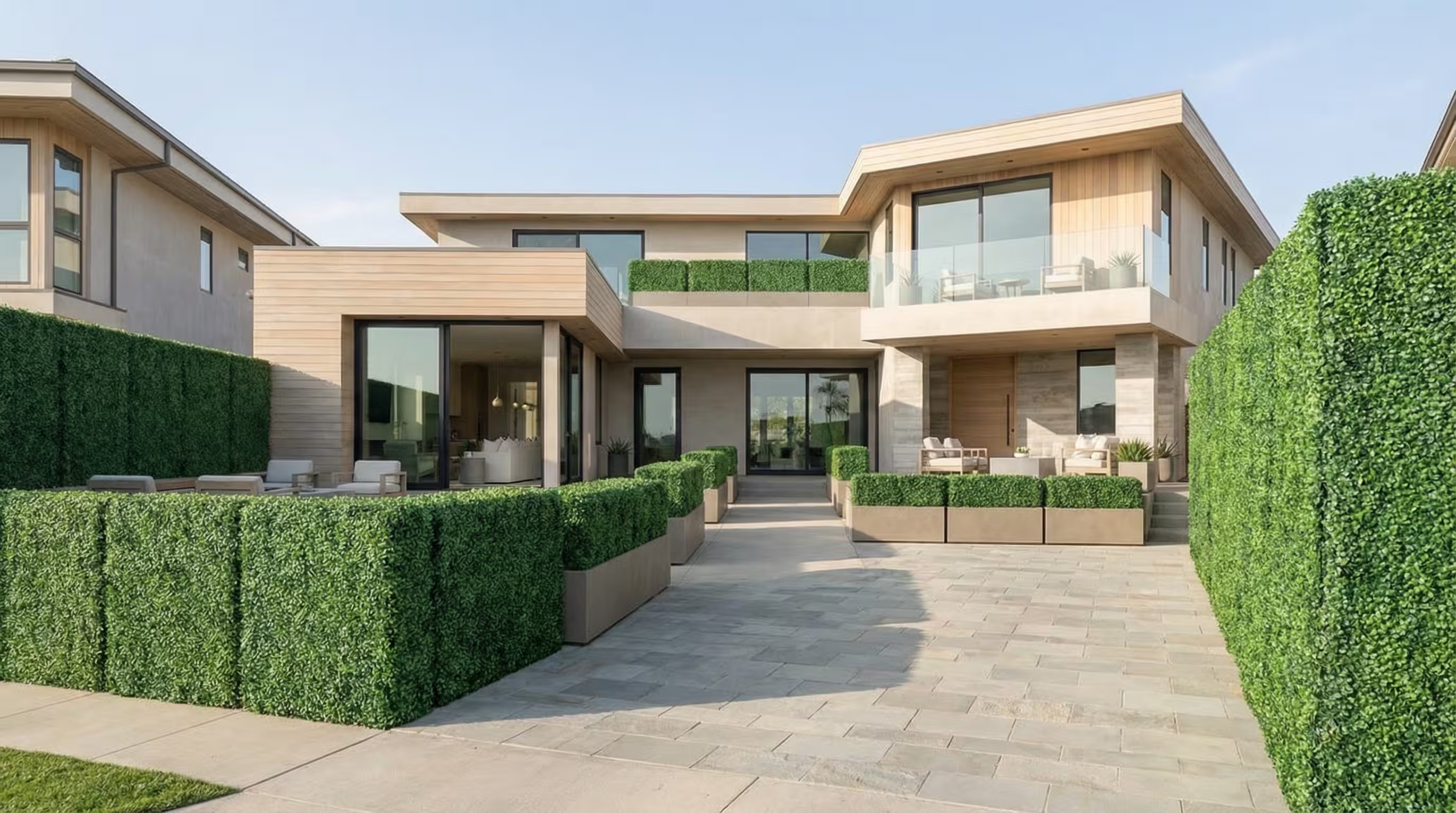
Privacy hedges, privacy walls, and fence extensions are often chosen because the property needs screening now, not after a growing period. This matters on visible lot lines, pool areas, terraces, patios, and shared edges where the finished look needs to read as complete as soon as the work is installed.
2. The finished look is easier to control
Live material changes over time. Some properties want exactly that. Others need a more consistent outcome across a frontage, a courtyard wall, or a long perimeter. Artificial systems are useful when the goal is visual consistency rather than seasonal variation.
3. They work where planting conditions are weak
A wall with no soil access, a fence line with limited depth, a rooftop edge, or a tight side yard can all make live planting harder to execute cleanly. Artificial systems are often specified when the design intent is clear but the planting conditions are not ideal.
4. They reduce ongoing landscape labor in the upgraded zone
Artificial systems still need occasional cleaning and routine review, but they remove the trimming, replanting, and irrigation work that usually comes with live hedges or planted vertical greenery in those same locations.
5. They can improve difficult vertical surfaces
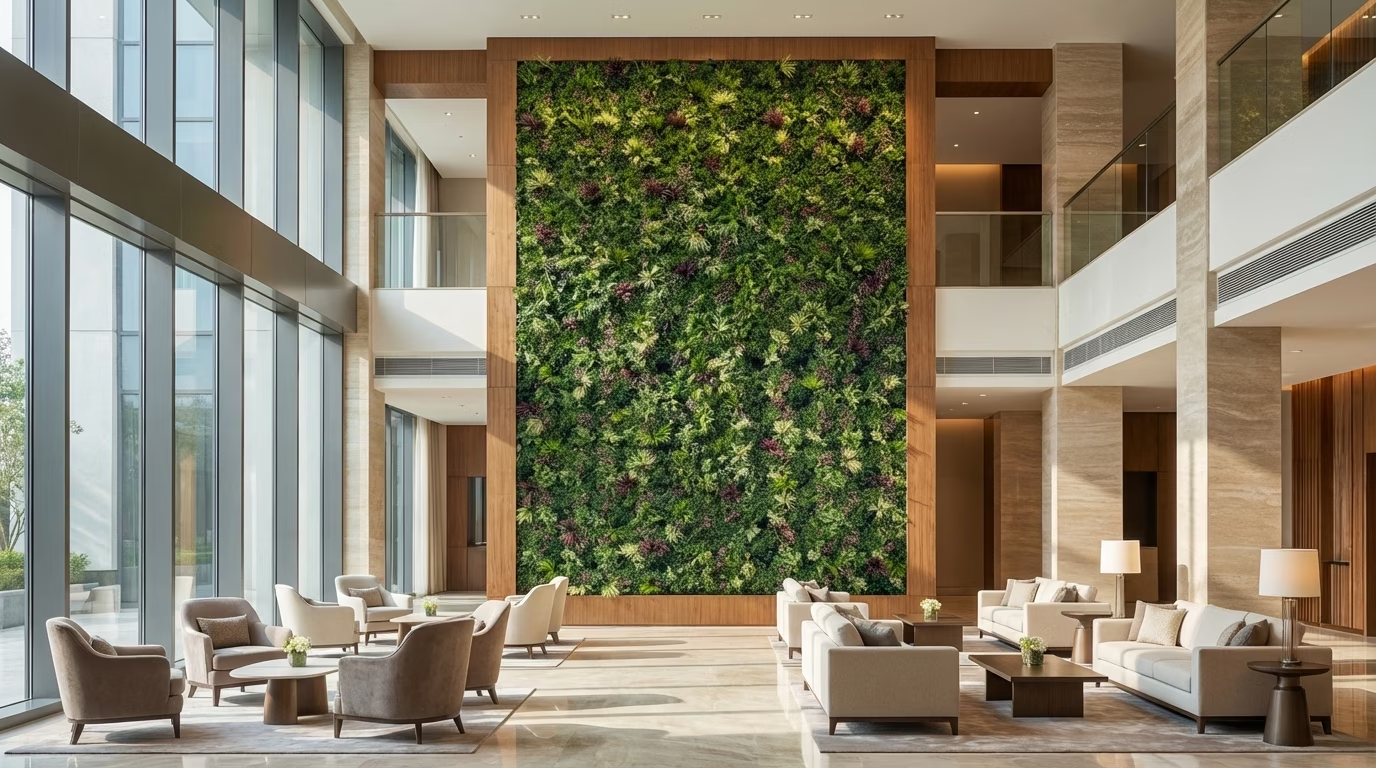
Artificial living walls and privacy walls are often used to soften bare walls, service edges, screening panels, and other highly visible surfaces. They are most effective when the project needs a controlled green finish on a vertical plane instead of another painted or hard-surface treatment.
6. They fit both commercial and high-end residential work
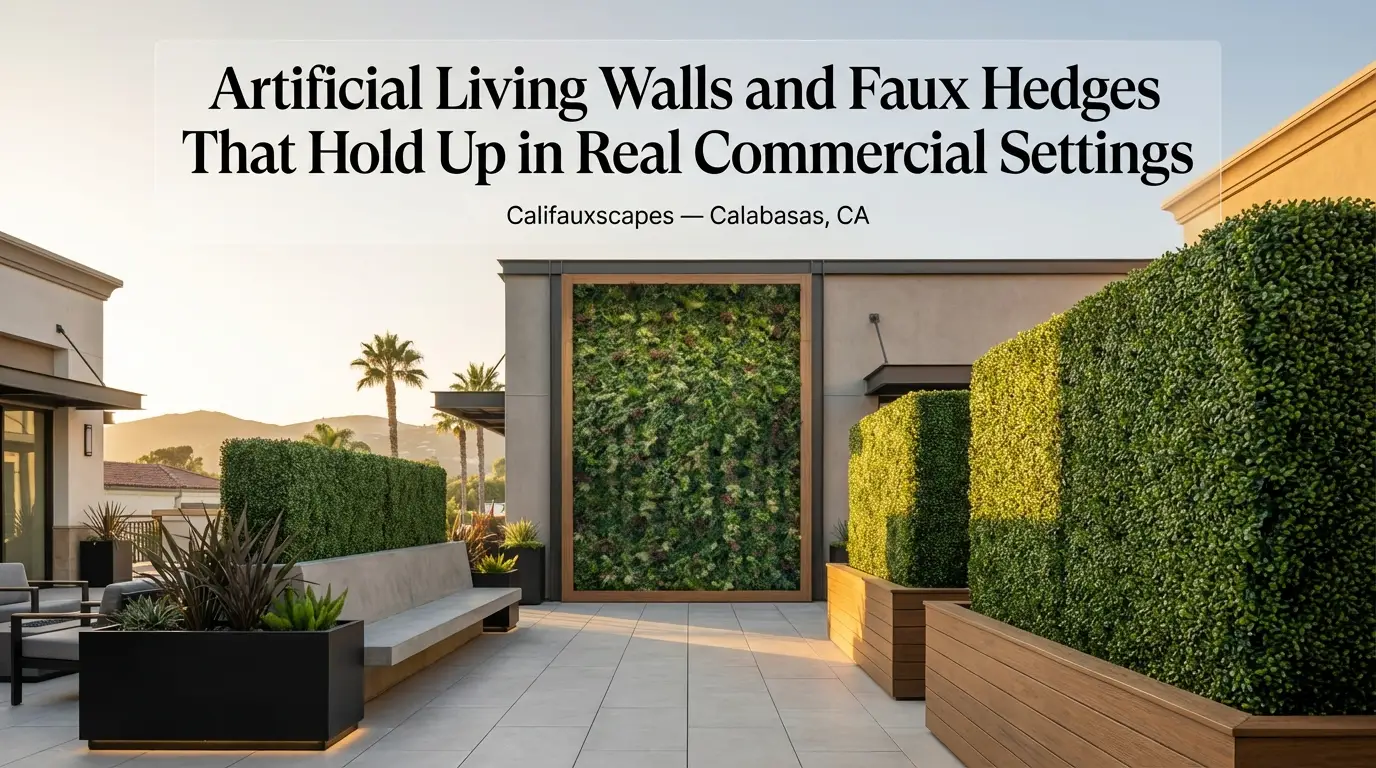
These systems are not limited to one property type. They show up on hospitality patios, multifamily amenities, office environments, private residences, and outdoor entertaining spaces. The question is not whether the property is commercial or residential. The question is whether the site condition calls for privacy, screening, or a stronger finished edge.
7. They help when upkeep needs to stay predictable
Many properties do not want the risk that comes with live material falling out of shape in a visible area. Artificial systems can be a better fit when the ownership team wants a more stable visual result and fewer recurring landscape variables in that specific zone.
8. Fence extensions can upgrade an existing edge without a full rebuild
If the existing fence or wall is in usable condition, a fence extension can be a cleaner answer than full replacement. The exact fit depends on the structure, attachment path, wind exposure, and required privacy height, but for the right condition it can solve a real problem efficiently.
9. They support design continuity across a project
Artificial systems are often used to tie together entries, courtyards, patios, and perimeters with a more consistent language. This is especially helpful when one part of the site can support live planting and another cannot, but the finished project still needs to feel cohesive.
10. They are best when the project team understands the tradeoffs
Artificial landscaping is not the right answer everywhere. It still needs the right product selection, the right backing or surface, and the right detailing to look intentional. The best projects start by identifying the real condition: privacy, screening, visual cleanup, or a vertical feature that needs to stay controlled over time.
Where to look next
- Artificial Living Wall Systems for vertical greenery on visible walls and feature surfaces
- Artificial Privacy Hedges for perimeter privacy and screening
- Fence Extensions for added privacy height on existing fences
- Artificial Hedges vs. Natural Hedges for a direct comparison