Challenge profile
What this scope is usually trying to solve
Open rooftops can feel exposed, and conventional planting plans may be difficult to maintain in elevated conditions.
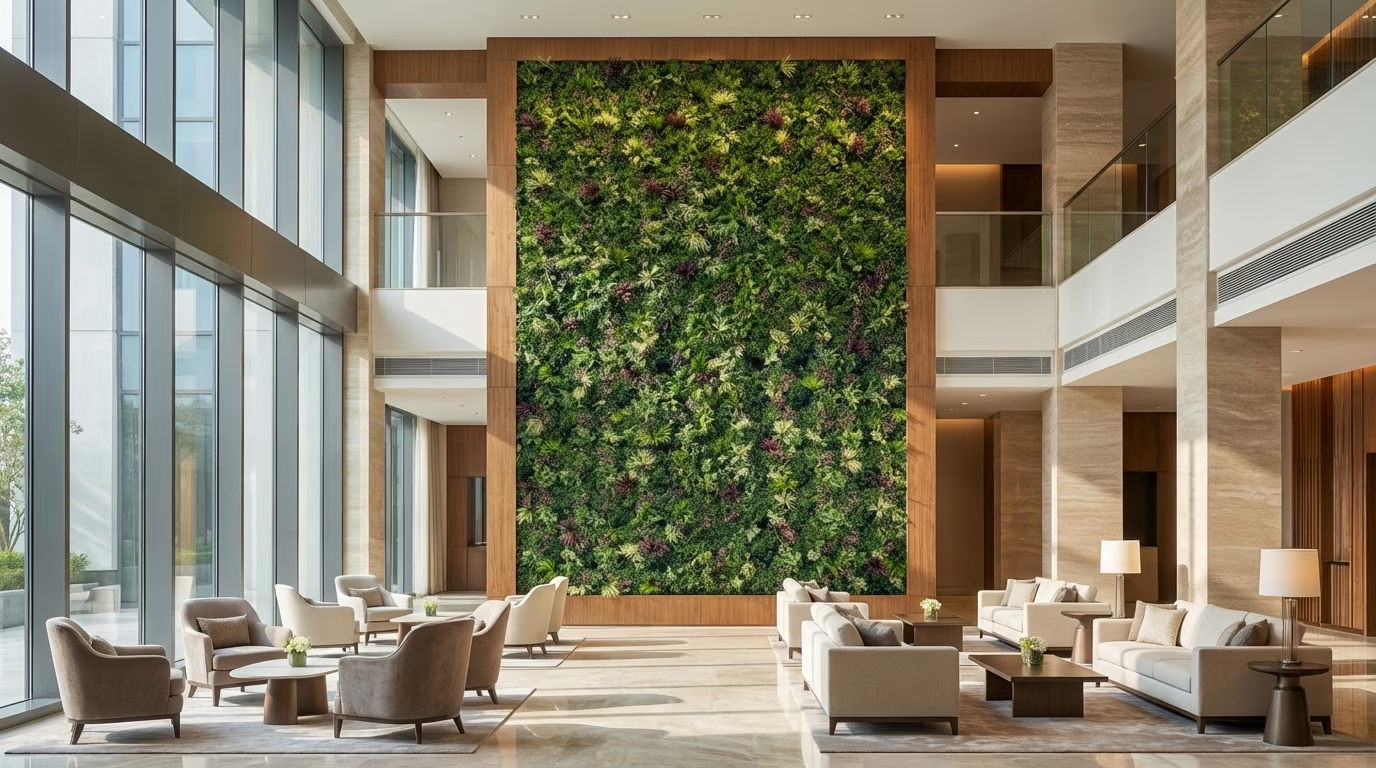
Rooftop
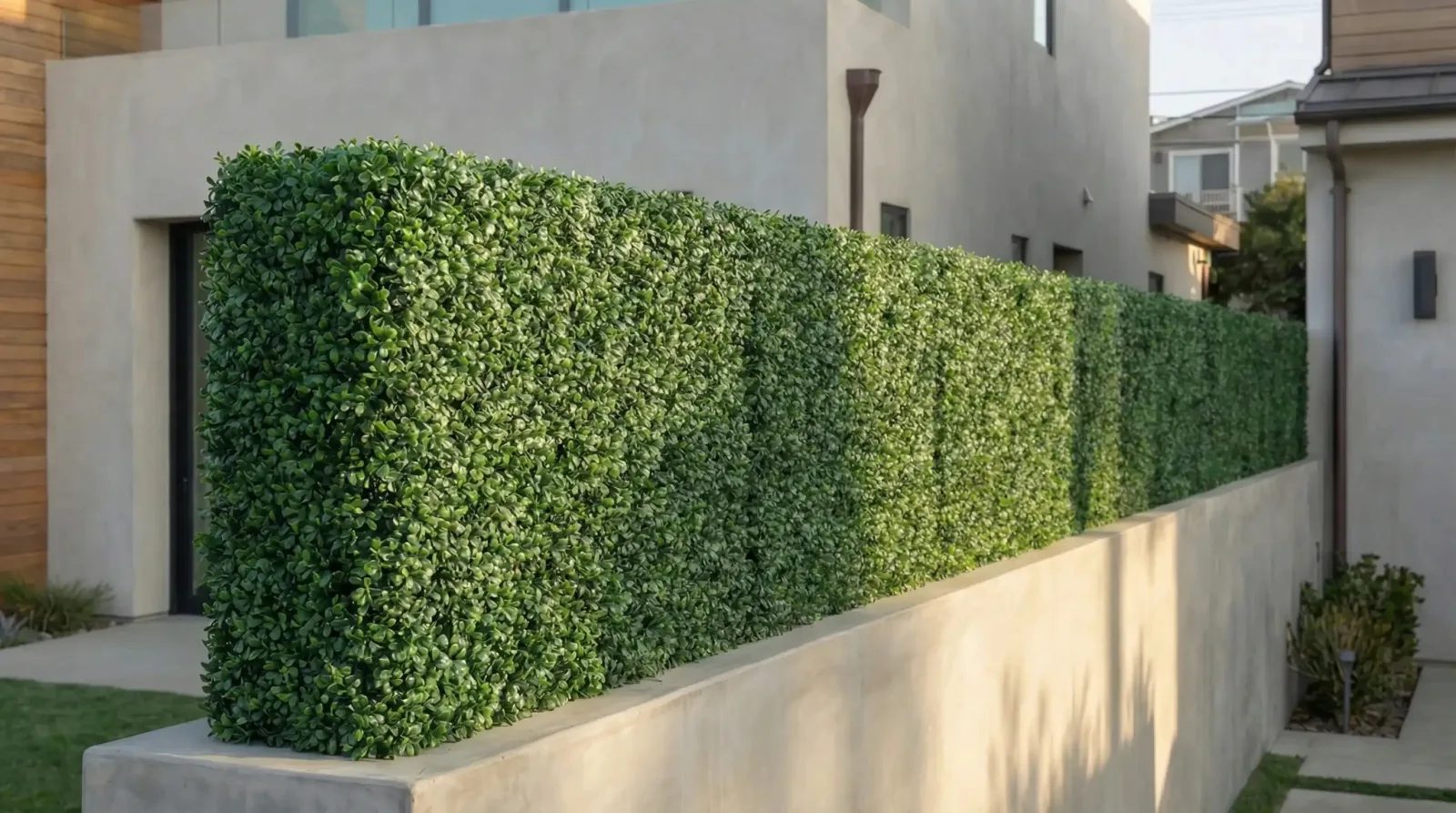
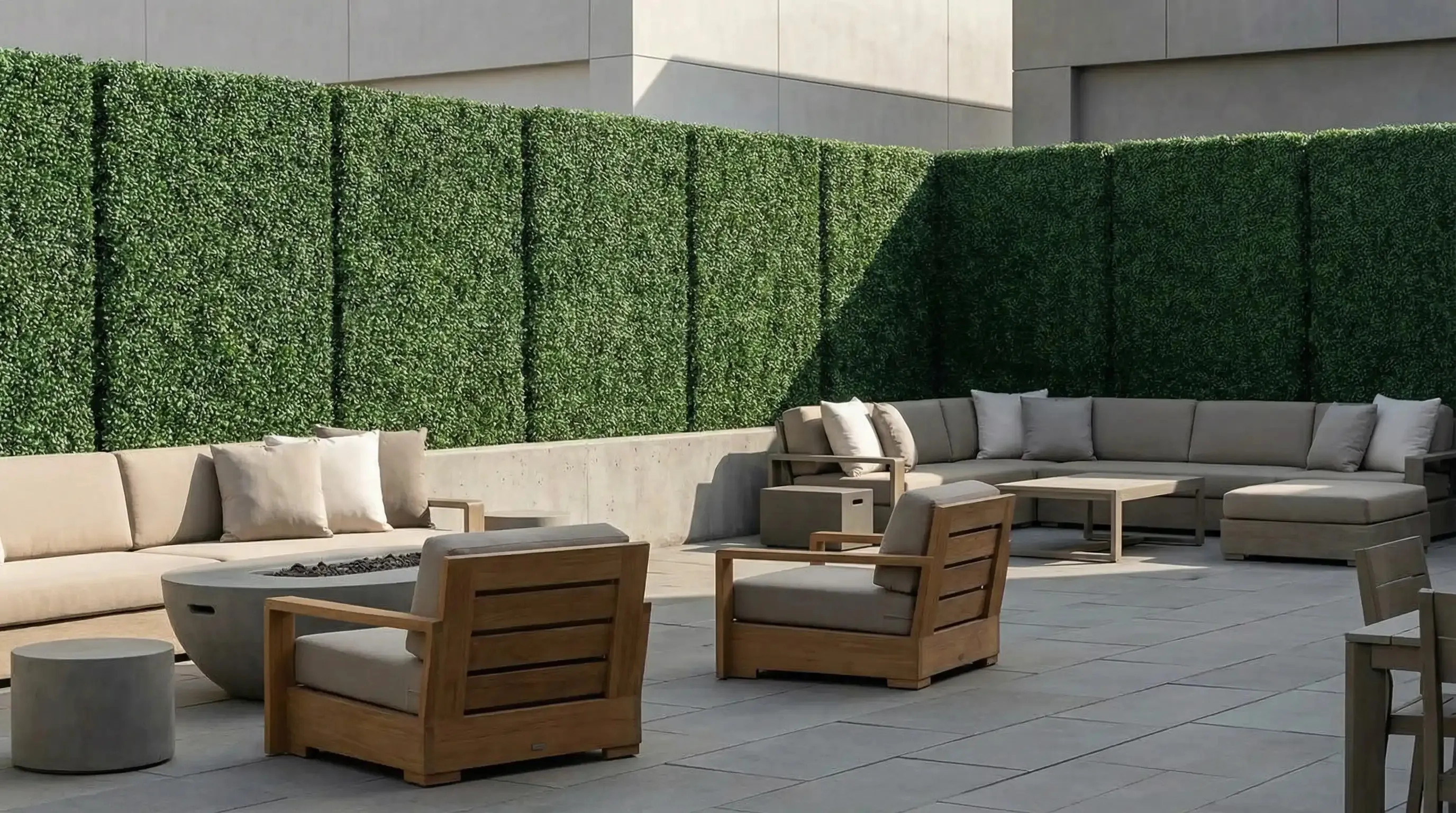
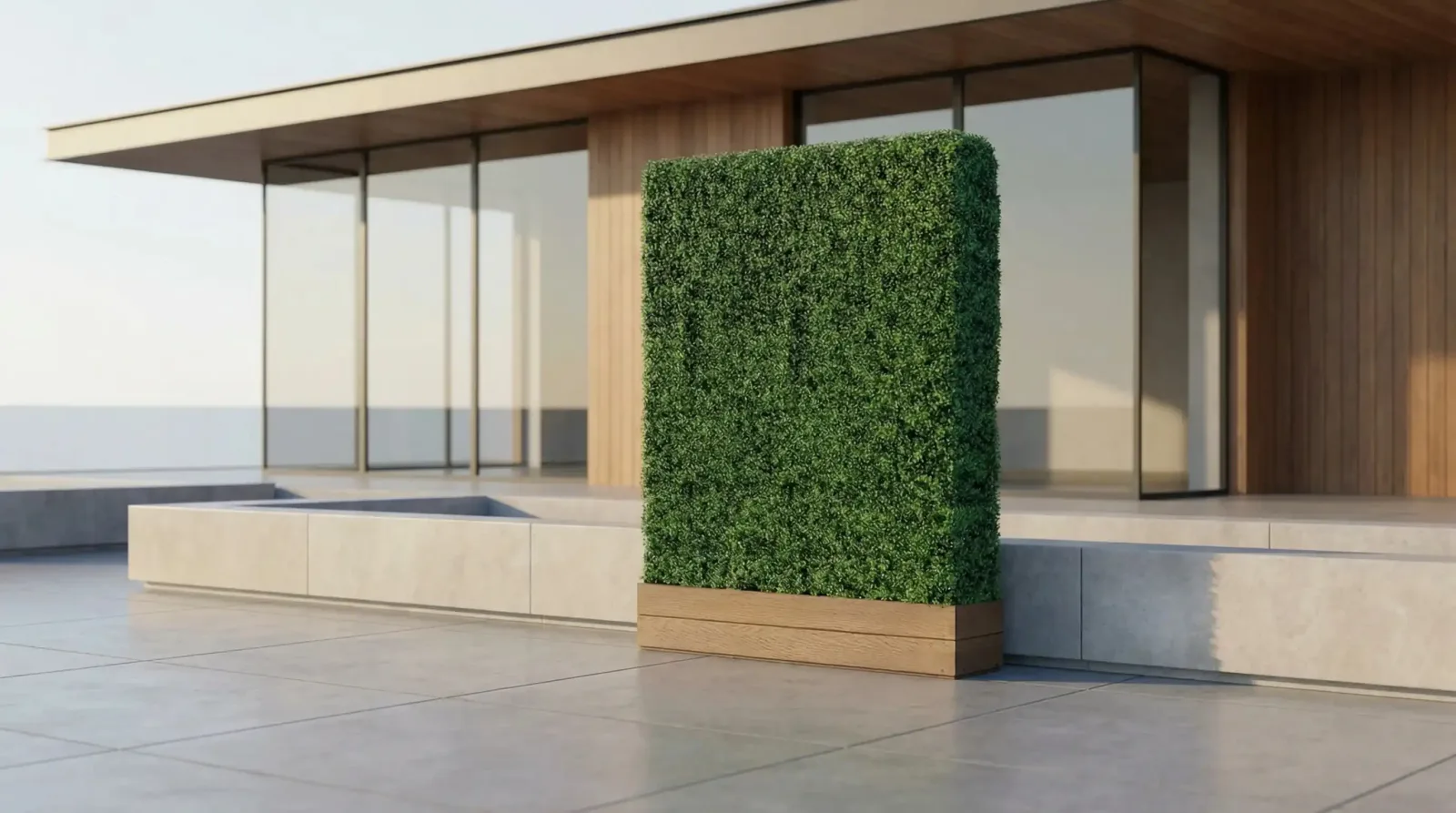
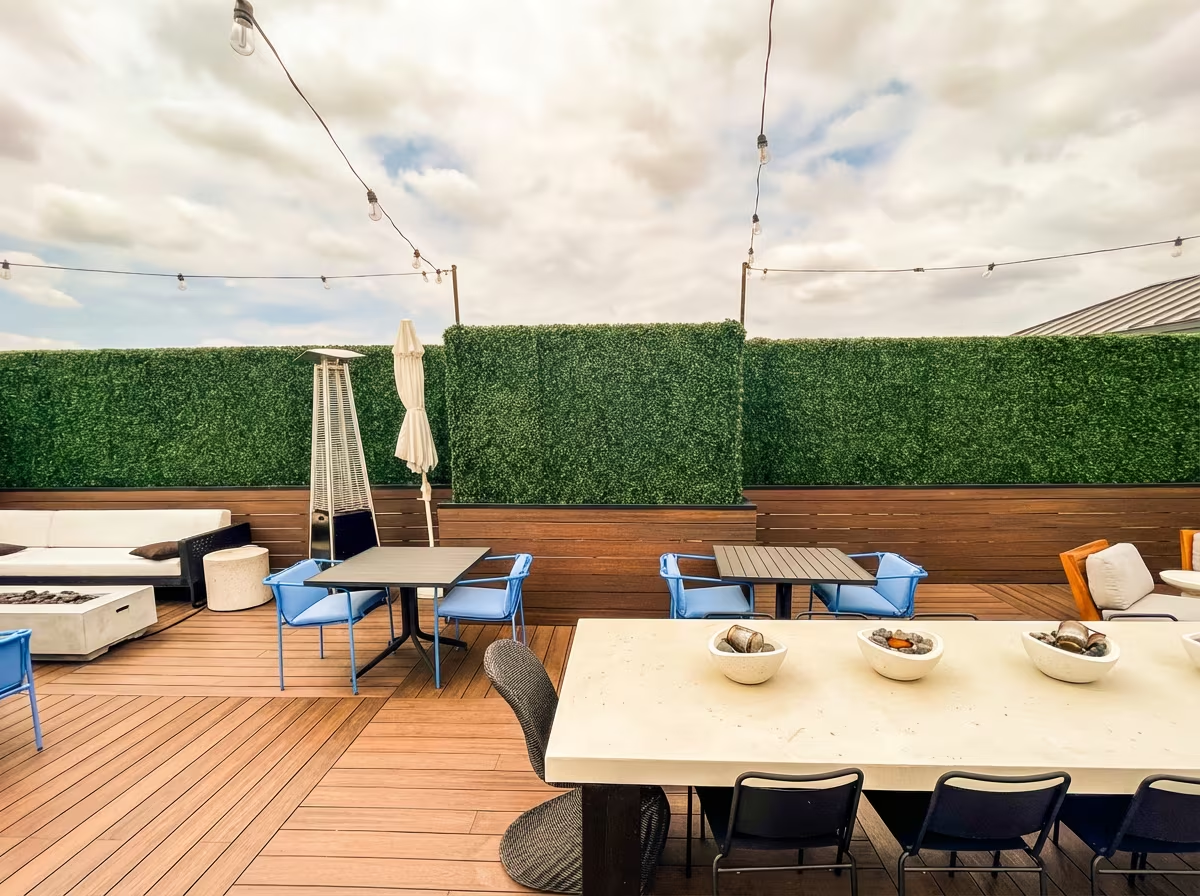
Lightweight visual screening strategies for rooftop amenity decks.
Rooftop projects frequently require privacy and visual softness while respecting structural and wind-related constraints.
Quick answer
This page summarizes how rooftop projects can use artificial screening systems for privacy and aesthetics while accounting for exposure, access, and coordination requirements.
Challenge profile
Open rooftops can feel exposed, and conventional planting plans may be difficult to maintain in elevated conditions.
Approach
We evaluate attachment conditions, wind exposure, and circulation flow before selecting lightweight systems and panel densities.
At a glance
This page summarizes how rooftop projects can use artificial screening systems for privacy and aesthetics while accounting for exposure, access, and coordination requirements.
Expected outcomes
Can soften exposed rooftop boundaries
May improve user comfort by reducing direct visual exposure
Often offers predictable appearance without extensive irrigation planning
Scope considerations
Wind and load conditions should be reviewed by the appropriate project team.
Drainage routes and roof membrane protection must be coordinated during install planning.
Panel anchoring strategy should align with base building requirements.
Planning detail
Rooftop garden projects often start with an aesthetic goal, but the real design work is usually about constraints: wind exposure, load considerations, drainage, membrane protection, access, and how much privacy the users actually need. On many rooftops, live planters look attractive in concept but introduce more irrigation, weight, and maintenance complexity than the property wants to carry. Artificial systems can be a better fit when the brief is to soften the perimeter and improve comfort without creating a more fragile rooftop environment.
That is why rooftop planning should begin with the edges and the user experience. Where do people feel exposed? Which views need screening? Are the AC units or service zones visible from the main amenity area? Does the project need a hedge line, a vertical screen, or a lighter feature treatment? Once those questions are answered, the recommendation becomes more disciplined and the scope is easier to coordinate with the broader project team.
Planning detail
A rooftop install that looks good on renderings can fail quickly if it ignores wind behavior, access paths, or how the building team will maintain the area after completion. That is why Califauxscapes usually treats rooftop work as a coordination problem as much as a design problem. The strongest scopes identify the critical edges, confirm how the system will be secured, and plan around the routes building staff still need for cleaning and service.
This is also where decision content matters. A rooftop hedge does not solve the same problem as a rooftop planter or a freestanding privacy wall. Hedges are usually better when the property wants lighter-weight screening and visual softness. More architectural privacy systems make more sense when the edge needs tighter control. Guides and case studies help clarify those differences before the design team locks itself into a direction that creates unnecessary complexity later.
Related rooftop project
This case study is relevant because it shows how Califauxscapes approaches rooftop visibility, equipment screening, and privacy planning where the amenity experience depends on more than just adding greenery.
CalifauxScapes installed 300 sq ft of UV-resistant artificial hedges on an LA commercial rooftop to screen AC units and create a usable lounge space for employees and clients. Done in 3 weeks.
Open case studyDecision framework
Rooftop decisions usually get easier once the team decides whether the main problem is visual softness, direct privacy, equipment screening, or a stronger architectural edge.
Best when the project wants softer screening, lighter visual weight, and a greener edge without a planter maintenance program.
If the site needs more precise screening or a more rigid geometry, a privacy wall may work better.
Best when the rooftop needs a tighter, more controlled screen or stronger separation between zones.
If the rooftop wants a more landscape-like finish, hedges usually read better.
Live or planted solutions can work when load, irrigation, and maintenance are fully supported.
When those conditions are weak, artificial systems often provide a more practical ownership path.
Recommended products
Supporting projects
Related resources
Useful for rooftop edges that need softer screening.
Helpful when the rooftop needs a more controlled architectural screen.
A strong option when an existing edge can be upgraded instead of replaced.
Budget-planning support for rooftop scopes.
Explore next
FAQ
Yes. Attachment method, wind exposure, drainage paths, and building requirements are typically reviewed in detail before final scope.
In many cases yes, if existing structures are suitable and local requirements are met.
Many rooftop projects include custom detailing, though some modules can still be standardized by zone.
Long-term appearance is usually supported by material selection and periodic cleaning/inspection plans.
Coverage
5-year limited UV warranty on qualifying products and 1-year installation workmanship warranty.
Coverage is limited and subject to product eligibility, installation scope, and written warranty terms.
5-year limited UV
1-year installation
Written terms apply