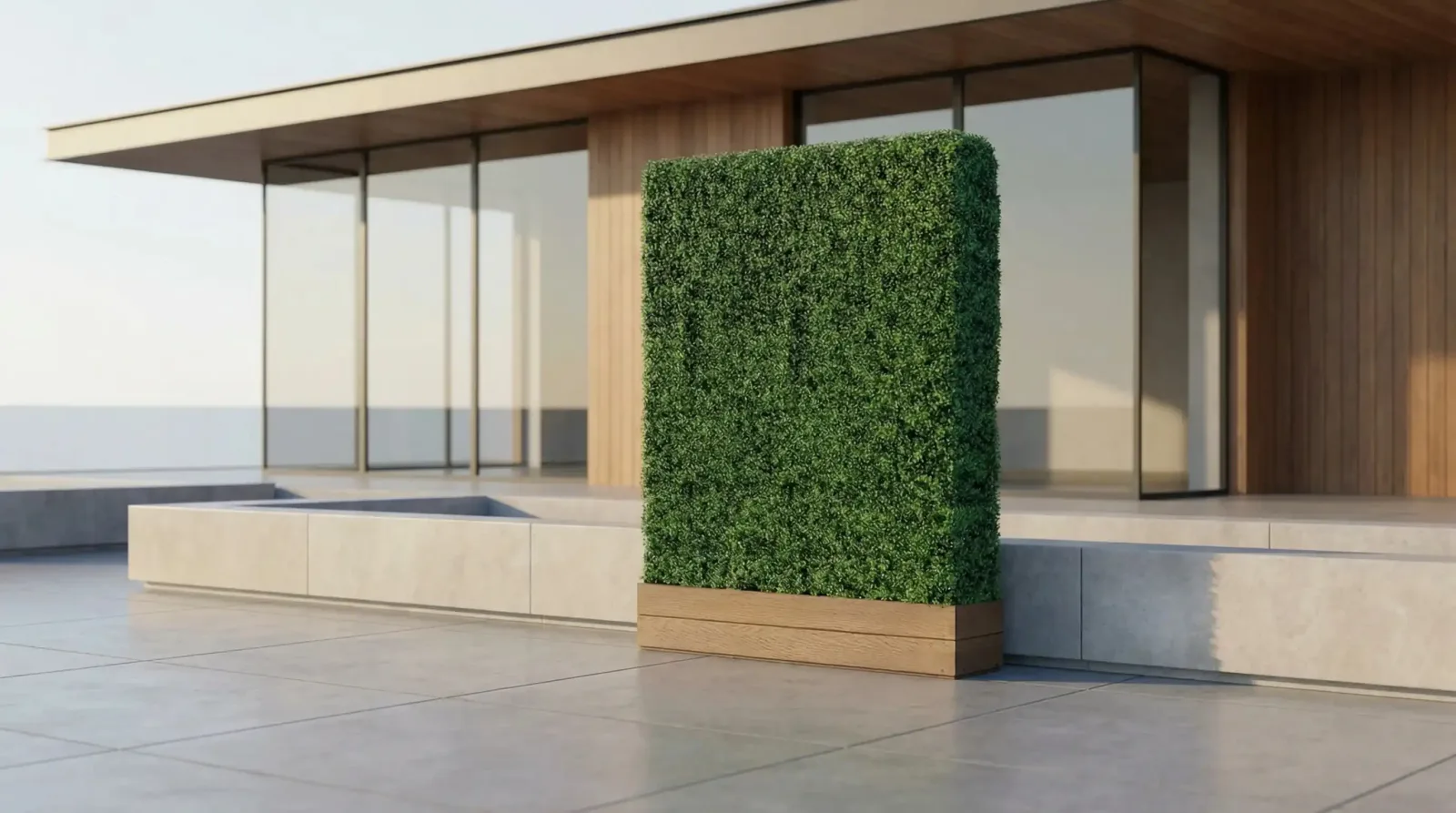
Challenge profile
What this scope is usually trying to solve
Guest spaces need premium presentation while minimizing visual downtime from ongoing plant maintenance.
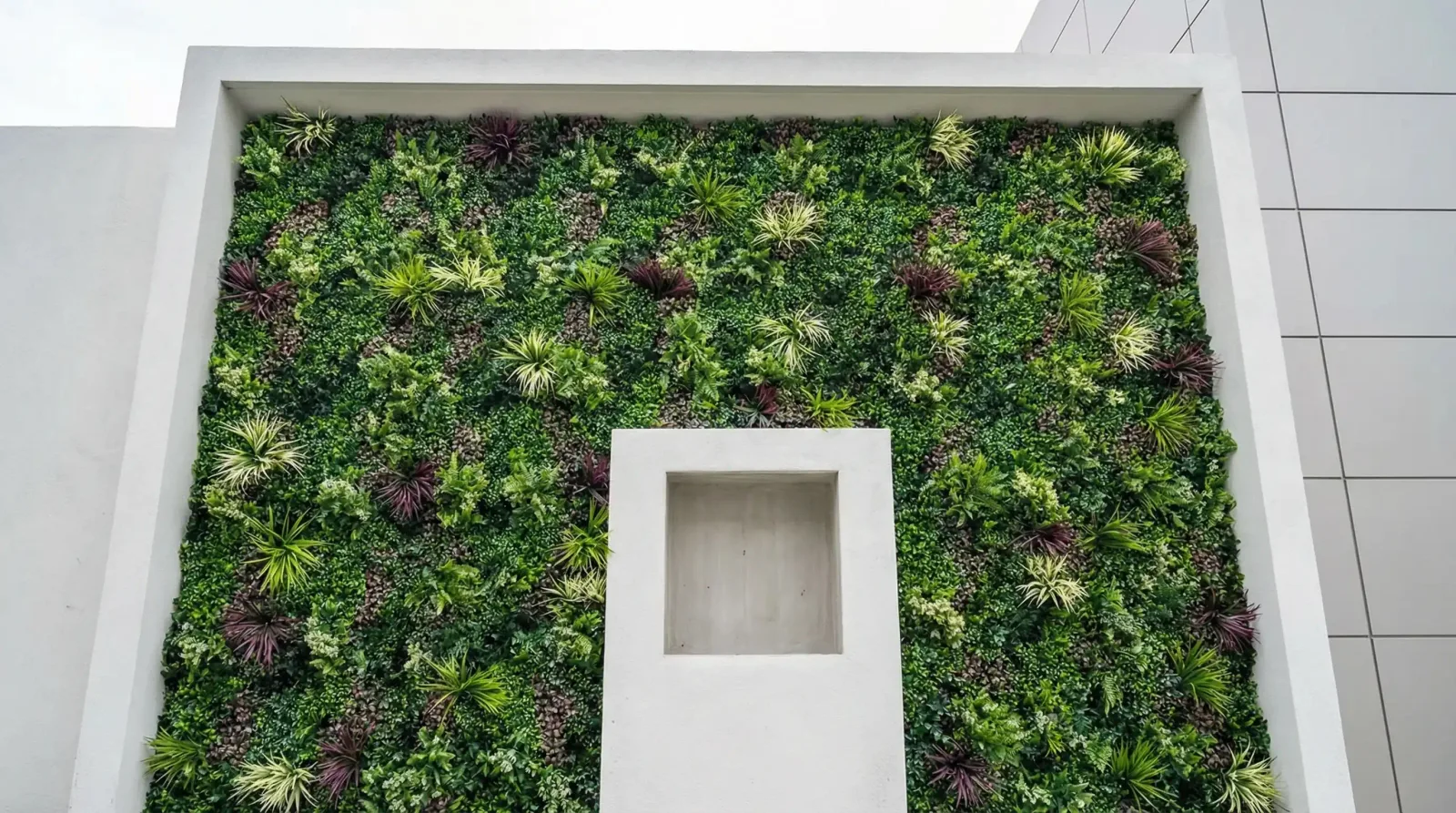
Hospitality
Guest-facing greenery systems for lobbies, patios, and event zones.
Hospitality teams often use artificial landscaping to maintain visual consistency in high-occupancy environments.
Quick answer
This page covers how hospitality teams can evaluate artificial landscaping for guest-facing areas while balancing aesthetics, service timing, and ongoing upkeep expectations.
Challenge profile
Guest spaces need premium presentation while minimizing visual downtime from ongoing plant maintenance.
Approach
We tune texture, scale, and placement around guest pathways, photo moments, and operations constraints.
At a glance
This page covers how hospitality teams can evaluate artificial landscaping for guest-facing areas while balancing aesthetics, service timing, and ongoing upkeep expectations.
Expected outcomes
Can support curated guest-facing aesthetics through seasonal shifts
May reduce maintenance interruptions during active service windows
Often improves visual cohesion between indoor and outdoor zones
Scope considerations
Material finish should be selected against the property lighting profile.
Installation timing should coordinate with events and occupancy patterns.
Cleaning protocol should be documented for long-term appearance.
Planning detail
A hospitality property rarely evaluates artificial landscaping as a stand-alone product purchase. The install is usually part of a broader guest-experience question: how the arrival feels, whether a patio reads as private enough, how a wedding or event space photographs, or whether the property can keep a polished look through peak occupancy without visible maintenance disruption. That is why hospitality planning should begin with the guest journey and not with the plant style alone.
When the work is scoped well, the system supports both operations and atmosphere. Patios stay visually consistent during heavy service periods, arrival edges feel more finished, and privacy improvements do not require irrigation or weekly horticultural touch-ups in the middle of active guest use. That matters on hotels, restaurants, venues, and resort properties where every visible edge shapes how the brand is experienced in person and online.
Planning detail
For hospitality teams, installation timing and visual consistency are often just as important as the product category. The site may need phased work around occupancy, quieter installation windows, and clear post-install maintenance expectations so the finished system stays guest-ready during active service. That is also why hospitality work tends to benefit from a more explicit scope narrative: what the install should do, which guest moments it supports, and what operational problem it is solving.
Case studies and guides are especially useful here because they show how other properties handled similar conditions. A hotel comparing oceanfront ceremony privacy to restaurant patio screening is still evaluating the same basic issues: guest visibility, serviceability, wind or exposure, and whether the finished effect should read as soft greenery or a more formal architectural backdrop.
Related hospitality project
This project matters because it shows how Califauxscapes plans around guest-facing visibility, event conditions, and the need for a premium finish that can stay consistent through active operations.
CalifauxScapes built custom mobile artificial boxwood hedges for L'Auberge Del Mar's oceanfront wedding deck. UV-resistant, on locking casters, installed in 3 weeks. Replaced costly hedge rentals.
Open case studyDecision framework
The decision usually gets easier once the property knows whether the priority is guest privacy, a stronger feature moment, or a cleaner backdrop that will hold through service cycles and events.
Best for ceremony edges, patio dividers, and dining zones where the property wants a softer privacy effect.
If the site needs a vertical feature or entry statement more than screening, a living wall is often the better move.
Best when the property needs a signature backdrop, arrival statement, or guest-facing feature wall.
If line-of-sight control matters more than visual impact, privacy systems usually carry more value.
Best when the property has both arrival and privacy needs, such as a hotel with ceremony, patio, and entry zones.
A one-product strategy can feel cleaner on simpler properties, but mixed scopes are common in hospitality.
Recommended products
Supporting projects
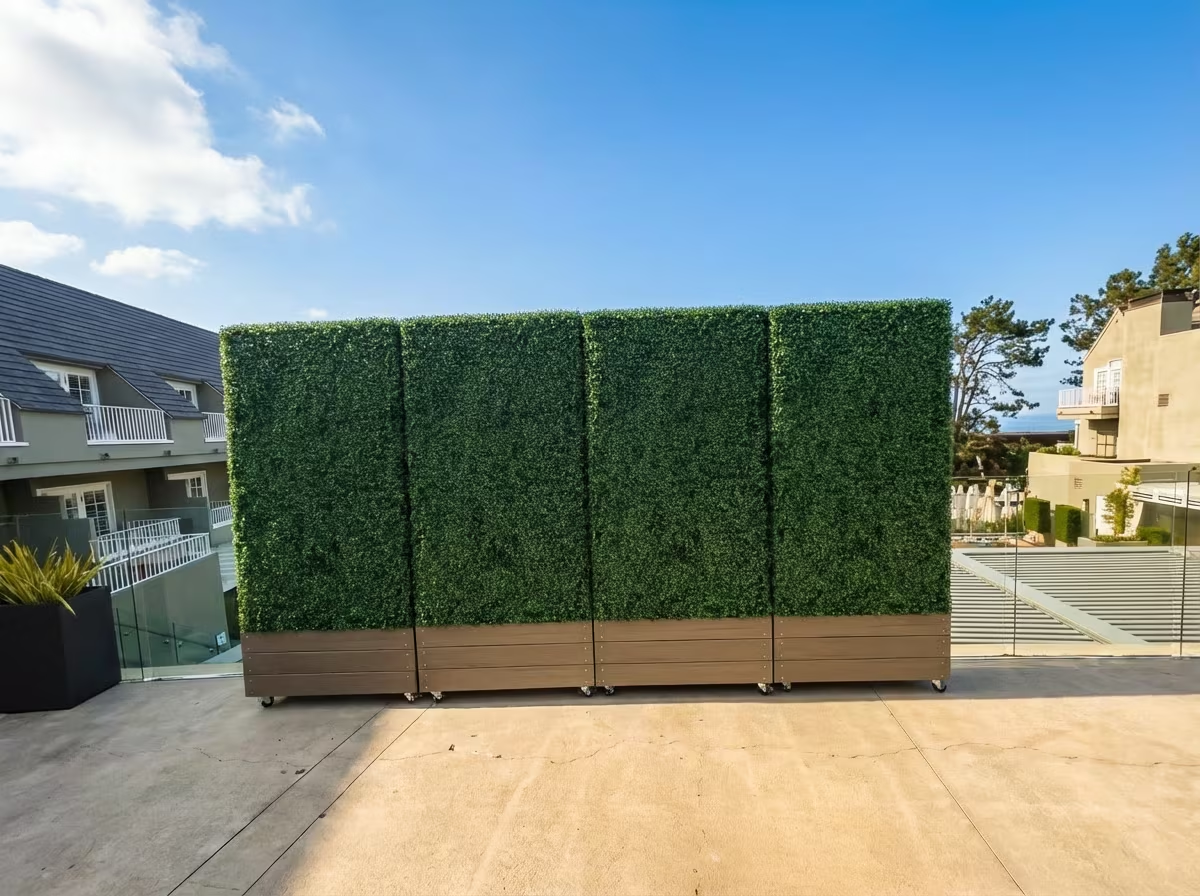
Del Mar
CalifauxScapes built custom mobile artificial boxwood hedges for L'Auberge Del Mar's oceanfront wedding deck. UV-resistant, on locking casters, installed in 3 weeks. Replaced costly hedge rentals.
Open case study
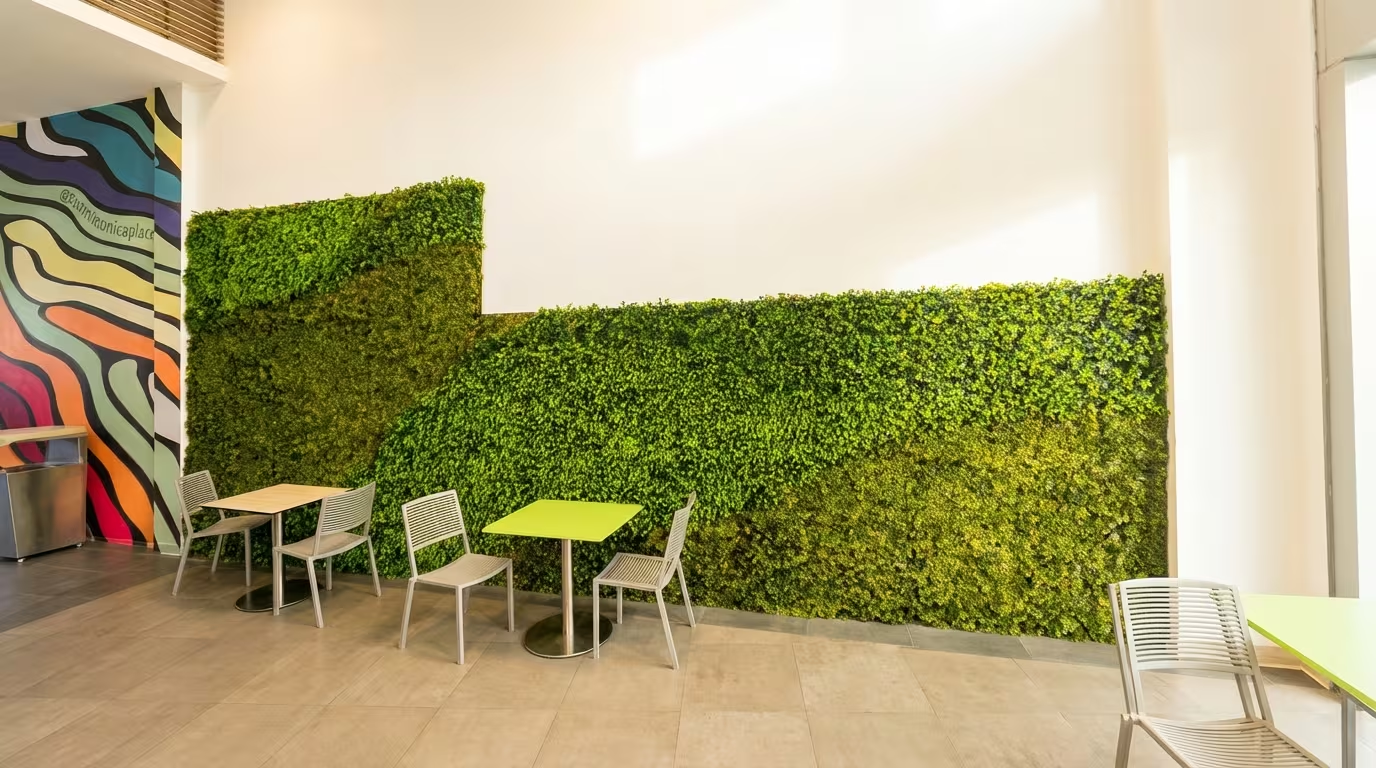
artificial living wall Santa Monica
CalifauxScapes designed and installed a 420 sq ft custom artificial living wall for a Santa Monica, CA mall food court. Three foliage types in a fluid pattern, UV-resistant materials, installed overnight.
Open case study
Related resources
Strong for hospitality screening and guest-comfort zones.
Best when the property needs a feature-driven installation.
Useful when hospitality teams are comparing living wall scope and detailing.
Current editorial context for design-forward hospitality environments.
Explore next
FAQ
Many start with high-visibility zones such as arrival areas, patios, and event-adjacent spaces where visual consistency is a priority.
In many cases yes. Material tone and texture can be selected to align with architecture and brand positioning.
Installation is often scheduled around occupancy and events to reduce operational impact.
Not always. Some properties use hybrid strategies depending on irrigation access, maintenance goals, and design intent.
Coverage
5-year limited UV warranty on qualifying products and 1-year installation workmanship warranty.
Coverage is limited and subject to product eligibility, installation scope, and written warranty terms.
5-year limited UV
1-year installation
Written terms apply