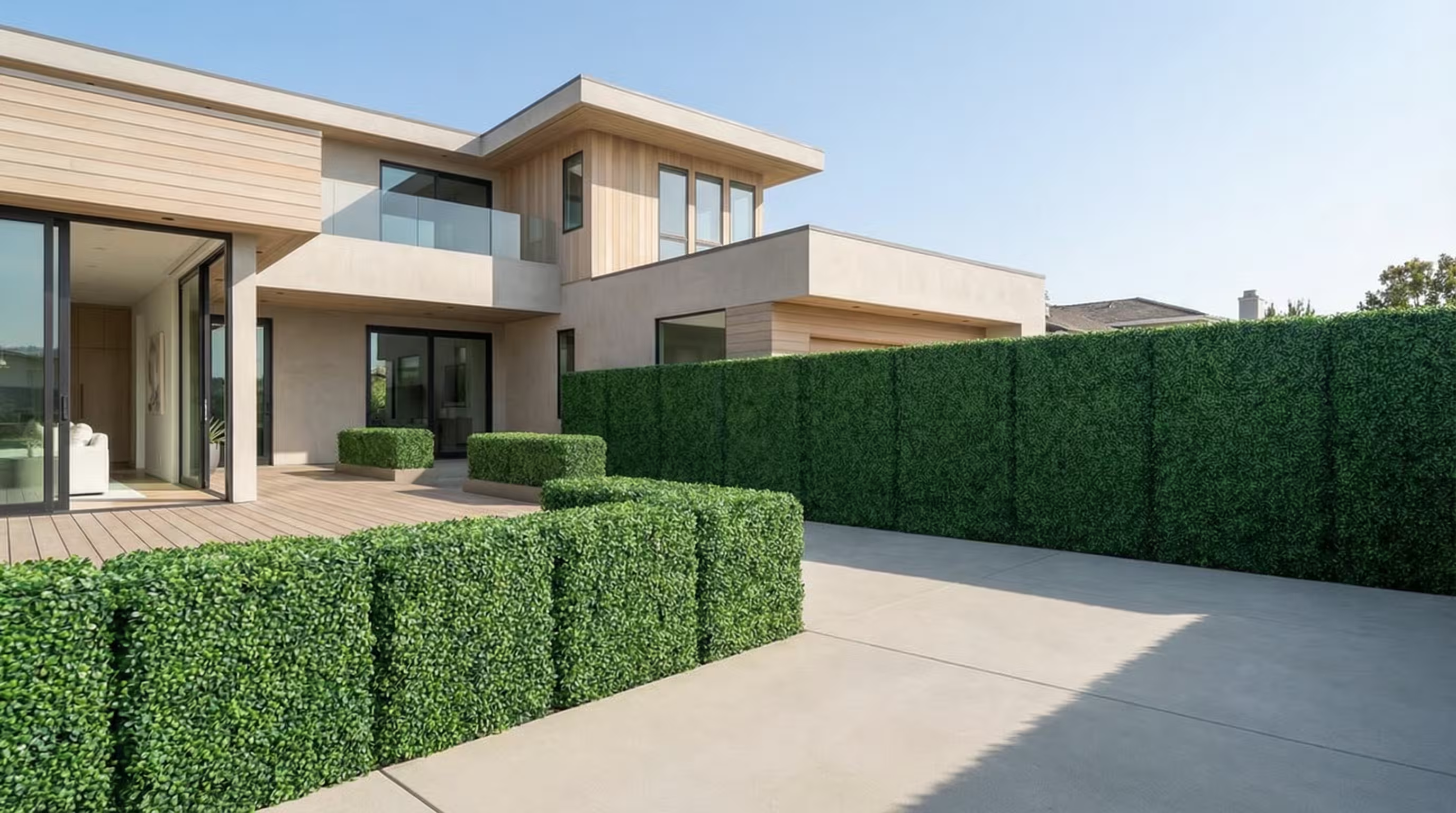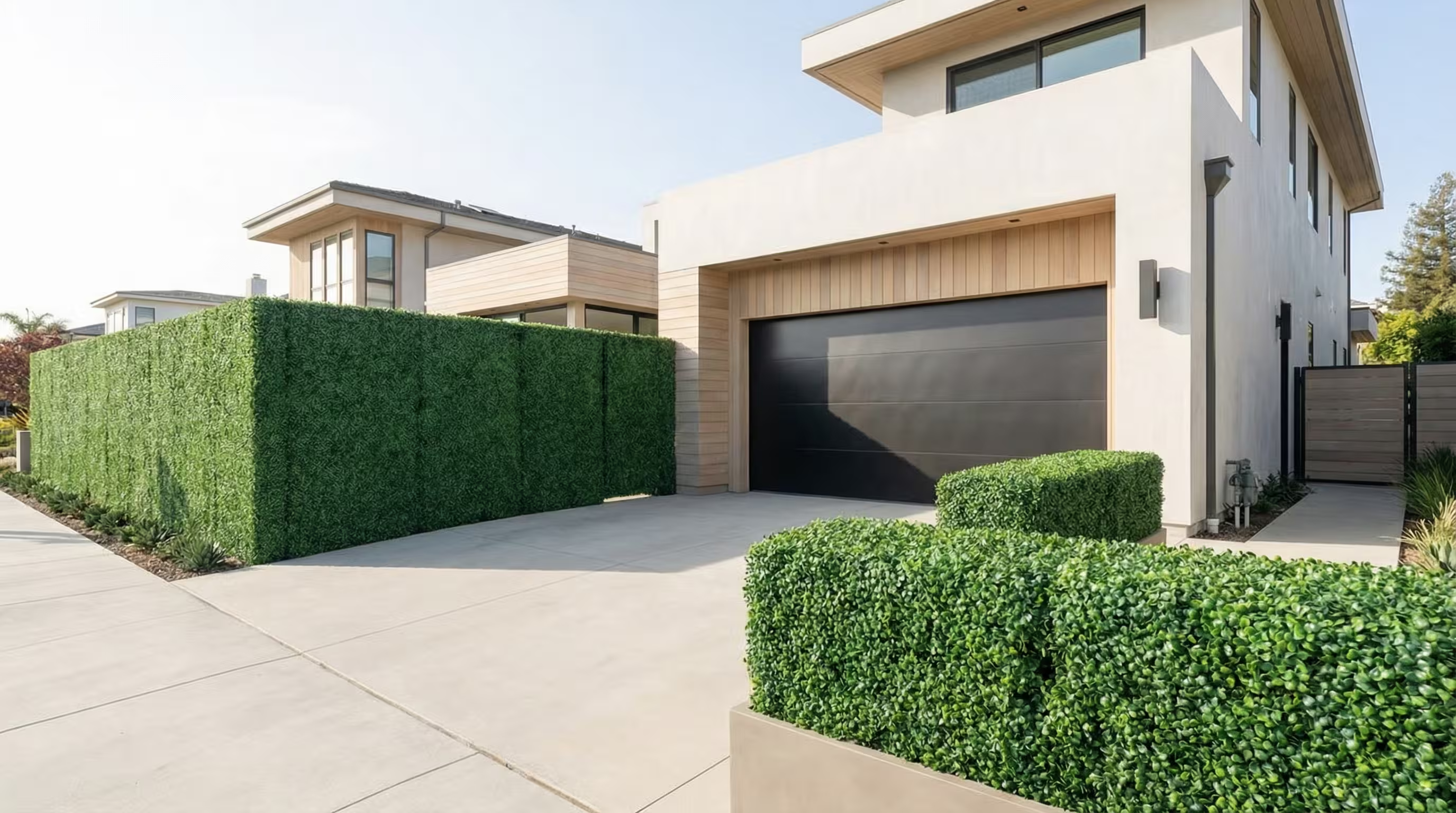
The short answer: artificial hedges do not block noise the way a wall does — sound reduction comes from mass, and foliage panels are light. What a dense artificial hedge does do is break up sightlines, soften hard reflective surfaces, and make a space feel enclosed — and in real yards and patios, that combination reliably makes outdoor spaces feel quieter, even though the decibel meter barely moves. If you need measurable noise reduction, the honest recipe is mass first (a wall or solid fence), greenery second.
Why a "quieter" yard is mostly a privacy problem
When people say their yard feels noisy, the full sentence is usually "noisy and exposed." If you can see every passing car, every second-story window, and every neighbor walking the fence line, the space never feels settled. Controlling the sightline changes how the brain processes the sound that remains — a screened patio with the same background noise level reads as calmer than an exposed one. That is not marketing language; it is the consistent feedback we hear after privacy installations across California homes and restaurant patios.
Artificial hedges also add soft, irregular surface texture in places where bare block walls, stucco, glass, and metal railings bounce sound around a courtyard. High frequencies — voices, clinking dishes — scatter against dense foliage instead of reflecting cleanly. The effect is modest and real: less echo, less harshness, especially in enclosed patios and courtyards with lots of hard surface.
What actually reduces outdoor noise
| Approach | Noise effect | Honest notes |
|---|---|---|
| Solid wall or fence (mass) | Meaningful reduction | The only reliable way to cut transmitted sound. Height and the absence of gaps matter most. |
| Artificial hedge on an existing wall or fence | Small acoustic effect, large perceived effect | Softens reflections and completes the visual enclosure. Pairs well with the mass that does the heavy lifting. |
| Artificial hedge alone (freestanding) | Minimal measured reduction | Privacy and enclosure benefits are real; decibel reduction is not the reason to buy it. |
| Living hedge | Similar to artificial once fully dense | Takes 2–5 growing seasons to reach the density that matters, and thins at the base over time. |
| Water feature | Masking, not reduction | Pleasant sound in the foreground makes background noise less noticeable. |
The pattern that works on real projects: let mass block the sound, let greenery fix the way the space feels. A fence extension that adds height to an existing wall, finished with dense hedge panels, addresses both at once.
Where artificial hedges earn their keep
- Shared property lines — completing the visual screen above an existing fence, where most of the "noise" complaint is actually exposure.
- Pool and lounge areas — softening stucco-and-concrete echo while screening neighboring windows.
- Restaurant patios — hedge dividers tame the harshness of hard-surface courtyards and define seating zones. Fire-rated panel options exist where the fire marshal requires documentation.
- Rooftop decks and balconies — places with no soil, where a living screen was never an option to begin with.
- Small urban yards — where a planted hedge would give up half the usable space to root zone and grow-in time.
Unlike a living screen, an installed artificial privacy hedge is at full density on day one, holds that density at the base year after year, and needs no irrigation or trimming — an occasional rinse is the maintenance plan. UV-stabilized product typically lasts 8–10 years outdoors.
How to plan a quieter outdoor space, in order
- Identify the noise path. Street level, or elevated (freeway, second stories)? Elevated sources are hard to block and favor the perception strategy.
- Add mass where it counts. A solid fence or wall along the noise-facing edge, as tall as your city allows — our California fence height guide covers where the limits come from.
- Close the visual gaps. Hedge panels above and along the structure complete the enclosure that makes the space read as calm.
- Soften the hard surfaces. Foliage on echo-prone walls, especially in courtyards.
- Add a foreground sound if it suits the space. A small water feature masks what remains.
The honest bottom line
If a vendor promises that hedge panels will "soundproof" your patio, be skeptical — that claim does not survive a decibel meter. What dense artificial hedges genuinely deliver is privacy, enclosure, and softer acoustics in hard-surfaced spaces, with zero water and no grow-in period. For most California yards and patios, that is exactly the change that makes the space feel quiet enough to actually use.
Wondering what fits your site? Send us photos and rough dimensions and we will tell you straight — including when the right answer is a wall, not a hedge.
Pricing your project?
Get a written quote for your wall, fence line, or patio
200+ California installations since 2017. Typically installed in days. 3–5 year limited UV fading warranty (varies by product line) on qualifying products. Installation services are provided by Geranium Street USA, Inc., CSLB #955154.