NFPA 701 Method 2 Explained: Fire-Rated Artificial Plants for California Businesses
What the test actually measures, where California businesses get asked for it, and how to specify fire-retardant artificial hedges and living walls that pass review.
By Alex TarnowskiUpdated June 9, 202610 min read
At a glance
NFPA 701 Method 2 is the flame-propagation test that applies to artificial foliage. Passing means the material self-extinguishes rather than spreading flame — fire-retardant, never "fireproof." California businesses typically need product-specific test reports for artificial greenery in hotels, restaurants, casinos, offices, and multifamily common areas, with the local fire authority making the final call.
Planning note: any timelines, cost examples, or ownership comparisons in this guide are for early specification and budgeting conversations only. Final scope depends on existing conditions, attachment strategy, access, and field verification.
Table of contents
If you manage a hotel, restaurant, casino, office, or multifamily property in California and you want artificial greenery in or around the building, there is a fair chance someone — a fire marshal, a plan reviewer, an insurer, or your own facilities team — will eventually ask one question: is it fire-rated? The standard they are usually referring to is NFPA 701, and specifically Method 2 for the kinds of synthetic materials used in artificial foliage.
This guide explains what NFPA 701 Method 2 actually tests, what passing it does and does not mean, where the requirement typically applies in California, and how to specify artificial hedges and living walls that will clear review the first time. One thing to state plainly up front, because the marketing around this topic gets loose: no foliage product is fireproof. The honest vocabulary is fire-retardant — and understanding the difference is most of what this guide is for.
What NFPA 701 actually is
NFPA 701 is the National Fire Protection Association’s Standard Methods of Fire Tests for Flame Propagation of Textiles and Films. In plain terms, it is a laboratory burn test that measures how a material behaves when a flame is applied and then removed: does the flame keep spreading, how much material is consumed, and does burning material drip in a way that could spread fire?
The standard contains two test protocols. Method 1 covers lighter fabrics such as drapes and curtains. Method 2 covers heavier materials, plastics, films, and vinyl-coated products — which is why it is the protocol relevant to artificial foliage, where polyethylene or PVC leaves are mounted on plastic backing panels.
A product that passes Method 2 self-extinguished within the standard’s limits when the flame source was removed, with limited material loss and controlled dripping behavior. That is meaningful: in a fire event, the material is not adding fuel the way untreated plastic foliage would. What it is not is a claim that the product cannot burn. Sustained flame exposure will damage and consume any foliage product. Fire-retardant means the material resists propagating flame, not that it is immune to fire.
The rating arrives in two ways: inherently fire-retardant product lines, where the resin itself is formulated with retardant compounds during manufacturing, and topically treated product, where a retardant coating is applied afterward. Inherent treatment is generally the stronger specification outdoors, because topical coatings can weather away with sun and rain exposure.
✕ "Fireproof" is not a real foliage rating
No artificial plant product is fireproof. Vendors using that word are overclaiming. The accurate term is fire-retardant, documented by an NFPA 701 Method 2 test report.
✕ Method 2 is the one that matters here
Method 1 covers light textiles like drapery. Artificial foliage — plastics, films, coated panels — falls under Method 2. Check which protocol a vendor’s test report actually cites.
✕ Treated vs. inherent matters outdoors
Topical retardant coatings can weather off in exterior exposure. For outdoor installations, inherently fire-retardant material is typically the more durable specification.
Where California businesses actually get asked for it
There is no single statewide rule that says "all artificial plants must be NFPA 701 rated." What exists instead is the California Fire Code’s treatment of decorative materials in regulated occupancies, enforced by the local fire authority having jurisdiction (AHJ). Decorative vegetation — and artificial foliage is decorative vegetation in the code’s eyes — in assembly spaces, hotels, and similar occupancies is generally required to be flame-resistant or flame-retardant, and an NFPA 701 test report is the standard way to demonstrate it.
In practice, the request shows up most often in: hotels and resorts (lobbies, corridors, event spaces), restaurants and bars (especially patio dining with overhead greenery or hedge dividers), casinos and entertainment venues, retail common areas and malls, office building lobbies and amenity floors, and multifamily corridors, club rooms, and shared rooftops. Interior installations draw scrutiny most reliably, but exterior installations near exits, under canopies, or on rooftop amenity decks get flagged too.
The enforcement moment is usually one of three: plan review for a new build-out or tenant improvement, the fire marshal’s periodic inspection, or an event permit review. The pattern we see on commercial projects is consistent — the documentation request is routine when it is anticipated, and expensive when it is not. Removing and replacing non-compliant greenery after an inspection costs far more than specifying rated product up front.
“Decorative vegetation in regulated occupancies is generally required to be flame-retardant under the California Fire Code, and an NFPA 701 test report is the standard proof. Your local fire authority makes the final call — when in doubt, ask them before you install, not after.”
— California Fire Code, decorative materials provisions; verified per-project with the local AHJ
Method 2
The NFPA 701 protocol for foliage
Covers plastics, films, and vinyl-coated materials used in artificial greenery
AHJ
Who decides locally
The fire authority having jurisdiction interprets and enforces the California Fire Code for your address
3
Common enforcement moments
Plan review, periodic fire inspection, and event permitting are when documentation gets requested
Standard vs. fire-retardant product: what changes
Visually, almost nothing — modern FR foliage lines are offered in the same boxwood, mixed-greenery, and living wall styles as standard product, and a finished installation reads the same to guests. What changes is the material certificate behind it, and modestly, the price.
For specification purposes, the practical differences are documentation and sourcing. Fire-retardant lines ship with a test report tied to the specific product — not a generic brochure claim — and that report is what plan reviewers and fire marshals actually accept. Lead times can be slightly longer for FR product, which matters on tenant-improvement schedules. And not every style is available in an FR version, so locking the rating requirement early keeps the design options honest.
Whether a given project needs FR product is a fit question: a private backyard hedge almost never does; a hotel lobby living wall almost always does; a restaurant patio falls wherever the local AHJ says it falls. This is exactly the kind of thing a project review settles before materials are ordered.
Standard foliage
Fire-retardant (NFPA 701 M2)
Appearance
Full style range
Same styles; FR availability varies by line
Documentation
None
Product-specific NFPA 701 Method 2 test report
Typical fit
Residential, most exterior privacy projects
Hotels, restaurants, casinos, offices, multifamily common areas
Plan review
May be rejected in regulated occupancies
Passes the decorative-materials check with documentation on file
Cost
Baseline
Modest premium; far cheaper than post-inspection replacement
How to specify it: a short checklist
If your project is commercial, run this sequence before ordering anything. One: confirm the occupancy context — assembly, hotel, multifamily common area, or office — and whether the installation is interior, exterior, or near egress paths. Two: ask the local fire authority (or your architect’s code consultant) whether decorative vegetation provisions apply to your specific placement. Three: require a product-specific NFPA 701 Method 2 test report from whoever supplies the foliage — a brochure that says "fire safe" is not documentation. Four: confirm whether the rating is inherent or topical, especially for exterior work. Five: keep the test report in your building’s compliance file, because the inspector who asks may not be the one who approved the install.
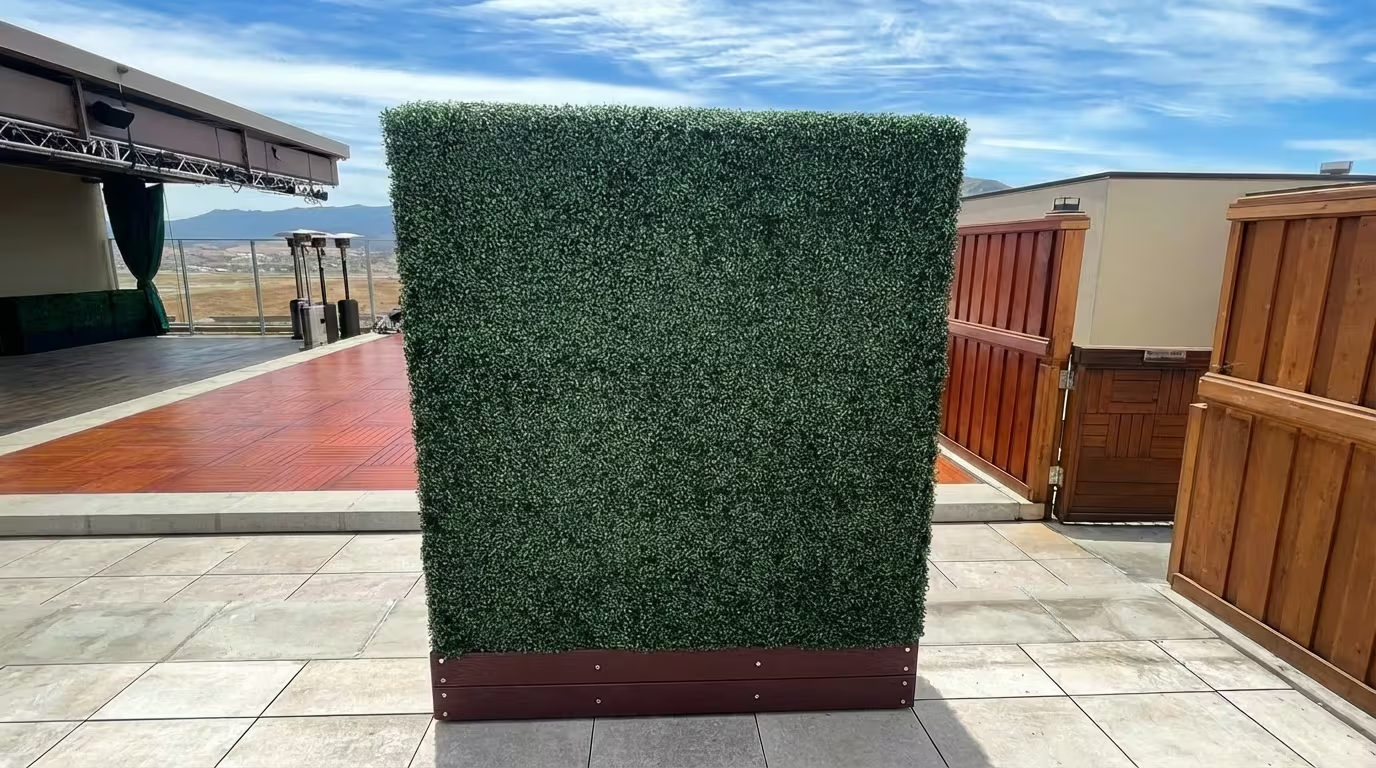
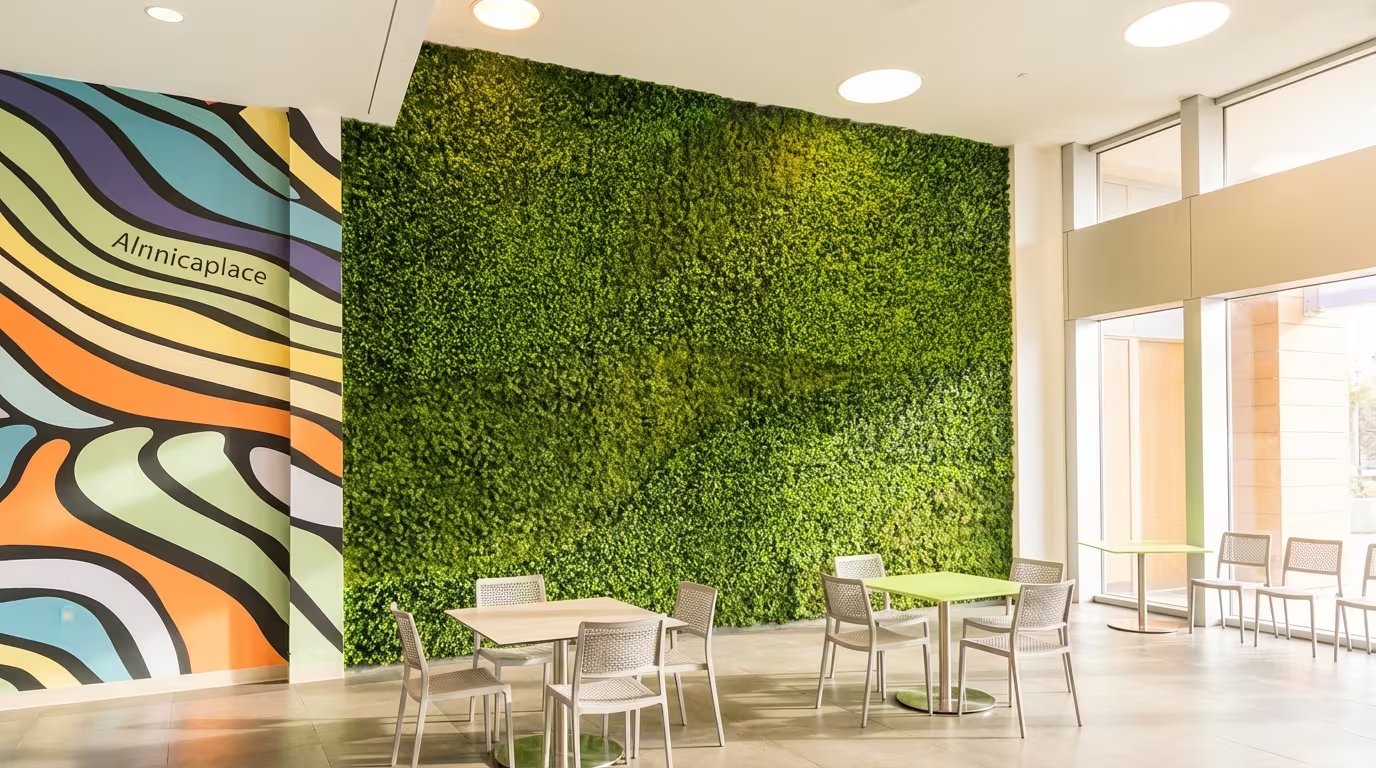
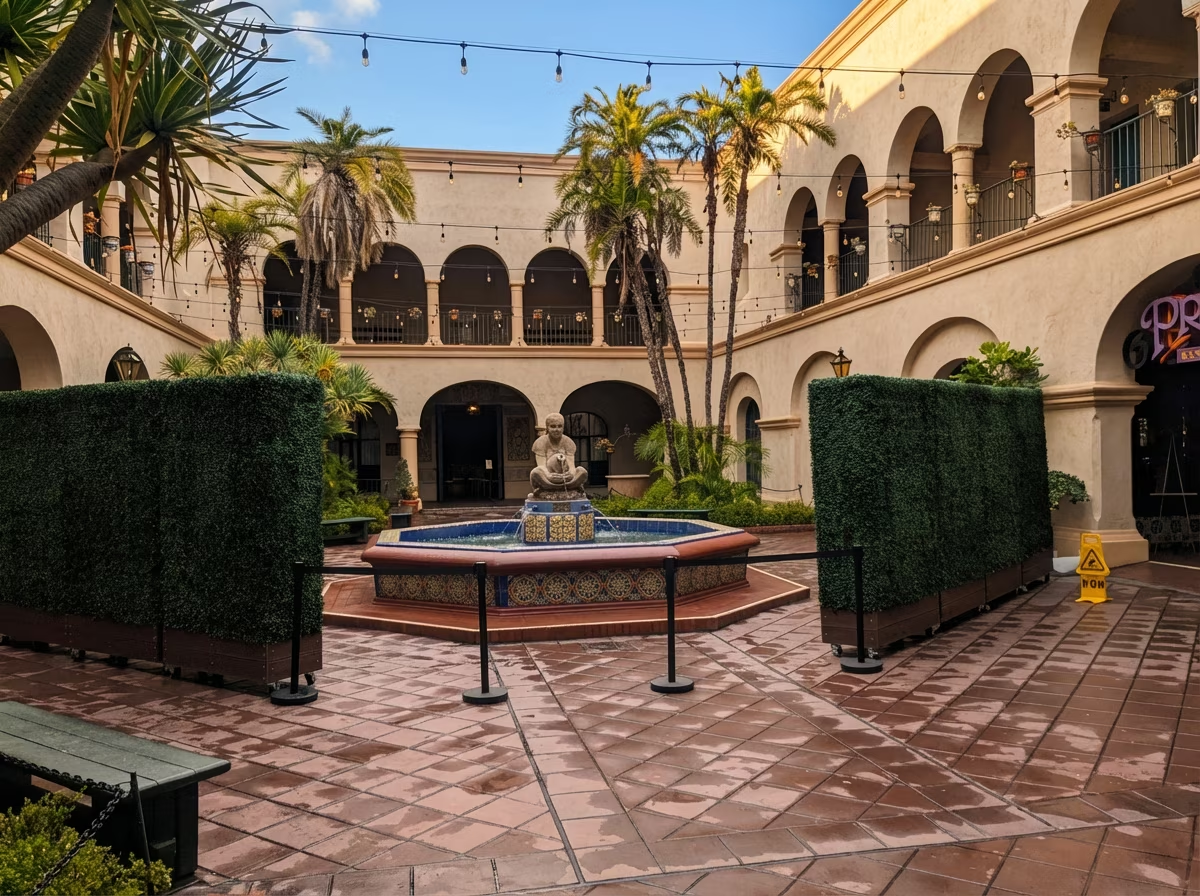
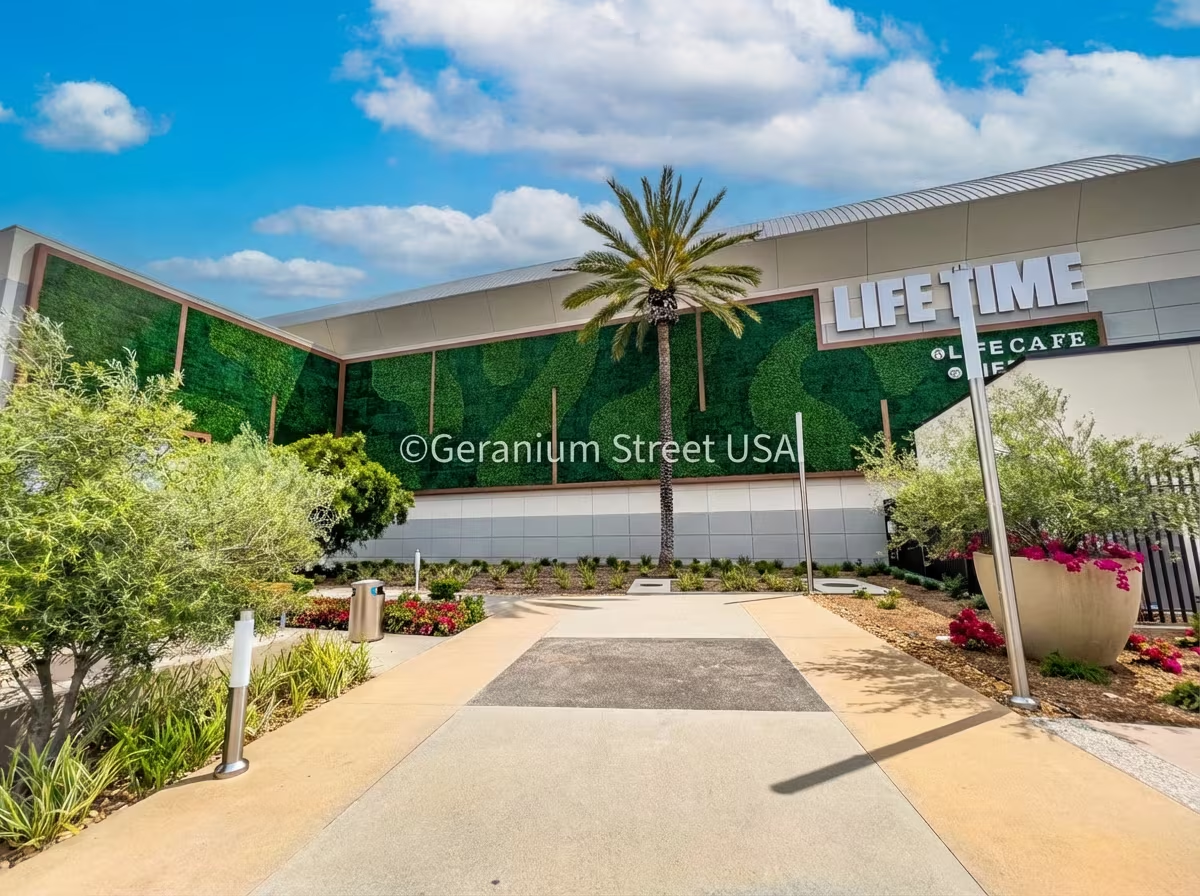
Califauxscapes handles this as part of commercial scoping: fire-retardant product lines tested to NFPA 701 Method 2 are available across our hedge and living wall systems, and we provide the documentation package with the installation. Our Jamul Casino and Santa Monica food court projects both ran through exactly this review path.
Last reviewed June 2026 · Content is reviewed periodically and updated when new information is available.
FAQ
What does NFPA 701 Method 2 certify?
That a material self-extinguished within the standard’s limits when a test flame was removed, with controlled material loss and dripping. It demonstrates the product resists propagating flame. It does not mean the product cannot burn — no foliage product is fireproof.
Are fire-rated artificial plants required in California?
Not universally. The California Fire Code’s decorative-materials provisions generally require flame-retardant decorative vegetation in regulated occupancies such as assembly spaces, hotels, and multifamily common areas, and the local fire authority having jurisdiction makes the final determination for a specific address and placement.
Do fire-retardant artificial hedges look different?
No — FR product lines are offered in the same boxwood, mixed-greenery, and living wall styles. The differences are the material formulation, the test documentation that ships with it, and a modest price premium.
What documentation should I ask a vendor for?
A product-specific NFPA 701 Method 2 test report — the actual lab report tied to the product being installed, not a generic marketing claim. Keep it in your compliance file; inspectors can request it years after installation.
Does my backyard hedge need to be fire-rated?
Typically no — residential privacy installations are not regulated occupancies. Fire-conscious siting still matters in hillside defensible-space zones, and FR product can be specified anywhere it gives an owner or insurer additional comfort.
Need project-specific guidance before design or procurement moves forward?
Share the site conditions, privacy goals, or wall type you are evaluating and we can help you narrow the right system for the project.