Skip to content
Back to Guides
Cost Planning

California Artificial Landscaping Cost Guide

How to budget with real site variables instead of generic square-foot promises.
By Alex TarnowskiUpdated February 14, 202612 min read
California Artificial Landscaping Cost Guide

At a glance

This guide is for owners, architects, designers, and builders who need a realistic early planning range before a site-specific quote exists. It explains what usually drives cost, how early budgets should be used, when phasing makes sense, and how maintenance and warranty terms affect total ownership.

Project next steps

Planning note: any timelines, cost examples, or ownership comparisons in this guide are for early specification and budgeting conversations only. Final scope depends on existing conditions, attachment strategy, access, and field verification.

Table of contents

Straight to the numbers: custom artificial privacy hedges typically start at $99 per linear foot for a 6-foot-tall, 12-inch-deep configuration, artificial hedge fence extensions start at $65 per linear foot for a 3-foot extension, and artificial living walls start at $18 per square foot. Each figure is a material and system starting point for that standard configuration, plus installation, which is quoted separately after a site review — access, substrate and attachment, and total run length drive it. Taller, denser, or custom configurations move the number up. Most budget mistakes happen when a project is priced as a surface area only. Artificial landscaping scopes are shaped by more than square footage: access, attachment conditions, detailing, species mix, returns, corners, existing wall condition, and how much of the work has to be staged around an active property. This guide is meant to help teams build a realistic early planning range before a field-verified quote exists. It is not a shortcut around site review. It is a way to ask better budgeting questions earlier, reduce redesign later, and understand what actually drives final pricing.

Starting points by system

Use these as published starting points, not as all-in installed prices. Each is the material and system cost for the standard configuration shown; installation is quoted separately after a site review. What moves the installed number is consistent: access, substrate and attachment, total run length, height and density, custom framing, and whether the project needs fire-rated documentation packages. A quick illustration keeps the arithmetic honest — 60 linear feet of 6-foot privacy hedge is materials from about $5,940, and a 420 sq ft living wall is materials from about $7,560, in both cases with installation quoted after review. Those are illustrations from the published floors, not quotes.

Starting prices reflect standard configurations of qualifying product lines. Installation is always quoted separately after a site review — access, substrate and attachment, and total run length drive it.

SystemStandard configurationStarting price (materials)
Artificial privacy hedge6 ft tall · 12 in deep$99 / linear foot
Artificial hedge fence extension3 ft extension height$65 / linear foot
Artificial living wallBy wall area$18 / square foot

What usually drives cost first

The biggest cost drivers are typically product type, project size, detailing complexity, and site access. A straight run on a ready substrate is a different exercise from a highly visible feature wall with returns, corners, transitions, and custom edge conditions. Retrofit scopes can also move quickly if existing walls need prep or if the attachment strategy changes after field review. That is why early budgets should be built around scope assumptions, not just price targets. If the design intent is premium, the detailing has to be included in the budget conversation from the beginning.

Product system

Living walls, privacy hedges, privacy walls, and fence extensions each carry different material and labor assumptions.

Detail complexity

Corners, returns, reveals, and custom transitions usually increase scope faster than raw area alone.

Substrate readiness

Existing wall condition, levelness, and attachment path can change labor requirements.

Site access

Staging, loading, elevators, and active-site constraints often affect pricing more than teams expect.

Early budget ranges are for planning, not procurement

Early ranges are useful when the team is deciding whether to screen one elevation or an entire perimeter, whether to phase the project, or whether a privacy hedge belongs in schematic design at all. They are not a substitute for field verification. The most productive use of an early planning range is comparison. It helps the team understand whether the budget is better spent on a high-visibility wall, an amenity edge, or a phased rollout instead of trying to finalize line-item pricing too early.

Early range

Best use

Compare options and phase priorities

Field review

Required for final quote

Validates substrate, access, and detailing

Premium detailing

Budget early

Do not treat edge conditions as an afterthought

Scope first

Better than target price

Pricing gets sharper once the layout is real

Early planning range versus finalized scope pricing

Reference: range-vs-final-pricing

Artificial Landscaping
  • +Can reduce irrigation demand in treated zones
  • +Often lowers recurring trimming requirements
  • +Supports consistent visual coverage through seasonal shifts
  • +Performance depends on material grade and installation detail
Natural Landscaping
  • -Often requires reliable irrigation and seasonal care
  • -Can need recurring pruning and plant health management
  • -Appearance can vary based on climate and maintenance quality
  • -Long-term cost profile depends on service intensity

Phasing is often the cleanest way to protect both budget and design quality

Many projects do not need full-site execution on day one. A phased strategy lets owners and builders tackle the highest-visibility zones first, then expand once the first area is complete and performing as expected. Entry sequences, pool edges, amenity decks, and highly exposed boundaries are common first phases because they carry the most visual weight. Phasing also gives the team a chance to refine detailing after the first installation. That can be a significant advantage on larger commercial or high-end residential projects where the same design logic repeats across multiple areas.
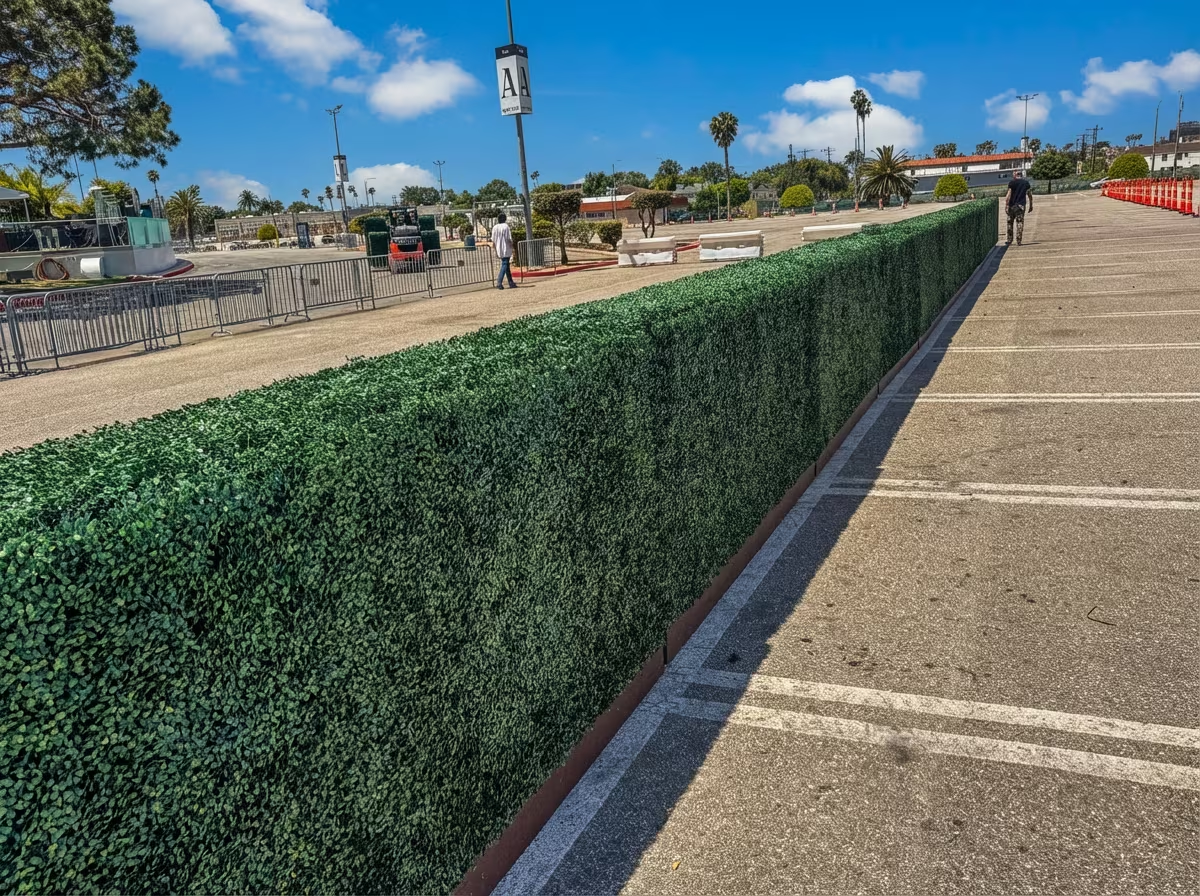
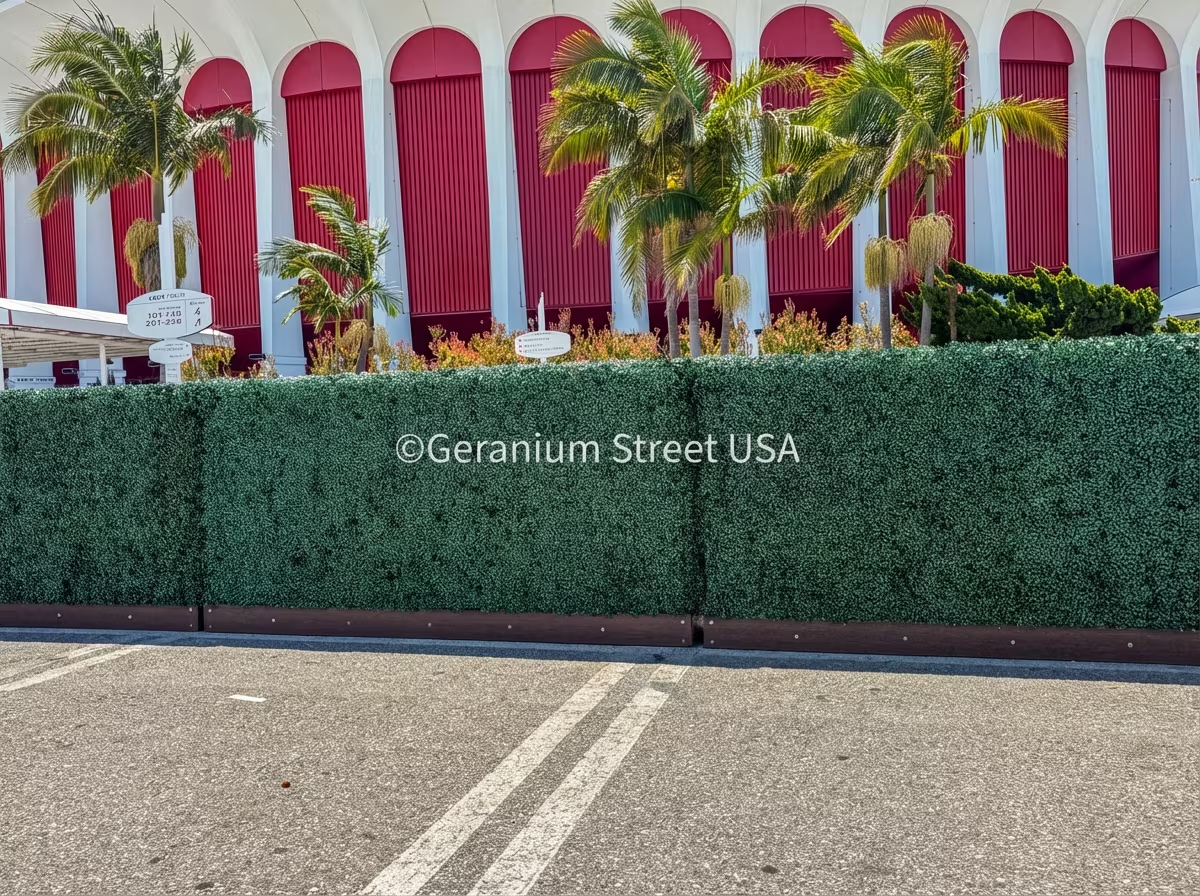
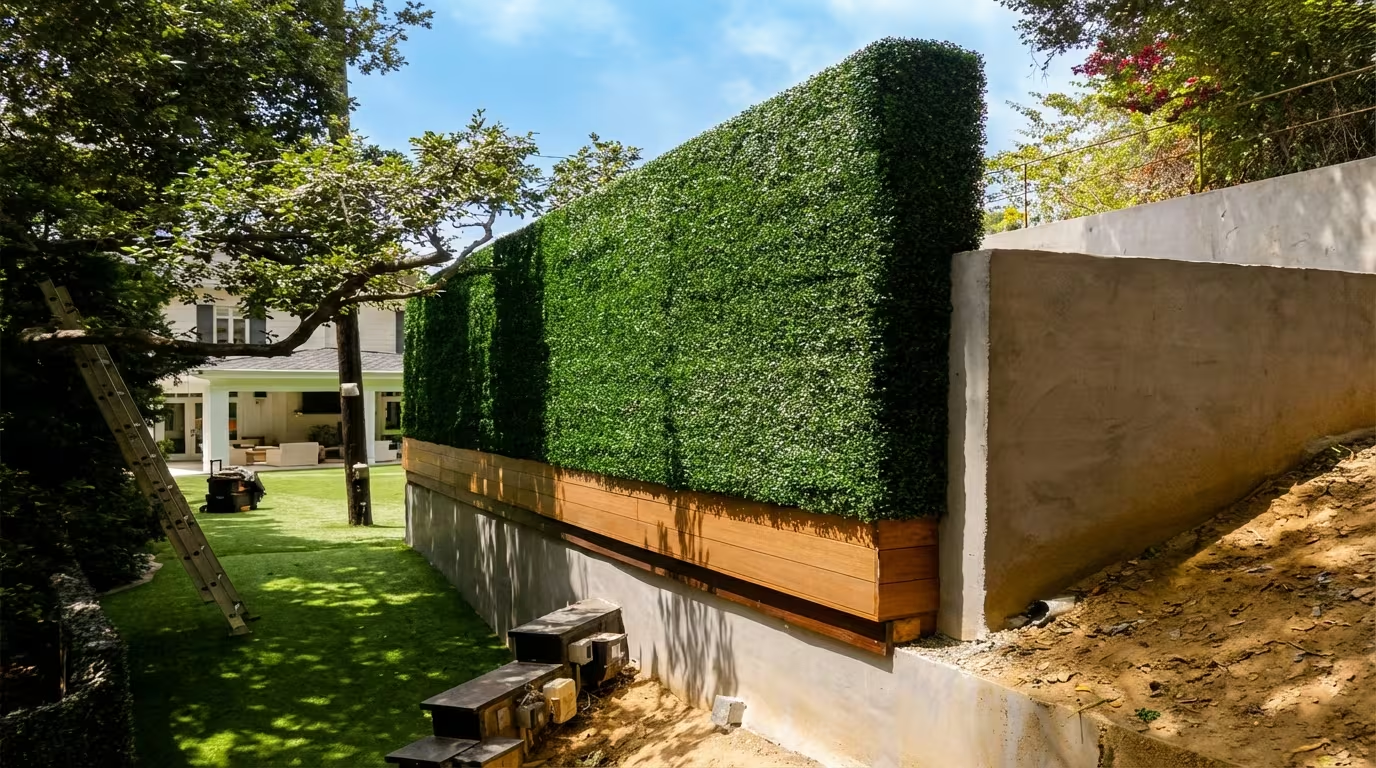
Artificial privacy hedge installation along a Los Angeles golf-side edge, showing a clean screening run that could be delivered as part of a phased exterior upgrade

Total ownership means more than install cost

Warranty terms and maintenance expectations should be reviewed as part of the budget, not after contract award. Califauxscapes currently references a 3–5 year limited UV fading material warranty (varies by product line) and a 1-year installation workmanship warranty, with final terms confirmed in project documentation. Ownership cost matters too. HomeGuide's 2025 data places typical California landscape maintenance between roughly $1,200 and $4,800 annually depending on scope, while professional hedge trimming alone can run about $200 to $600 per year. Those recurring costs should be part of any comparison between artificial systems and living material in the same zone.
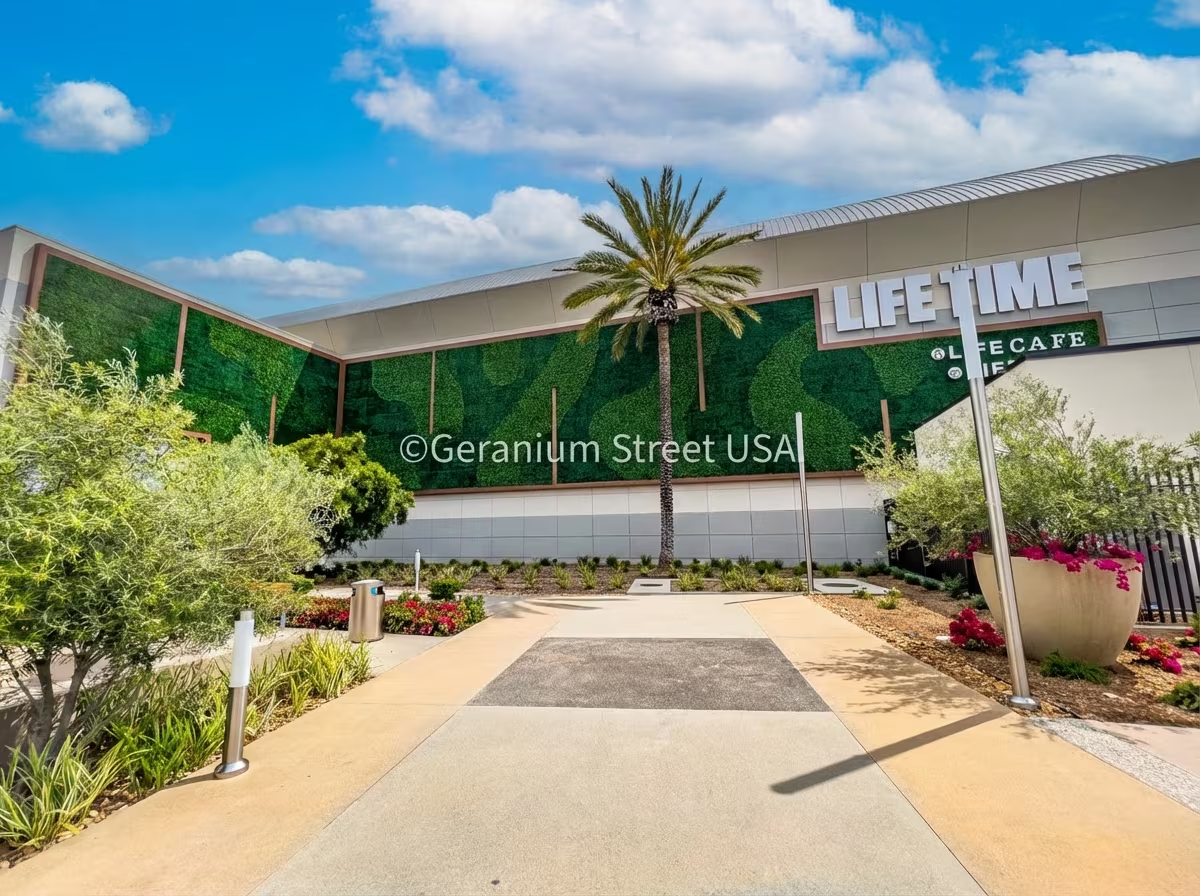
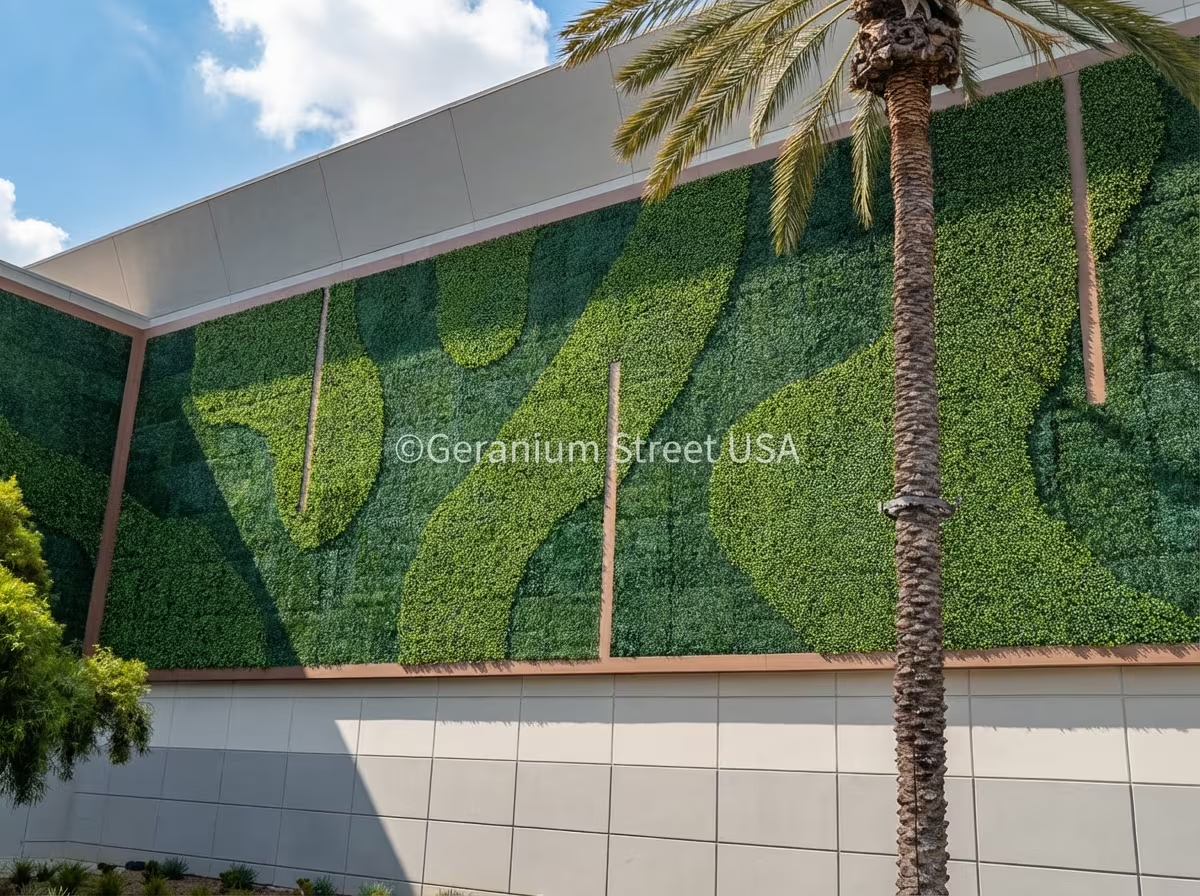
Commercial artificial living wall at Life Time Irvine, illustrating a premium installation where finish quality and long-term upkeep expectations both affect total ownership

Last reviewed February 2026 · Content is reviewed periodically and updated when new information is available.

FAQ

Can an online estimate replace a site visit?

Online estimates are usually an early planning tool. Site verification is typically needed for final pricing.

Does larger square footage always reduce unit cost?

Sometimes, but not always. Complexity, access, and detailing can offset volume efficiencies.

Should maintenance be budgeted from the start?

Yes. Ongoing care expectations should be included in total ownership planning.

Need project-specific guidance before design or procurement moves forward?

Share the site conditions, privacy goals, or wall type you are evaluating and we can help you narrow the right system for the project.

Get a Free Quote
Products mentioned

Related projects

More guides