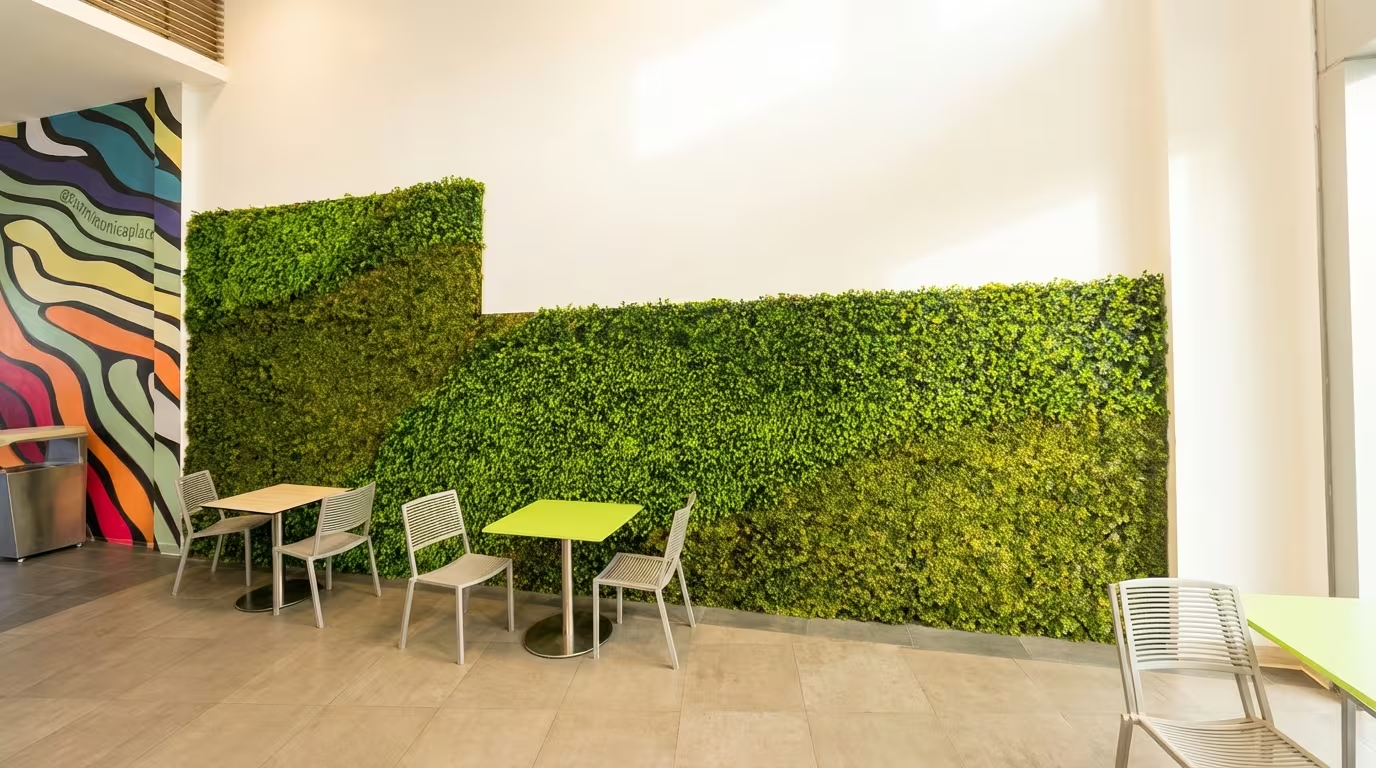
Where live biophilic wins: humidity-controlled indoor atriums with dedicated horticulture programs, sensory gardens where Pattern 2 (Thermal & Airflow Variability) is the design target, and green roofs sized for stormwater benefit.
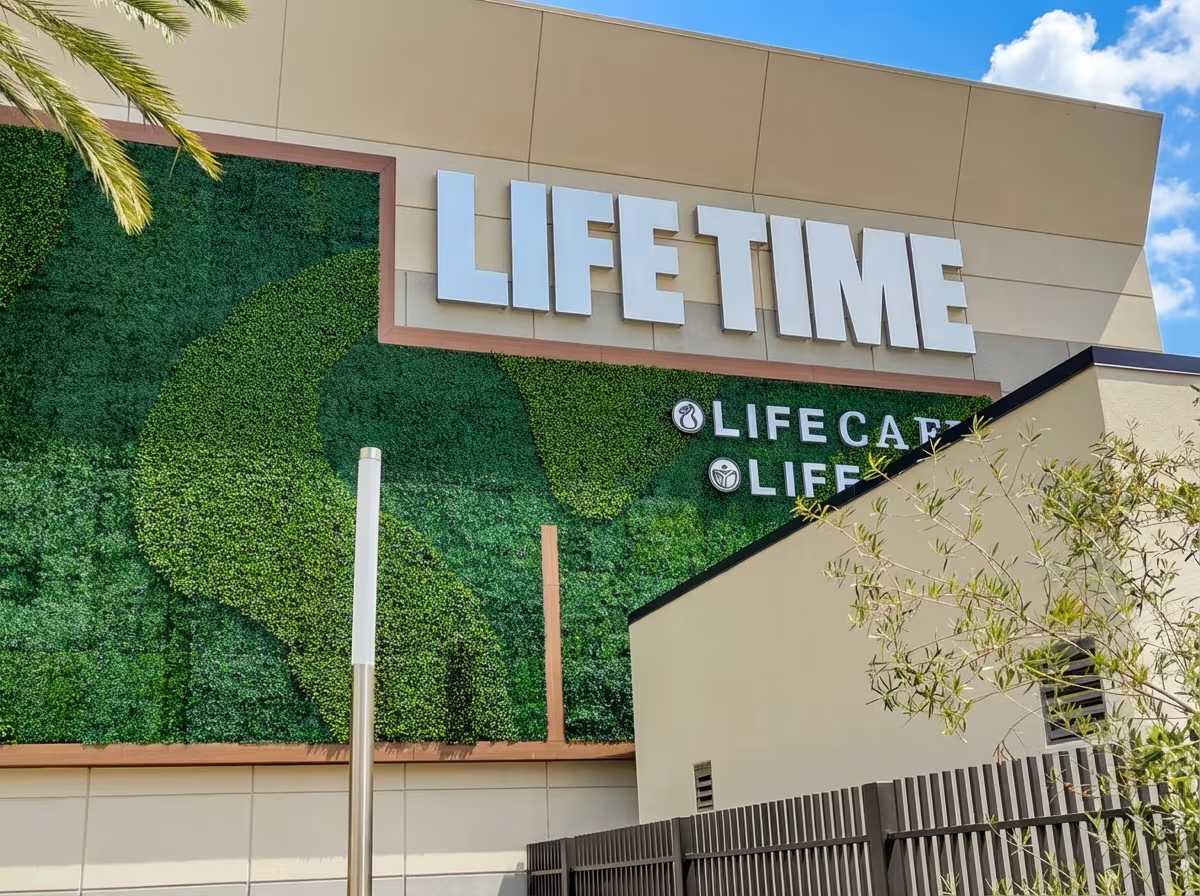
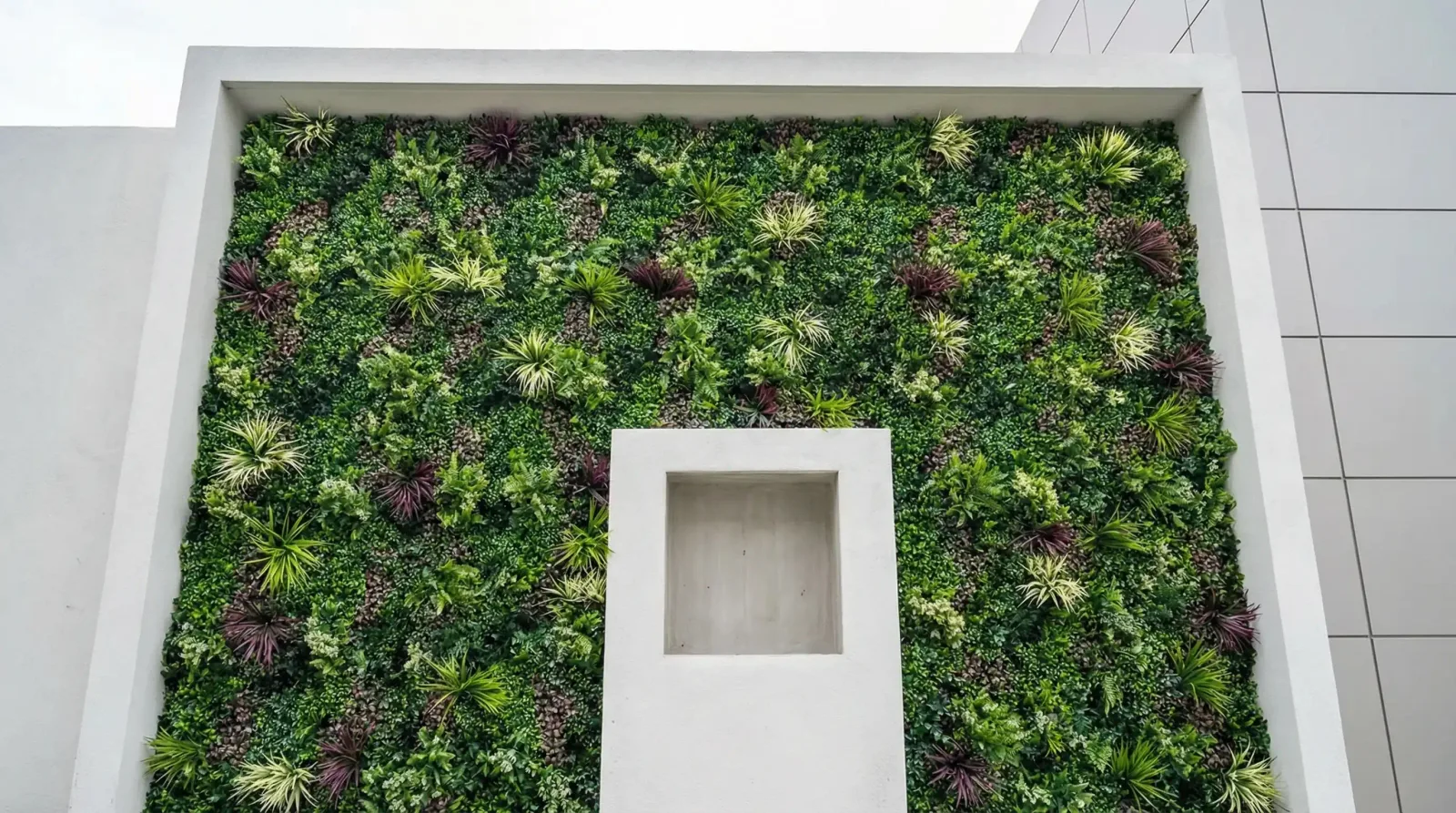
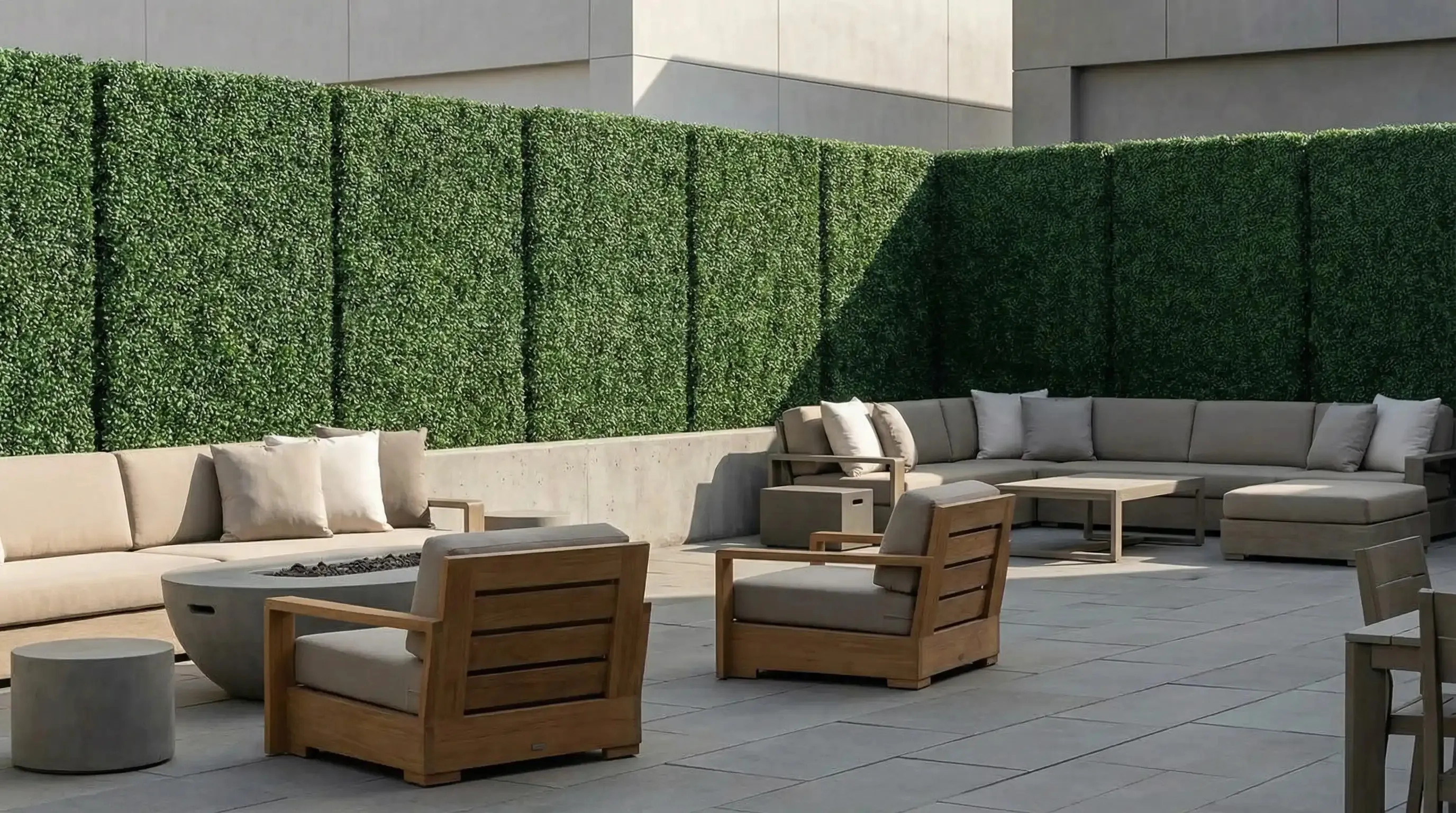
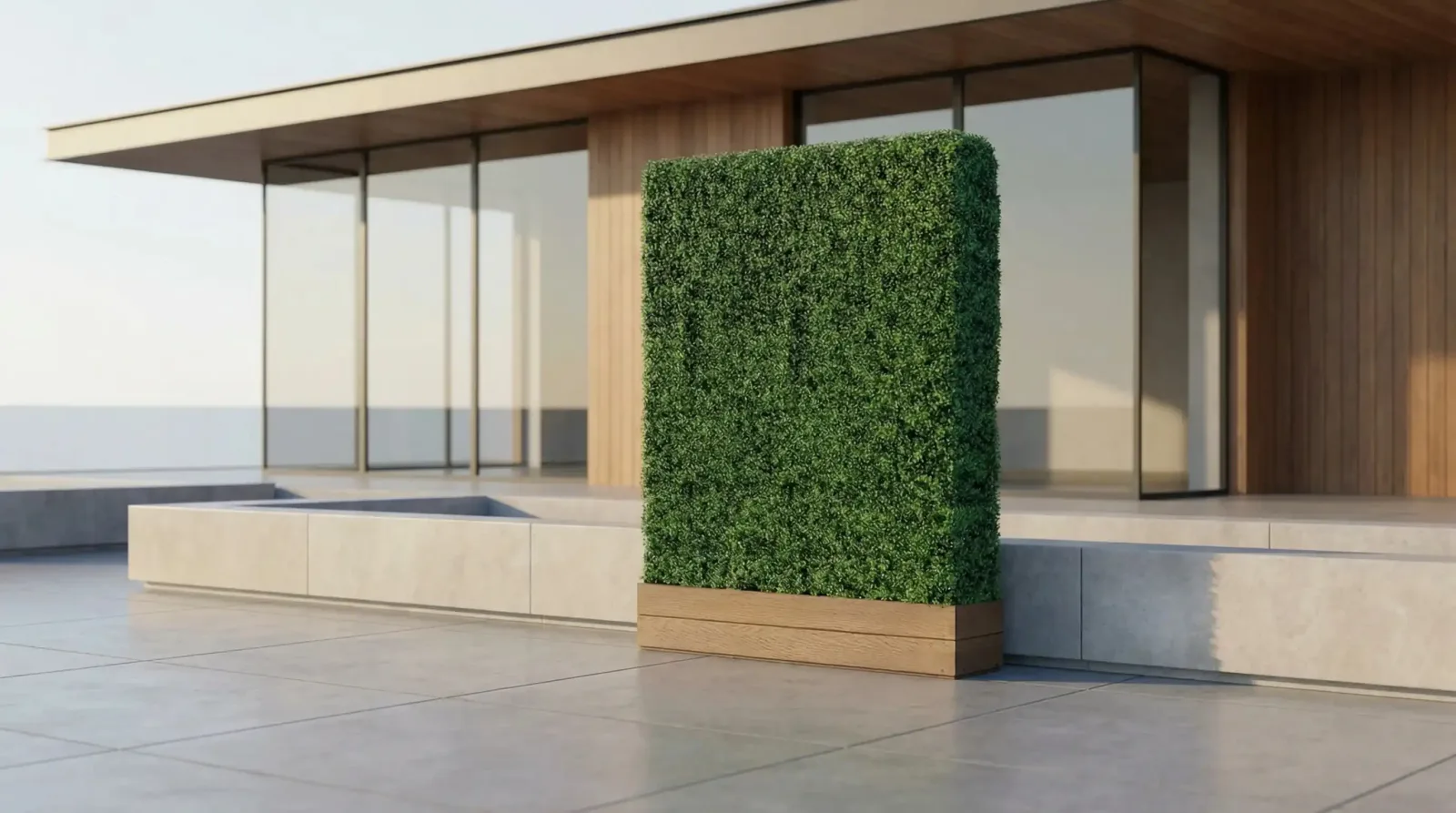
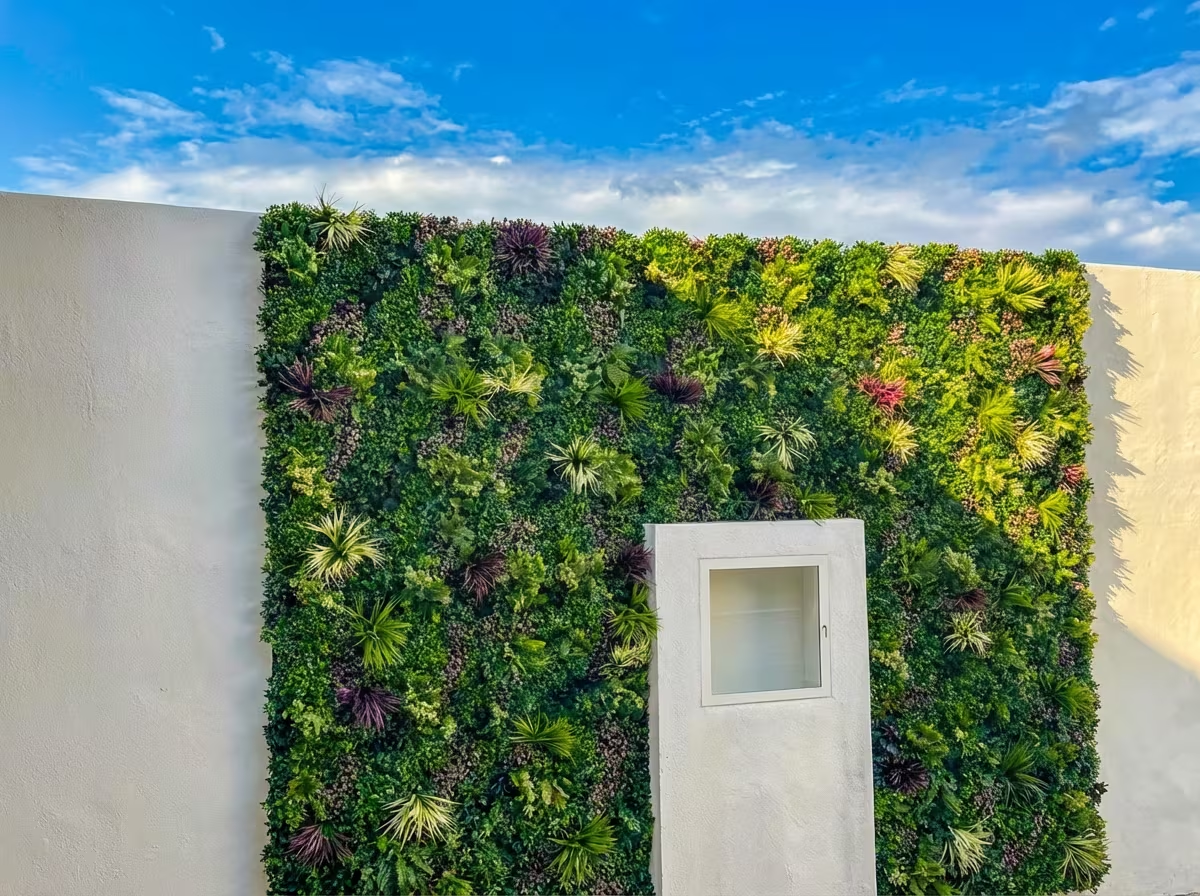
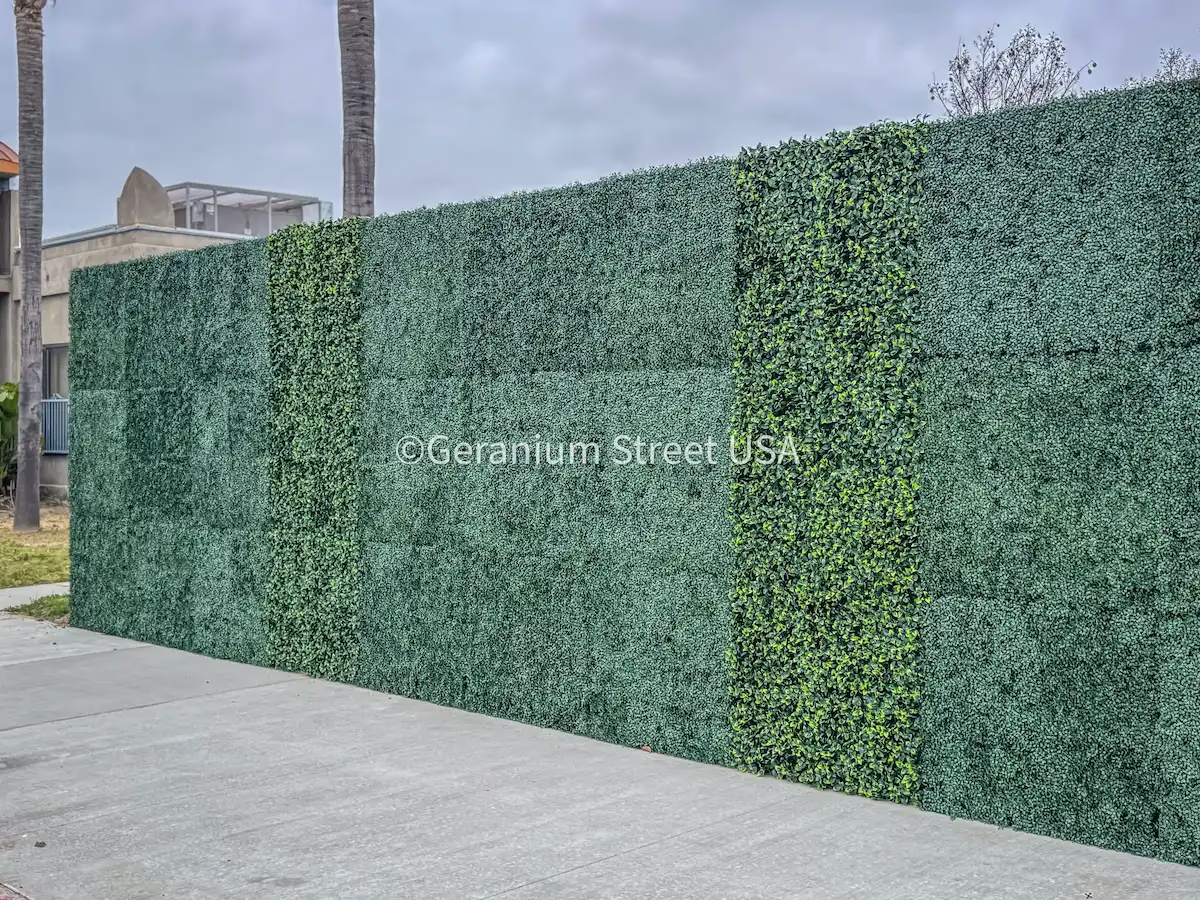
Where artificial biophilic wins: exterior facades, rooftop decks without service water, hospitality terraces with high occupancy turnover, and any site where two-year maintenance budget is a real question.
Biophilic pattern coverage is partial, not universal. Artificial systems deliver visual-connection patterns strongly and material-connection patterns moderately; they do not deliver thermal variability, dynamic light, or natural-scent patterns. Specify accordingly.
Fire zone requirements: any install near egress paths or in hospitality/corporate settings should confirm ASTM E84 or NFPA 701 test documentation before material order.
Acoustic contribution is real but modest — dense panels attenuate 3–7 dB in typical open-office settings; treat as a supporting benefit, not a primary acoustic strategy.