San Diego fence extensions
Privacy Fence Extension Installation in San Diego County
Califauxscapes installs privacy fence extensions across San Diego County — retrofitting UV-stabilized artificial foliage panels onto existing wood, vinyl, or metal fences to add screening height for backyards, side yards, pool areas, and multifamily boundaries without a full fence rebuild.
San Diego service focus
If you are searching for a privacy fence extension in San Diego, the practical question is usually how to add a foot or two of screening to a fence that is already standing — not whether to tear it out and start over. Califauxscapes retrofits artificial foliage fence extensions onto existing wood, vinyl, and metal fences across San Diego County, from coastal La Jolla and Point Loma to inland El Cajon and Santee. The appeal of an extension is that it reuses a fence you have already paid for: instead of demolition, new footings, and a full rebuild, a foliage-paneled section is added on top of the existing structure to close the sightline over the fence line. A fence extension should be scoped around the condition of the fence you already have, the height your jurisdiction allows, the wind exposure at your specific site, and any HOA rules that apply. Those four factors change from one San Diego neighborhood to the next, so this page covers who these installations are for, the local conditions that shape scope, and the questions that come up most often before an extension is added.
Residential privacy fence extensions across San Diego
The most common San Diego request is a backyard or side-yard fence that no longer provides enough privacy — a neighbor added a second story, a new build overlooks the yard, or a six-foot fence simply does not screen a raised patio or pool deck. Rather than rebuilding, a fence extension adds foliage-paneled height on top of the existing structure. Most serviceable fences can typically gain roughly 12 to 24 inches of screening height with a retrofit extension, though the workable amount always depends on the existing fence and the local height limit for your zone.
Residential extensions work best on side yards between homes, pool and spa perimeters where sightlines from neighboring windows are the concern, and balcony or terrace edges that need a screen without the weight of solid fencing. The artificial foliage reads as a planted hedge from normal living distances, holds its color under sustained San Diego sun, and does not need the irrigation, trimming, or grow-in time a live privacy hedge would require to reach the same height. It is also a lighter load than adding solid boards or lattice, which matters when the existing posts were set for a shorter fence and cannot safely carry much more weight or wind.
- Side-yard sightline control between neighboring homes
- Pool and spa privacy where raised decks are overlooked
- Backyard fences shaded by new two-story construction
- Balcony and terrace screening without solid-fence weight
- Low-water screening height on top of an existing fence line
HOA, multifamily, and commercial fence extensions
North County San Diego is heavily HOA-governed, and Carlsbad, Encinitas, and the master-planned communities inland frequently regulate fence height, materials, and appearance through CC&Rs. HOA rules can only add restrictions on top of the municipal code, never loosen them, so a fence extension in an HOA community is scoped with documentation and color samples prepared for architectural review before work begins. Confirming what the association allows early keeps the project from stalling at approval.
Multifamily and commercial properties use fence extensions to raise perimeter privacy along shared boundaries, pool decks, and active streets where a taller solid wall would be costly or would not pass wind loading on the existing structure. Along a busy road, the added foliage also softens the look of a bare fence and can help visually screen a parking edge or utility area without the permitting and structural work a masonry wall would involve. For these sites the extension is planned around access for cleaning and inspection, guest and tenant sightlines, and how the boundary reads from the main approach — the same way any perimeter improvement is coordinated with the property team that maintains it after handoff.
- HOA and CC&R-governed communities in North County
- Multifamily perimeter and pool-deck privacy upgrades
- Shared-boundary screening between adjacent properties
- Noise-softening visual screens along active streets
- Commercial boundaries that need height without a full rebuild
What to check before extending a San Diego fence
Existing fence condition comes first. A fence that is leaning, rotting at the base, or built on posts that were not set deep enough may not support added height and wind load — we evaluate the structure before recommending an extension height.
Height limits vary by jurisdiction. In San Diego rear and interior side yards, six feet is the most common maximum for residential fences, and extensions above that often require a permit — always check your city or county rules, because thresholds and front-yard limits differ by zone.
Wind exposure changes the attachment plan. Coastal and ridgeline sites see higher, more sustained wind than sheltered inland yards, so panel density and fastening are matched to the exposure at your specific address.
Attachment path depends on the fence material. Wood, vinyl, and metal fences each take a different retrofit framing approach, confirmed after a field review of the posts and rails already in place.
HOA and design-review approval should be settled before installation in governed communities, with material and color documentation prepared for the architectural committee.
Coastal wind, inland heat, and San Diego fence conditions
San Diego County splits into exposure zones that change how a fence extension is specified. Coastal corridors like La Jolla, Point Loma, and the Del Mar and Encinitas bluffs bring salt air and higher, more sustained wind, so extensions there are reviewed for UV-stabilized, salt-tolerant materials and fastening built for wind loading rather than a light decorative attachment. Corner lots and long, uninterrupted fence runs near the coast catch even more wind, which is one reason the existing posts and their footings are checked before an added height is confirmed. Inland areas such as El Cajon, Santee, and the East County valleys run hotter and drier, where the priority shifts to materials that hold color under long hours of direct sun and where the wind picture is usually calmer but not absent.
A fence extension does not remove all maintenance. It avoids the watering, trimming, and replanting a live hedge of the same height would need, but the panels and the fence they sit on still need periodic cleaning and inspection — and on a coastal site that inspection matters more, because wind and salt work on any exterior attachment over time. Where a property, HOA, or authority having jurisdiction asks for documentation, the correct package depends on the product, the site, and the final application.
Verified project proof
San Diego County privacy screening proof
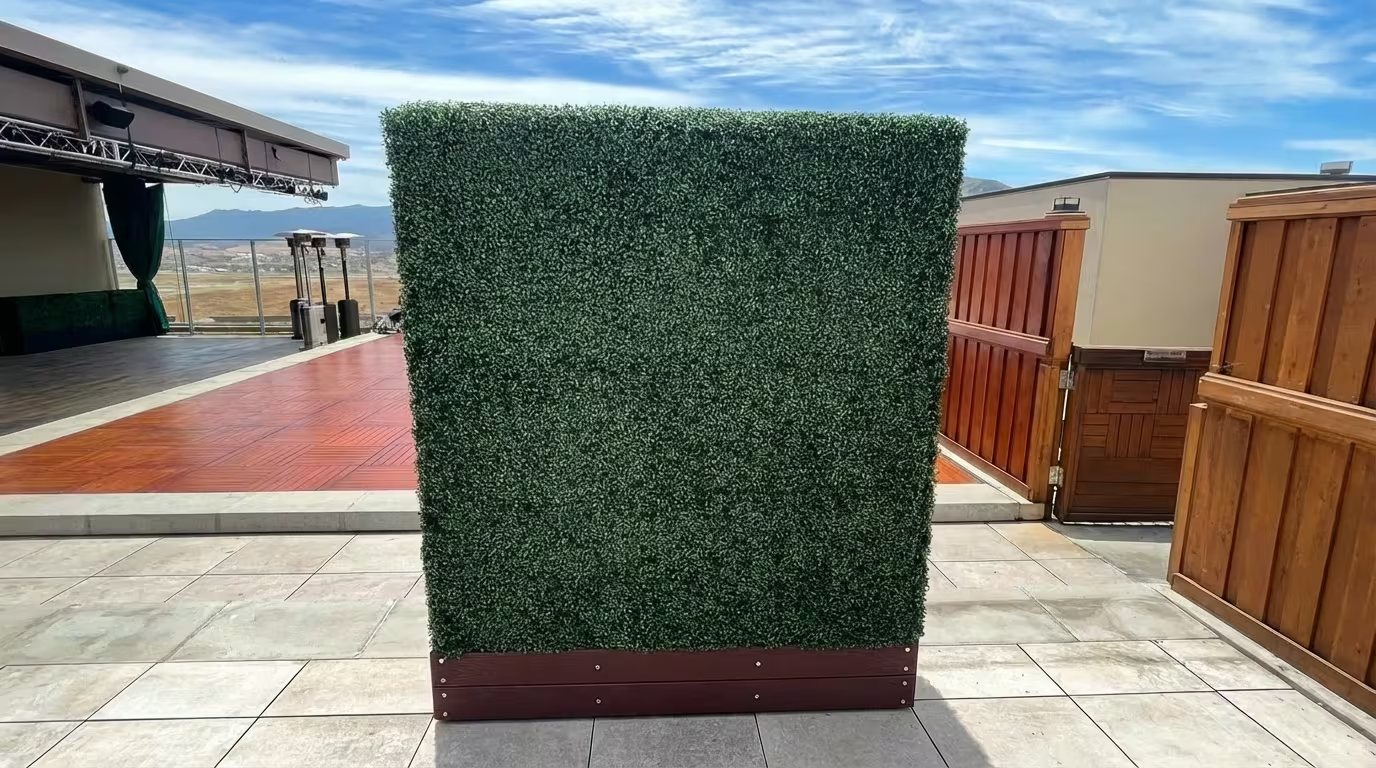
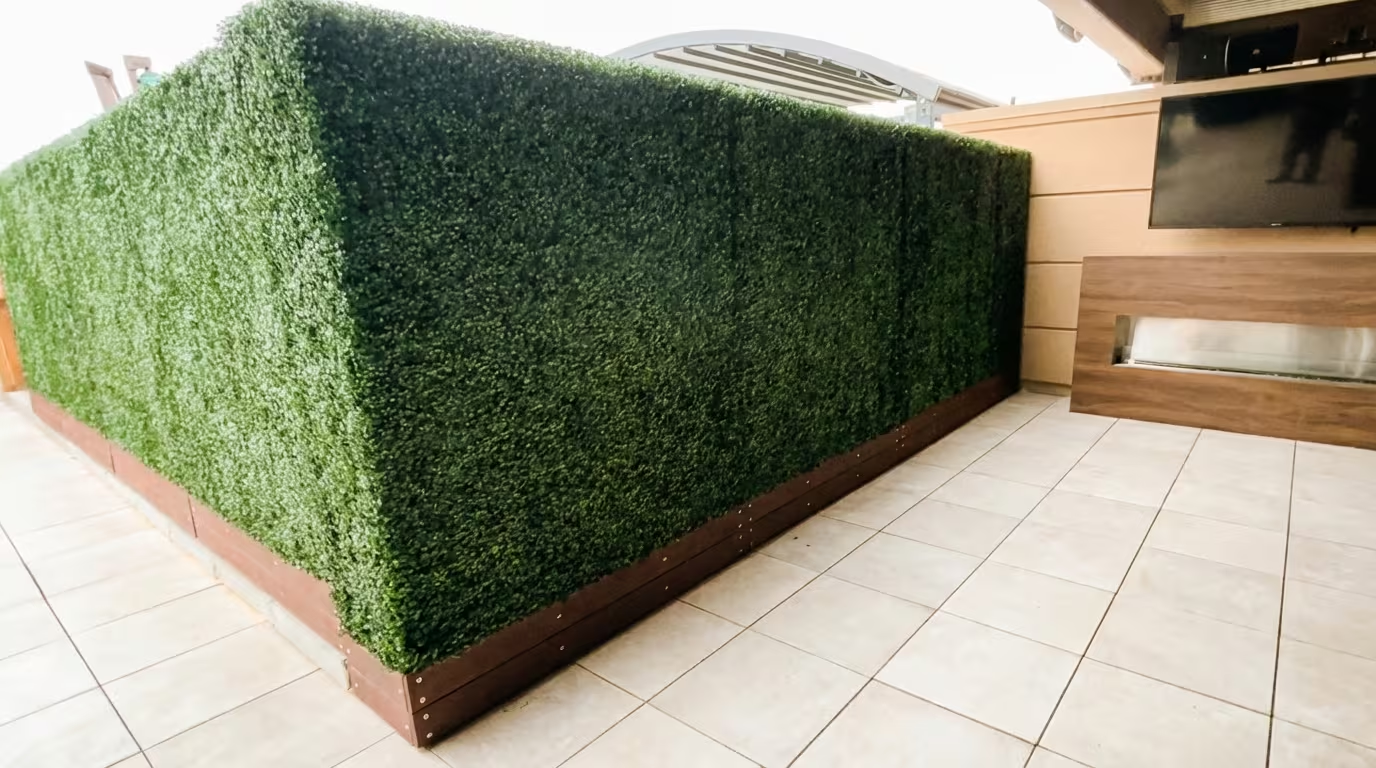
The closest San Diego County proof for fence-line privacy is a completed exterior boxwood screening project with known material direction and application.
San Diego County fence extension service area
Califauxscapes installs privacy fence extensions across San Diego County — coastal and inland — while remaining a California-wide installation brand. San Diego is a priority cluster, not the entire company footprint.
Process
Step 1
Site and fence review
Confirm the existing fence material, post condition and depth, measurements, wind exposure, the height your jurisdiction allows, and whether the project is residential, HOA, multifamily, or commercial.
Step 2
Extension recommendation
Match added height, foliage density, and the retrofit attachment method to the fence and the site instead of forcing a generic panel onto an unsuitable structure.
Step 3
Proposal and approvals
Scope the installation, confirm materials, and prepare any HOA or design-review documentation so approval is settled before work begins.
Step 4
Installation and handoff
Install the fence extension, review the top line and edges from the primary sightlines, and provide practical cleaning and inspection expectations for the owner or property team.
FAQs
Do you install privacy fence extensions in San Diego?
Yes. Califauxscapes installs artificial foliage privacy fence extensions across San Diego County, retrofitting screening height onto existing wood, vinyl, and metal fences for backyards, side yards, pool areas, HOA communities, and multifamily and commercial boundaries — coastal and inland.
How much height can a fence extension add in San Diego?
Most serviceable fences can typically gain roughly 12 to 24 inches of screening height with a retrofit extension rather than a full rebuild. The workable amount depends on the condition of the existing fence, its post depth and wind loading, and the height limit for your zone. In San Diego rear and interior side yards, six feet is the most common maximum, and extensions above that often require a permit — check your city or county rules.
Do I need a permit or HOA approval for a fence extension?
It depends on your jurisdiction and community. Many San Diego cities require a permit for fences above a certain height, often six feet, and front-yard and street-facing limits are typically lower than rear and interior side-yard limits. North County HOA communities also regulate fence height, materials, and appearance through CC&Rs that can only add restrictions on top of the municipal code, never loosen them. Always check your local rules and, in a governed community, secure architectural-review approval before installation.
Can you extend a fence on a windy coastal San Diego site?
Often, but the existing fence has to support it. Coastal corridors like La Jolla and Point Loma see higher, more sustained wind, so an extension there is reviewed for UV-stabilized, salt-tolerant materials and wind-rated fastening, and the existing posts are checked for depth and condition before an added height is recommended.
Who provides the installation?
Califauxscapes is the California installation division of Geranium Street USA, Inc. Installation services are provided by Geranium Street USA, Inc., CSLB #955154.
Compare next
Plan a fence extension that fits the San Diego site
Send the fence location, its material and approximate height, photos of the posts and top rail, and how much added privacy you need. Califauxscapes will confirm whether a fence extension, an artificial privacy hedge, or another screening system is the right fit for the San Diego property.