Artificial hedges are usually chosen for privacy, screening, and appearance. On some projects, those are not the only questions on the table. The project team may also want to review NFPA 701 fire-test documentation for the artificial hedge package before it is approved.
That is why NFPA 701 tested artificial hedges matter on certain California jobs.
When NFPA 701 comes up on artificial hedge projects
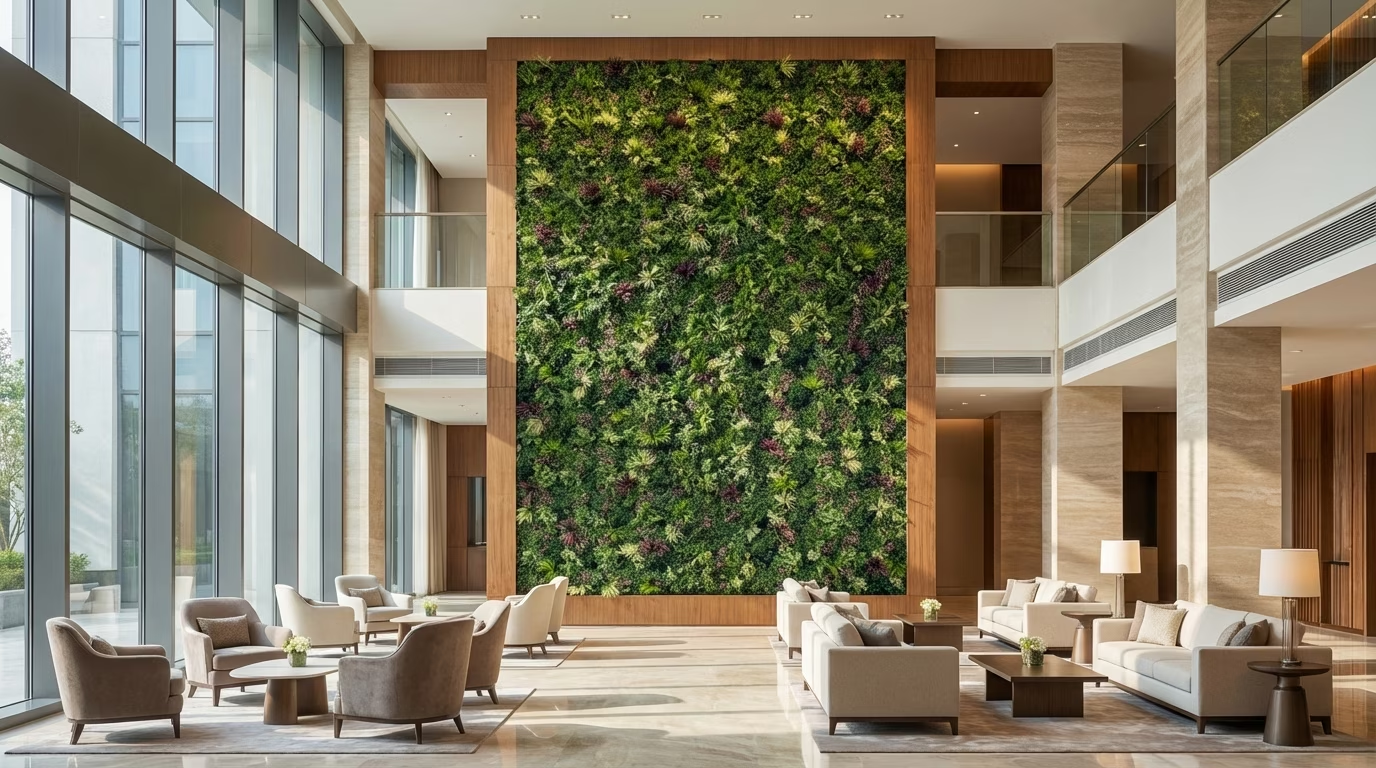
It commonly appears on commercial, hospitality, multi-family, and event-facing projects, but it can also come up on residential work when the owner, designer, or building team wants more clarity around the materials being used.
The point is not to turn a hedge purchase into a maze of jargon. The point is to make sure the product being proposed is documented clearly enough for the people reviewing it.
What buyers should ask for when specifying artificial hedges
- Documentation tied to the exact hedge product being specified
- Clarity on where and how the hedge will be installed
- Any supporting information the project team needs for review
- A clear distinction between the foliage itself and the rest of the assembly
Why this matters for artificial hedge privacy screens
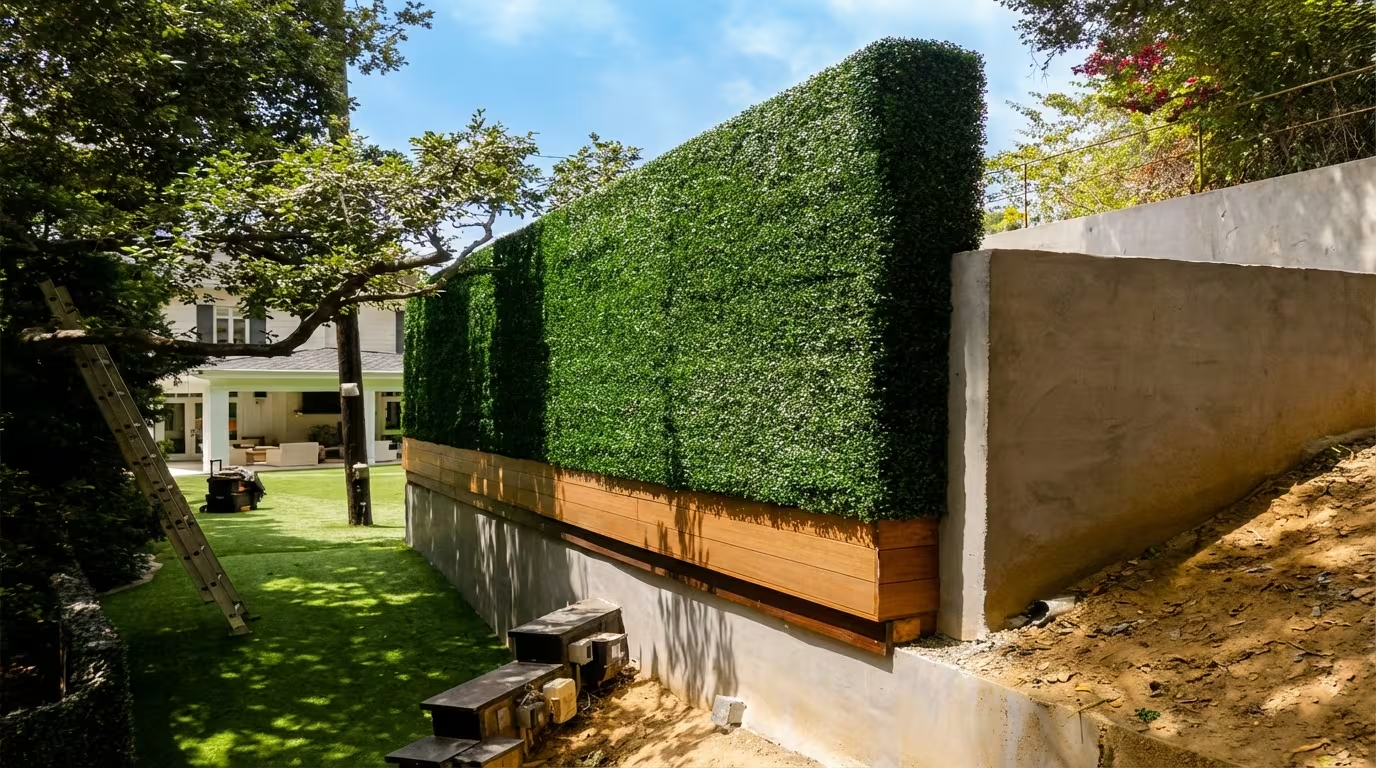
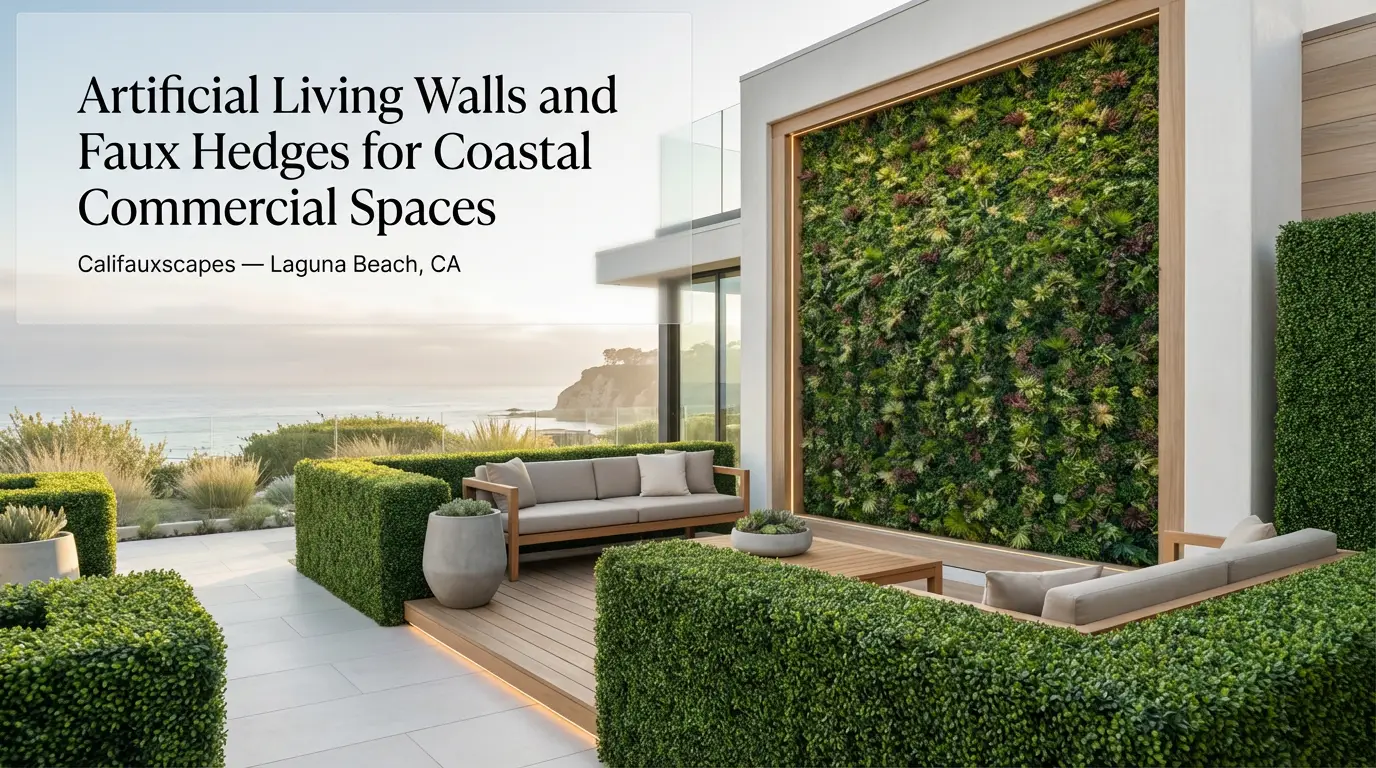
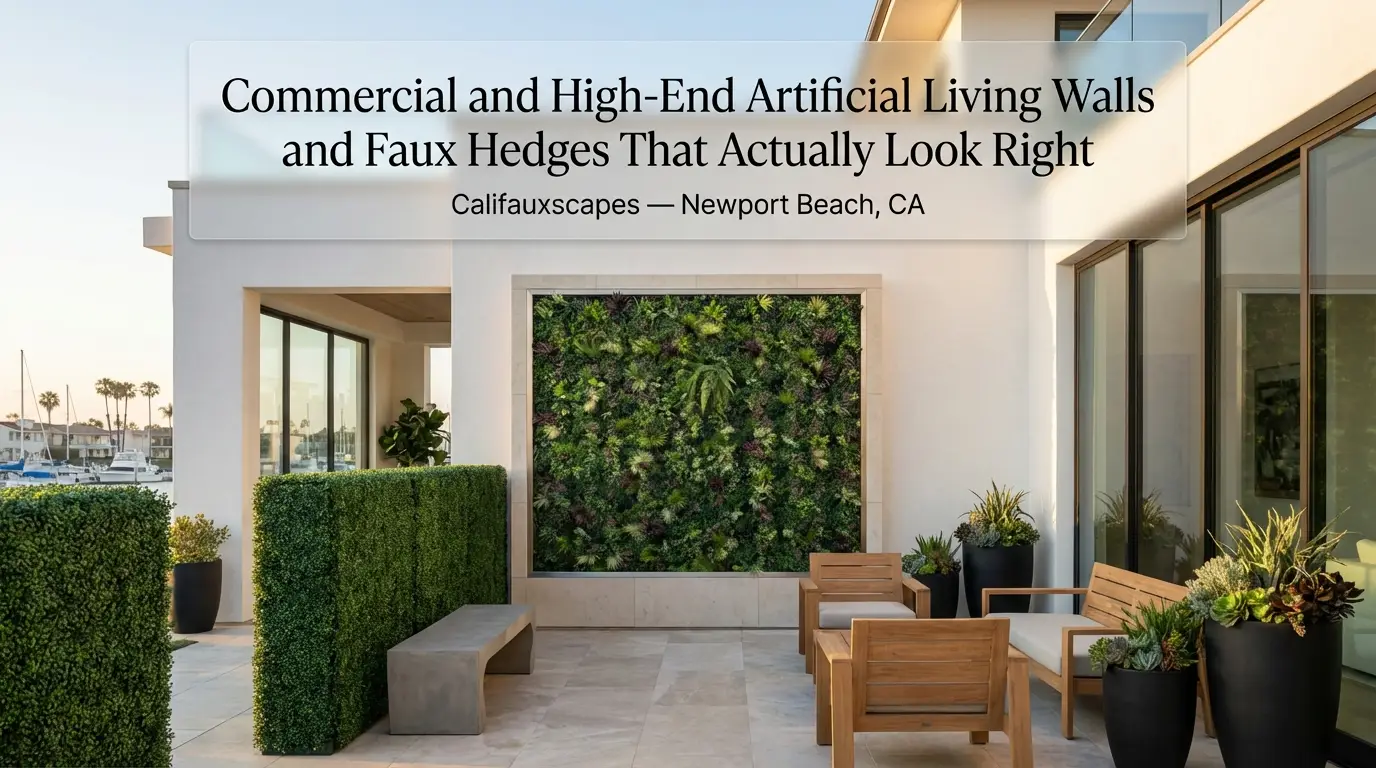
Many privacy screens end up in visible, guest-facing, or high-traffic locations. That is especially true with restaurant patios, hotel edges, multi-family amenity areas, and rooftop lounge spaces. When the screen has to look good and satisfy project review requirements, documentation becomes part of the buying decision.
Design still matters for artificial hedge installations
A documented artificial hedge package still has to look right. Height, density, mounting strategy, wind exposure, and the visual integration with the fence or planter all shape the finished result. The strongest projects do not treat NFPA 701 documentation and artificial hedge design quality as separate conversations.
The takeaway
If your California project needs a privacy hedge and the team is asking about NFPA 701 testing, get clear product-specific information early. It keeps the review process cleaner and helps prevent late surprises after the design direction is already chosen.
To compare hedge systems in a broader context, review artificial privacy hedges and fence extension options.