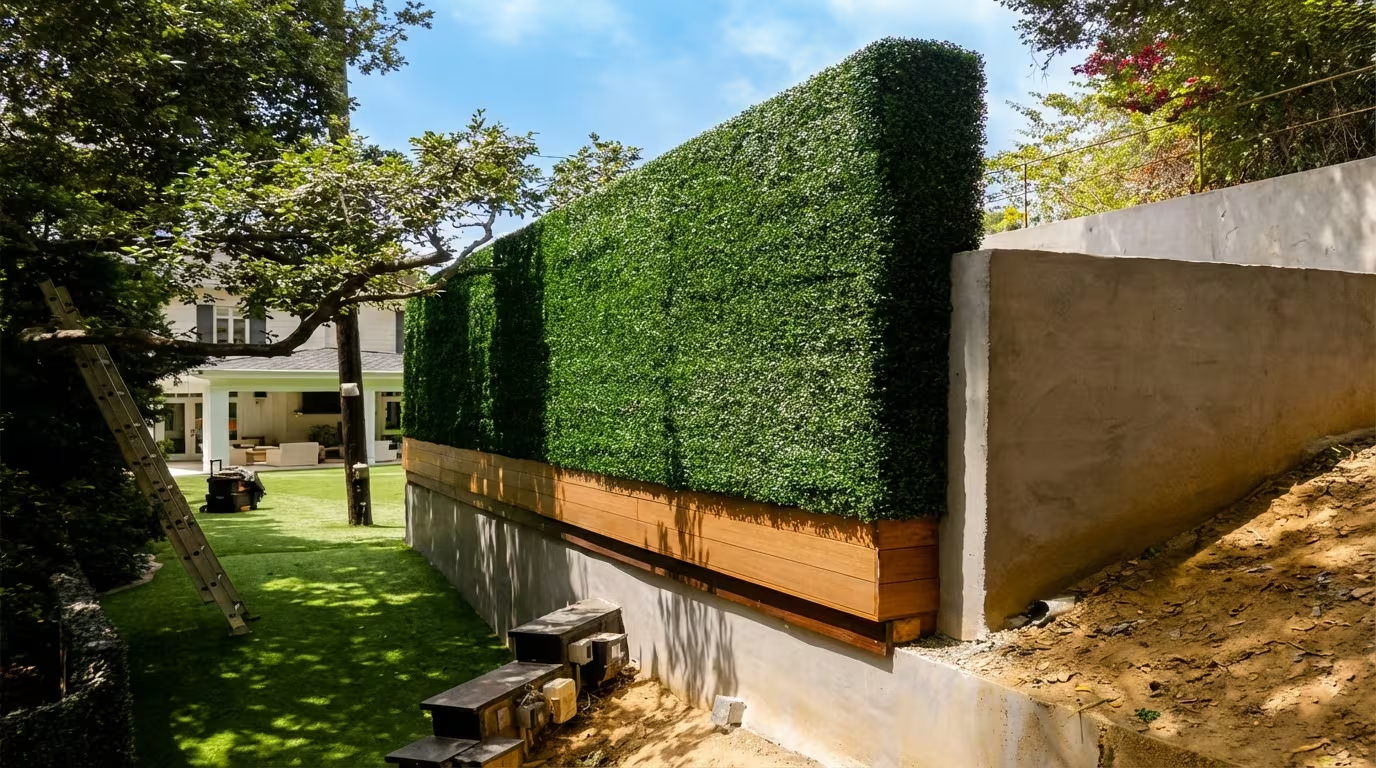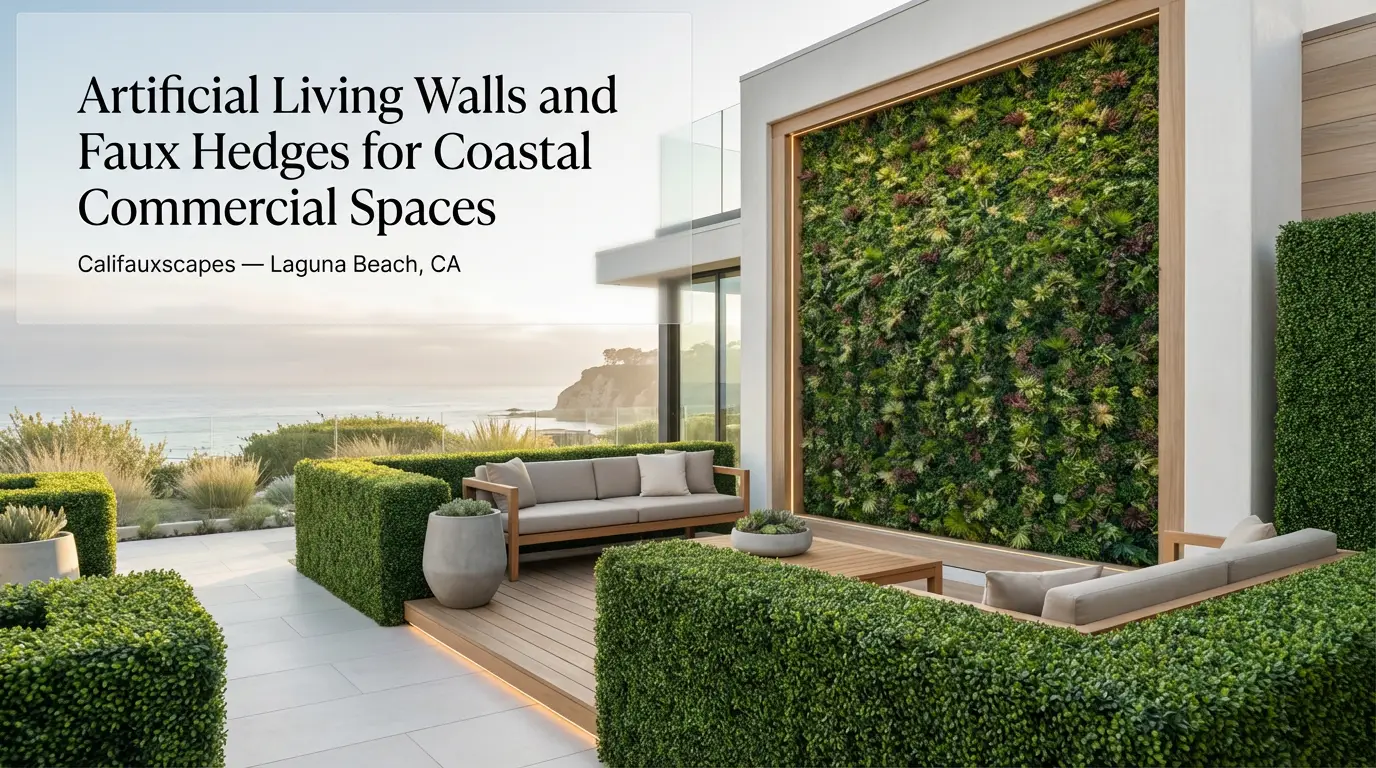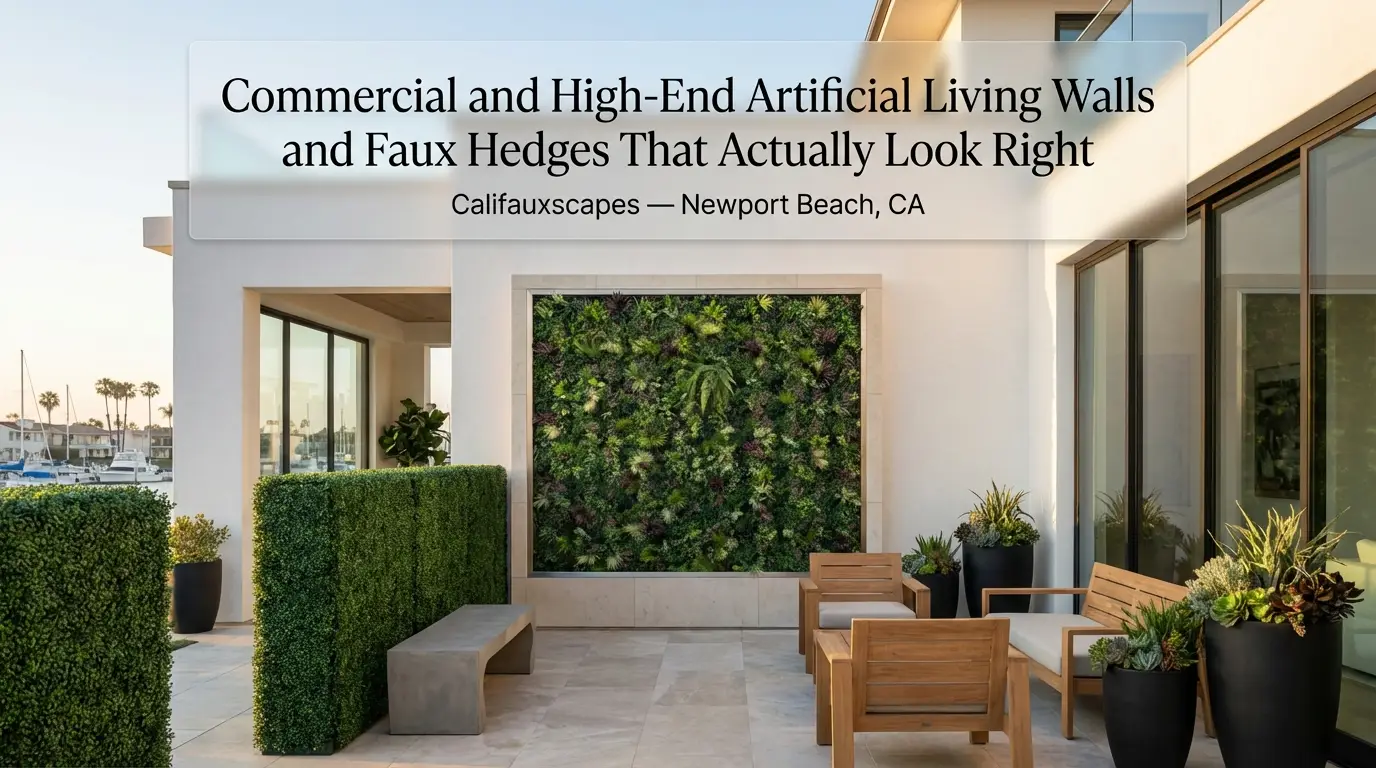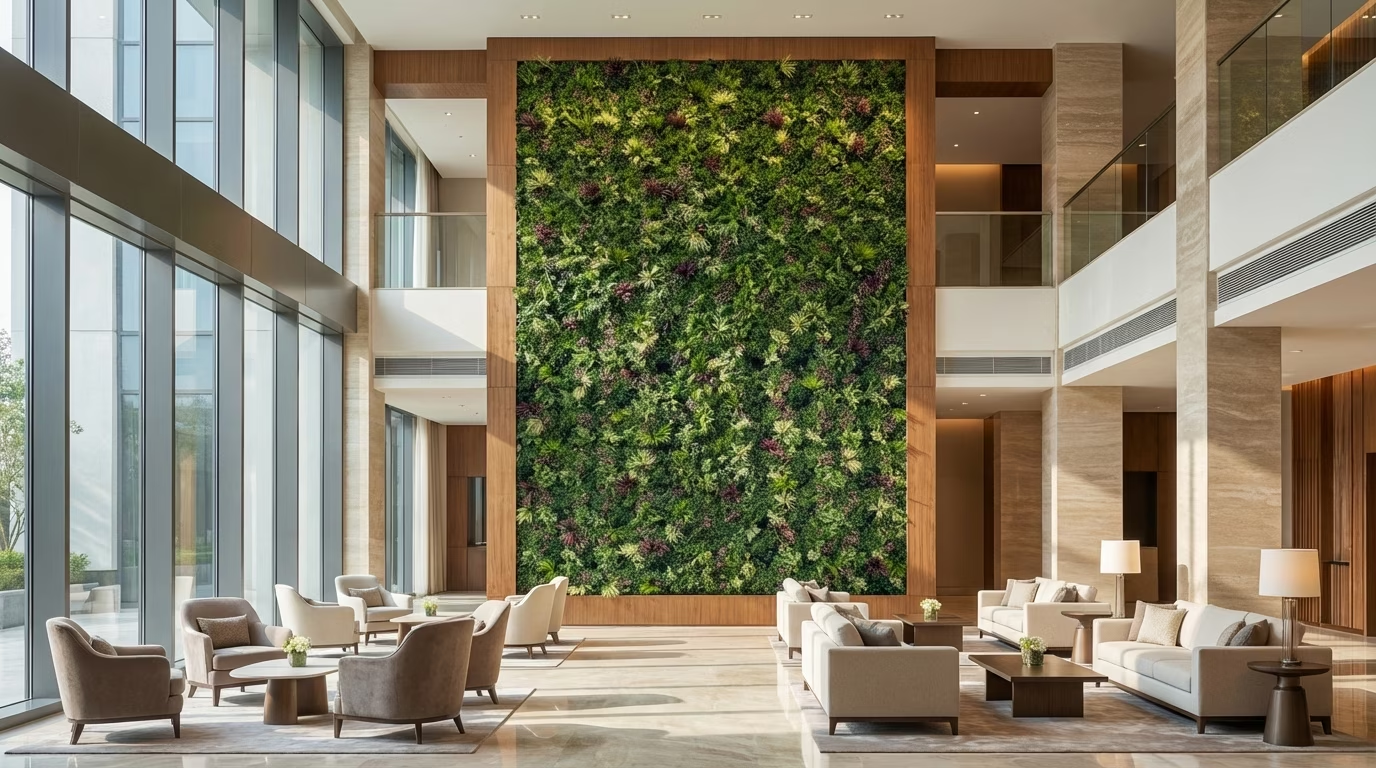
Artificial greenery, including artificial hedges, living walls, and artificial plant screens, shows up in Los Angeles commercial spaces for a lot of reasons: privacy, screening, guest experience, and cleaner-looking architecture. But on many projects the design conversation eventually turns into a documentation conversation. The question becomes simple: what NFPA 701 paperwork can the team review when the artificial greenery package needs fire-performance documentation for approval?
That is where NFPA 701 usually enters the discussion.
What buyers are really asking when they ask about NFPA 701 for artificial greenery
Most buyers are not looking for a code lecture. They are trying to figure out whether the artificial greenery package they are considering can move through landlord review, risk review, or project approval without surprises.
When a property manager, architect, venue team, or general contractor asks about fire performance for artificial plants or living walls, they usually want clear NFPA 701 documentation, clear product identification, and a contractor who can explain how the artificial greenery fits the actual install.
Why NFPA 701 testing matters for artificial greenery in Los Angeles
Los Angeles projects often involve multiple decision-makers. Hospitality groups, landlords, facilities teams, design teams, and ownership may all want to review product information before an installation moves forward. If the artificial greenery package is vague, the project slows down.
That is why NFPA 701 tested, documented artificial plant and hedge material matters. It helps the discussion move from “is this acceptable?” to “which system fits the site?”
What to verify before you specify an artificial greenery product
- Ask for documentation tied to the actual product being proposed.
- Make sure the intended application matches the product package being reviewed.
- Confirm whether the project team needs additional submittal information for the wall, frame, or substrate.
- Do not assume that every artificial greenery product is interchangeable.
Why documentation and artificial greenery installation belong together
An NFPA 701 tested artificial greenery product is only part of the decision. Commercial projects still need the right mounting strategy, the right wall condition, and an artificial hedge or living wall layout that works with the space. Good teams handle both sides of the job: the paperwork that helps an artificial greenery project get approved and the installation that makes it look right once it is built.
Common commercial applications for NFPA 701 artificial greenery
In California, buyers typically ask about NFPA 701 documented artificial greenery packages for:
- hospitality and restaurant projects
- multi-family common areas
- retail and mixed-use screens
- office and amenity walls
- event-facing backdrops and guest zones
The takeaway
If your Los Angeles commercial project needs artificial greenery and the team is asking about NFPA 701 fire-test documentation for the artificial plants or living walls, the right move is not to guess. Ask for project-specific product information early, make sure the artificial greenery package is documented clearly, and keep the install strategy tied to the real conditions of the site.
For more specific paths, review NFPA 701 tested artificial hedges or fire-rated artificial living walls for Los Angeles businesses.