Graffiti Abatement Using Artificial Foliage in California
How modular screening systems change the maintenance equation for walls, fences, and enclosures that keep getting tagged.
By Alex TarnowskiUpdated March 9, 202616 min read
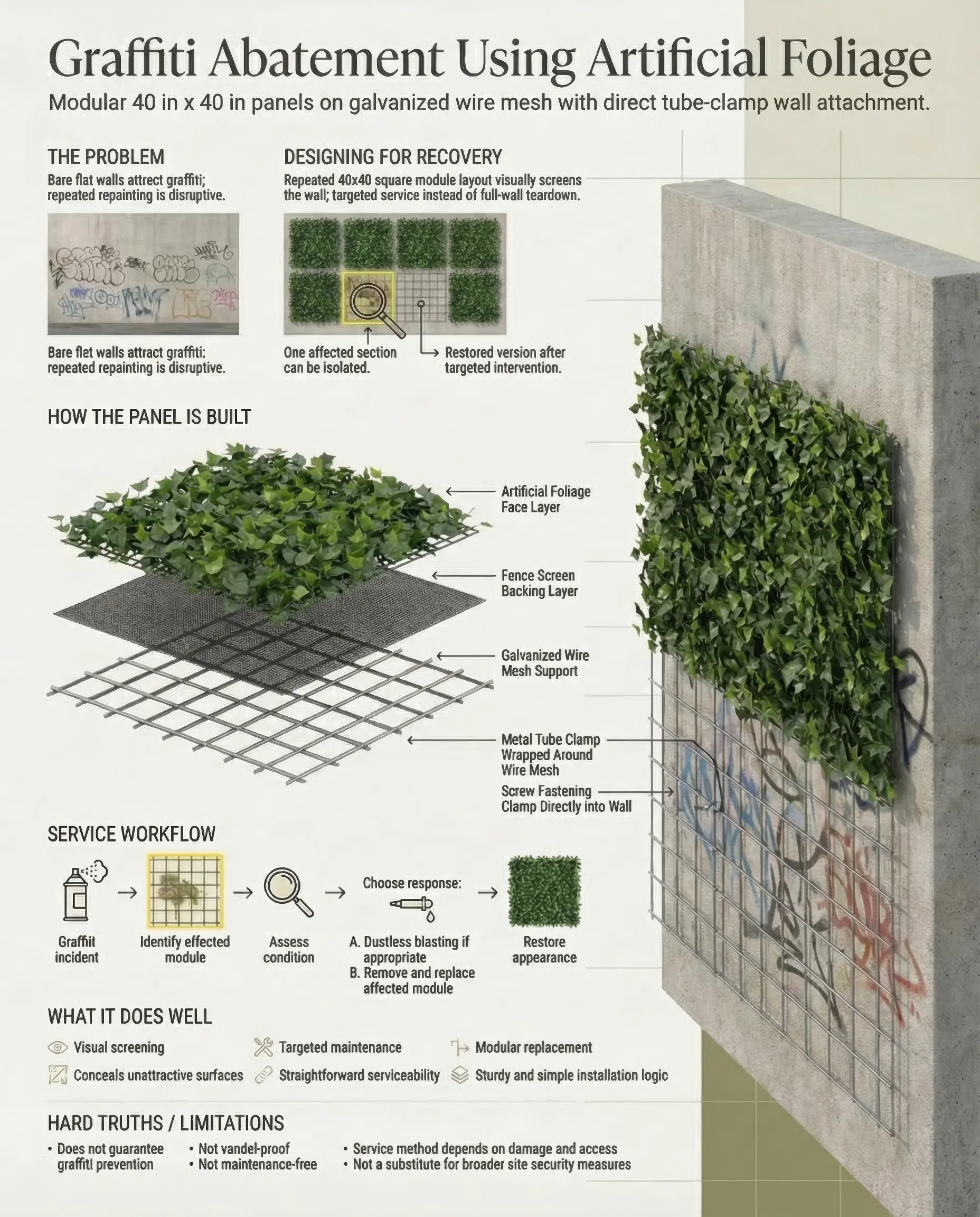
How the modular system is built and serviced
At a glance
This guide is for property owners, facility managers, and developers managing walls, fences, or enclosures with recurring graffiti. It covers why conventional repainting compounds the problem, how modular recovery architecture changes the response model, what foliage screening does and does not do, and where this approach fits versus where other solutions are better. Includes fire code requirements, California climate considerations, and a real project case study from Compton.
Table of contents
A contractor in Compton had a problem. A new commercial block wall — 1,500 square feet of fresh masonry facing a public street — was about to become a graffiti target. The city knew it. The contractor knew it. They needed the wall to look finished, stay finished, and be serviceable when it inevitably got tagged.
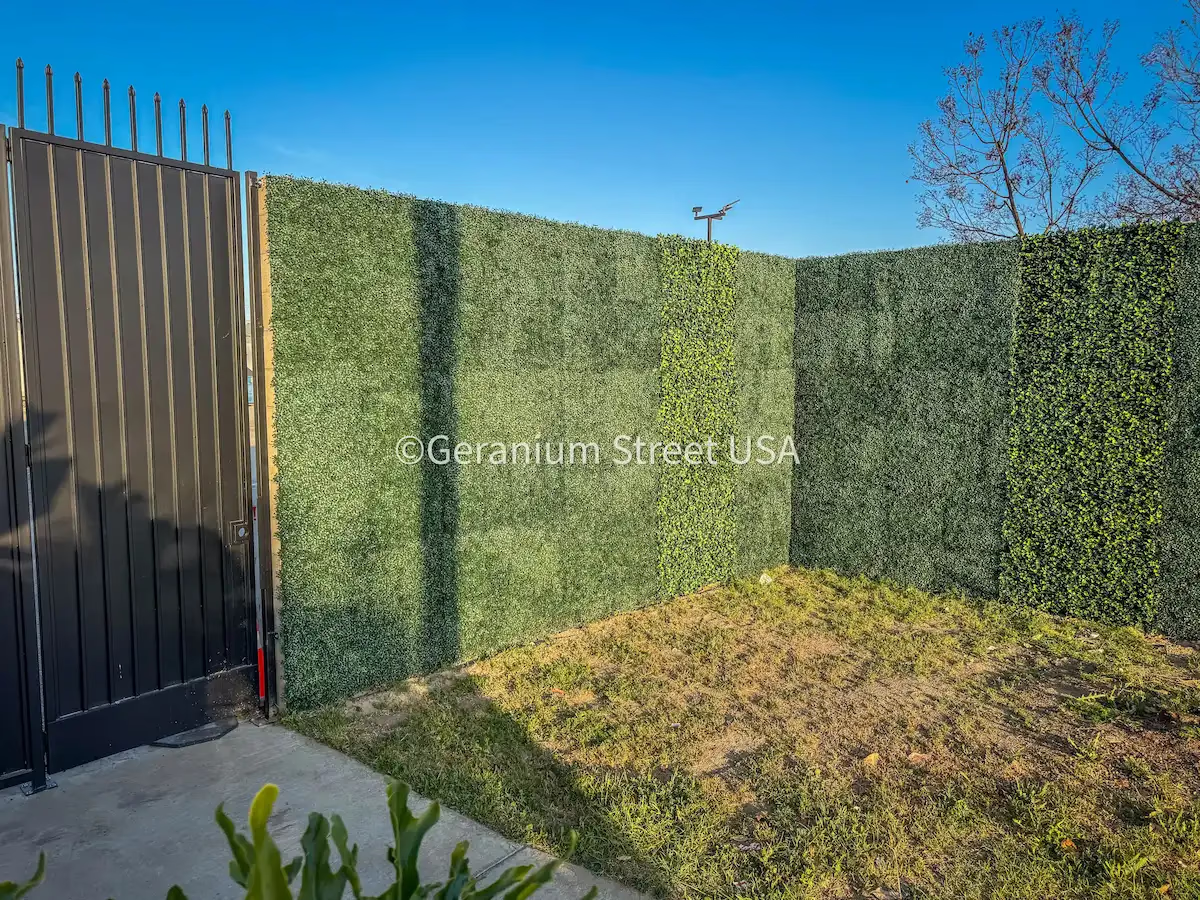
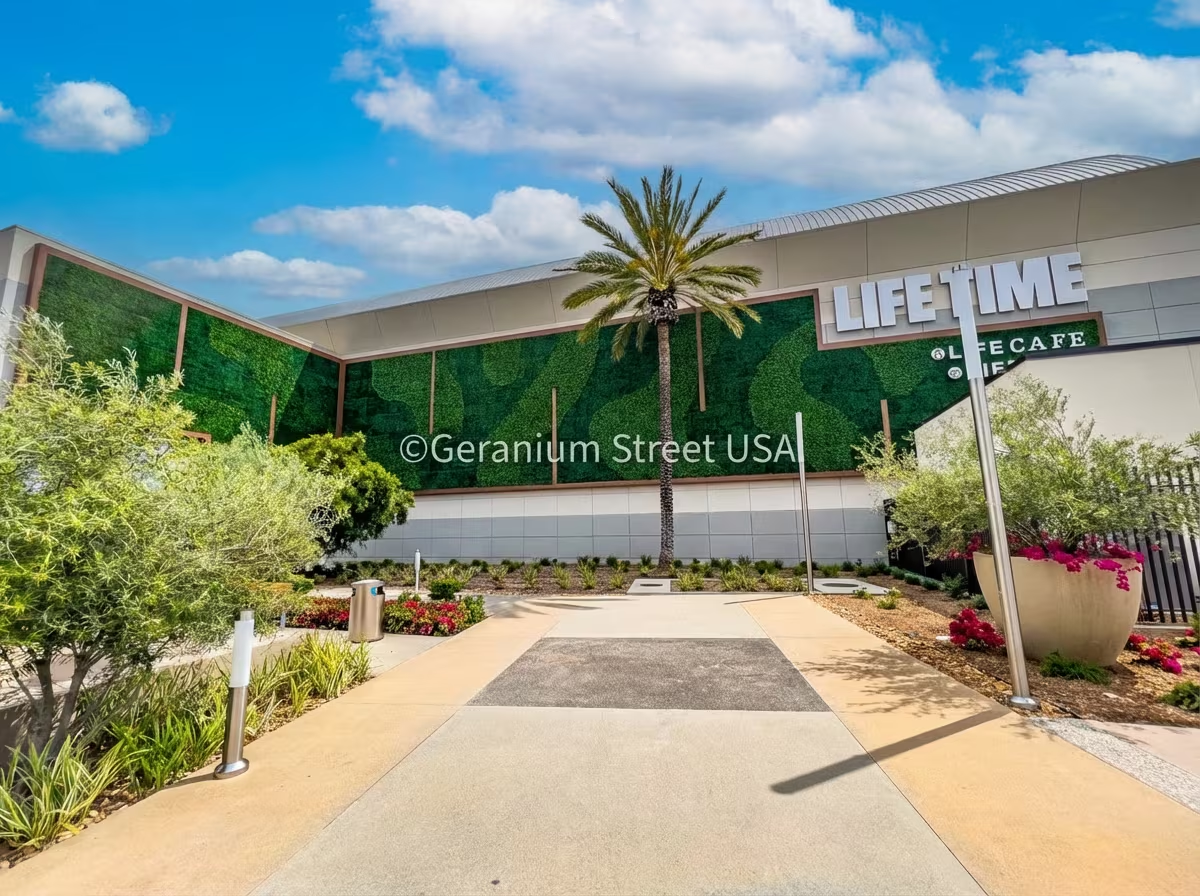
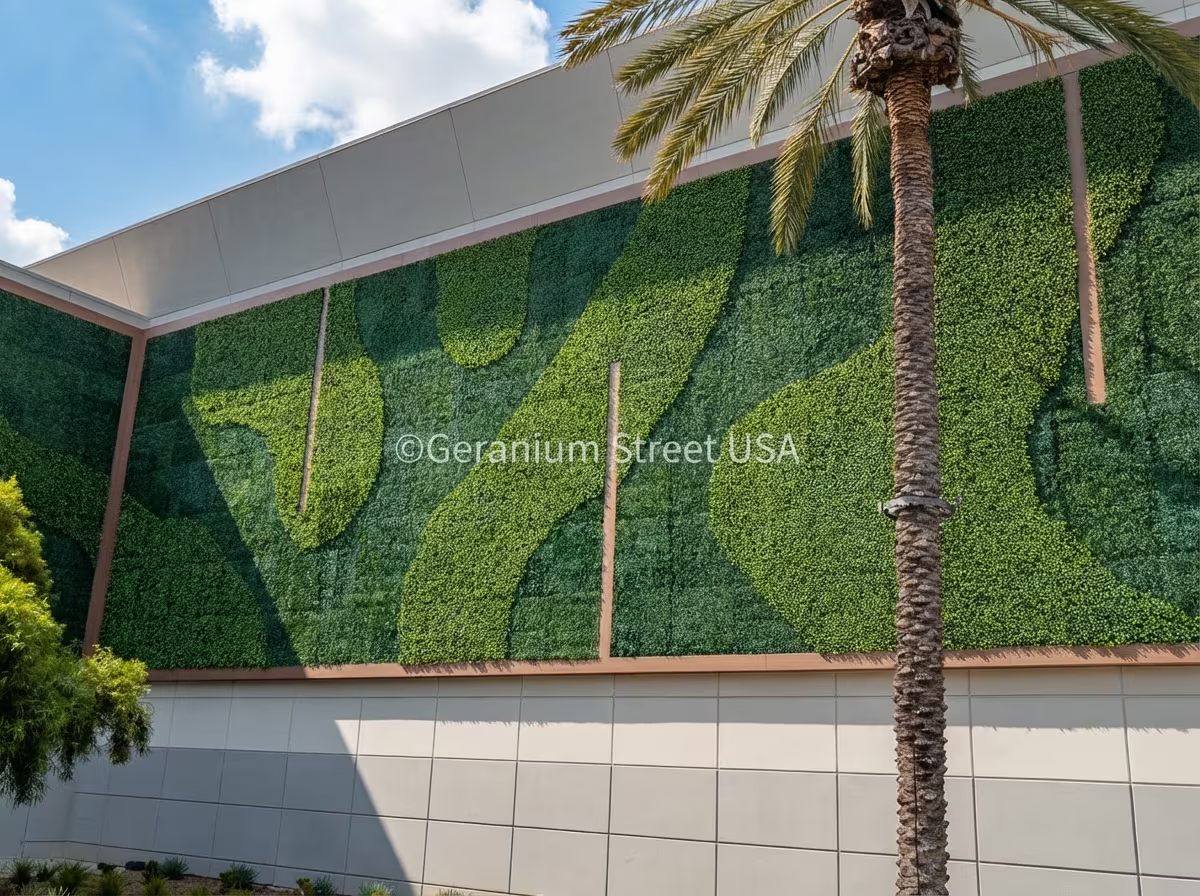
Califauxscapes designed and installed a two-material modular living wall across the full perimeter in one month. Boxwood panels on the lower ten feet, ficus on the upper four. Every section independently removable. No irrigation. No grow-in period.
That project is one example of what this guide covers: how modular artificial foliage systems can change the graffiti-response equation for California properties — what works, what does not, and how to evaluate fit for your site.
How much does graffiti actually cost California properties?
The U.S. Department of Justice estimates $12 billion is spent annually on graffiti cleanup nationwide (Weisel, COPS Problem-Oriented Guide No. 9, 2002).
In California, the numbers are staggering at the city level. These are public-sector costs alone. Private property owners absorb their own cleanup burden on top of this — and for commercial properties, the reputational cost of a visibly tagged building compounds the financial one.
$12B
Nationwide
Annual graffiti cleanup (U.S. DOJ)
$7M
Los Angeles
32M sq ft cleaned in 2014 (LAist/KPCC)
$20M+
San Francisco
Annual cleanup spend (SF Public Works)
$16M
San Diego region
618,851 sq ft in 2011 (SANDAG)
Why does repainting make the problem worse?
Repainting a tagged wall often creates a new problem: color mismatch. Stucco and masonry absorb paint differently over time, and a fresh paint-over can look worse than the original tag — a lighter or darker patch that announces the repair.
On textured surfaces like split-face block, paint removal is difficult without damaging the substrate. On metal fencing, certain spray paints bond aggressively and resist standard solvents. Each incident, each imperfect repair, adds another layer of visual compromise.
For commercial properties, multifamily housing, and hospitality venues, this cycle erodes the perceived quality of the entire property. If you manage a property where walls have accumulated years of mismatched paint-overs, our maintenance and care guide covers how to establish a clean visual baseline before screening.
Why does removal speed matter so much?
The COPS Office Guide No. 9 (U.S. Department of Justice) is direct on this point. Most jurisdictions target removal within 24 to 48 hours.
Wilson and Kelling's "broken windows" framework (The Atlantic, 1982) proposed that visible disorder signals an absence of social control. In 2008, Keizer, Lindenberg, and Steg published experimental evidence in Science confirming the mechanism: when people observe existing graffiti, they become significantly more likely to violate other norms themselves.
Martin Innes' "signal crimes" research extends this further — minor visible disorders like graffiti function as disproportionate signals about whether a place is cared for (British Journal of Sociology, 2004).
The practical implication: the faster a tagged surface is restored to its intended appearance, the less likely it is to attract additional incidents. These findings support rapid restoration as a maintenance practice — they do not guarantee that fast removal will prevent all future graffiti.
“Graffiti has a serious cumulative effect; its initial appearance in a location appears to attract more graffiti.”
— COPS Office Guide No. 9, U.S. Department of Justice
What is recovery architecture?
Most graffiti thinking starts from the surface. Apply a coating. Repaint. Chemically treat. The wall is a single, monolithic entity — when it is damaged, the entire surface must be addressed.
There is another way to think about this. Instead of treating the surface as one inseparable unit, the system can be designed as a series of independent, addressable modules. If one module is compromised, it can be isolated and serviced without disrupting the rest.
The concept borrows from operational design in other fields. Modular data centers isolate failures to individual racks. Tiled facades allow localized replacement. Raised-access flooring systems enable panel-level service. The principle is the same: design for recovery, not just for appearance.
"When we designed the Compton perimeter wall, we planned every panel to be independently removable from day one," says Alex Tarnowski, founder of Califauxscapes. "If a section gets tagged next month or next year, the response is contained to that zone — not a full-wall project."
What does foliage screening actually do?
Dense artificial foliage panels serve several distinct functions. Each is site-dependent — they are not all present in every installation.
Artificial foliage is not a security product. It does not prevent physical access. It does not deter determined vandals who target the foliage itself. It does not replace security cameras, lighting, or access control. It is one layer in a broader property-management strategy. For a deeper comparison of artificial foliage versus living plants on walls, see our living wall comparison guide.
Visual screening
The foliage layer becomes the visible surface, replacing a flat substrate with a dimensional, textured one.
Surface interruption
Dimensional panels create an irregular canvas that is harder to tag legibly — a design inference, not a guaranteed deterrent.
Damage concealment
Where walls have years of imperfect repairs and color mismatches, foliage panels restore a clean visual baseline.
Aesthetic uplift
Foliage improves utilitarian structures, contributing to visible maintenance that CPTED research identifies as meaningful (Crowe, 2013).
How does the Califauxscapes modular system work?
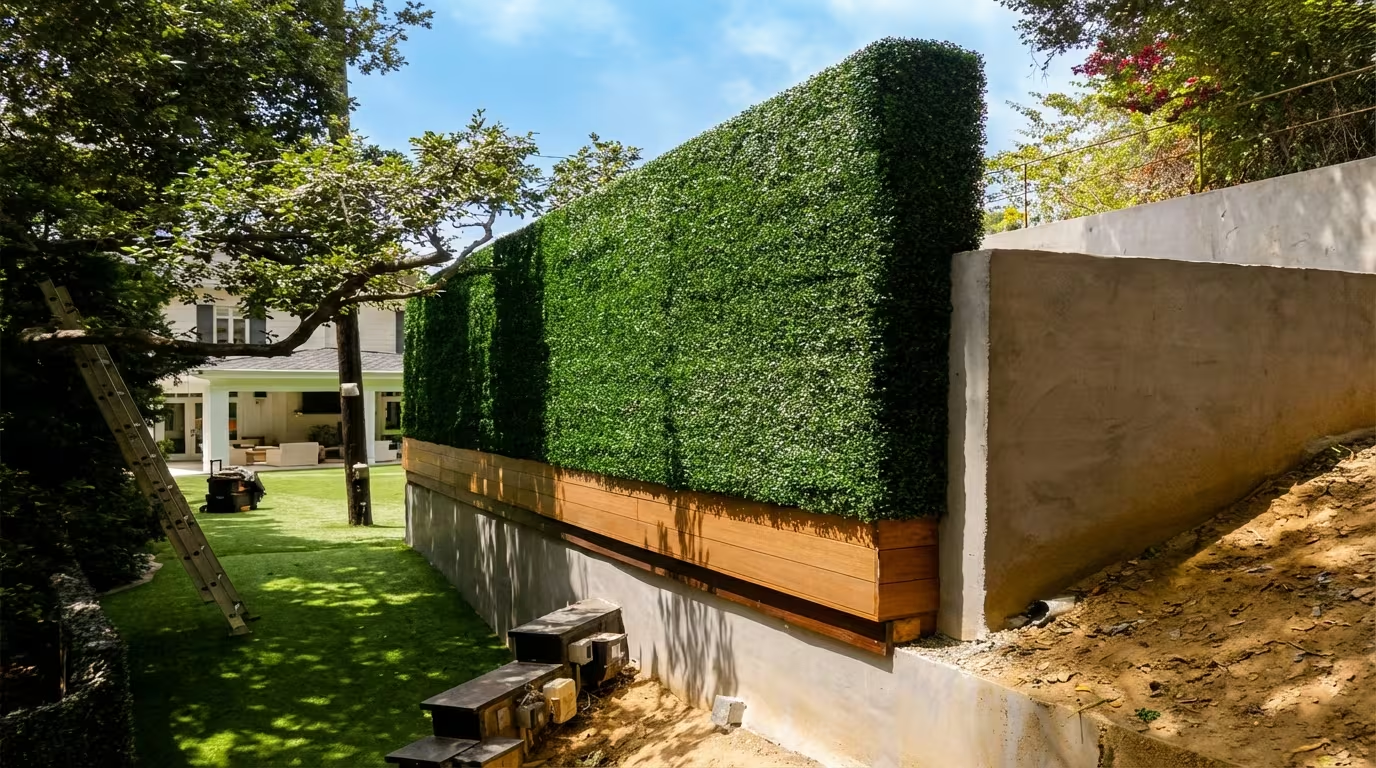
Califauxscapes installations are built as modular sections — individual panels that collectively form the visible surface across a wall, fence, or enclosure. When a section is spray painted, the affected area can be identified and isolated without taking the entire installation offline.
There are two response paths. The first is cleaning via dustless blasting — a process that combines water with an abrasive media (typically recycled glass) at adjustable pressure. The water suppresses airborne dust, making it suitable for occupied commercial environments. Suitability depends on paint type, extent, material condition, and the visual-quality standard required after treatment.
The second path is module removal and replacement. When cleaning cannot restore the section to an acceptable standard, the affected module can be removed and a replacement installed. Because the system is modular, this does not require dismantling the surrounding installation. The cost of module replacement should be understood during project planning, not after the first incident.
Where does modular screening fit best?
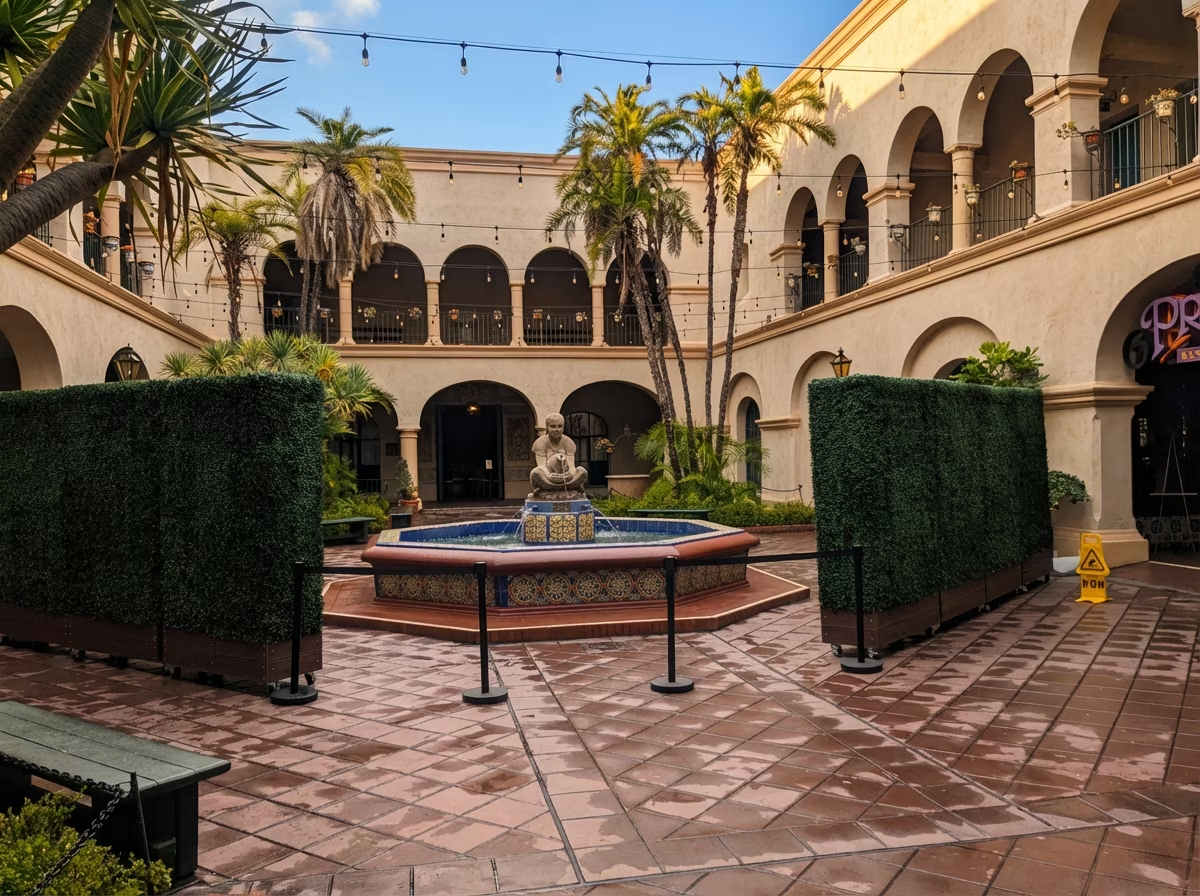
Back-of-house and service walls are frequent graffiti targets because they are low-visibility and low-traffic. Loading docks, service corridors, and rear-facing walls benefit from foliage screening that improves the visual baseline while enabling targeted module service if tagged. The improvement is often visible to neighboring properties, tenants, or public-facing views that overlook service areas.
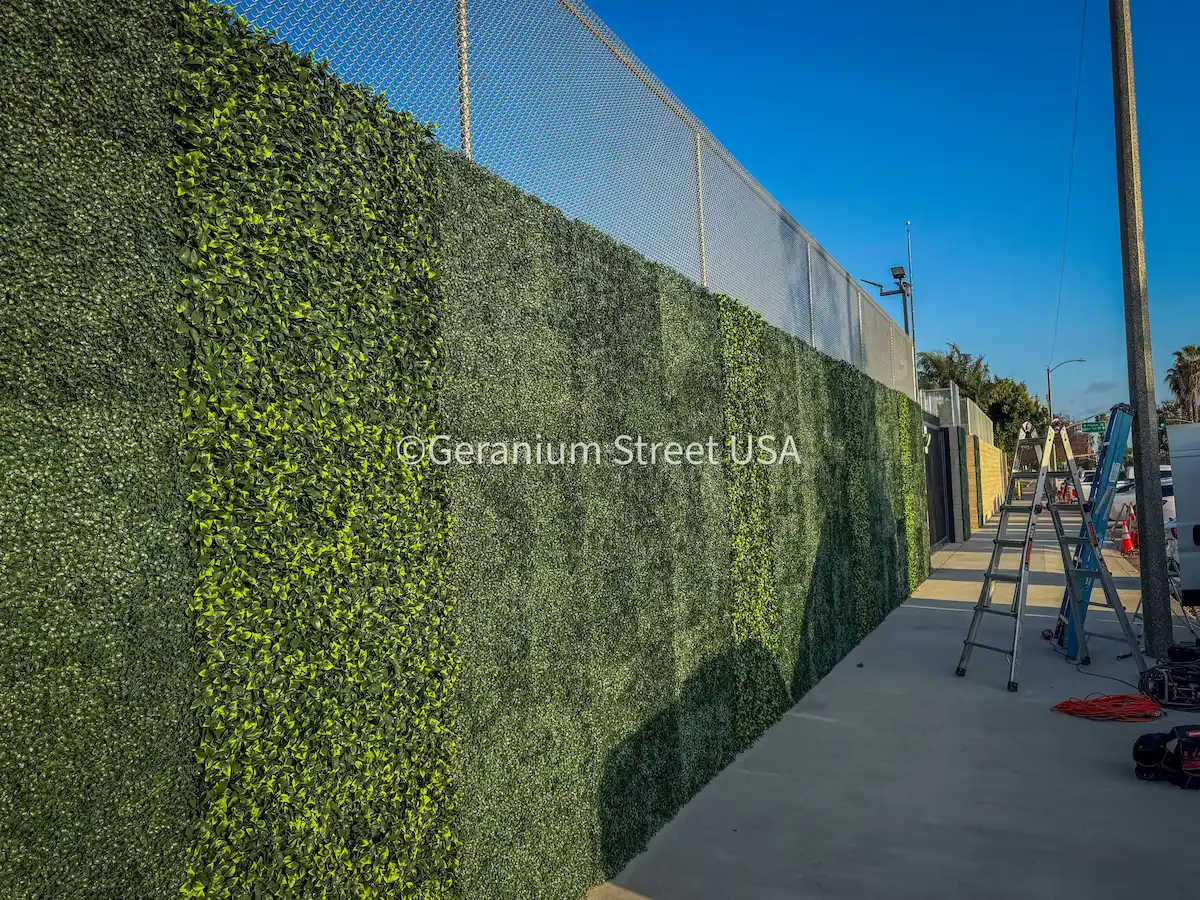
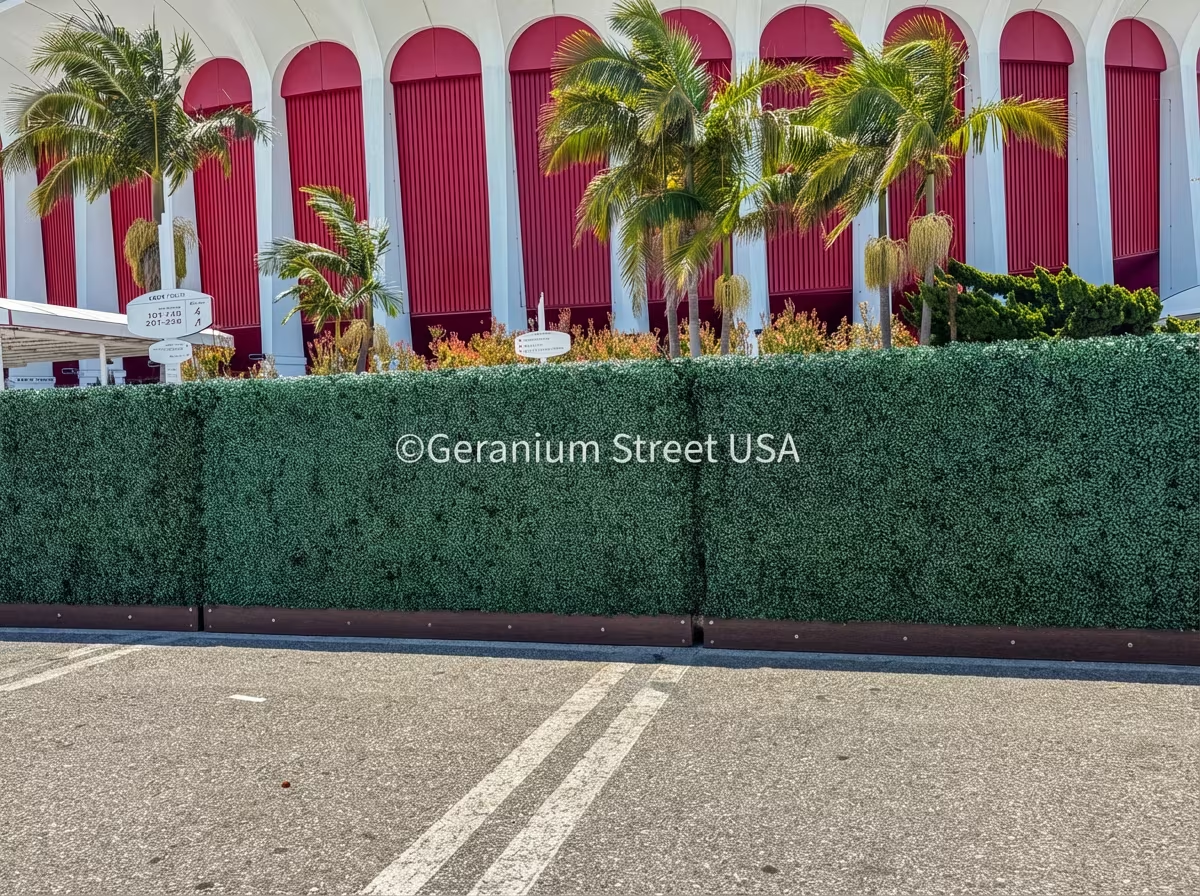
Utility enclosures, transformer pads, and dumpster screens are among the most frequently tagged structures on commercial and multifamily properties. Extended runs of chain-link, wrought iron, or block fencing present large, accessible canvases — foliage panels break up these surfaces into addressable sections. For properties evaluating fence screening specifically, our fence extension options guide covers the full range of approaches.
Apartment communities adjacent to public corridors or alleys often have recurring graffiti on perimeter walls. Hotels, resorts, and mixed-use hospitality properties use screening to maintain a curated visual environment where service areas or adjacent structures are graffiti-vulnerable.
Each application must be evaluated individually. Surface condition, exposure, access, local codes, fire-safety requirements, and the specific vandalism pattern all influence fit.
Have a wall, fence, or enclosure that keeps getting tagged?
We can assess your site and tell you whether modular foliage screening is the right fit — or recommend something else entirely.
No system is appropriate everywhere. This system does not prevent graffiti — it changes the response model. Our maintenance and care guide covers what realistic upkeep looks like.
✕ Physical destruction
If vandalism involves cutting or tearing materials, these areas need a different barrier strategy first.
✕ Security gaps
If graffiti signals broader security problems, invest in lighting, cameras, access control, or patrols first.
✕ Fire-code constraints
California Fire Code Section 321 and WUI zones set requirements that may limit where artificial vegetation can be installed.
✕ Zero-maintenance expectations
Artificial foliage is not maintenance-free. Dust, UV exposure, and vandalism require periodic attention.
✕ Living vegetation is better
Where irrigation and horticulture support exist, living plants provide ecological benefits artificial foliage cannot.
✕ Simpler solutions exist
For smooth walls easy to repaint, anti-graffiti coatings or improved lighting may be more cost-effective.
What does the evidence actually support?
Rapid graffiti removal is associated with reduced recurrence. The COPS Office Guide No. 9 identifies this across jurisdictions, and the Keizer et al. (2008) study in Science provides the strongest controlled evidence.
Visible maintenance and territorial reinforcement are established principles in Crime Prevention Through Environmental Design (CPTED). Well-maintained environments signal active ownership. Landscaping is explicitly included as a territorial-definition tool (WBDG/National Institute of Building Sciences).
What is design inference, not proven fact: that textured surfaces specifically deter graffiti more than flat ones. No peer-reviewed study tests this claim for artificial foliage. No controlled study measures specific incidence reductions from foliage screening.
This guide does not claim certainty where the evidence does not support it.
How does artificial foliage compare ecologically to living plants?
Artificial foliage is not a substitute for living vegetation in ecological terms. Living plants provide ecosystem services artificial materials cannot: photosynthesis, carbon sequestration, pollinator habitat, stormwater infiltration, air filtration, and urban heat-island mitigation. For a full comparison, see our artificial living wall vs. real living wall guide.
Where artificial foliage has a legitimate consideration is water. The California Department of Water Resources notes outdoor landscaping accounts for approximately 50% of urban residential water use statewide (DWR/PPIC). AB 1881 and the Model Water Efficient Landscape Ordinance limit non-functional turf and promote water-efficient approaches. Artificial foliage eliminates irrigation demand in treated zones.
But eliminating irrigation is a resource-efficiency characteristic, not an ecological one. Artificial foliage should not be positioned as an ecological equivalent to living plants.
What are the fire code requirements in California?
California Fire Code Section 321 addresses artificial combustible vegetation. Outdoor installations exceeding 6 feet in height within 5 feet of a building must comply with flame-propagation criteria under California Code of Regulations, Title 19, or be tested per NFPA 289. Installations more than 30 feet from an exterior wall are exempt.
In WUI zones, California Building Code Chapter 7A sets additional requirements. CAL FIRE's defensible space guidance defines Zone 0 (0–5 feet from structures) as requiring non-combustible materials. As of this writing, CAL FIRE has not published specific guidance on artificial vegetation in defensible space — a regulatory gap, not a clearance.
Fire-rating requirements vary by product, height, distance, jurisdiction, and zone. Specificity matters. Product specification for fire-sensitive locations should be coordinated with the applicable fire authority.
What does California's climate mean for exterior installations?
California properties face environmental pressures that affect any exterior treatment. UV exposure in Southern California and the Central Valley is among the most intense in the continental U.S. — materials that work in temperate climates may degrade faster here. UV-stabilized materials and documented UV warranties are meaningful specifications.
Dust accumulation varies by region. Inland and desert-adjacent properties need more frequent cleaning. Irrigation adjacency is common — even artificial installations may be exposed to overspray. Vandalism patterns vary by location and land use.
These conditions do not disqualify artificial foliage. They define the specification and maintenance parameters for long-term performance. For California-specific product selection and material guidance, see our commercial artificial landscaping guide.
The Compton project: what a real installation looks like
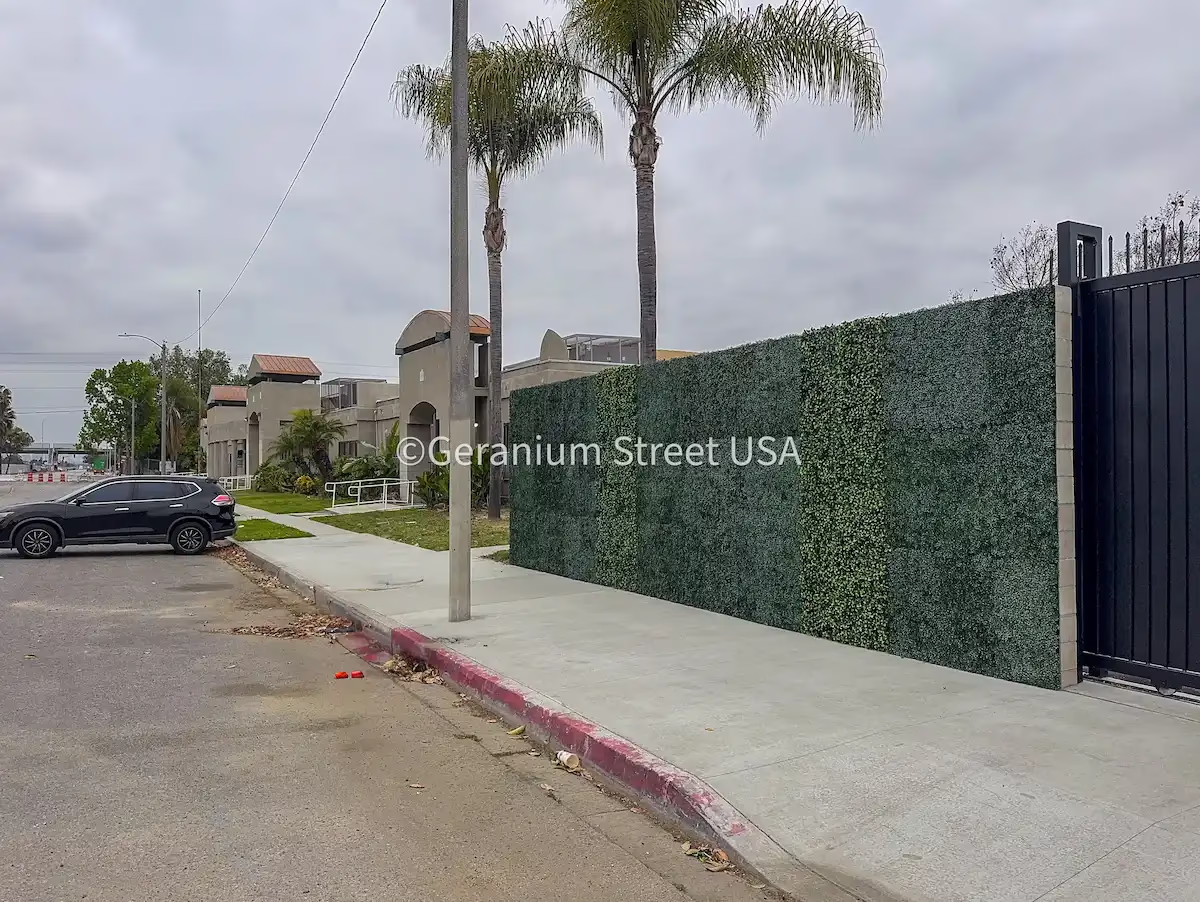
The 1,500-square-foot Compton installation demonstrates how these principles work on a real commercial site. A new block wall along a building perimeter needed graffiti abatement before the property was even occupied.
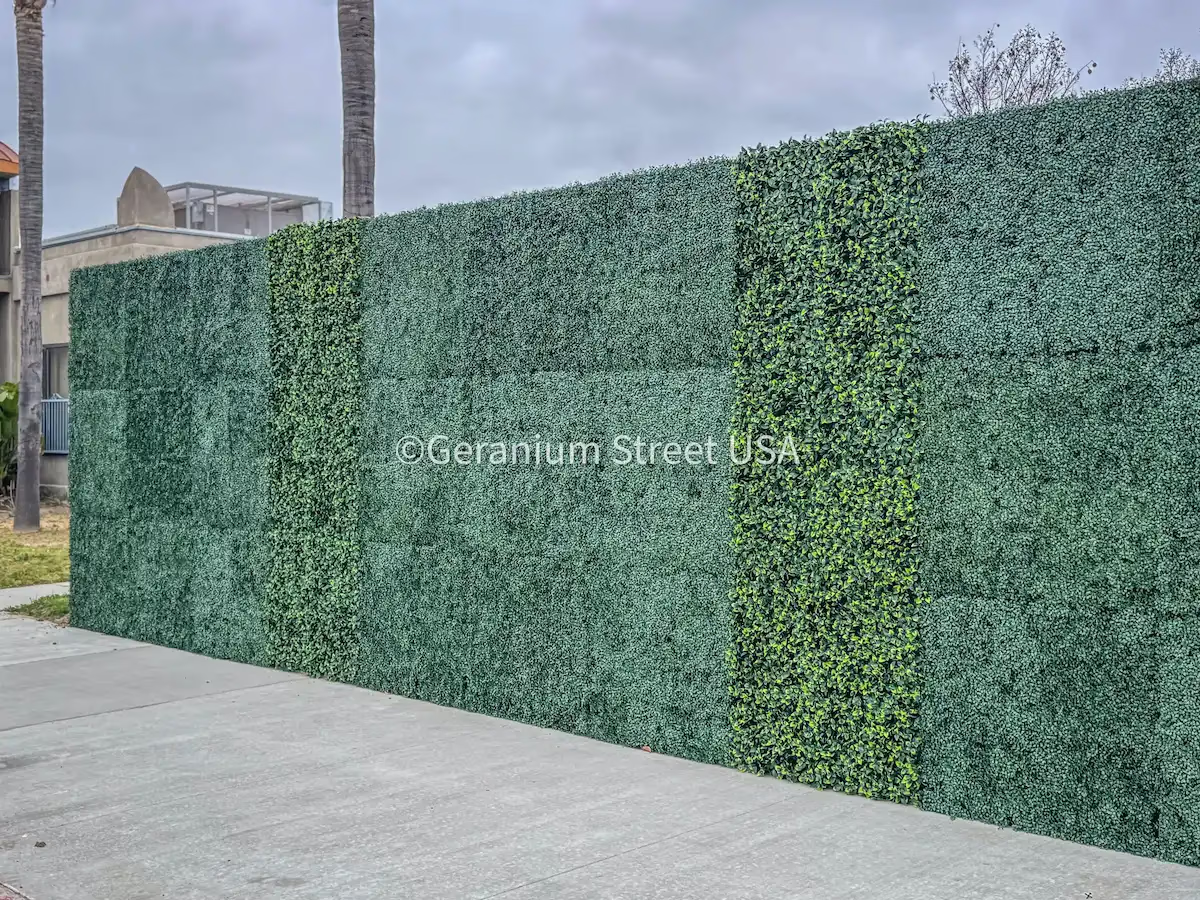
Califauxscapes designed a two-material layout — artificial boxwood on the lower ten feet, ficus on the upper four — to break up the scale and give the wall a composed, intentional appearance rather than a single uniform covering. UV-resistant foliage was selected for Southern California conditions. The modular panel format made the installation plannable, stageable, and repeatable across the full run.
The project was completed in one month. No irrigation infrastructure. No grow-in period. Every panel independently serviceable. If a section is tagged, the affected area can be assessed and addressed — cleaned or replaced — without taking down the surrounding installation.
View the full Compton graffiti abatement case study for project photos and details.
Last reviewed March 2026 · Content is reviewed periodically and updated when new information is available.
FAQ
Does artificial foliage prevent graffiti?
No. Artificial foliage does not prevent spray paint from reaching a surface. What it changes is the response model. Modular panels can be individually serviced without full-wall intervention, and the dimensional texture may be less appealing for legible tagging — though that is a design inference, not a guarantee.
What happens if someone spray paints the foliage panels?
The affected area is assessed to determine the response. Depending on paint type, extent, and material condition, the section may be cleaned using dustless blasting or removed and replaced with a new module. The method is determined by site conditions, not a one-size-fits-all protocol.
Can the affected area be cleaned, or does it have to be replaced?
Both options are available. Dustless blasting can remove spray paint from many foliage materials. When cleaning cannot achieve the required appearance standard or the material is compromised, module replacement is the alternative. The determination is made during assessment.
Do you have to remove the whole wall to fix a tagged section?
No. Individual sections can be isolated and serviced independently. The surrounding installation remains in place. This is the primary operational advantage of a modular system.
Is this better than repainting?
It depends. For smooth walls where paint matching is straightforward, repainting may be simpler. For textured surfaces like split-face block, stucco with accumulated repairs, or metal fencing where color matching is difficult, a modular foliage system can provide a more consistent long-term result.
Is artificial foliage appropriate for commercial properties in California?
It can be, when site conditions, code requirements, and maintenance plans support it. California Fire Code Section 321 and local WUI requirements must be verified. Fire code compliance and site-specific assessment are required — not optional.
What are the realistic limitations?
Artificial foliage does not prevent graffiti, does not provide security, does not replicate the ecological benefits of living plants, is not maintenance-free, and may not meet fire-code requirements in all locations. It is one tool in a broader property-management strategy.
How fast can a damaged section be serviced?
Response time depends on damage extent, module availability, site access, and scheduling. Califauxscapes defines response protocols during project planning so the pathway is established before an incident occurs. Timelines vary by project.
How much does a modular foliage installation cost?
Cost depends on wall size, material selection, substrate condition, and site access. The Compton project covered 1,500 square feet with a two-material design in one month. For project-specific pricing, request a site assessment through our contact page.
How does this compare with living plants?
Living plants provide ecological benefits artificial foliage cannot — habitat, air quality, stormwater management. But living plants require irrigation, horticulture support, and time to achieve density. Artificial foliage offers immediate coverage, zero irrigation, and modular replaceability. The right choice depends on site conditions, maintenance capacity, and project priorities.
Need project-specific guidance before design or procurement moves forward?
Share the site conditions, privacy goals, or wall type you are evaluating and we can help you narrow the right system for the project.