Artificial Landscaping and California Water Restrictions: What Property Owners Should Know
How water policy, drought restrictions, and landscape ordinances connect to artificial landscaping decisions.
By Alex TarnowskiUpdated March 28, 202610 min read
How water policy connects to landscape decisions
Reference: water-restriction-landscape-options
Artificial Landscaping
+Can reduce irrigation demand in treated zones
+Often lowers recurring trimming requirements
+Supports consistent visual coverage through seasonal shifts
+Performance depends on material grade and installation detail
Natural Landscaping
-Often requires reliable irrigation and seasonal care
-Can need recurring pruning and plant health management
-Appearance can vary based on climate and maintenance quality
-Long-term cost profile depends on service intensity
At a glance
This guide connects California water policy to practical landscaping decisions. It covers how drought restrictions, tiered pricing, and MWELO affect what property owners can plant and what it costs to maintain, where artificial landscaping fits within the water-efficiency framework, and when drought-tolerant native planting is the better answer.
Planning note: any timelines, cost examples, or ownership comparisons in this guide are for early specification and budgeting conversations only. Final scope depends on existing conditions, attachment strategy, access, and field verification.
Table of contents
California's relationship with water shapes every landscaping decision on the property. Drought restrictions, tiered water pricing, and the state's Model Water Efficient Landscape Ordinance (MWELO) all influence what can be planted, how much it costs to maintain, and whether artificial alternatives make practical sense in specific zones. If you just received a water bill that made you reconsider your entire yard, you are not alone -- and you are not wrong to be looking at alternatives.
This guide explains where to find the water rules that apply to your property, how they affect landscaping choices, and where artificial systems fit within the framework -- honestly, including the conditions where drought-tolerant native planting is the better answer. We link to the actual agencies and ordinances so you can verify everything yourself.
California's water landscape: what's driving the restrictions
California's water supply depends primarily on snowpack in the Sierra Nevada and a system of reservoirs and aqueducts that move water hundreds of miles from where it falls to where it is used. That system has always been subject to drought cycles, but the droughts of 2012-2016 and 2020-2022 pushed water policy into territory that directly affects how residential and commercial properties manage their landscapes.
In response to recurring shortages, the State Water Resources Control Board (waterboards.ca.gov) established statewide conservation mandates that local water districts implement and enforce. Governor Brown's 2015 executive order required a 25 percent statewide reduction in urban water use. Even when mandatory restrictions are relaxed between drought periods, many districts have retained tiered pricing structures that make high outdoor water use progressively more expensive. The EPA's WaterSense program estimates that outdoor use accounts for up to 60 percent of residential water consumption in arid regions -- and in much of California, landscape irrigation is the largest single category of household water use.
The result is a regulatory and economic environment where the cost of maintaining irrigated landscaping is not just a line item -- it is a variable that moves with drought declarations, tier thresholds, and district-level pricing decisions. California has more than 400 water agencies, each with its own rate structure, restriction rules, and drought-response framework. There is no single statewide water price or restriction schedule. What applies to a property in San Diego may be substantially different from what applies in Sacramento or the Inland Empire.
“Water pricing alone is changing behavior faster than mandates. In some Southern California districts, Tier 3 and Tier 4 rates are 4-6x the base rate. That makes the cost of irrigating a large hedge visible on every bill.”
— Califauxscapes observation from client discussions, 2024-2026
Up to 60%
Outdoor water share
Residential outdoor use as share of total in arid regions (EPA WaterSense)
400+
Water agencies in CA
Each with its own rate structure, tier thresholds, and restriction rules
MWELO
State landscape ordinance
Model Water Efficient Landscape Ordinance -- applies to new and renovated landscapes
2015 / 2021
MWELO updates
Major 2015 revision with amendments effective 2021 (Department of Water Resources)
MWELO: the ordinance that affects new landscape installations
The Model Water Efficient Landscape Ordinance -- MWELO -- is California's primary regulatory tool for controlling landscape water use on new and renovated properties. Codified under Government Code sections 65595-65596 and administered by the California Department of Water Resources (water.ca.gov), MWELO applies to new construction and landscape renovation projects that exceed a square footage threshold. In most jurisdictions that have adopted the model ordinance, that threshold is 500 square feet for residential projects and 2,500 square feet for non-residential projects, though some local agencies have adopted stricter thresholds.
MWELO does not ban live plants or mandate artificial landscaping. What it does is set a Maximum Applied Water Allowance (MAWA) for the project -- a water budget calculated using a formula that accounts for local evapotranspiration rates, the plant factor of the selected species, and the total irrigated area. The landscape plan must demonstrate that the projected water use stays within that budget. The California Department of Water Resources publishes the full MWELO text and implementation resources on its website.
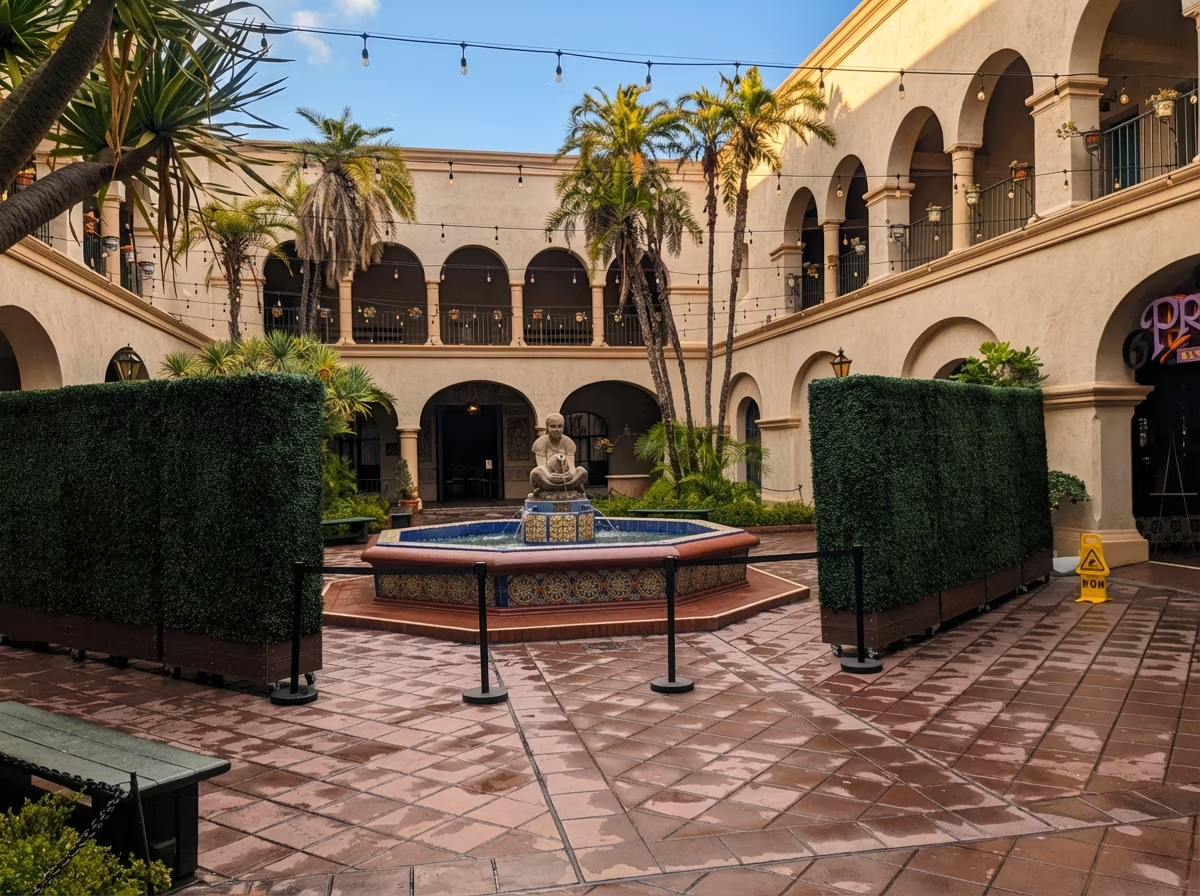
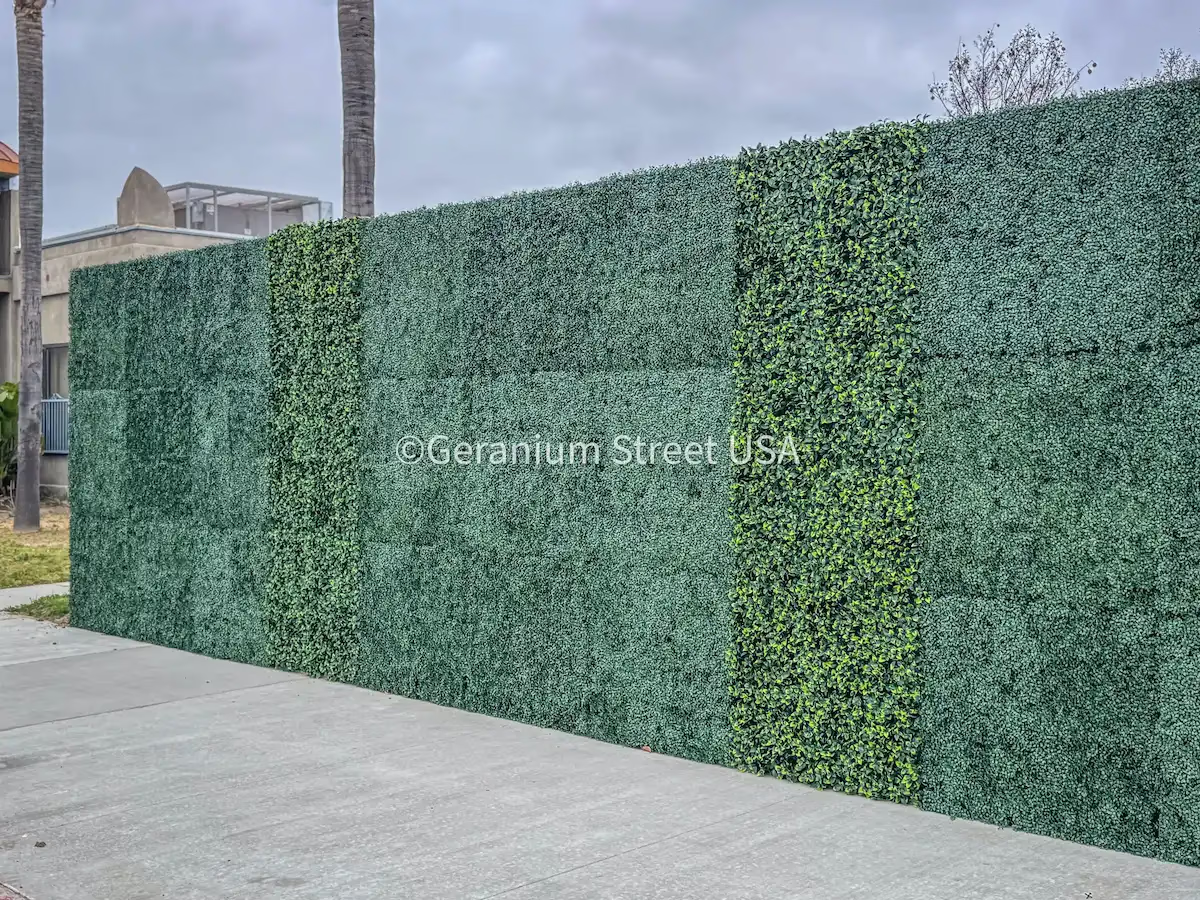
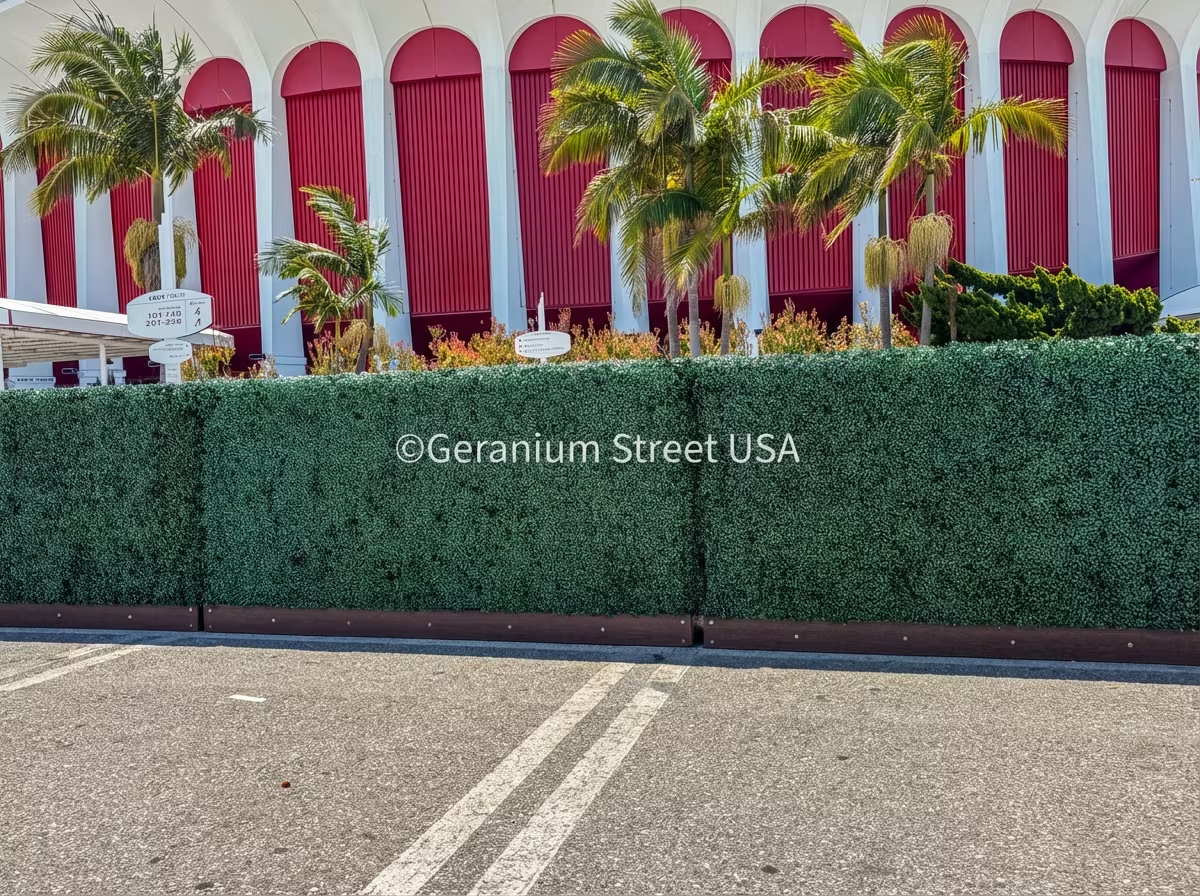
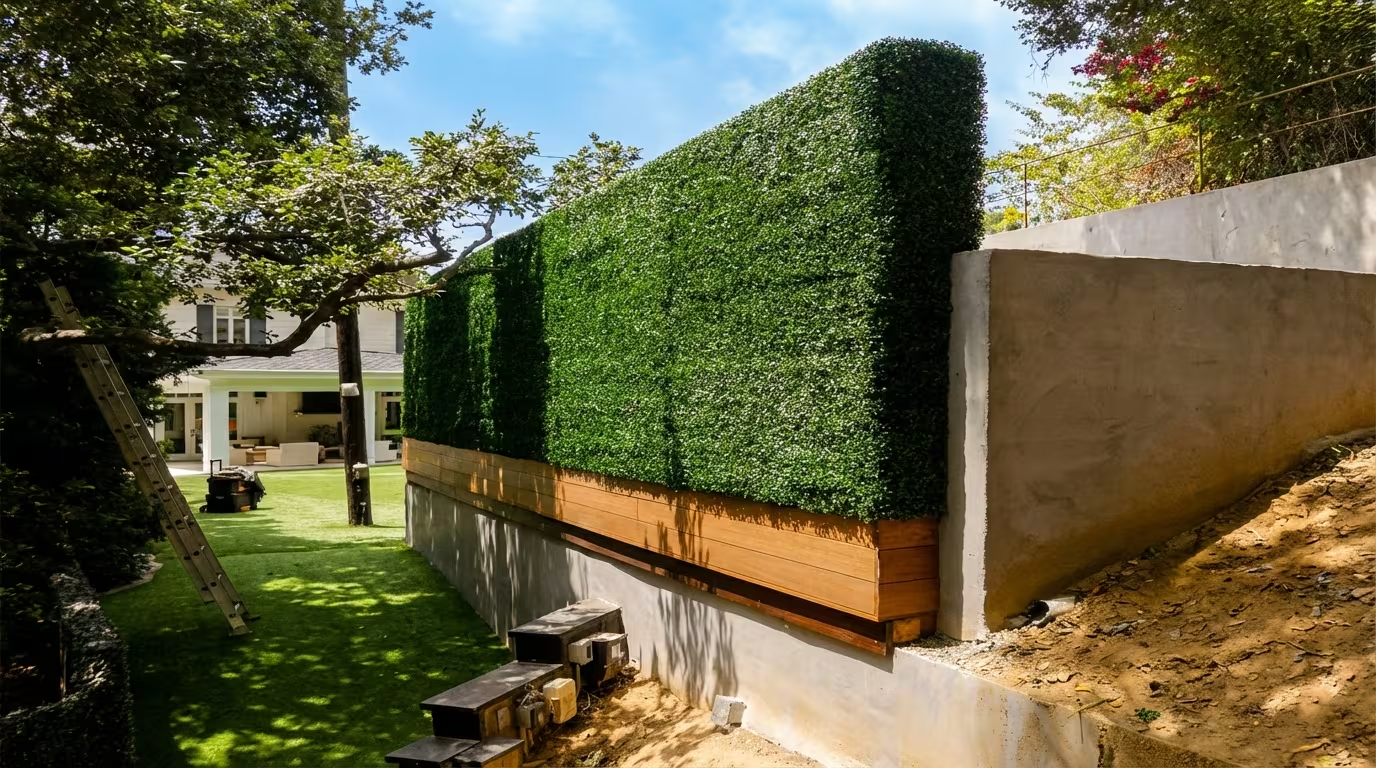
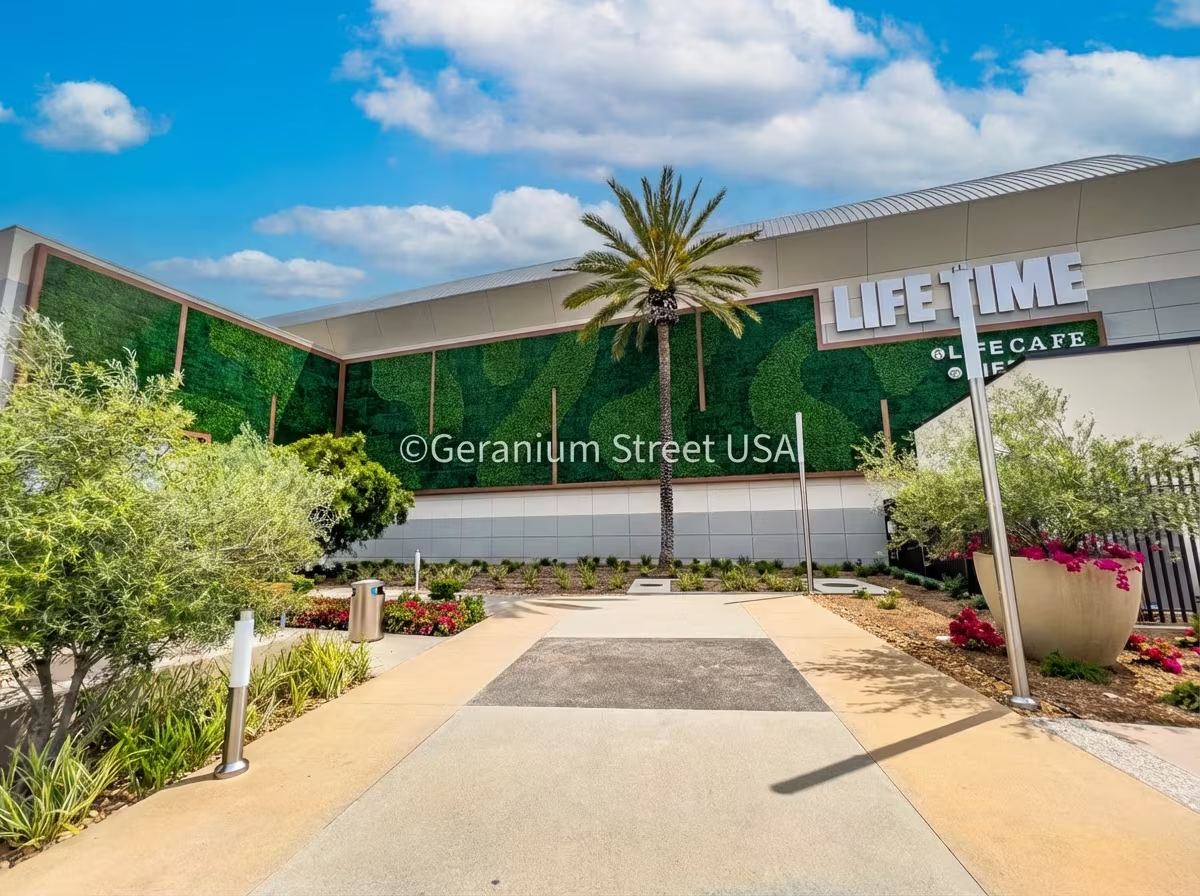
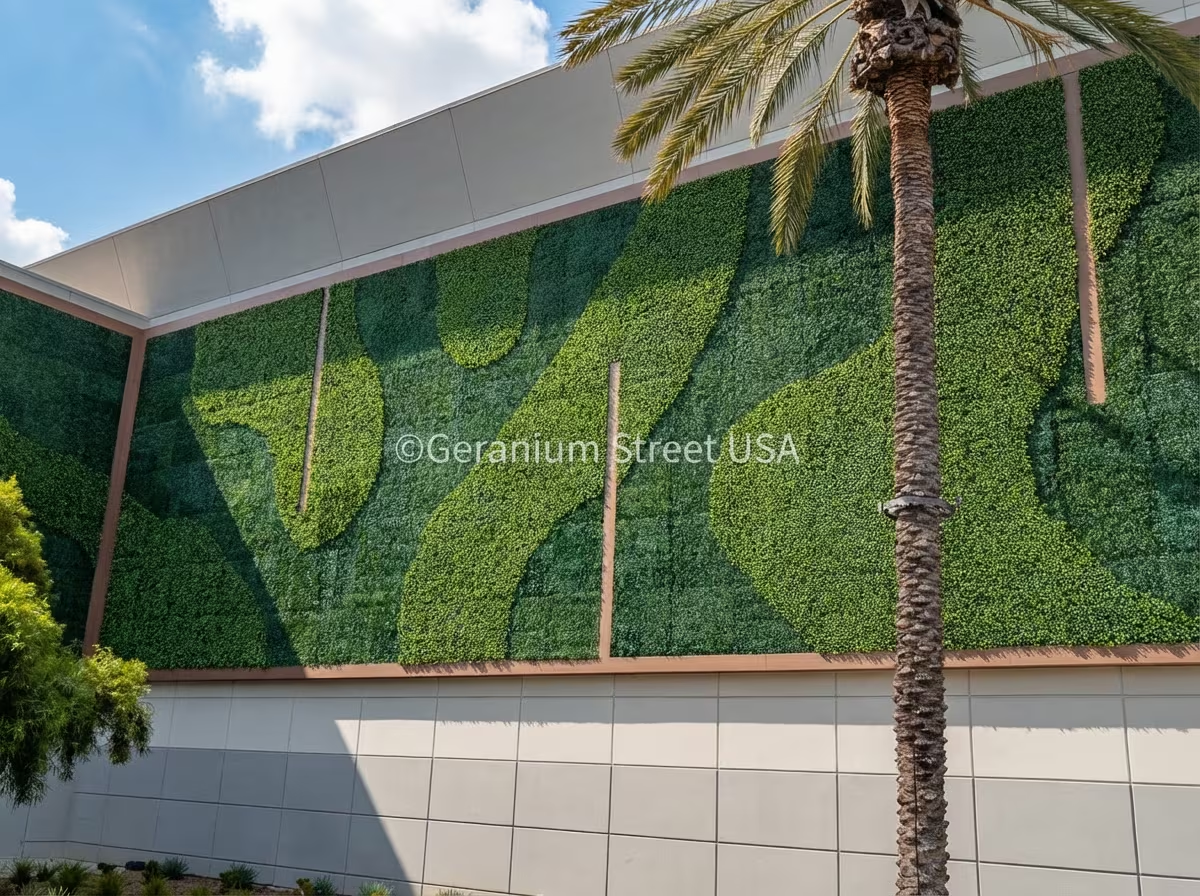
For property owners planning a landscape renovation, the practical implication is straightforward: any zone that uses artificial landscaping instead of irrigated planting contributes zero to the water budget. That does not mean the entire property must be artificial -- it means that using artificial systems in specific zones (a privacy hedge along a fence line, a living wall on a courtyard face, screening around pool equipment) frees up water budget for irrigated planting elsewhere on the property. This zone-by-zone approach is how most landscape architects work within MWELO constraints.
If you are planning a project that might trigger MWELO, your city's planning department can confirm the local threshold and documentation requirements. Most cities that have adopted MWELO require a landscape documentation package as part of the building permit process.
What MWELO regulates
Total applied water for new or renovated landscape areas. It sets a water budget, not a plant list.
When it applies
New construction, and landscape renovations above a square footage threshold (typically 500 sq ft residential, 2,500 sq ft non-residential).
How it calculates
Uses a Maximum Applied Water Allowance (MAWA) formula based on evapotranspiration, plant factor, and irrigated area.
What it means for artificial systems
Artificial landscaping zones have zero irrigation demand, freeing up water budget for irrigated areas elsewhere on the property.
How to find your local water restrictions
The water rules that matter most are the ones set by your local water district -- not the statewide framework. Your district controls the tiered pricing that determines what you actually pay, the drought-stage restrictions that determine when and how you can irrigate, and any rebate programs that might offset the cost of a landscape conversion.
Start with your water bill. The district name is printed on it. From there, visit the district website to find current drought stage declarations, mandatory restrictions, tiered rate schedules, and any landscape-related rebate programs. Most districts publish this information publicly.
For Southern California properties, the Metropolitan Water District of Southern California (mwdh2o.com) is the regional wholesale supplier that sets baseline conservation targets for its 26 member agencies. The San Diego County Water Authority (sdcwa.org) serves the San Diego region. In Northern California, the San Francisco Public Utilities Commission (sfpuc.org) manages water supply for San Francisco and several wholesale customers. The Eastern Municipal Water District and Inland Empire Utilities Agency serve large portions of the inland regions.
Some districts offer per-square-foot rebates for removing irrigated turf and converting to water-efficient landscaping. These rebate programs have historically been popular -- the Metropolitan Water District's turf removal program has offered rebates that have varied over time, and local agencies sometimes supplement with additional incentives. Rebate availability, amounts, and eligible conversion categories change frequently, so check your local district for current terms.
For new landscape projects or major renovations, check with your city's planning department to confirm whether MWELO applies to your project scope and what documentation is needed for permit approval.
Check your water bill
Your water district name is on your bill. That is your starting point for restrictions and rate tiers.
Find current drought stage
Each district sets its own drought response level. Restrictions vary by stage.
Look up tiered pricing
Many districts publish rate schedules online. Higher tiers penalize excess use -- outdoor irrigation is usually what pushes households into higher tiers.
Ask about landscape rebates
Some districts offer per-square-foot rebates for turf removal or conversion to water-efficient landscaping.
Check MWELO applicability
For new projects or major renovations, your city's planning department can confirm whether MWELO applies and what documentation is needed.
When artificial landscaping makes water sense -- and when it doesn't
Artificial landscaping makes its strongest case in zones where irrigation is difficult, expensive, or impractical. Properties already paying Tier 3 or Tier 4 water rates, rooftop or balcony installations without plumbing access, areas near pool equipment where chemical exposure damages live plants, and coastal sites where salt air and wind stress conventional planting -- these are conditions where eliminating irrigation demand from a specific zone produces a real, measurable benefit on the water bill.
Artificial systems also make sense where the property needs immediate visual coverage. A newly installed privacy hedge or living wall is fully dense on install day, with no two-to-three-year establishment period and no temporary irrigation system needed for grow-in. For commercial properties, multifamily communities, and homeowners who need screening now, that timeline advantage has practical value.
But artificial landscaping is not the right answer everywhere, and we should be straightforward about that. Drought-tolerant native planting -- California buckwheat, manzanita, ceanothus, salvias, and similar species adapted to the state's climate -- provides ecological benefits that artificial systems simply cannot replicate. Native plantings support pollinators and local wildlife, contribute to stormwater absorption through their root systems, and help manage soil stability on slopes and erosion-prone areas. Once established (typically one to three years with supplemental irrigation), many California natives require little to no supplemental water.
Drought-tolerant planting also typically costs less per square foot upfront than artificial systems. If the property has functional irrigation, reasonable soil conditions, and a maintenance plan that can support periodic pruning and weed management, native planting may achieve a similar visual result at lower initial cost with greater long-term ecological value. The best projects often combine both approaches -- artificial systems in zones that need immediate coverage or cannot support irrigation, and drought-tolerant natives where the site conditions favor living material.
“The best projects usually combine both approaches. Use artificial systems where you need immediate screening or cannot irrigate, and plant drought-tolerant natives where the site can support them. Zone-by-zone decisions produce better results than all-or-nothing choices.”
— Alex Tarnowski, Califauxscapes
Factor
Artificial Landscaping
Drought-Tolerant Planting
Water demand
Zero in treated zones
Reduced but not zero -- establishment period needs irrigation
Establishment time
Immediate full coverage
1-3 years to fill in
Ongoing maintenance
Cleaning, inspection
Pruning, occasional watering, pest management
Ecological value
None (no habitat, no pollination)
Supports local ecology when native species are used
Zones needing immediate coverage, no irrigation, high visibility
Areas where living material serves a design or ecological purpose
What to ask your water district and planning department
Before starting a landscape project in California, a few well-placed questions can save significant time and money. The two agencies that matter most are your local water district (for pricing, restrictions, and rebates) and your city planning department (for MWELO compliance, permits, and code requirements). Both are typically accessible by phone, and most have staff who can answer landscape-related questions without requiring a formal appointment.
For the water district, the key questions are operational: What drought stage are we currently in, and what outdoor watering restrictions apply? What are the current tiered water rates, and at what usage level does my household move into Tier 2, 3, or 4? Are there rebates available for turf removal or landscape conversion, and what categories of replacement are eligible? How does the district classify artificial landscaping in water budget calculations?
For the planning department, the questions are regulatory: Does my project trigger MWELO requirements based on the scope of the renovation? What landscape documentation package is needed for the building permit? Are there any overlay zones, specific plans, or HOA architectural review requirements that affect landscape materials on my property?
These questions take about 10-15 minutes per agency. The answers will tell you what your actual constraints are, what financial incentives exist, and whether the project you are envisioning aligns with local requirements. That information should come before material selection, contractor conversations, or design decisions -- not after.
For reference, major agency websites where current restrictions and rates are typically published: Metropolitan Water District of Southern California (mwdh2o.com), San Diego County Water Authority (sdcwa.org), San Francisco Public Utilities Commission (sfpuc.org), and the California Department of Water Resources MWELO page (water.ca.gov).
Current drought stage
What restrictions are in effect? How long are they expected to last?
Tiered rate thresholds
At what usage level do I move into Tier 2, 3, or 4? What is the cost difference?
MWELO applicability
Does my project trigger MWELO requirements? What is the square footage threshold?
Available rebates
Does the district offer turf removal rebates or water-efficient landscape conversion incentives?
Artificial system classification
How does the district classify artificial landscaping in water budget calculations?
Permit requirements
What permits and documentation are needed for a landscape renovation of this size?
Last reviewed March 2026 · Content is reviewed periodically and updated when new information is available.
FAQ
Does artificial landscaping count toward water-efficient landscape requirements?
In most California jurisdictions, artificial landscaping zones are counted as zero irrigation demand in MWELO calculations. This can free up water budget for irrigated areas elsewhere on the property. Confirm with your local planning department, as implementation details vary by jurisdiction.
Are there rebates for switching to artificial landscaping?
Some water districts include artificial turf in turf-removal rebate programs, but artificial hedge and living wall systems are generally not covered by most rebate programs as of this writing. Check your local water district for current eligible conversion categories -- rebate terms change frequently.
Is drought-tolerant planting always better than artificial?
Not always. Drought-tolerant plants still need establishment irrigation (typically one to three years), ongoing maintenance, and may not provide immediate privacy or screening. However, once established, native drought-tolerant species offer ecological benefits -- pollinator habitat, stormwater absorption, soil stability -- that artificial systems cannot provide. The best choice depends on the zone's purpose, visibility needs, irrigation access, and available maintenance capacity.
Where can I find my water district's current restrictions?
Your water district name is on your water bill. Visit the district website for current drought stage, restrictions, and rate schedules. Major districts: mwdh2o.com (Metropolitan Water District of Southern California), sdcwa.org (San Diego County Water Authority), sfpuc.org (San Francisco Public Utilities Commission). The California Department of Water Resources also publishes statewide conservation information at water.ca.gov.
Need project-specific guidance before design or procurement moves forward?
Share the site conditions, privacy goals, or wall type you are evaluating and we can help you narrow the right system for the project.