California Fence Height Rules and Privacy: What to Check Before You Build
Where to find your local height limits, setback rules, and HOA restrictions before planning a privacy upgrade.
By Alex TarnowskiUpdated March 28, 202610 min read
The three-layer regulatory stack for California fence height
Reference: fence-height-regulatory-stack
Site Review
Dimensions, substrate, and access validation
System Fit
Match product behavior to project goals
Execution
Stage delivery and document care expectations
At a glance
This guide helps California property owners find the fence height rules that apply to their specific property. It explains the three-layer regulatory stack (state law, municipal zoning code, HOA), common height patterns across California cities, how to look up your local rules, where fence extensions and privacy screens fit within the framework, and how to verify contractor licensing through the CSLB.
Planning note: any timelines, cost examples, or ownership comparisons in this guide are for early specification and budgeting conversations only. Final scope depends on existing conditions, attachment strategy, access, and field verification.
Table of contents
Most privacy projects in California start with a height question: how tall can I actually build? The honest answer is that it depends — on where your property sits, what zoning district it falls in, whether a homeowners association applies, and sometimes which direction the fence faces. There is no single statewide fence height rule in California. The number comes from your city or county zoning code, and it can vary meaningfully even between neighboring jurisdictions. If you are standing in your backyard right now wondering whether you can add two feet to your fence line, the answer is probably findable — but it is not going to come from a state statute.
This guide does not provide legal advice. What it does is explain where to look for the rules that apply to your specific property, what the common patterns look like across California cities, and where fence extensions and privacy screening systems fit within those frameworks. We link to the actual agencies and code databases so you can verify everything yourself. If something in your situation is unclear after reading this, the best next step is a quick call to your local planning department — most have someone on staff who can answer fence questions in a few minutes.
Where California fence height rules actually come from
When property owners search for "California fence height laws," they typically expect to find a single statewide number. That number does not exist. Fence height in California is governed by a three-layer regulatory stack, and understanding which layer does what will save you from the most common planning mistakes.
The first layer is state law. California Civil Code sections 841 through 841.4 address shared boundary fence obligations between neighbors — who pays for maintenance, how disputes are handled, and what constitutes a reasonable fence. These sections do not specify height limits. They establish the legal framework for neighborly fence responsibilities, but the actual allowable height comes from somewhere else entirely.
The second layer is your municipal zoning code. This is where the numbers live. Your city or county sets specific height limits by zone and by yard location — front, side, and rear. A city like Los Angeles has different limits than Pasadena, which has different limits than unincorporated LA County. These codes are public, typically free to access online, and they are the authoritative source for how tall your fence can be.
The third layer is your HOA, if you have one. Homeowners association CC&Rs (Covenants, Conditions, and Restrictions) are private contractual agreements that can impose additional restrictions on top of what the city allows. An HOA can require lower heights, specific materials, approved colors, or architectural review before any fence work begins. What an HOA cannot do is permit heights that exceed the municipal code. The restrictions only go one direction: stricter.
“The most common mistake is assuming a statewide rule exists. California does not have a single fence height limit. Your city or county zoning code controls the number, and your HOA (if any) can reduce it further.”
— Califauxscapes project experience across 5 California counties
State law (Civil Code)
Sets neighbor responsibilities for shared boundary fences. Does not specify height limits. Reference: California Civil Code sections 841–841.4.
Municipal zoning code
Sets height limits by zone (front yard, side yard, rear yard). This is where the actual numbers come from. Limits vary by city.
HOA CC&Rs
Can impose additional restrictions (materials, colors, styles, maximum heights). These are contractual, not statutory. Check your governing documents.
Common height patterns across California cities
While every jurisdiction sets its own limits, there are patterns that repeat across most California cities. Understanding these typical ranges gives you a starting point — but you should always verify the specific numbers with your own city before making any decisions.
In rear and interior side yards, six feet is the most common maximum height for residential fences and walls. This is the standard limit in the majority of California cities for the portions of your property that do not face a street. Some jurisdictions allow up to eight feet with a neighbor agreement or a variance, but six feet is the baseline you will encounter most often.
Front yards are where it gets more restrictive. Most cities limit front-yard fences to somewhere between 36 and 42 inches — roughly three to three-and-a-half feet. The reasoning is straightforward: lower fences in front yards protect sightlines for drivers pulling out of driveways and for pedestrians on the sidewalk. Some cities allow taller front fences if they are set back a certain distance from the sidewalk or if they meet specific transparency requirements.
Corner lots add another layer of complexity. The street-facing side yard on a corner lot is often treated more like a front yard than an interior side yard, with lower height limits to maintain driver visibility at the intersection. Many cities define "sight triangles" at corners where fences must stay below a certain height to keep the intersection safe.
Slope conditions, design review districts, and coastal zone overlays can all introduce additional requirements. Cities like Beverly Hills, portions of San Francisco, and communities along the coast may require architectural review or design approval beyond the standard height check. The point is not to memorize every exception — it is to know that exceptions exist and to check for them before you assume the standard limits apply to your lot.
6 ft
Most common rear/side limit
Typical maximum in California residential zones (verify with your city)
3–4 ft
Typical front yard limit
Lower limits protect sightlines for drivers and pedestrians
482
Incorporated cities in CA
Each with its own zoning code and fence regulations (plus 58 counties with unincorporated areas)
Free
Municipal code lookup
Most cities publish zoning codes online via Municode or city website
Yard Zone
Typical Limit
What to Check
Front yard
36–42 inches (3–3.5 ft)
Some cities allow taller with a permit or if set back from the sidewalk
Side yard (street-facing)
42–48 inches (3.5–4 ft)
Corner lots often have stricter limits on the street-facing side
Side yard (interior)
6 feet
Most common limit; some cities allow up to 8 ft with neighbor agreement
Rear yard
6 feet
Most permissive zone; extensions above 6 ft may require a permit
Pool perimeter
Varies (typically 48 in / 4 ft min barrier)
Pool barrier codes are separate from fence height codes — check both
How to find the rules for YOUR property
Knowing the typical patterns is useful context, but what matters is the specific rule that applies to your address. The good news is that this information is almost always publicly available and free to access. Here is how to find it.
Start with your zoning district. Your property tax bill or assessment notice typically shows the zone code — something like R-1, R-2, RE, or similar. If it is not on the tax bill, most cities publish interactive zoning maps on their websites. You can search your address and find out exactly which zone your parcel sits in. Fence rules often vary by zone, so this is your first step.
Next, search your city's municipal code for fence regulations. Most California cities publish their zoning ordinances online through platforms like Municode, Sterling Codifiers, or American Legal Publishing. Search for chapters on "fences," "walls," or "screening" — the terminology varies, but the regulations are usually in the zoning title of the municipal code. Look for the section that addresses your specific zone.
Check for overlay zones or specific plan areas. If your property is in a historic district, a coastal zone, a hillside area, or a specific plan district, there may be additional standards that override or supplement the base zoning rules. These are typically stricter, not more lenient.
If your property is in an HOA, request the current CC&Rs and any architectural guidelines. These documents spell out what the association allows in terms of fence materials, colors, height, opacity, and whether you need architectural committee approval before starting work.
Finally, if you are unsure about any of it, call your city's planning department directly. Most California cities have a duty planner available during business hours who can confirm the fence rules for your address in a few minutes. It is free, it does not require an appointment, and it is the most reliable way to confirm what applies to your property before you contact a contractor.
Check your zoning district
Your property tax bill or city zoning map shows the zone code (R-1, R-2, etc.). Fence rules often vary by zone.
Search the municipal code
Look for chapters on "fences," "walls," or "screening" in your city's published zoning code. Most are free online.
Ask about overlay zones
Historic districts, coastal zones, and specific plan areas often have different (usually stricter) standards.
Review HOA documents
Your CC&Rs and architectural guidelines may restrict materials, colors, opacity, and height beyond what the city allows.
Call the planning counter
Most California cities have a duty planner who can confirm fence rules for your address in a few minutes. Free. No appointment needed.
Where fence extensions and privacy screens fit
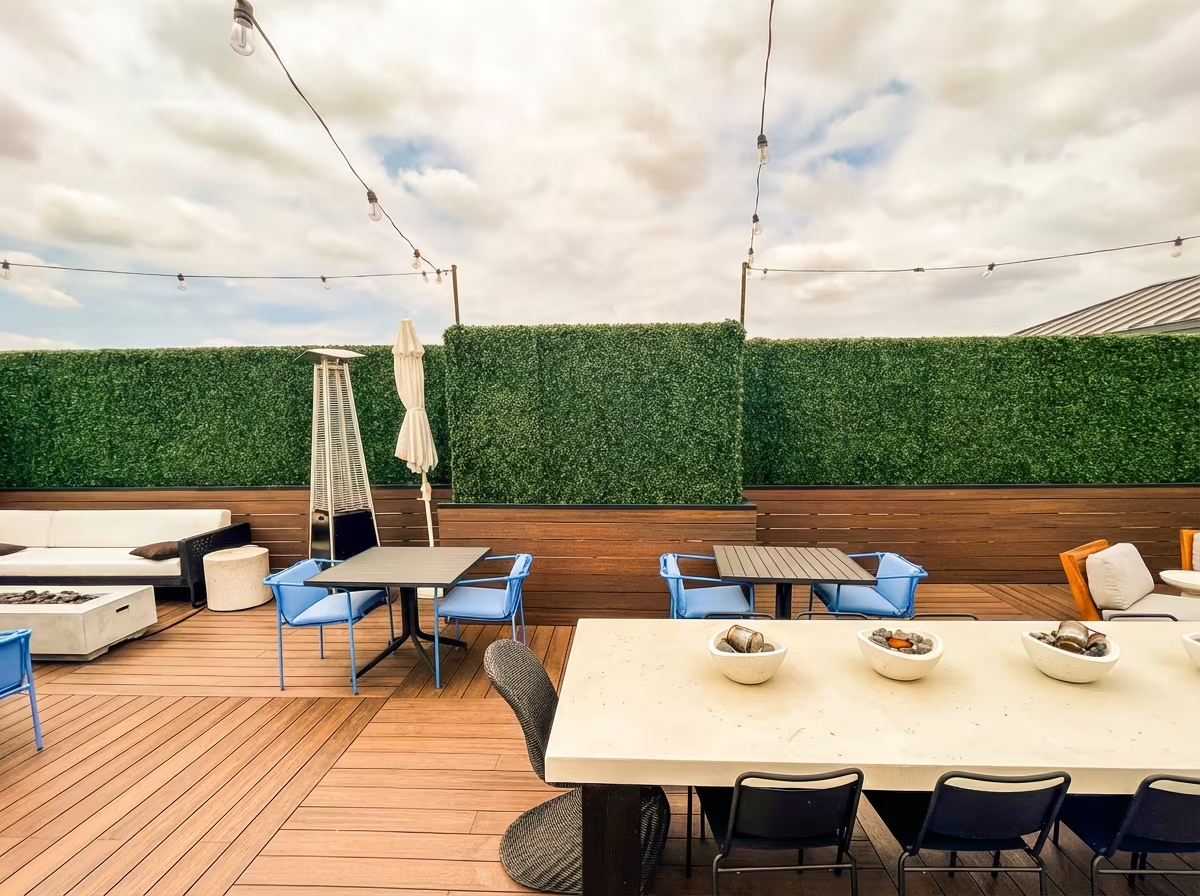
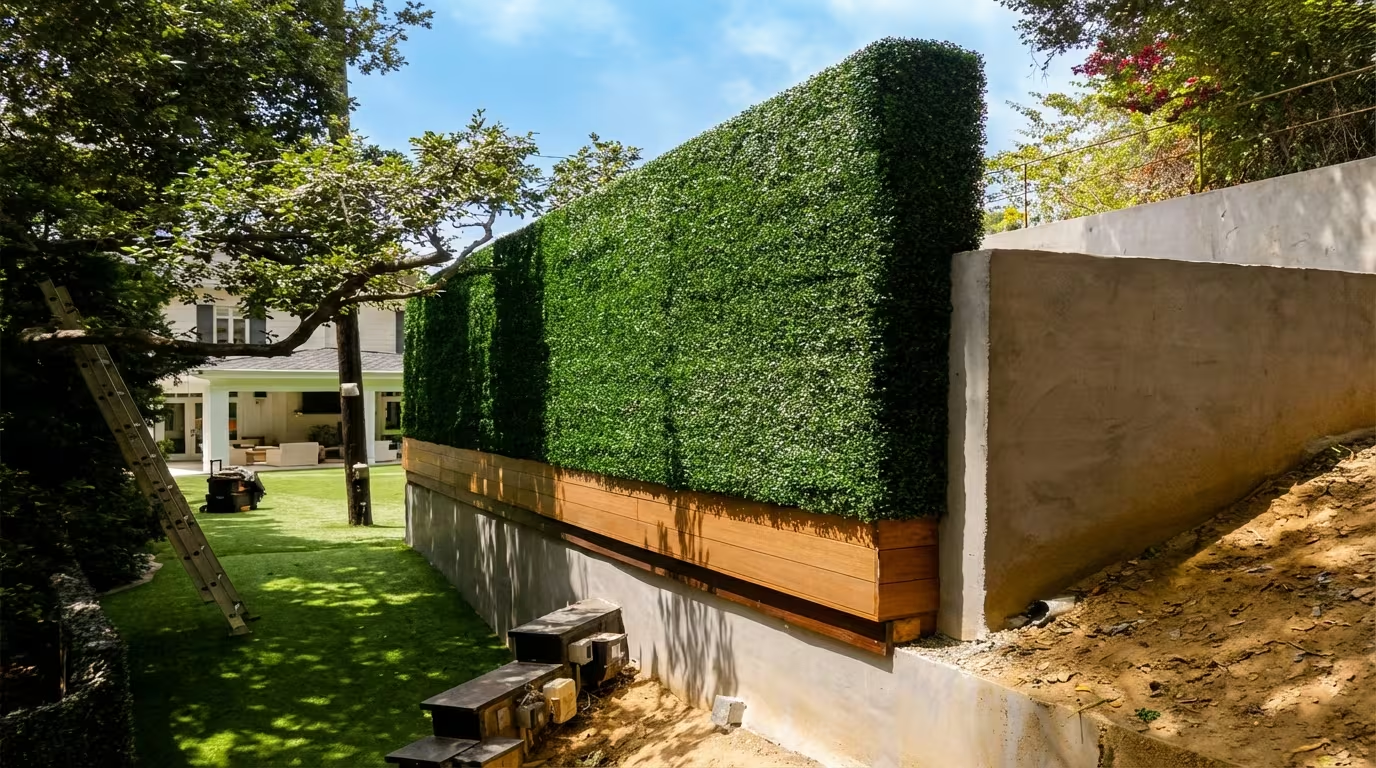
Fence extensions — adding height to an existing fence using lattice, trellis, hedge panels, or other screening materials — are one of the most common ways property owners try to gain additional privacy without rebuilding an entire fence line. But extensions are subject to the same height limits as new fences in most California jurisdictions. If your city caps fences at six feet, adding a two-foot extension on top of your existing six-foot fence would put you at eight feet and likely require a variance or permit.
That said, some cities treat certain types of extensions differently. Open-weave materials like lattice or trellis that allow light and air to pass through may be allowed to extend above the standard height limit in some jurisdictions — often with the condition that the extension is at least 50 percent open. This is not universal, and the specific rules vary significantly from one city to the next.
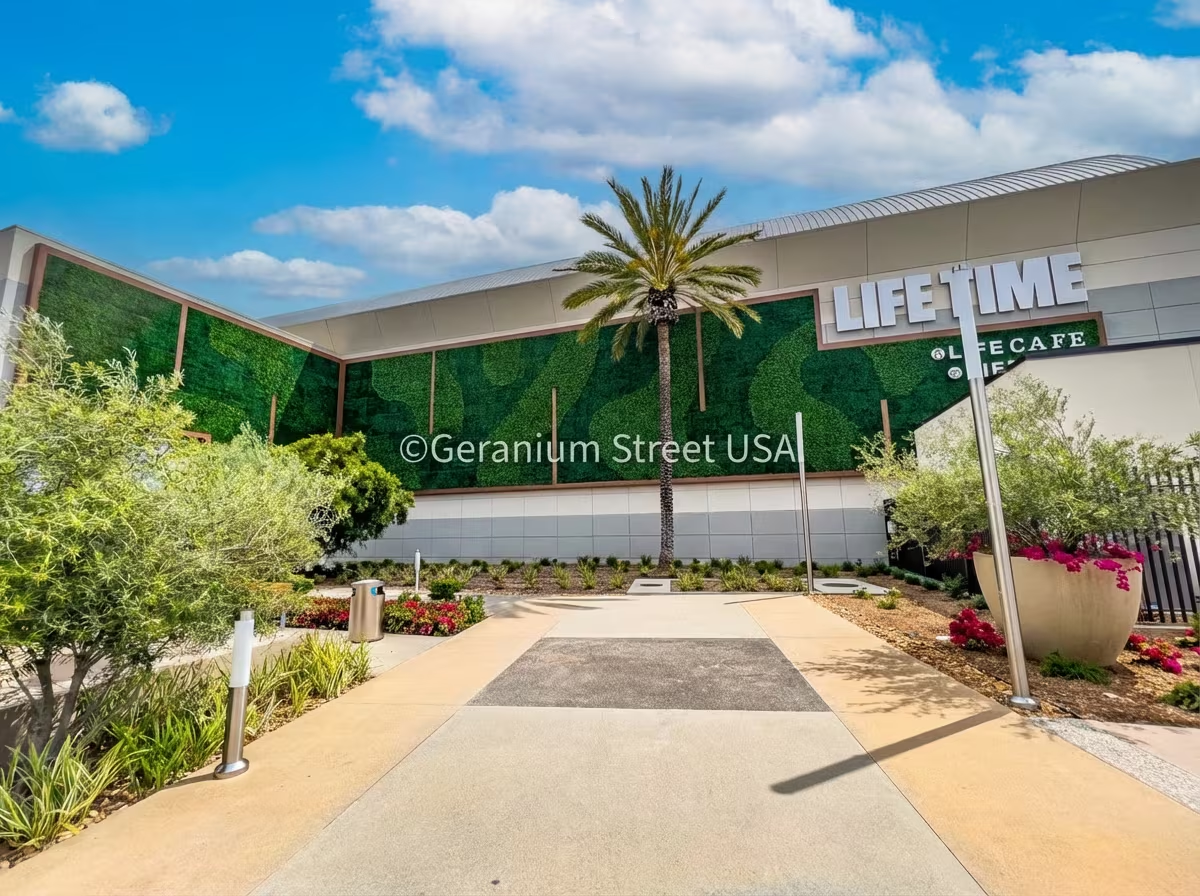
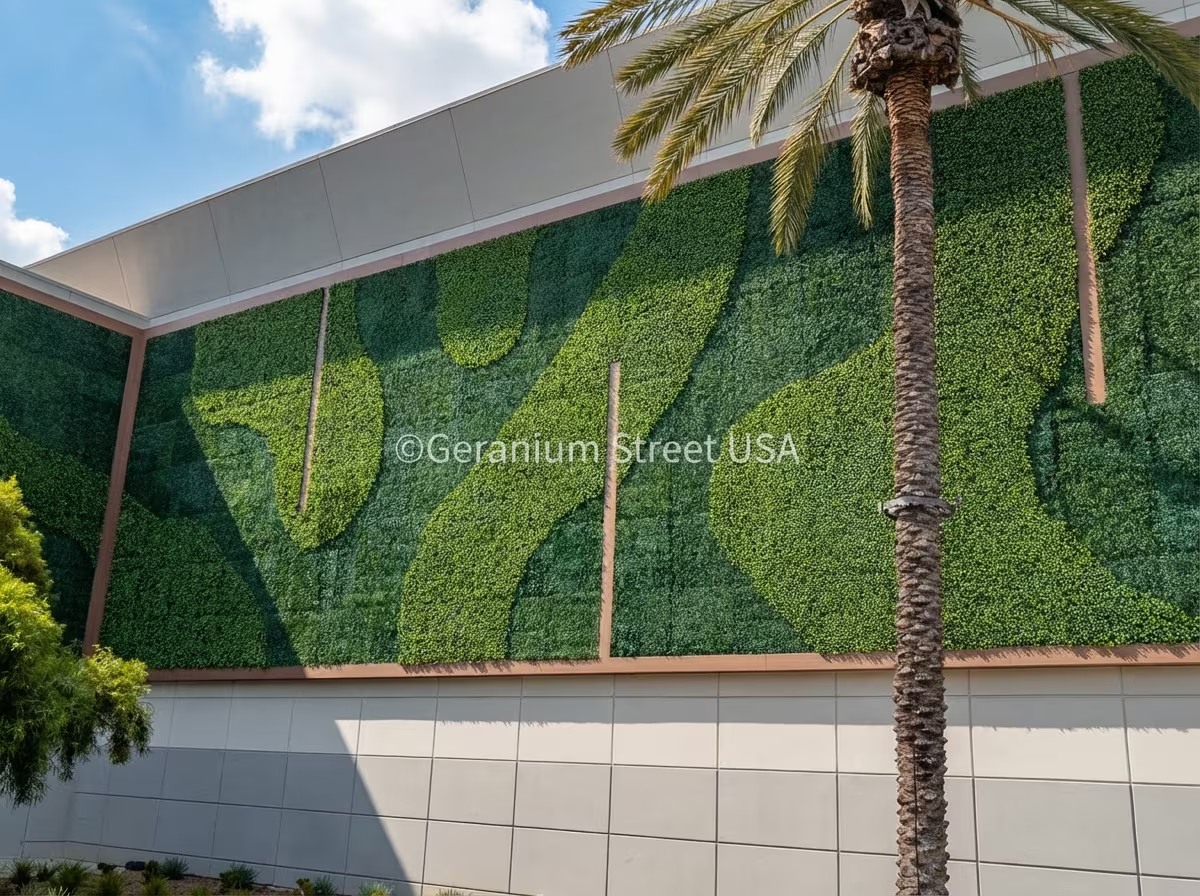
Artificial hedge panels and living wall systems occupy an interesting space in this conversation. Depending on the jurisdiction, they may be classified differently from solid walls or traditional fencing materials. Some planning departments treat them more like landscaping than like fencing, which can affect how height is measured and what limits apply. Others apply the same rules as any solid barrier. The classification is not standardized across California, which is why confirming with your local planning department before assuming a system qualifies for an exception is essential.
It is also worth being honest about when a fence extension is not the right answer. If your existing fence is leaning, rotting at the base, or was not built with posts deep enough to support additional height and wind load, adding more material on top can create a structural problem. A fence that was engineered for six feet of coverage may not safely support eight feet of wind exposure. In those cases, reinforcing or replacing the existing fence may be necessary before any extension makes sense.
“On about half the projects where a client wants to go above 6 feet, we recommend they check with their city planning department before we scope the work. A 10-minute call can prevent a code enforcement issue later.”
— Alex Tarnowski, Califauxscapes
Contractor licensing: what to verify before hiring
Any contractor installing fences, walls, or screening systems in California should hold a valid license issued by the California Contractors State License Board (CSLB). This is not optional guidance — California Business and Professions Code Section 7028 makes it unlawful to perform contracting work valued over $500 (including labor and materials) without a valid CSLB license. The threshold is low enough that virtually any fence or screening project of meaningful scope requires a licensed contractor.
The CSLB maintains a free, public license lookup tool at cslb.ca.gov where you can verify any contractor's license status, classifications, bond status, and complaint history. It takes about two minutes. The relevant license classifications for fence and screening work include C-13 (Fencing), C-27 (Landscaping), and B (General Building). A contractor may hold one or more of these depending on the scope of work they perform.
When evaluating a contractor, check that the license is active and in good standing, that the classifications match the work being proposed, and that workers' compensation insurance is current. The CSLB site shows all of this. If a contractor cannot provide a license number, or if the number does not check out on the CSLB site, that is a clear signal to look elsewhere.
In the interest of transparency: Califauxscapes operates under CSLB license #955154, held by Geranium Street USA, Inc. You can verify this at the same CSLB lookup tool linked above. We include this not as a sales pitch but because every contractor reference in this guide should be verifiable, including ours.
CSLB
Contractor license board
California Contractors State License Board — free public license lookup
#955154
Califauxscapes license
Held by Geranium Street USA, Inc. — verify at cslb.ca.gov
$500+
Projects requiring a license
California law requires a contractor license for work valued over $500
Last reviewed March 2026 · Content is reviewed periodically and updated when new information is available.
FAQ
Is there a statewide fence height limit in California?
No. Fence height limits are set by local municipal zoning codes, not state law. California Civil Code sections 841–841.4 address shared boundary fence obligations between neighbors but do not specify height limits. The height number comes from your city or county zoning ordinance.
Can my HOA override the city's fence height limit?
An HOA can impose stricter limits — lower maximum heights, material restrictions, color requirements, or architectural review — but it cannot permit heights that exceed what the municipal code allows. HOA restrictions are contractual and layered on top of municipal code, not a replacement for it.
Do I need a permit to extend my fence height?
It depends on your city. Some California cities require a building permit for fences over a certain height (often six feet), while others handle it through zoning clearance. If your extension would exceed the standard height limit for your zone, you may need a variance. Check your local zoning code or call the planning department to confirm what your city requires.
Where can I verify a contractor's license in California?
Use the CSLB license lookup tool at cslb.ca.gov. Enter the contractor's license number or business name to verify license status, classifications, bond information, and complaint history. The lookup is free and takes about two minutes.
Need project-specific guidance before design or procurement moves forward?
Share the site conditions, privacy goals, or wall type you are evaluating and we can help you narrow the right system for the project.