Can one project include both real and artificial walls?
Yes. Hybrid concepts are possible when zones have different technical and operational requirements.
A candid comparison for specifiers, operators, and ownership teams.
At a glance
This guide helps project teams compare real and artificial living walls based on operations, maintenance, visual consistency, and long-term ownership fit. It is intended for specifiers and operators who need to choose the wall type the property can actually support after installation.
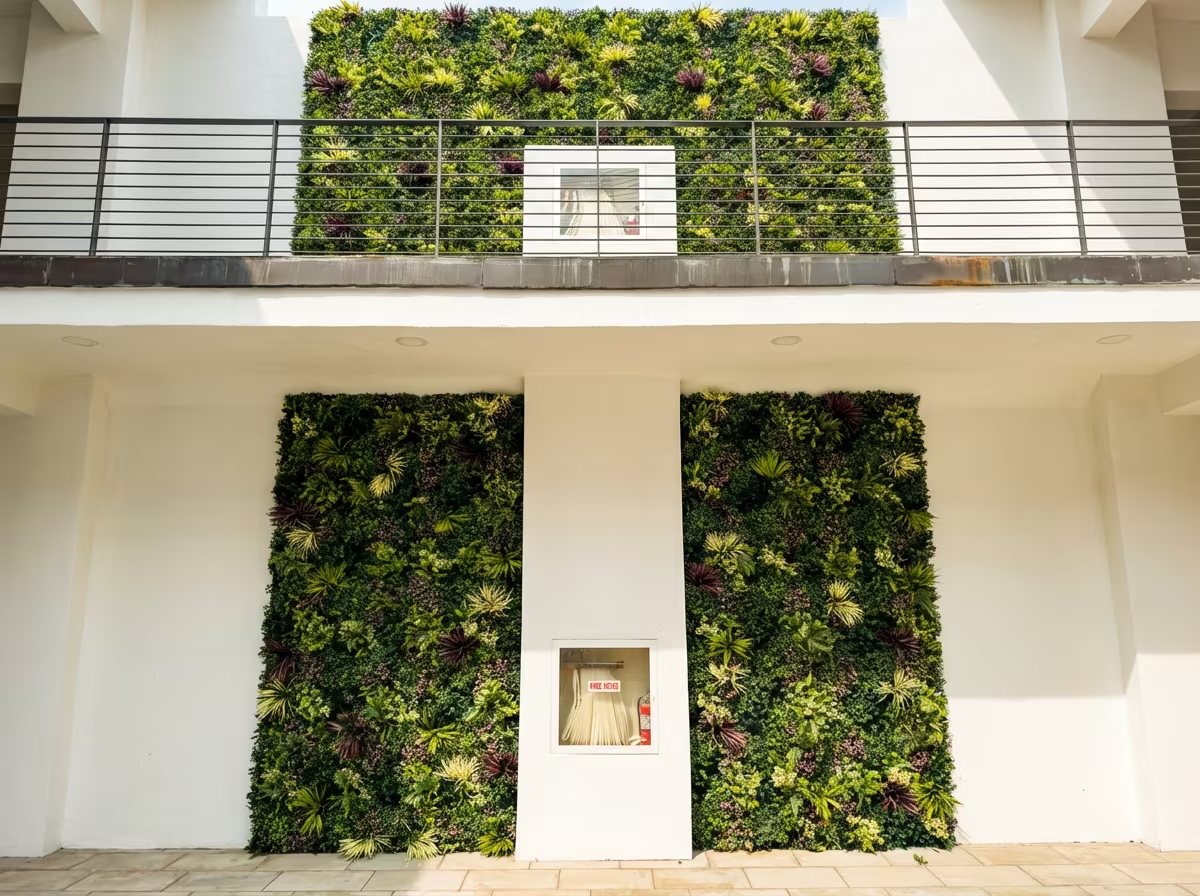
Real and artificial living walls can both be visually impressive, but they ask very different things of the project team after ribbon cutting. Real systems require irrigation, plant health management, and long-term horticultural attention. Artificial systems usually trade those biological requirements for faster install, more controlled appearance, and a simpler maintenance profile. This guide is written for teams that need to make that choice honestly. Not as a trend decision, but as an ownership model decision. The right answer depends on how the wall needs to perform, how the space is managed, and how much variability the project is willing to accept over time.
Irrigation and drainage
These systems need coordinated water delivery and the infrastructure to manage it.
Plant stewardship
Ongoing horticultural care is part of the system, not an optional add-on.
Biological variation
Growth, thinning, replacement, and seasonal change are part of the finished result.
Program fit
Best suited to projects that can support plant operations long term.
Living
Best when
Biological planting is central to the concept and ongoing care is supported
Artificial
Best when
Visual consistency, speed, and lower horticultural burden matter more
0 grow-in
Artificial wall
Finished look is delivered on installation day
Active care
Real wall
Plant operations remain part of ownership after handoff
| Factor | Artificial Living Wall | Real Living Wall |
|---|---|---|
| Installation speed | Faster — finished on install day | Longer — grow-in and establishment period |
| Irrigation requirement | None | Integrated irrigation system required |
| Ongoing plant care | None — cleaning and inspection only | Horticultural program: pruning, feeding, replacement |
| Visual consistency | Stable density and composition over time | Varies with season, health, and maintenance quality |
| Environmental services | No biological benefit | Air quality, cooling, habitat value |
| Placement flexibility | Broader — interior, exterior, variable conditions | Narrower — needs light, water access, drainage |
| Operational burden | Low — periodic maintenance visits | High — active plant stewardship after handoff |
| Best for | Hospitality arrivals, amenity zones, retrofits, low-ops properties | Mission-driven biophilia, properties with horticultural support |
Last reviewed February 2026 · Content is reviewed periodically and updated when new information is available.
Yes. Hybrid concepts are possible when zones have different technical and operational requirements.
Sustainability outcomes depend on water use, maintenance practices, and full lifecycle context.
Timelines vary by scope, but artificial systems are often faster to deploy in many retrofit situations.
Share the site conditions, privacy goals, or wall type you are evaluating and we can help you narrow the right system for the project.
Request project review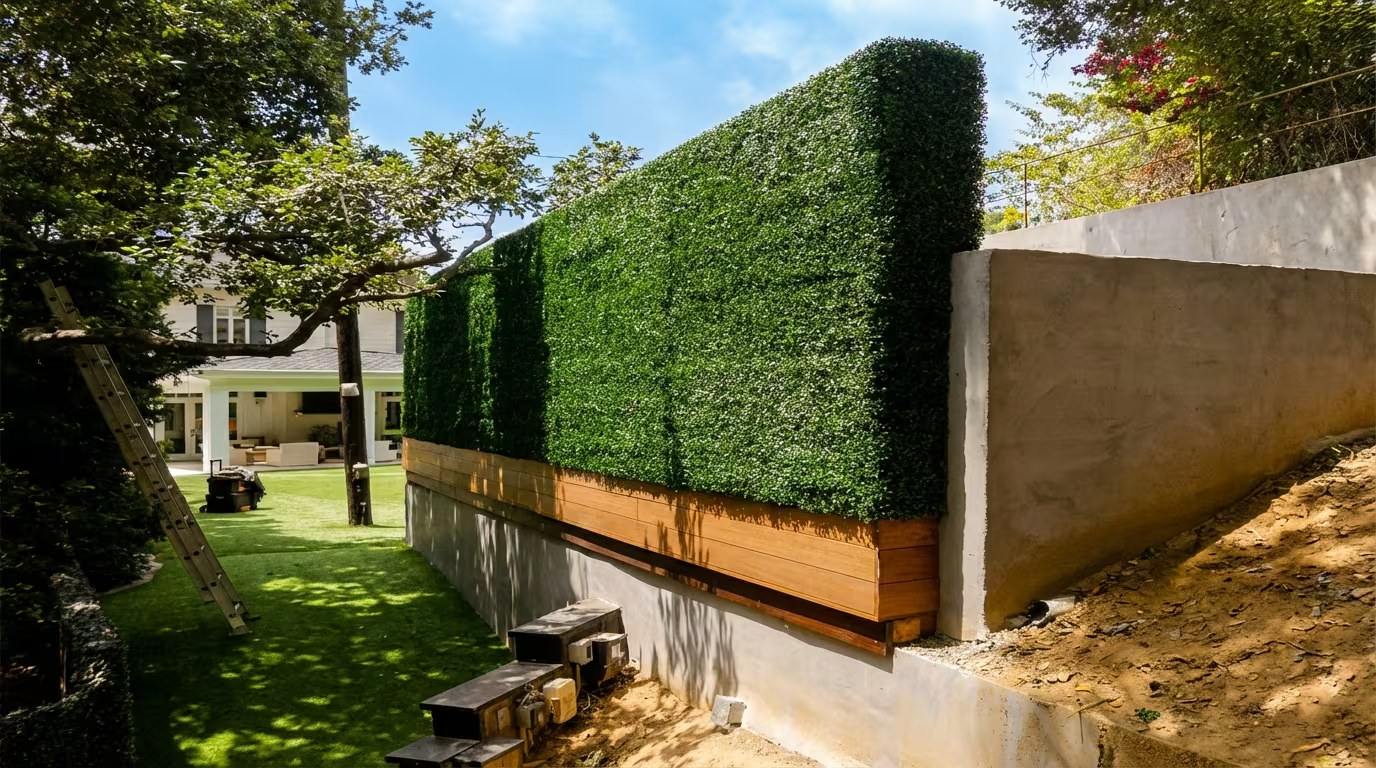
A California planning guide for privacy, screening, and long-term ownership.
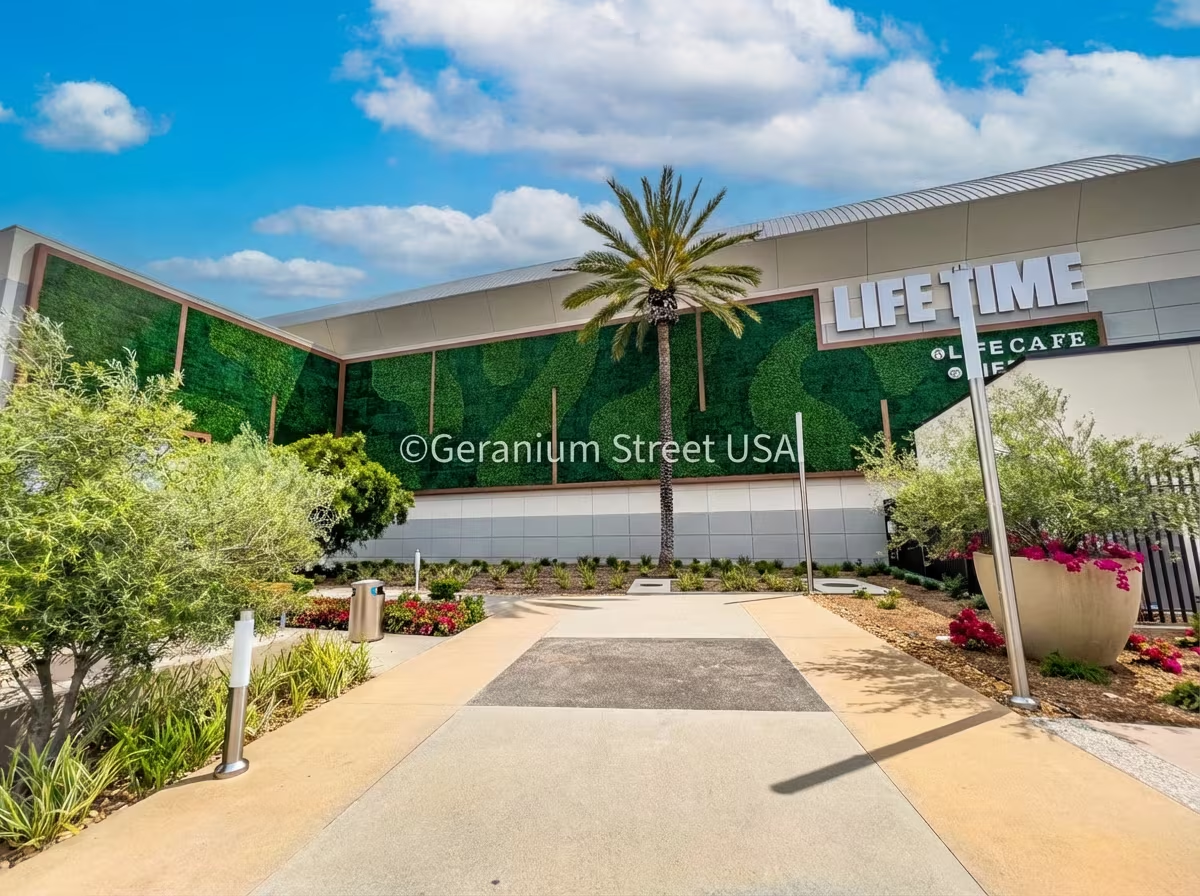
A California planning guide for architects, designers, builders, and owners.
How commercial teams scope visible landscape upgrades without creating operational drag.
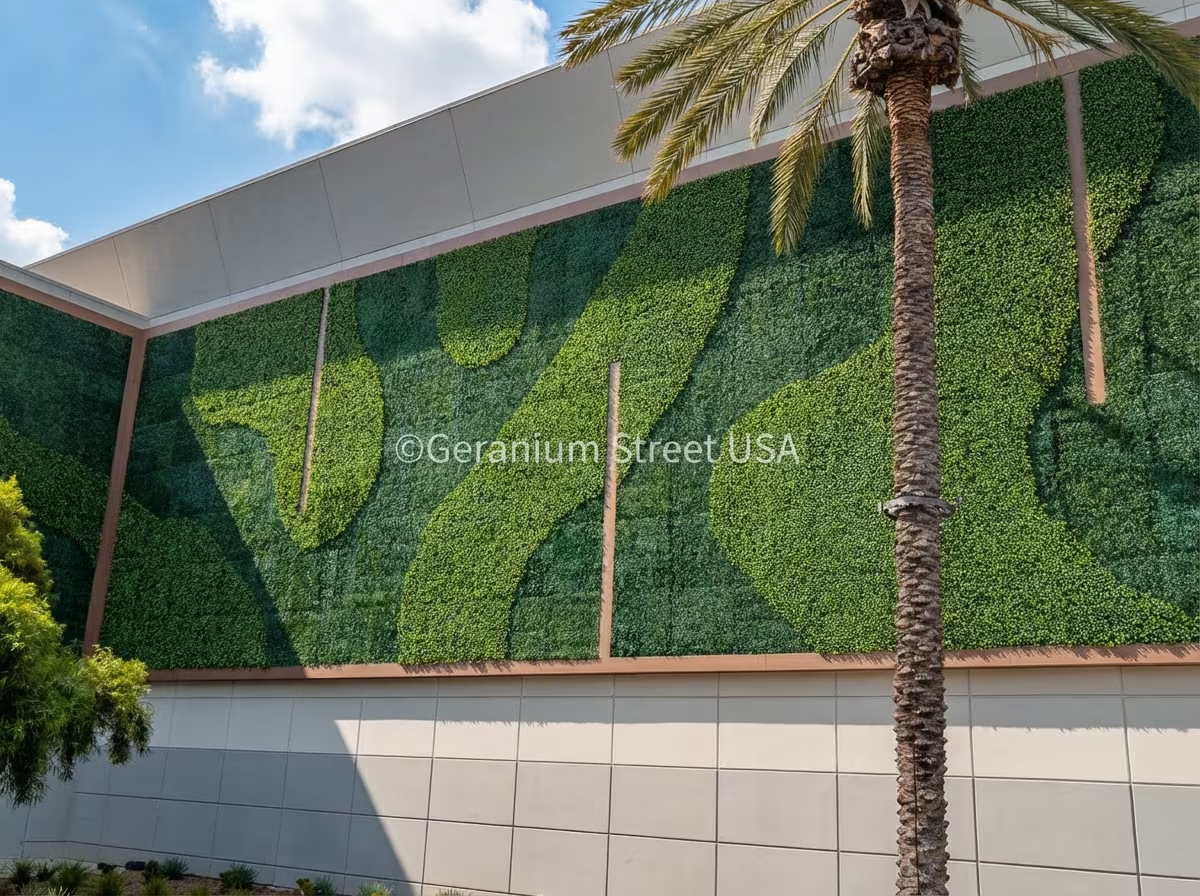
How to budget with real site variables instead of generic square-foot promises.