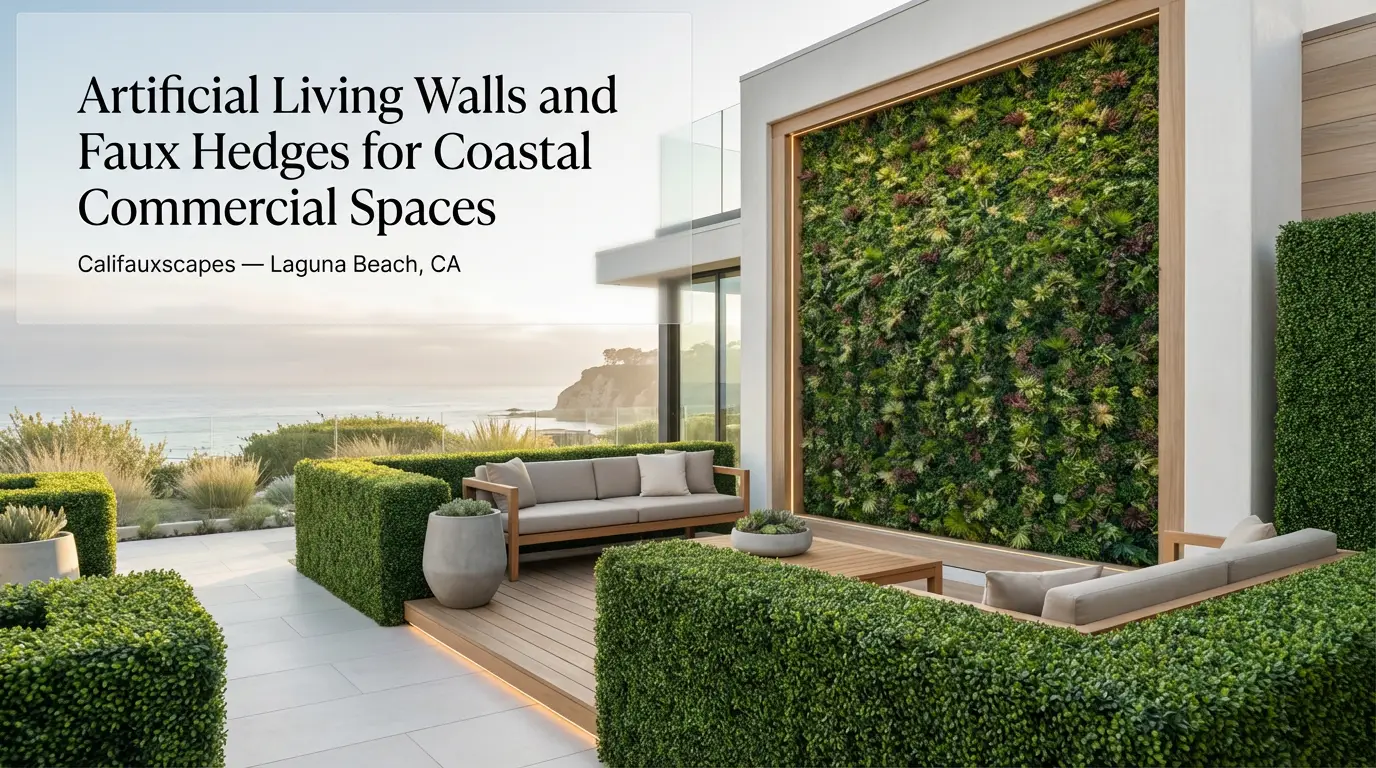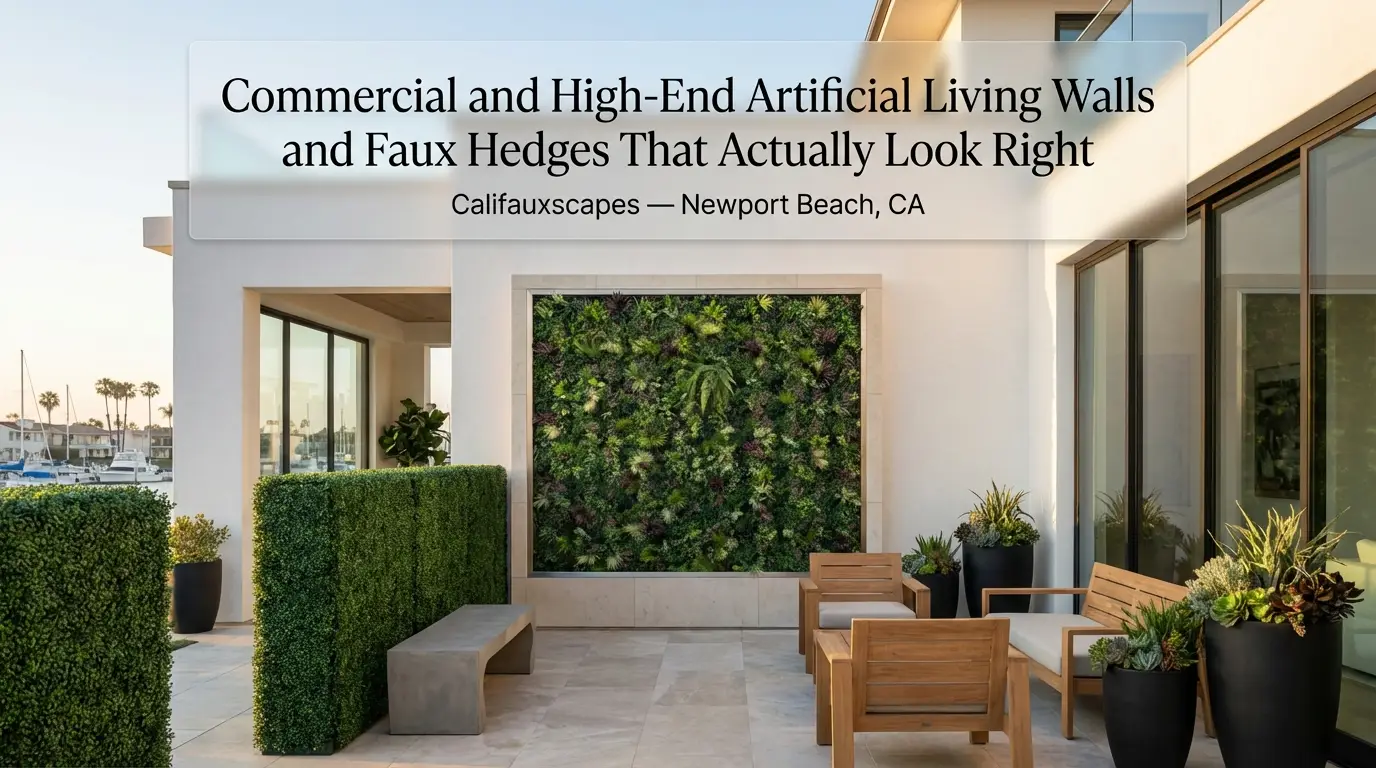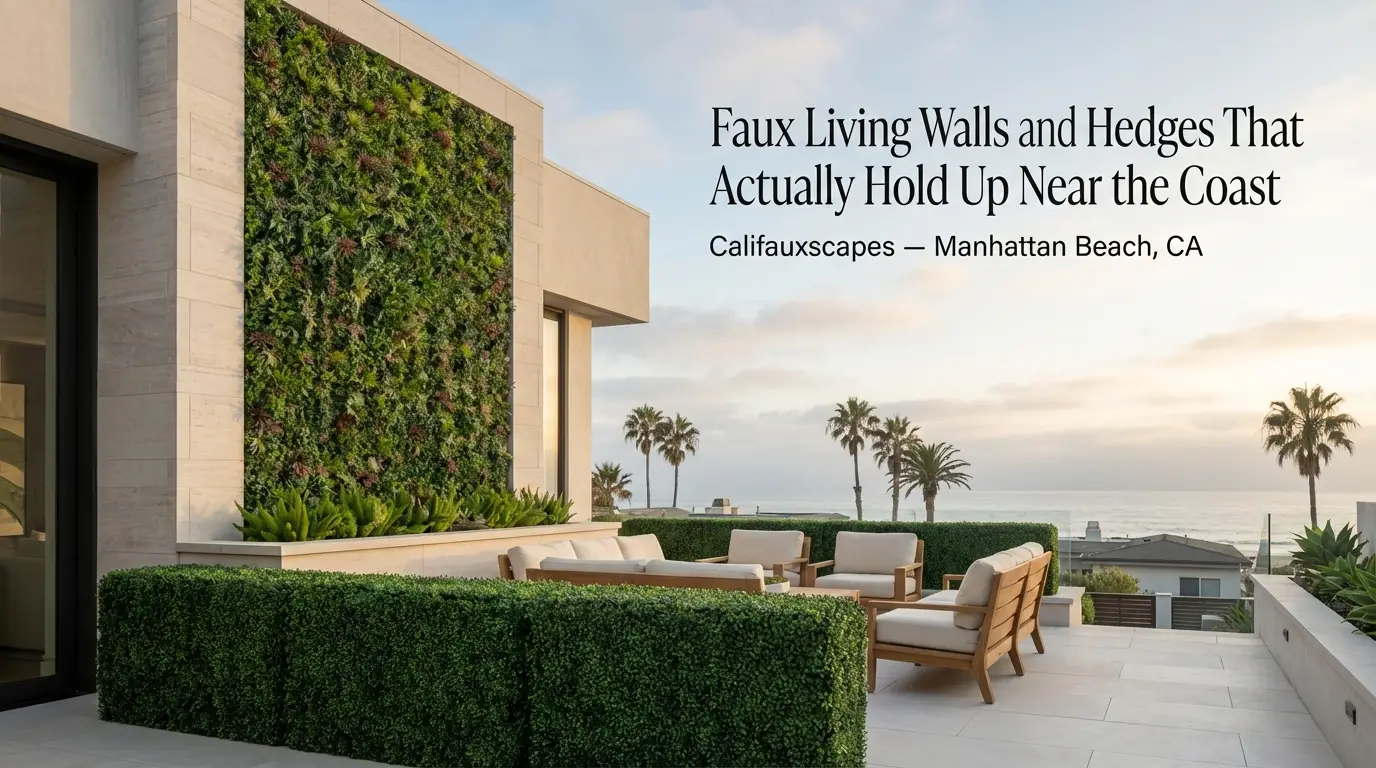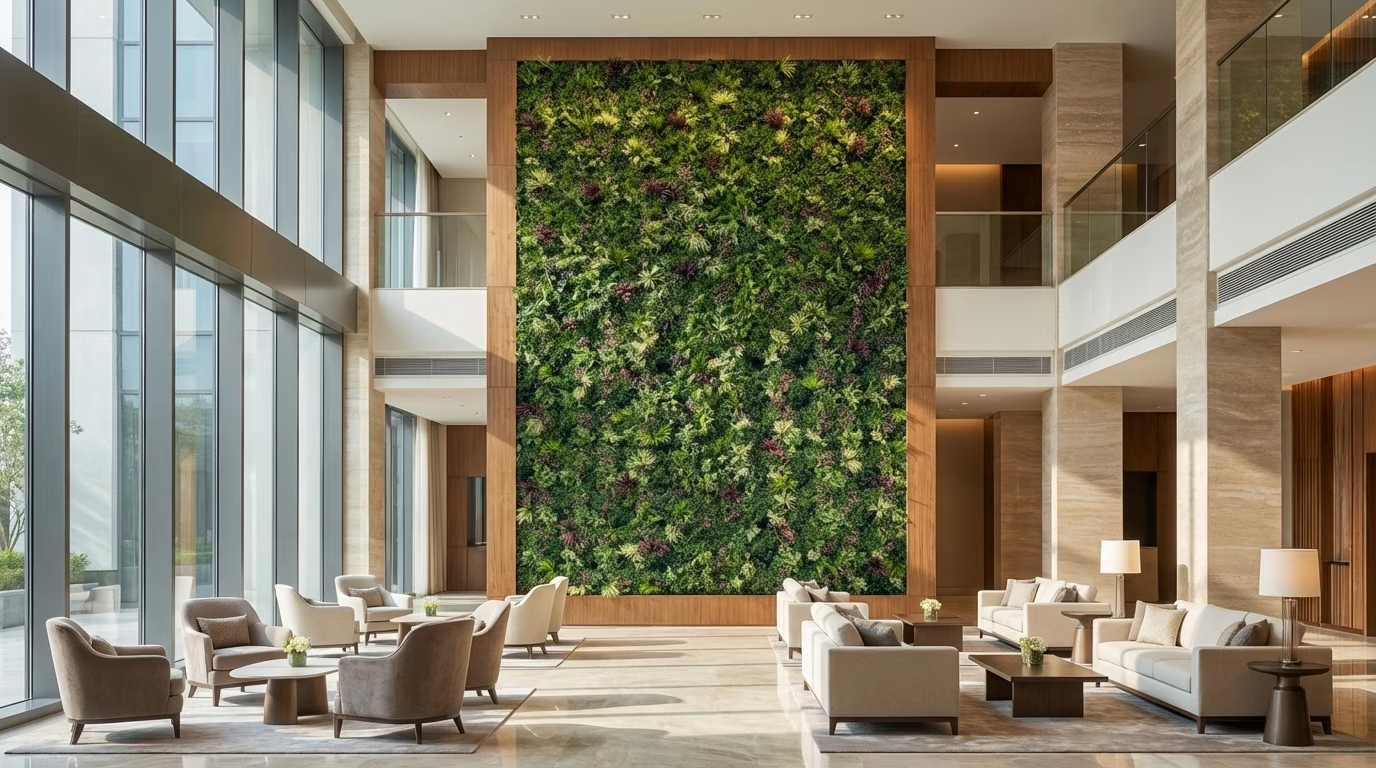
Artificial living walls are often chosen because they bring warmth, greenery, and architectural impact to a commercial property without the maintenance burden of live systems. On Los Angeles projects, though, appearance is only one part of the conversation. Many teams also need to understand the fire documentation behind the product they are considering.
Why this comes up so often
Commercial projects rarely move forward on aesthetics alone. Landlords, facilities teams, designers, ownership groups, and contractors may all want to review submittal information before a wall is approved. If the living wall package is loosely defined, that review gets harder.
That is why documented fire-rated artificial living wall systems matter. They make the selection process more concrete.
What project teams usually need
- Clear identification of the living wall product being proposed
- Supporting documentation tied to that product
- Clarity around how the wall will be installed and what assembly conditions matter
- A contractor who can speak to both the visual design and the practical installation
Where this matters most
In Los Angeles, this conversation often shows up in hospitality, office, retail, mixed-use, and multi-family common-area work. These are the spaces where a living wall may be a big visual move, but it still has to pass through review and fit the realities of the site.
What a good process looks like
The strongest projects handle documentation early. They do not wait until fabrication or installation to discover that the team has unanswered questions. Product information, submittals, site conditions, and detailing all need to line up before the wall goes in.
The design side still matters
A fire-rated living wall still needs to look right. Scale, panel layout, edge conditions, lighting, and the relationship to the surrounding architecture all matter. A commercial wall should feel built for the space, not dropped onto it.
The takeaway
If your Los Angeles business is considering an artificial living wall and the review team is asking about fire performance, get the right documentation on the table early and make sure the install strategy is part of the same conversation. That is usually the cleanest path to a project that looks strong and moves forward without unnecessary backtracking.
For the broader commercial compliance topic, start with NFPA 701 tested artificial greenery for Los Angeles commercial projects.