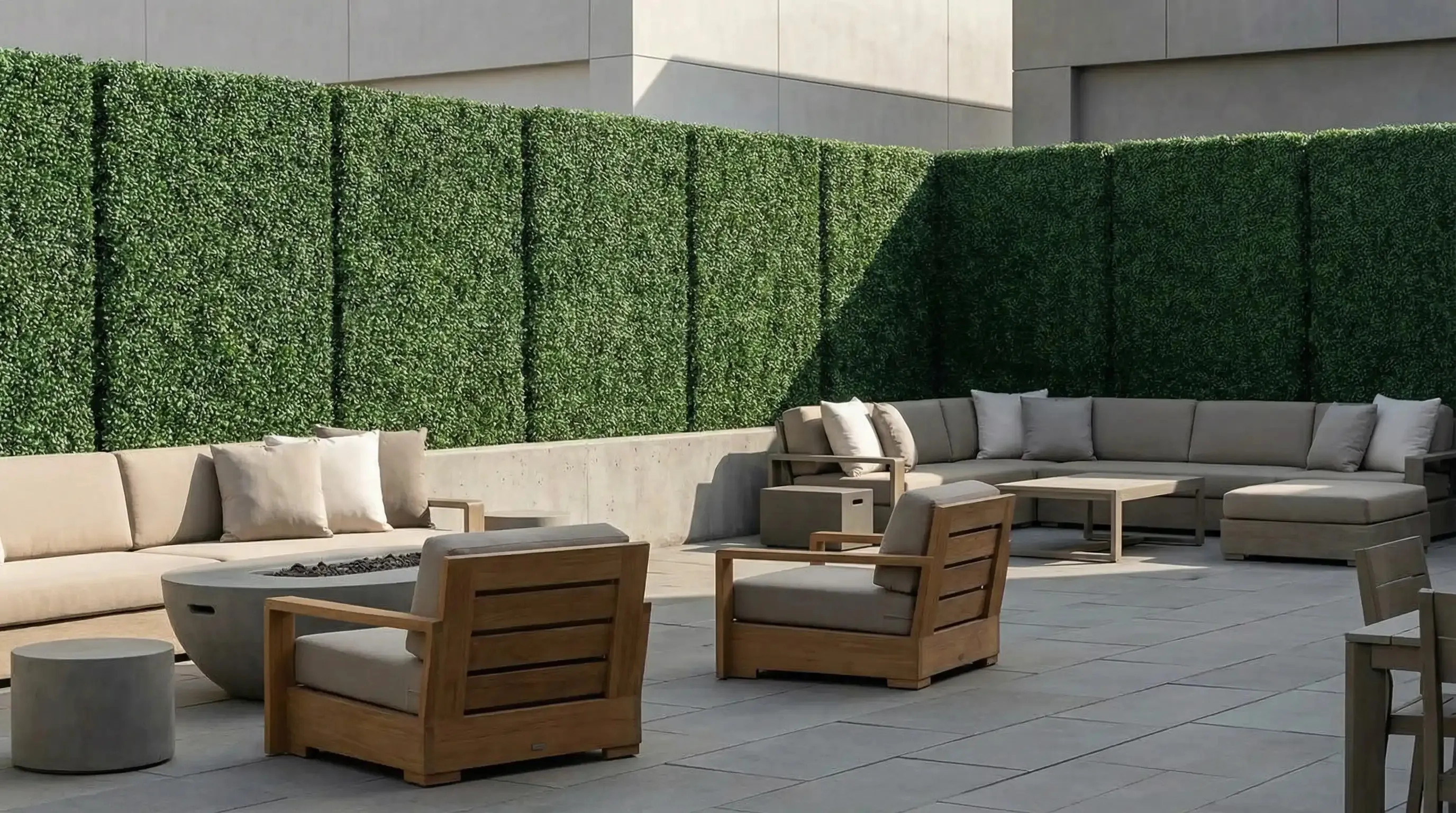
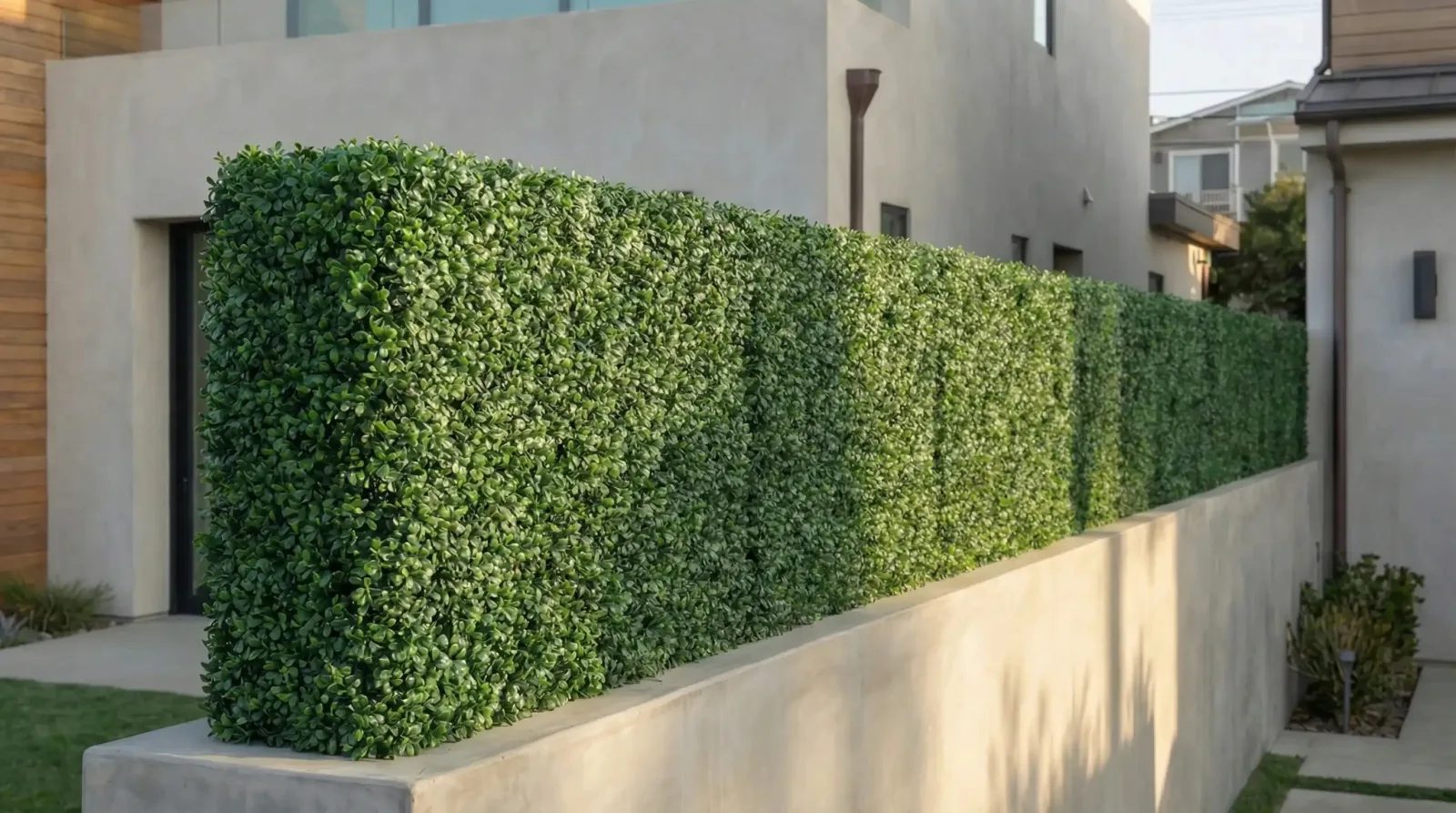
Challenge profile
What this scope is usually trying to solve
Many California homes need stronger sightline control without introducing bulky walls or high-maintenance planting plans.
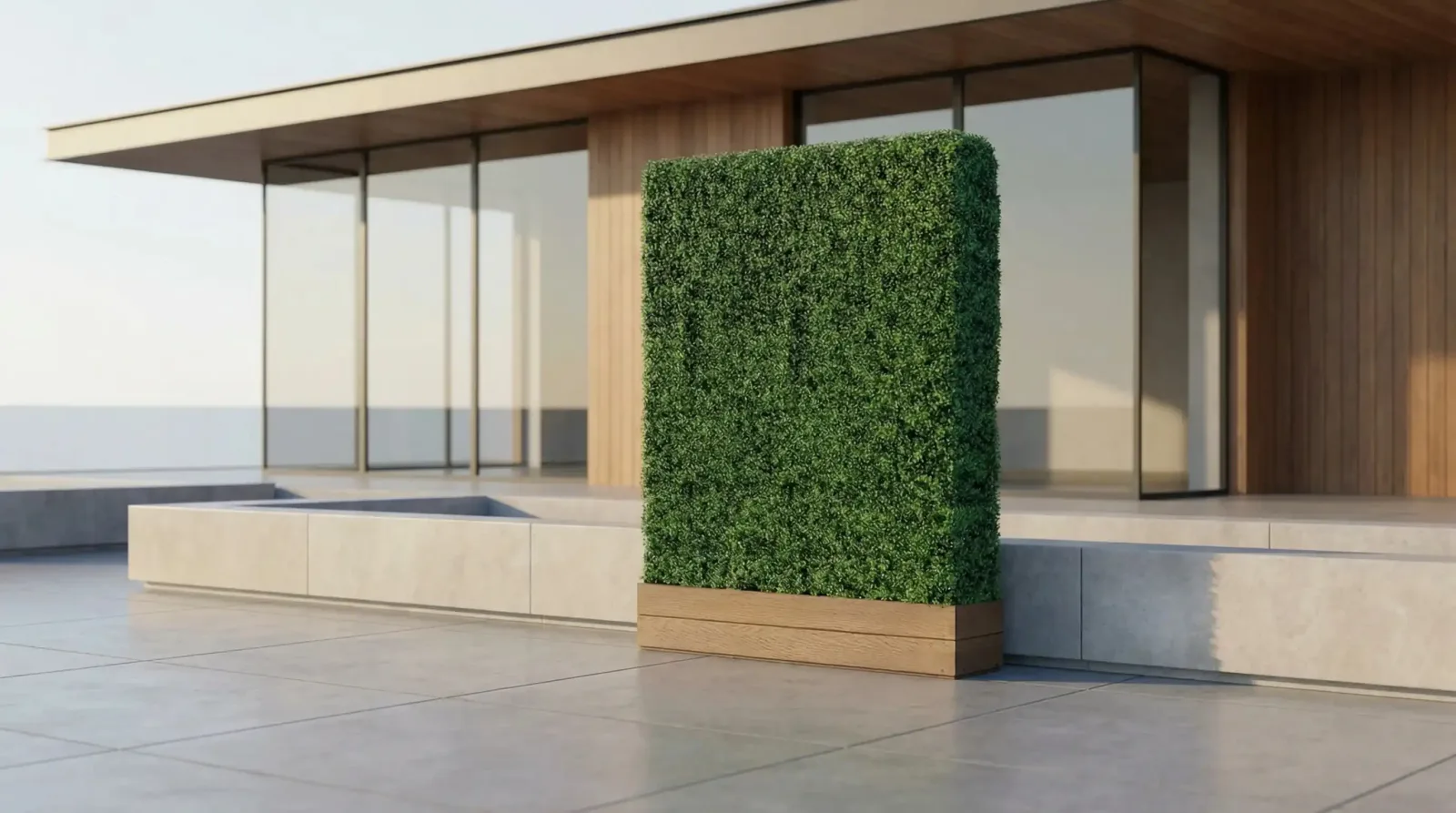
Residential
Layered screening for backyards, patios, and shared-lot boundaries.
Residential privacy scopes often combine hedge textures, fence extensions, and selective wall coverage to improve comfort while keeping a premium look.
Quick answer
This page outlines when artificial privacy systems may be a strong fit for California homes, what tradeoffs to review first, and which product combinations are commonly selected.
Challenge profile
Many California homes need stronger sightline control without introducing bulky walls or high-maintenance planting plans.
Approach
We map priority sightlines, choose density levels by zone, and align installation details to existing fences, gates, and outdoor architecture.
At a glance
This page outlines when artificial privacy systems may be a strong fit for California homes, what tradeoffs to review first, and which product combinations are commonly selected.
Expected outcomes
Can improve visual privacy in high-exposure yard zones
May reduce seasonal inconsistency common with live hedge growth cycles
Often lowers recurring trimming and irrigation routines
Scope considerations
Setback, fence-height, and HOA constraints should be reviewed before final dimensions.
Density and material tone should be sampled on site to align with exterior finishes.
Wind corridors and attachment substrate condition can influence final system selection.
Planning detail
Most residential privacy projects are not really about covering every inch of a fence line. They are about solving a handful of views that make a yard feel exposed: the second-story window that looks into the patio, the shared-lot edge around a pool, the driveway side where the property line feels unfinished, or the outdoor dining zone that needs separation without another hard wall. When the problem is framed that way, the right system becomes clearer and the scope is easier to budget.
That is also why Califauxscapes usually reviews privacy by zone instead of by product category alone. A backyard entertaining edge may want the softness of a privacy hedge, while a tighter side yard may need the cleaner footprint of a privacy wall or fence extension. On many California homes, the strongest answer is a selective combination rather than a single product used everywhere.
Planning detail
On residential work, the real scope usually gets shaped by practical constraints before it gets shaped by aesthetics. HOA rules, fence-height limits, gate hardware, old retaining walls, irrigation conflicts, and how much long-term trimming the owner wants to avoid all influence what the finished recommendation should be. Ignoring those constraints early is the fastest way to end up with a layout that looks good in concept but creates friction during approval or installation.
That is why early planning should include photos from the key views, rough dimensions, and a short note on whether the priority is full privacy, a more polished perimeter, or a cleaner backdrop around a patio or pool. Once that is clear, product fit, installation sequencing, and pricing become far more predictable. This is also where pages like the cost guide and the artificial-vs-natural hedge comparison become more useful than generic inspiration galleries.
Compare maintenance, visual consistency, and privacy timing before choosing a direction.
Breaks down what usually moves budget on residential privacy scopes.
A practical homeowner-focused article that supports early product decisions.
Related project
This case study is a useful benchmark because it shows how Califauxscapes handles privacy-critical residential zones where the installation has to look finished immediately and stay visually consistent without a heavy maintenance cycle.
CalifauxScapes installed 600 sq ft of long-lasting, UV-resistant artificial hedges for a Brentwood homeowner dealing with an ugly hillside and no deck privacy. Completed in 3 weeks.
Open case studyDecision framework
For residential privacy work, the product decision usually comes down to whether the site is upgrading an existing edge, creating a denser visual barrier, or trying to control sightlines in a tighter footprint.
Best when the goal is a softer planted look with immediate visual coverage along patios, pool edges, or long yard boundaries.
If the existing fence is structurally sound and only needs more height, a fence extension may be the cleaner move.
Best when the fence can be upgraded instead of replaced and the problem is mostly height, not full redesign.
If the footprint is tight or the design needs a more architectural finish, a privacy wall may outperform it.
Best when layout control, cleaner detailing, or a tighter installation zone matter more than creating a hedge profile.
If the owner wants a softer green edge with less of a built-wall look, a privacy hedge is usually the better fit.
Recommended products
Supporting projects
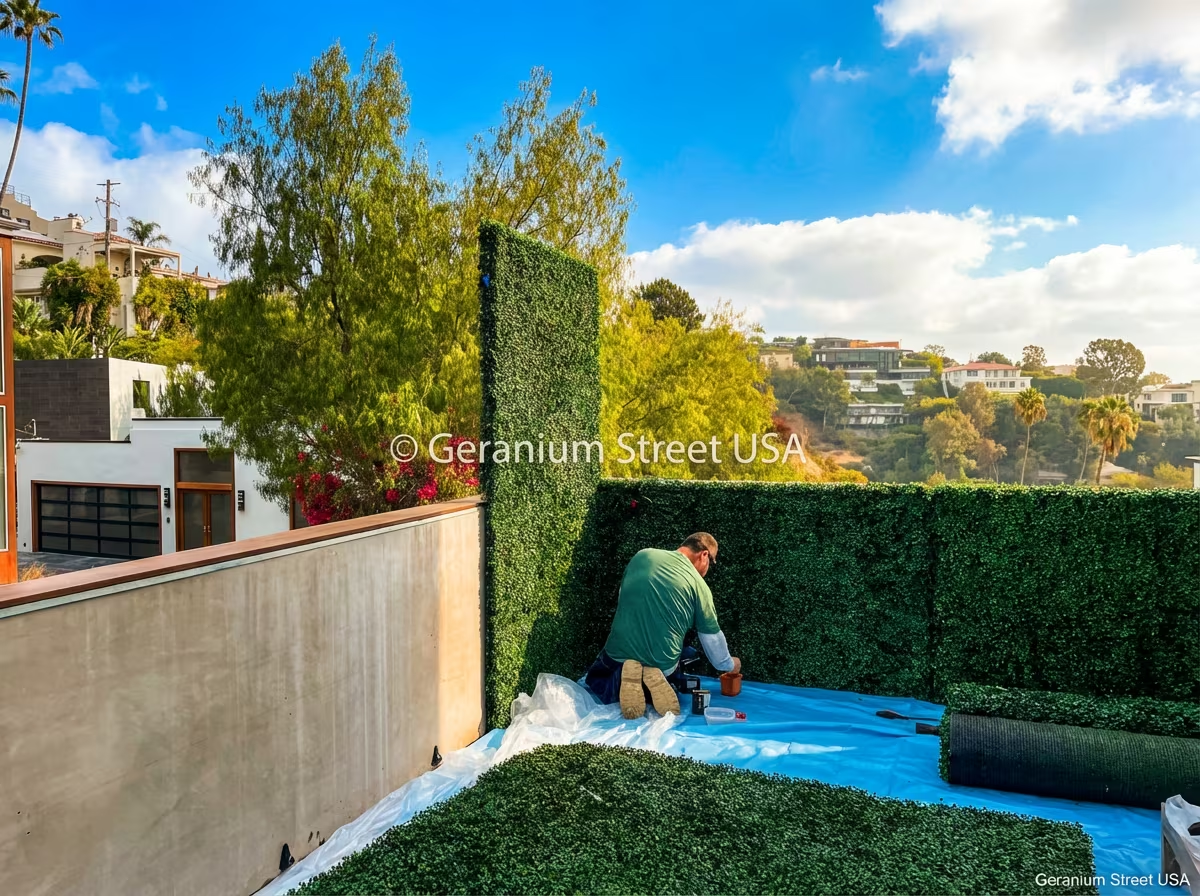
Brentwood
CalifauxScapes installed 600 sq ft of long-lasting, UV-resistant artificial hedges for a Brentwood homeowner dealing with an ugly hillside and no deck privacy. Completed in 3 weeks.
Open case study
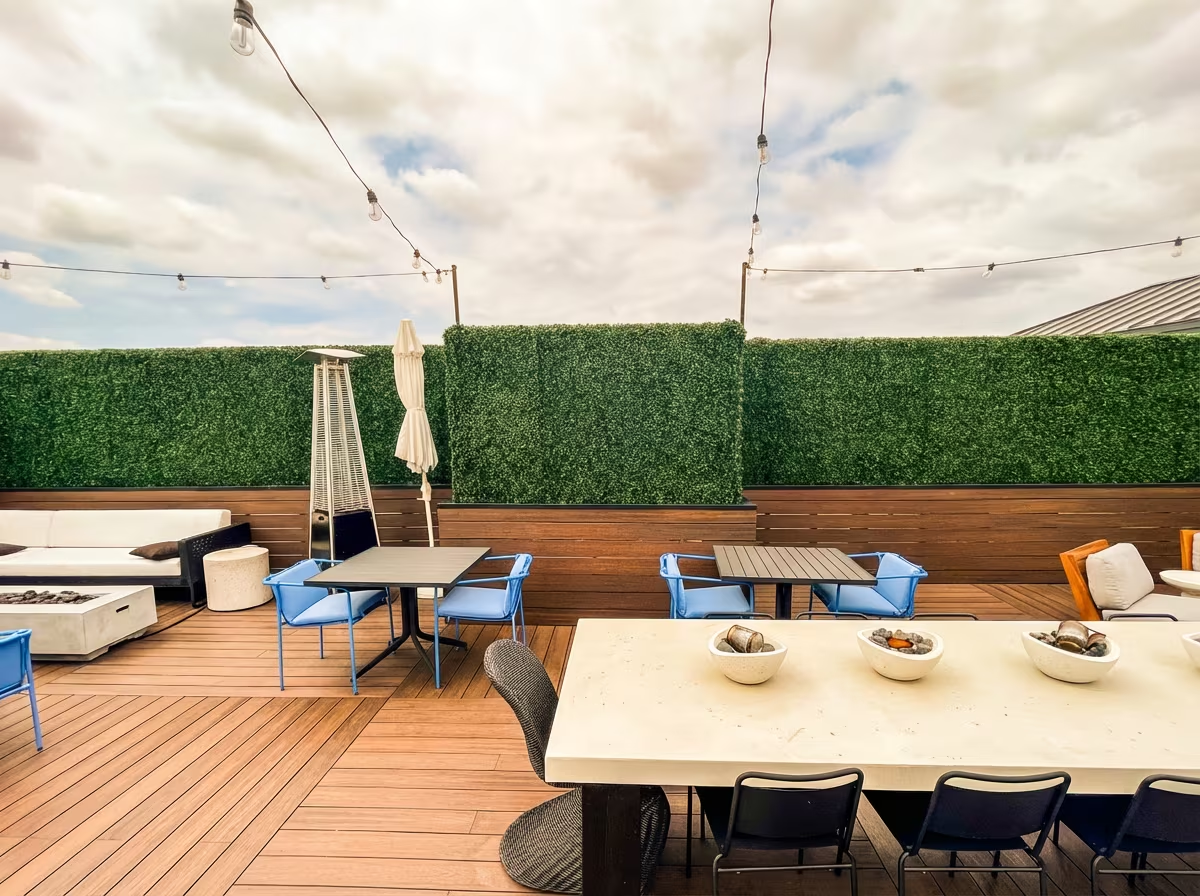
Los Angeles
CalifauxScapes installed 300 sq ft of UV-resistant artificial hedges on an LA commercial rooftop to screen AC units and create a usable lounge space for employees and clients. Done in 3 weeks.
Open case study
Related resources
Useful when the site needs more layout control and a cleaner architectural screen.
Often the most efficient option when the existing fence can carry the upgrade.
A budget-planning companion for residential scopes.
A practical article for owners comparing where privacy hedge panels fit best.
Explore next
FAQ
Fence extensions are often considered when an existing fence is structurally suitable and only additional height is needed. Privacy walls are commonly used when layout control or freestanding placement is required.
Artificial privacy systems usually reduce trimming and irrigation tasks, but periodic cleaning and hardware checks are still recommended.
They can in many cases, but final layout depends on access, attachment conditions, and local setback requirements.
A site review is typically needed to confirm dimensions, substrate condition, and installation complexity before final scope and pricing.
Coverage
5-year limited UV warranty on qualifying products and 1-year installation workmanship warranty.
Coverage is limited and subject to product eligibility, installation scope, and written warranty terms.
5-year limited UV
1-year installation
Written terms apply